Support

Maison Saint-Gabriel

About

Imagine a corner of living history miraculously preserved in the heart of a modern metropolis. Maison Saint-Gabriel is the world's oldest example of rural architecture from the New France era, located in the city of Montreal. It is not just a house, but a true museum complex and a National Historic Site that transports visitors back to the 17th century.

This territory was once a thriving farm, purchased in 1668 by Marguerite Bourgeoys, founder of the Congregation of Notre-Dame. Today, Canada carefully preserves this heritage: the site houses more than 15,000 unique artifacts, including furniture, textiles, and everyday items used by the early settlers.
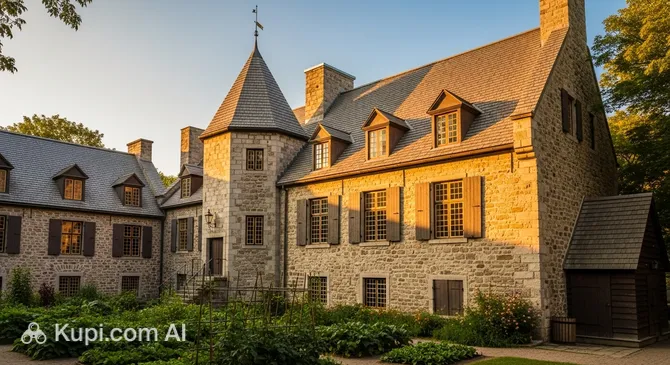
Maison Saint-Gabriel. Source: Kupi.com AI

The entire complex includes a massive stone house, an 18th-century barn, and magnificent themed gardens. This place is unique because it allows you to literally touch the roots of Quebec culture and see how life was built on the banks of the St. Lawrence River hundreds of years ago.

Contacts

To inquire about special events or to book group tours, you can contact the museum administration directly.

Address 2146 Pl. de Dublin, Montréal, QC H3K 2A2, Canada
Phone +1 514-935-8136
Official website maisonsaintgabriel.ca

What to Do

The main highlight of Maison Saint-Gabriel is the opportunity to step inside the historic house and see its authentic interiors. Massive stone walls, heavy oak beams, and large hearths create a unique atmosphere. Be sure to visit the old chapel and the bedrooms where the nuns once lived to experience their modest and hardworking way of life.

During the summer season, the museum literally comes to life with fascinating demonstrations of traditional crafts. Actors in period costumes show how household items were made, clothes were sewn, and food was prepared three hundred years ago. It is a great spectacle for both adults and children, allowing you to see history in action.

A walk through the complex grounds is equally interesting. You can walk along the "Poetry Path," featuring plants used by Indigenous peoples, peek into the 17th-century vegetable garden, or relax in the sharecroppers' garden. To round off your visit, stop by the Catherine-Crolo pavilion, which houses a tea room with a terrace and a cozy gift shop featuring handmade souvenirs.

Getting There

The museum is located in the picturesque and quiet Pointe-Saint-Charles neighborhood in the southwest part of the city. Getting here is quite easy, especially if you prefer public transport. Take the "Green Line" of the metro and get off at Charlevoix or LaSalle station. From either of these stations, it is about a 10–15 minute walk to the end of Place de Dublin.

If you value comfort and speed, it is best to take a taxi or use a ride-sharing service directly from the city center. The trip won't take long, as the site is located within the city limits in a cozy residential area surrounded by green spaces, making the journey a pleasant addition to your excursion.

History & Facts

The history of this site began on October 31, 1662, when the city’s founder, Paul de Chomedey de Maisonneuve, bequeathed a plot of land to Marguerite Bourgeoys. A farm was established here to provide food for the Congregation of Notre-Dame. The first laborers cleared the forests to plant corn, wheat, and squash, laying the foundation for the community's food security.

The stone house seen today was built in 1668. However, a devastating fire broke out in 1693, and the building had to be restored almost from the ashes—it acquired its current appearance after reconstruction in 1698. For more than 300 years, the sisters of the Congregation lived here continuously, not only managing the farm but also engaging in charitable work.

One of the most fascinating chapters in the house's history is its role in the fate of the filles du roi ("King's Daughters"). Maison Saint-Gabriel served as a temporary home for young women arriving from France to marry settlers and populate the new lands. Here, they were taught housekeeping, sewing, and the rules of life in the harsh conditions of New France. Additionally, at various times, the house served as a school and a shelter for orphans and Indigenous children.

Time Needed

To leisurely immerse yourself in the historical atmosphere, view all the exhibits in the main house, and stroll through the gardens, you will typically need about 2–3 hours. This is plenty of time to take a guided tour and see the traditional craft demonstrations.

If you plan to visit the local tea room or spend some time in the gift shop choosing authentic souvenirs, you should set aside half a day for your visit. The estate encourages contemplative relaxation, so you won't want to rush.

Working Hours

The museum follows a seasonal schedule. It is typically closed on Mondays and Tuesdays. From Wednesday to Friday, the doors are open from 1:00 PM to 5:00 PM, and on weekends—Saturday and Sunday—visitors are welcome from 10:00 AM to 5:00 PM.

As opening hours may change depending on holidays or special cultural events, we strongly recommend checking the information on the official website before planning your trip.

Nearby

A visit to the historic farm in the Pointe-Saint-Charles neighborhood is just part of what this welcoming city has to offer. Exploring the surroundings will allow you to seamlessly transition from the 17th-century atmosphere to the modern entertainment and active recreation for which the region is so famous.

Nearby, you will find many family-friendly venues, amusement parks, and active entertainment centers that perfectly complement your travel itinerary in the area.

Name Distance (km)
Voiles en Voiles 3.6
La Ronde 5.4
PI-O Amusement Park 9.6
BFLY Brossard 10.1
Centre D'amusement Kazoom Café 12.4
Centre d'amusement Funtropolis 13.2
Elevation Trampoline & Amusement Montreal 14.3
Piscine St-Vincent 16.1
iFLY Montréal Chute Libre Intérieur 17.4
Club De Trampoline Acrosport 20.5

Reached the end of the page?

That means the route is fully explored