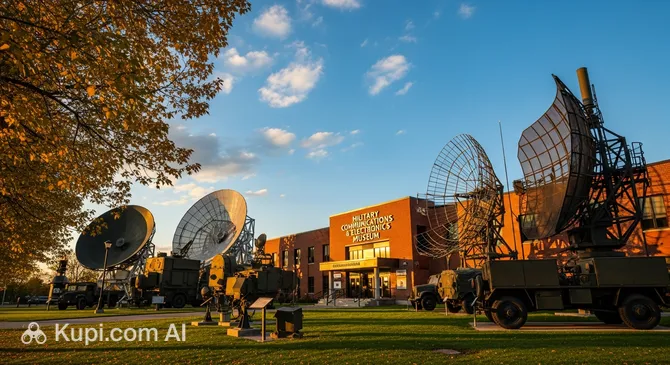
If you want to take a look into the world of invisible signals and high technology of the past, be sure to visit the Military Communications and Electronics Museum. This specialized center, located in the charming city of Kingston, represents one of the most interesting technical collections that Canada has to offer.
Military Communications and Electronics Museum. Illustration.
Source: Kupi.com AI
Traveler photos:
The museum is the official keeper of the history of the Canadian communications forces. Housed in a modern, purpose-built facility, it showcases the evolution of communications—from early telegraph machines to complex electronic systems. As a key participant in the country's Organization of Military Museums, it serves as a bridge between a heroic past and a high-tech future.
The significance of this place lies not only in its unique instruments but also in how clearly it demonstrates the role of communication in the success of operations. This is a must-see for anyone who appreciates engineering and wants to understand how technology changed the course of world history.
Contacts
To plan your visit to the Military Communications and Electronics Museum, it's helpful to have current contact information on hand. You can contact the administration by phone or visit the official website for details on special events.
Inside the museum's halls, visitors will find an exciting journey through decades of technical progress. You can take a close look at historical radio stations used in the field and learn how information secrecy was maintained during the most pivotal moments in history.
Special attention should be paid to the exhibits dedicated to the development of electronic systems and radars. Visitors can trace how bulky vacuum tube devices gradually evolved into compact microchips. Interactive elements and detailed reconstructions of communication hubs allow you to literally feel like a radio operator on the front lines.
For those interested in the educational component, the museum offers rich illustrative material. You will see how cryptography and data transmission technologies evolved, and understand the massive impact technical progress has had on the tactics of modern operations.
Getting There
The museum is located at 95 Craftsman Blvd in the eastern part of Kingston. It is quite easy to get here by car by following the navigation signs toward the CFB Kingston base. Convenient parking is provided for visitors with private vehicles directly at the building.
If you prefer public transportation, regular bus routes run from the city center, though it is worth checking the schedule in advance as stops may be a few minutes' walk from the entrance. You can also always use a local taxi or Uber; the trip from downtown Kingston takes about 10–15 minutes.
Nearest city: Kingston
History & Facts
The history of this place began in 1961, when it was decided to create a small institution at one of the bases to preserve the memory of the development of communication tools. At first, it was a modest collection available to a narrow circle of people, but over time it grew into a full-scale national project to study communication technologies.
A major milestone was 1996, when the museum moved into a specially designed modern building. This allowed not only for expanded space but also created optimal conditions for storing fragile electronic components and bulky radio stations from the last century. It is now a full member of the Organization of Military Museums of Canada.
Over the decades of its existence, the museum has become a key center for preserving the heritage of the Canadian communications forces. It carefully preserves stories of how technology changed from simple flag signals to sophisticated satellite systems and electronic countermeasures during the Cold War years.
Time Needed
To explore all the themed halls and examine the details of the vintage equipment without rushing, experienced travelers suggest allocating 1.5 to 2 hours. This is quite enough time to go through the main exhibits and read the information stands.
If you are a true fan of radio technology or history, your stay here could stretch to half a day. Many small details and technical nuances of the exhibits deserve careful study, especially in the sections dedicated to cryptography and the development of radar.
Working Hours
The museum usually welcomes visitors on weekdays: Monday to Friday from 10:00 AM to 3:30 PM. Please note that the institution's doors are closed on Saturdays and Sundays.
Since the operating schedule may change depending on public holidays or internal events, we strongly recommend checking the current information on the official website before planning your trip.
Day
Working hours
Monday
10:00–15:30
Tuesday
10:00–15:30
Wednesday
10:00–15:30
Thursday
10:00–15:30
Friday
10:00–15:30
Saturday
Закрыто
Sunday
Закрыто
Nearby
A visit to the electronics museum can easily be combined with a walk through other historical sites in Kingston. The city is rich in fortifications and picturesque waterfronts that will allow you to dive deeper into the atmosphere of the past and enjoy the beauty of the Lake Ontario shoreline.