Support

Jack Point and Biggs Park

About

If you are looking for a place where nature meets the ocean in its pristine beauty, then Jack Point and Biggs Park will be a true discovery. This 32-acre natural park, located in the city of Nanaimo, offers travelers a unique landscape characteristic of Canada's coast. Here, rocky sandstone shores sit alongside quiet meadows where rare Garry oaks and evergreen Arbutus trees grow.
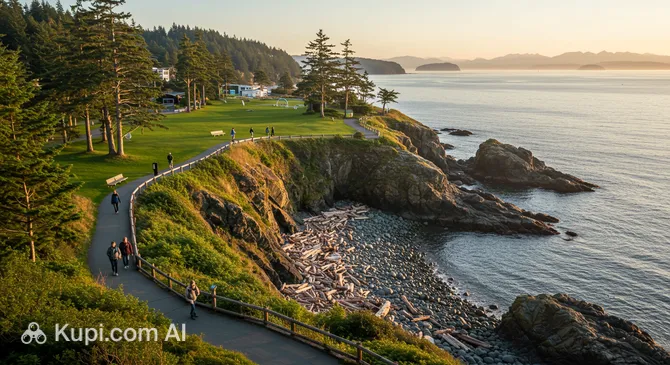
Jack Point and Biggs Park. Source: Kupi.com AI

The uniqueness of this place lies in its location along the scenic Nanaimo River estuary. Jack Point was once a separate island, accessible only at low tide, but today it is connected to Biggs Park, forming a single space for exploration. The park remains largely untouched by civilization, allowing you to fully experience the wild coastal atmosphere of the Pacific Ocean.

The park's main pride is its panoramic views. From the tip of the point, there is a stunning vista of the city center, Gabriola Island, and majestic ferries passing by. This is not just a place for a walk, but a natural gallery sculpted by wind and water over thousands of years.

Contacts

For the latest information on trail conditions or planned maintenance in the park, you can consult the city's official resources.

Official website nanaimo.ca
Address Nanaimo, BC V9X 1H6, Canada
Google Maps Open map

What to Do

The main activity in the park is, of course, hiking along the scenic coastal trail. A loop route of about 2.5 km takes you through shaded forests to open rocky bluffs. Here, you can see true geological wonders: sandstone shelters and whimsical shapes carved by the waves. At low tide, be sure to look into the tide pools—they are entire mini-ecosystems with sea stars and crabs.

Wildlife enthusiasts will be thrilled by the opportunity to spot local inhabitants. Armed with binoculars, you can see majestic bald eagles gracefully circling in the sky, as well as seals, sea lions, and otters frolicking in the coastal waters. If you're lucky, you might even see the fins of orcas or porpoises on the horizon.

Jack Point is deservedly considered one of the best spots in the region to watch the sunset. As the sun dips below the horizon, painting the sky and estuary waters in golden-pink hues, it creates a perfect setting for photography. Don't forget to bring a blanket and a picnic basket to enjoy this moment in a silence broken only by the cries of seagulls and the sound of the surf.

Getting There

Getting to this natural sanctuary is easy: the park is located in the southern part of Nanaimo, near the Duke Point ferry terminal. If you're planning to drive, head towards 655 Jackson Road, where a designated parking lot is available. We strongly recommend leaving your car only in this area, as parking along the Duke Point Highway is prohibited and may result in penalties.

From the parking lot, your journey to the natural beauty begins through a special pedestrian tunnel. The main trail starts immediately on the other side. The entire route is well-marked, and it's virtually impossible to get lost. The first 300 meters of the path are fully wheelchair accessible, making the park welcoming for all types of visitors.

If you prefer public transport or a taxi, you can easily reach the park entrance from downtown Nanaimo. A taxi ride takes about 10–15 minutes, which is a convenient option for those who want to enjoy their walk without worrying about finding a parking spot during peak hours.

History & Facts

Jack Point was named after Jack Doholt, a hardworking farmer who settled on this point in the mid-19th century. For forty years, starting in the 1860s, he provided the residents of Nanaimo with fresh hay and milk. Interestingly, in those days, Jack Point was a full island at high tide and was only later connected to the city's mainland.

The second part of the name—Biggs Park—commemorates John Biggs. He was a carpenter and miner who worked for the famous Hudson’s Bay Company before settling on these lands. The history of these individuals is inextricably linked to the development of the region, giving a walk through the park a special historical context.

It is also important to remember the deep roots of the indigenous population. This territory holds great cultural significance for the Snuneymuxw people. Attentive travelers may notice traces of ancient presence here—unique wood and stone carvings that testify to the centuries-old connection between the indigenous peoples and this land and sea.

The park's geological past is equally impressive. The local sandstone and mudstone cliffs were formed over millions of years. Constant exposure to wind and salt spray from the ocean has created whimsical wave-like platforms and caves, which are today considered a classic example of the Gulf Islands landscape.

Time Needed

To take a leisurely stroll along the loop route and soak in the views, most visitors need about 1 to 1.5 hours. The main trail is approximately 2.5 kilometers long and does not require special physical training, although the presence of stairs adds a bit of dynamic movement to the walk.

If you plan on doing some photography, having a picnic on the shore, or waiting for the famous sunset, it's better to set aside up to 3 hours for your visit. This is especially true during low tide, when fascinating geological formations and tide pools are revealed, which can keep both adults and children engaged for quite a while.

Working Hours

The park is open to the public daily, allowing guests to choose a convenient time for a visit on both weekdays and weekends. The territory is accessible from early morning until late evening:

Monday — Sunday: from 06:00 to 23:00.

Visiting the park at different times of day offers different experiences: the morning hours are ideal for birdwatching, while the evening is perfect for contemplating sunsets over the bay.

Nearby

Exploring the surroundings of Jack Point and Biggs Park can significantly enrich your trip. The area around Nanaimo Harbour is filled with historical sites and scenic routes that allow you to dive deeper into the atmosphere of Vancouver Island.

After a breath of fresh air, you can head to the historic buildings of the city center or explore the region's industrial past. Below is a list of interesting places located within a few kilometers of the park:

Attraction Distance (km)
Gallows Point Light House 2.3
Halliburton multi-use path 2.9
Colvilletown 3.1
China Steps 3.2
The Bastion 3.3
Old City Quarter 3.7
Protection & Nanaimo No. 1 Airshaft 4.6
REGHQ Nanaimo (Decommissioned "Diefenbunker") 5.8
Japanese Herring Salteries & Shipyard 5.8
Hamilton Black Powder Works 6.4

Reached the end of the page?

That means the route is fully explored