Support

Postville

About

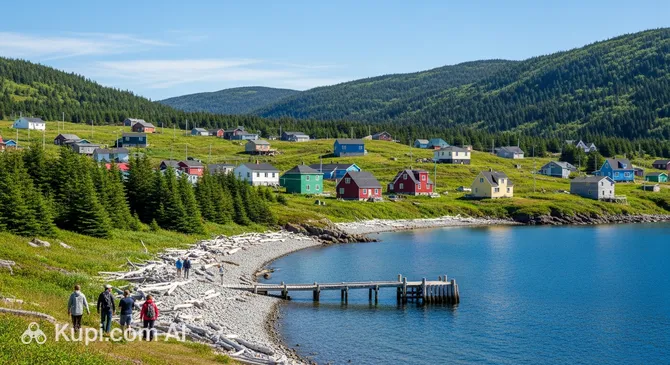
Welcome to Postville, a serene and welcoming Inuit community located in the province of Newfoundland and Labrador. Nestled deep within the majestic Kaipokok Bay, this remote settlement offers a truly authentic experience in northern Canada. With a population of approximately 200 people, the town maintains a peaceful and intimate atmosphere where visitors are often greeted with warm local hospitality.

Postville. Source: Kupi.Binoculars

The settlement has significant roots as a trading center, and exploring the history of Postville reveals its evolution from a 19th-century Hudson's Bay Company post to a modern community. Today, it serves as a gateway to the pristine wilderness of Nunatsiavut. The surrounding landscape is a haven for outdoor enthusiasts, featuring rolling hills and dense forests that are perfect for hiking and berry picking during the warmer months.

Travelers are drawn to the area for its exceptional natural beauty and abundant wildlife. Kaipokok Bay is a major highlight, offering world-class fishing opportunities for salmon and trout, as well as scenic boat tours to spot marine life. In the winter, the region transforms into a snowy wonderland ideal for snowmobiling and ice fishing. If you are seeking a quiet escape to connect with nature and experience the unique culture of the North, Postville is a destination worth discovering.

Weather Overview

The climate in this northern community is characterized by distinct seasons, offering a true subarctic experience. To help plan your activities, it is useful to review the detailed weather in Postville before your arrival. Generally, visitors can expect cold, crisp winters ideal for snow sports and mild, comfortable summers perfect for exploring the wilderness.

Winter brings the coldest temperatures, particularly in February, when the average temperature hovers around -16.9°C and can drop as low as -20.5°C. This season transforms the landscape into a snowy playground. Conversely, the summer months offer a pleasant respite. July is typically the warmest month, with average temperatures of 14.5°C and highs reaching nearly 19°C, providing excellent conditions for hiking and fishing.

Precipitation is a constant factor to consider when packing, although the volume is generally light. While the amount of rainfall or snow is often low, occurring around 2mm to 3mm, the frequency of precipitation is notable. You can expect about 9 to 15 wet days per month throughout the year, so bringing water-resistant clothing and layers is recommended to stay comfortable regardless of the season.

Interesting Facts

Beyond its scenic beauty, Postville holds fascinating details that define its unique character and heritage. From its deep historical roots to its geographical isolation, there are several key aspects that make this community truly special.

  • Part of Nunatsiavut: Postville is one of the southern communities within the autonomous region of Nunatsiavut. This distinction highlights its integral role in the self-governing Inuit territory, preserving a rich cultural identity within Newfoundland and Labrador.

  • "The Post": The town's name is a direct nod to its commercial origins. For generations, the area was known simply as "The Post" because of the Hudson's Bay Company trading station established there in the 19th century. The name "Postville" was officially adopted later to honor this history while marking its evolution into a village.

  • Remote Accessibility: Getting here is an adventure in itself, as there are no roads connecting the town to the rest of Canada. This remote settlement is accessible only by air or seasonal ferry, ensuring a peaceful atmosphere far removed from the hustle of highway traffic.

  • Archaeological Significance: The ground beneath the town holds ancient secrets. The Postville Pentecostal site is recognized as a major archaeological find, yielding significant artifacts from the Groswater Paleo-Eskimo culture. These discoveries prove that the area has been a vital settlement and hunting ground for thousands of years.

How to Get There

Reaching this remote community requires some planning, as it is situated in a roadless region of Northern Labrador. For a comprehensive guide on routes and logistics, you can read more about how to get to Postville. Most travelers arrive by air or, during the summer months, by coastal ferry service.

The city of Postville does not have a major international airport, so most visitors first fly into Goose Bay Airport (YYR) in the city of Happy Valley-Goose Bay. Located approximately 182 km from Postville, this is the primary transportation hub for the region. It handles a significant volume of annual passengers and serves as the main gateway for connecting flights to coastal communities. Since there are no roads connecting these towns, travelers typically transfer here to a smaller regional airline for the final leg of the journey.

Other nearby regional airports include the one in Nain (YDP), situated about 219 km away, and the airstrip in Rigolet (YRG), which is roughly 118 km from Postville. These facilities are much smaller than the hub in Goose Bay and primarily serve local traffic within Nunatsiavut. Travel from these locations also requires arranging air or marine transport, as ground transportation is not an option in this wilderness area.

For clarity, here is a summary of the main airports:

Airport Name City Passenger Traffic Km from City
Goose Bay Airport Happy Valley-Goose Bay Medium 182.2
Nain Nain Small 218.6
Rigolet Rigolet Small 117.6

Main Attractions

Although Postville is a small and remote community, it offers unique experiences for those who venture to this part of Nunatsiavut. The attractions here are deeply connected to the land, the sea, and the rich Inuit culture of the region. Visitors will find that the true beauty of the town lies in its unspoiled wilderness and the stories embedded in its landscape.

One of the most accessible and scenic features is the Postville Boardwalk. This wooden walking path is perfect for a leisurely stroll, guiding you through lush forest areas before descending toward the sandy shoreline. It provides an excellent vantage point for admiring the water and the surrounding terrain. As you walk, keep an eye out for local flora, such as the rare snowberry, and enjoy the fresh sea breeze that sweeps in from the Atlantic.

The lifeblood of the community is Kaipokok Bay, a stunning fjord-like inlet that stretches inland from the ocean. It is a paradise for outdoor enthusiasts, offering world-class opportunities for boating and fishing. In the summer, the waters are teeming with Arctic char and Atlantic salmon, while the bay itself serves as a historic waterway that was once a vital route for fur traders. Today, it remains the scenic heart of the town, perfect for photography and wildlife observation.

Across the water, the rugged silhouette of Post Hill dominates the horizon. This natural landmark is a favorite subject for photographers and nature lovers. While it adds to the dramatic scenery viewed from the town, the surrounding hills and backcountry trails offer adventurous visitors the chance to hike in the summer or snowmobile in the winter. The elevated terrain provides panoramic views of the settlement and the vast, untouched wilderness that defines Northern Labrador.

For those visiting during the warmer months, the Fun in the Sun festival is a highlight of the local calendar. This annual summer celebration brings the community together with events like barbecues, games, and traditional activities. It is a fantastic way for tourists to experience the genuine warmth and hospitality of the residents, offering a glimpse into the vibrant social life that thrives in this close-knit northern town.

Local Cuisine

The culinary landscape of Postville is deeply rooted in the traditions of the Inuit culture and the bounty of the surrounding wilderness. In this remote community, the concept of "farm-to-table" is replaced by "land-to-table," with a heavy reliance on what is locally known as Country Food. Visitors will find that the cuisine here is defined by freshness and simplicity, focusing on wild-harvested ingredients sourced directly from the land and the cold waters of the Atlantic.

Seafood is the cornerstone of the local diet, thanks to the town's location on Kaipokok Bay. Arctic char and Atlantic salmon are staples, often prepared in traditional ways such as smoking or drying to create a jerky-like snack known as pitsik. Fresh trout is also commonly pan-fried or baked. These dishes are frequently accompanied by bannock, a dense and comforting fried bread that is a quintessential part of any meal in Northern Canada, perfect for dipping in stews or serving with jams.

For those with a sweet tooth, the local berries are a true delicacy. The subarctic terrain produces an abundance of bakeapples (cloudberries) and redberries (partridgeberries) in the late summer and autumn. These tart and flavorful fruits are widely used to make rich jams, jellies, and desserts. You might be offered a slice of berry pie or fresh bannock topped with homemade preserves, offering a taste of the tundra's natural sweetness.

Beverages in Postville are simple and warming, designed to combat the northern chill. Tea is the undisputed drink of choice and plays a central role in social interactions; a pot is almost always brewing in local homes and gathering spots. While alcohol is available, the social drinking culture is low-key. The pristine local water, sourced from nearby freshwater supplies, is also exceptionally pure and refreshing.

Due to the small population of approximately 200 people, Postville does not have a commercial restaurant scene or street food markets. Instead, the food culture is centered around home cooking and community hospitality. Visitors typically enjoy meals at their accommodation, such as a local bed and breakfast or lodge, where hosts prepare hearty, home-style dishes. Community events, such as the summer festival, are also excellent opportunities to taste local favorites like grilled fish and wild game in a communal setting.

Travel Tips

Visiting a remote northern community like Postville requires a bit more preparation than your average city trip, as the isolation and rugged environment present unique challenges. To help you navigate your adventure in Nunatsiavut with confidence, here are some essential practical tips to ensure a safe and enjoyable experience.

  1. Clothing and Gear: The weather in Labrador can be unpredictable, so packing layers is key. In summer, bring a high-quality bug jacket or head net, as black flies and mosquitoes can be intense. Waterproof hiking boots are essential for the boggy terrain. If visiting in winter, you will need expedition-grade cold weather gear, including a heavy parka, insulated pants, and thermal boots, to handle temperatures that drop well below freezing.
  2. Transportation: Within the town itself, there is no public transport, taxis, or car rental service. The settlement is small enough to navigate entirely on foot. For travel further afield or into the wilderness, locals rely on ATVs in the summer and snowmobiles in the winter. You may be able to arrange a ride or a tour with a local guide, but do not expect to rent a vehicle for self-driving.
  3. Finances: The local currency is the Canadian Dollar (CAD). It is highly recommended to bring sufficient cash with you before arriving, as banking facilities are virtually non-existent and ATM availability can be unreliable. While the main general store typically accepts credit and debit cards, smaller transactions or purchasing crafts from local artisans may require cash.
  4. Health and Safety: There is a local community clinic staffed by nurses for basic medical needs, but serious emergencies require medical evacuation by air to a larger center. Be "bear aware" at all times; black bears and occasionally polar bears can roam near the town, so never wander into the wilderness alone without a guide or proper safety knowledge.
  5. Communication: English is the primary language spoken in Postville, though you may hear Inuktitut among older residents. Cell phone coverage is generally available within the community (primarily on the Bell network) but drops off quickly once you leave the town limits. Wi-Fi is available in some accommodations, but speeds may be slower than what you are used to in urban centers.
  6. Local Etiquette: The community is small and tight-knit, so a friendly wave or a "hello" to passersby is customary and polite. If you are invited into a local home, it is standard practice to remove your shoes at the door. Respect is paramount; always ask for permission before taking photographs of residents or their property.
  7. What to Avoid: Do not walk on or disturb woodpiles or equipment you see near homes or cabins; these are vital resources for survival in the North. Additionally, avoid complaining about the cost of groceries or supplies at the local store; shipping goods to remote locations is expensive, and locals are well aware of the high prices.
  8. Additional Tip: Be mindful of "Labrador Time." Life here moves at a slower, more relaxed pace dictated by the weather and the seasons rather than a clock. Service might be more casual than in a big city, so patience and a flexible attitude will go a long way in helping you connect with the locals.

By packing the right gear and respecting the local way of life, you will find that Postville is a warm and inviting destination despite its chilly climate. Embrace the quiet, the nature, and the hospitality, and you are sure to have an unforgettable journey in the Canadian North.

Entertainment & Nightlife

Entertainment in Postville is a world away from the crowded clubs and noisy bars found in major cities. In this intimate community of approximately 200 residents, evening activities are defined by tranquility, nature, and close-knit social gatherings rather than commercial venues. Visitors should not expect a bustling nightlife district or late-night dance floors; instead, the "nightlife" here is often provided by the spectacular skies and the peaceful atmosphere of the wilderness.

The most breathtaking evening attraction is undoubtedly the Northern Lights (Aurora Borealis). During clear nights, especially in winter, the lack of light pollution makes this remote settlement a prime location for viewing the celestial display. Simply walking to the edge of town, away from the few streetlights, offers a front-row seat to dancing ribbons of green and violet light. It is a serene and awe-inspiring experience that serves as the main event after the sun goes down.

Socializing in Postville tends to happen in private settings or at community hubs rather than in public bars. The local lifestyle revolves around visiting friends and family, and the atmosphere is warm and welcoming. Occasional events at the local Recreation Centre, such as bingo nights or community feasts, are popular ways to spend an evening and offer a genuine glimpse into Inuit culture. If you are looking to relax with a drink, it is best to do so quietly at your accommodation, as there are no dedicated pubs or nightclubs in the village.

When venturing out after dark, safety is primarily about the environment rather than crime. The streets are incredibly safe for walking, but there are no taxi services or public transport, so getting around is done entirely on foot. It is essential to carry a flashlight and dress in reflective gear, as street lighting is minimal. Be mindful of wildlife, particularly bears, which can occasionally wander near the settlement; it is advisable to stay within the main town area and avoid walking alone on the outskirts at night.

During the day, entertainment shifts from the quiet of the night to exploring the rugged outdoors. While you will not find amusement parks or large theaters, the landscape itself offers endless engagement. Visitors can spend their time hiking the nearby hills to catch panoramic views of the Atlantic or exploring the shoreline. Engaging with locals to hear stories of the land and its history provides a rich cultural experience that replaces the need for formal museums.

Parks & Museums

In the remote community of Postville, the concept of parks and museums is defined not by ticketed venues or manicured gardens, but by the boundless wilderness and the deep historical roots embedded in the landscape itself. Visitors here will not find traditional galleries; instead, they are invited to explore a living museum where the land tells the story of thousands of years of Inuit history and European trade.

Postville Boardwalk is the closest equivalent to a municipal park and serves as a central recreational space for locals and visitors alike. This wooden walking path winds through serene forested areas before opening up to the sandy shores of the waterfront. It is an ideal spot for a relaxing stroll, offering benches where you can sit and admire the view of the water while surrounded by native flora, including the rare snowberry plants that grow in the region.

The vast Kaipokok Bay acts as a natural aquatic park, providing a playground for boating, fishing, and wildlife observation. As the historic highway of the region, the bay is framed by rolling hills and offers access to pristine beaches and secluded coves that feel entirely untouched. Across the water lies Post Hill, a rugged natural landmark that beckons hikers with the promise of panoramic views over the settlement and the sweeping subarctic terrain.

While there is no formal building labeled as a museum, the Old Hudson's Bay Company Site stands as a significant historical marker. Known locally as "The Post," this area was the foundation of the modern community, serving as a trading hub for fur pelts in the 19th century. Walking near the site allows visitors to connect with the town’s colonial past and imagine the bustling activity of trappers and traders that once defined the local economy.

The region's deeper history is showcased at the Postville Pentecostal Archaeological Site, which offers a glimpse into the ancient past without glass display cases. Excavations here have revealed tools and artifacts from the Groswater Paleo-Eskimo culture, proving that this land has been a vital settlement for thousands of years. For those interested in culture, the community itself is the gallery; local artisans often create intricate grasswork and carvings that reflect the artistic heritage of Nunatsiavut.

For a truly authentic experience, ask a local guide about the best spots for berry picking in late summer. The hills surrounding the town are often carpeted with bakeapples and partridgeberries. Gathering these fruits is not just a pastime but a cultural tradition, offering a delicious way to connect with the land just as the residents have done for generations.

Getting Around

Due to the small size and remote nature of Postville, visitors will quickly discover that there is no conventional public transport system within the community. Unlike larger cities, you will not find buses, metros, trams, or scheduled shuttle services here. The settlement is compact, with a population of approximately 200 people, meaning that the entire town is easily navigable on foot. For most tourists, walking is the primary and most enjoyable way to get around, allowing you to take in the fresh air and scenic views at a leisurely pace.

In the absence of formal transit, the local "traffic" is defined by the seasons and the terrain. During the warmer months, All-Terrain Vehicles (ATVs) and pickup trucks are the standard modes of transport for residents moving supplies or traveling slightly longer distances. In the winter, the town transforms, and snowmobiles become the essential vehicle for navigating the snow-covered trails. While there are no rental agencies for these vehicles, visitors staying at local lodges may sometimes be transported by their hosts using these methods.

Since there is no ticketing system, travel passes, or transport apps, you do not need to worry about validating tickets or checking zone maps. If you do arrange a ride with a local guide or need boat transport to nearby areas in Kaipokok Bay, transactions are informal. Cash is the preferred and often the only accepted method of payment for these private arrangements. It is advisable to agree on a price beforehand if you are hiring a local for a specific trip or tour.

Commercial taxi services and ride-sharing platforms like Uber or Lyft do not exist in Postville. If you require assistance moving heavy luggage from the airstrip or the ferry dock to your accommodation, it is best to coordinate this with your host prior to arrival. Most locals are incredibly helpful and accustomed to assisting visitors, but relying on spontaneous taxi availability is not an option. For those exploring on foot, always dress for the weather—sturdy, waterproof boots are recommended for the unpaved roads, and reflective clothing is a good idea if you are walking during the darker winter evenings.

Accommodation

Accommodation in Postville is reflective of its status as a small, remote northern community. Visitors should not expect international hotel chains, luxury resorts, or sprawling hostels. Instead, the options are limited to a few local establishments, typically small inns or bed-and-breakfast style lodgings. These facilities offer a warm, home-like atmosphere where hospitality is personal, and hosts often go out of their way to ensure guests are comfortable in the rugged environment.

Given the compact size of the town, location is rarely an issue. Any accommodation you find will be centrally located, within walking distance of the airstrip, the ferry wharf, and the general store. Staying in the heart of the community allows for easy access to the waterfront and the boardwalk, making it convenient for travelers who want to explore the settlement on foot without the need for transportation.

Because there are very few rooms available in the entire town, securing a place to stay requires advanced planning. It is highly recommended to book your accommodation as early as possible, especially if you are visiting during the summer months or during community festivals, when the limited capacity can fill up quickly. Spontaneous arrival without a reservation is risky and not creating a booking plan beforehand could leave you without a place to stay.

In terms of pricing, rates are generally in the mid-range to higher bracket, reflecting the high cost of operating and shipping supplies to Northern Canada. Amenities are typically comfortable but basic, often including shared or private bathrooms, Wi-Fi, and meals provided by the host since there are no standalone restaurants. Booking is rarely done through major online travel aggregators; instead, you will likely need to contact the establishment directly by phone or email to confirm your reservation.

Nearby Cities

Nearby Cities:

Situated in the vast and rugged landscape of Nunatsiavut, Postville is defined by its isolation. Unlike towns in more populated regions, "nearby" cities here are separated by hundreds of kilometers of wilderness and water. There are no roads connecting these communities, so travel between them is conducted almost exclusively by small aircraft or, during the ice-free summer months, by coastal ferry service.

The most important regional connection is Happy Valley-Goose Bay, located approximately 182 km to the southwest. As the primary transportation and service hub for Labrador, it is the main gateway for visitors entering the region. Residents and tourists alike rely on this town for major supplies, medical services, and connecting flights to the rest of Canada.

To the north lies Nain, the administrative capital of the Nunatsiavut government. Although it is about 218 km away, it shares a deep cultural bond with Postville as part of the Inuit land claims area. Further afield are communities like Wabush in western Labrador and St. Anthony on the tip of the Northern Peninsula, both of which are significantly more distant and require complex travel logistics to reach.

The following table lists the closest cities and towns, providing a perspective on the distances involved in this remote region:

City Name Population Distance (km)
Happy Valley-Goose Bay 8,000 182
Nain 1,125 218
Blanc-Sablon 1,200 426
St. Anthony 2,300 482
Wabush 2,000 517

Shopping & Souvenirs

Shopping in Postville is a unique experience defined by the community's remote location and small population of approximately 200 people. Unlike larger cities in Canada, you will not find bustling retail districts, designer boutiques, or extensive commercial strips here. Instead, the shopping scene is purely functional and deeply community-oriented, catering primarily to the daily needs of residents. For visitors, this simplicity offers a glimpse into the self-sufficient lifestyle of Northern Labrador, where the focus is on essentials rather than luxury.

There are no designated shopping streets or districts in the traditional sense. The commercial activity of the town revolves almost entirely around the local general store. This single establishment serves as a "one-stop-shop" for the entire village, stocking everything from groceries and fresh produce to hardware, clothing, and household supplies. It is the social and economic hub of the town, where you can pick up supplies for a hike or grab a snack while chatting with locals.

Travelers expecting large shopping malls or department stores will not find them in Postville. The infrastructure is built to support a small, close-knit community, so large-scale retail complexes are non-existent. The charm of visiting such a place lies in its lack of commercialization, allowing you to escape the consumer-driven atmosphere of urban centers.

While there are no permanent daily markets, the spirit of trade is alive in the form of local craftsmanship. You won't find a formal flea market, but community events and festivals often feature tables where residents sell homemade goods. These pop-up opportunities are the best places to find baked goods, jams made from local bakeapples, and handcrafted items that reflect the region's heritage.

For souvenirs, the true treasures of Postville are authentic Inuit arts and crafts. The region is renowned for its skilled artisans who create beautiful items using traditional methods. Look for intricate grasswork (woven baskets and mats), which is a specialty of the area, as well as hand-carved sculptures made from soapstone, antler, or bone. Warm, hand-knitted accessories like socks and mitts are also popular and practical keepsakes. These items are rarely sold in a formal shop; instead, you may need to ask around or visit the town office to connect directly with local artists.

When planning to make purchases, be mindful of the opening hours and payment methods. The general store typically operates during standard business hours but may close earlier than you are used to, and it is often closed or has reduced hours on Sundays. While the main store usually accepts credit and debit cards, cash is absolutely essential if you plan to buy crafts directly from locals or pay for small services. Banking facilities are limited, so it is highly recommended to bring sufficient Canadian currency with you.

regarding taxes, the standard Goods and Services Tax (GST) and Harmonized Sales Tax (HST) apply to most purchases in Newfoundland and Labrador. There is no specific tax-free shopping program within the town itself for tourists. Visitors should expect prices for groceries and goods to be higher than in southern parts of the country, reflecting the significant cost of shipping supplies to this remote northern location.
Reached the end of the page?

That means the route is fully explored