Support

Hopedale

About

Hopedale, known traditionally as Agvituk or "The Place of the Whales," is a small but culturally significant community located on the rugged northern coast of Labrador. As the legislative capital of the Nunatsiavut government, this settlement plays a vital role in the Inuit region within Canada. With a population of approximately 130 residents, it offers an intimate and authentic atmosphere for travelers seeking to explore the remote beauty and resilience of the North.

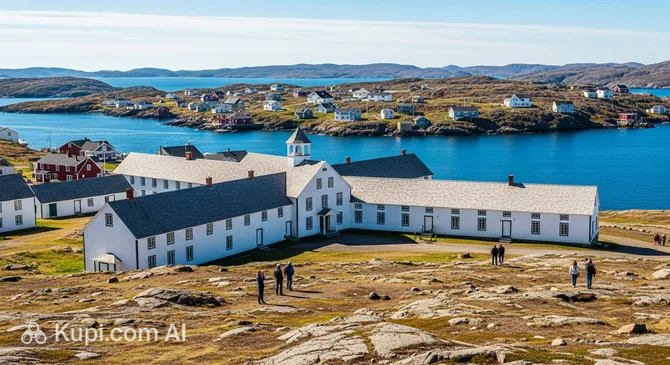
The town is renowned for its deep historical roots, representing a unique convergence of Inuit culture and European influence. It was established as a permanent settlement by Moravian missionaries in the late 18th century. You can delve deeper into the fascinating history of Hopedale by exploring its well-preserved heritage sites. The community is home to the Hopedale Moravian Mission Complex, a National Historic Site that includes some of the oldest wooden-frame buildings in eastern Canada, offering a window into the life of early missionaries and their interactions with the local Inuit population.

Beyond its architectural treasures, Hopedale offers breathtaking natural surroundings that define the wild character of the province of Newfoundland and Labrador. Visitors are often treated to spectacular views of the barren, rocky coastline, and it serves as an excellent vantage point for viewing majestic icebergs drifting along the Atlantic during the warmer months. Whether you are a history enthusiast or a lover of pristine landscapes, a visit to this unique northern outpost promises a memorable and educational journey.

Weather Overview

The climate in Hopedale is characterized by long, cold winters and short, cool summers, typical of the rugged northern Labrador coast. Because conditions can be challenging, it is essential to check the weather in Hopedale before packing for your trip. The region experiences a subarctic climate where temperatures vary significantly between the freezing winter months and the milder summer season.

Winters are harsh, with January and February being the coldest months; average temperatures drop to around -16.8°C, and minimums frequently plummet below -20°C. Conversely, the summer offers a brief but pleasant respite. August is generally the warmest month, with average temperatures reaching approximately 13.1°C and daily highs peaking near 16.6°C, making it the most comfortable time for outdoor exploration.

Precipitation is a frequent occurrence throughout the year, although often falling as light rain or snow rather than heavy downpours. While the recorded accumulation is low, the number of "wet days" is quite high, ranging from 8 to 15 days per month. Visitors should expect cool, often damp conditions during the warmer months and persistent snow and ice during the winter.

Interesting Facts

Beyond its main historical attractions, Hopedale holds fascinating stories that reveal its strategic and cultural importance throughout the centuries. Here are some intriguing facts about this remote community that often surprise visitors.

  • The community is home to the oldest timber-frame buildings in Atlantic Canada. Constructed by German Moravian missionaries starting in 1782, the mission buildings have survived hundreds of harsh winters and stand today as a testament to 18th-century architecture and resilience.

  • Hopedale played a strategic role during the Cold War as the site of a United States military radar base. Known as the Hopedale Air Station, this facility was part of the Pinetree Line, a series of radar stations established in the 1950s to detect potential aerial threats across the continent.

  • Despite its small size, the town serves as the legislative capital of the Nunatsiavut Government. While the administrative center is located further north in Nain, the Nunatsiavut Assembly meets here, making it a pivotal hub for Inuit self-governance and political decision-making in the region.

  • The town remains completely disconnected from the North American road network. There are no highways leading in or out; access is exclusively by air or, during the ice-free summer months, by coastal ferry, preserving its atmosphere of true isolation.

How to Get There

Reaching this remote community on the rugged Labrador coast is an adventure in itself, as the town is not connected to the North American road network. Visitors typically arrive by air or, during the ice-free summer months, by coastal ferry. For a comprehensive guide on planning your journey, you can read more about how to get to Hopedale.

The most significant regional transport hub is Goose Bay Airport (YYR), located in the town of Happy Valley-Goose Bay. This facility is approximately 239 km south of Hopedale and handles the majority of traffic entering the region. Since there are no roads linking the two towns, travelers flying into Goose Bay Airport must connect to a local airline or the marine ferry service to complete their journey. The airport serves as a vital lifeline for the north coast, managing a medium volume of passenger traffic annually.

Another key access point in the vicinity is the airport in Nain (YDP), situated roughly 152 km to the north. Located in the town of Nain, this smaller airport supports the northern communities of Nunatsiavut. Additionally, travelers may transit through the facility in Rigolet, which is about 182 km away. As with the other hubs, travel from Nain or Rigolet to Hopedale requires a connecting flight or boat trip, as ground transport is not an option in this wild terrain.

For clarity, here is a summary of the main regional airports nearby:

Airport Name City Passenger Traffic Km from City
Goose Bay Airport Happy Valley-Goose Bay Medium 238.8
Nain Nain Small 152.3
Rigolet Rigolet Small 181.6

Main Attractions

The most significant landmark in the community is the Hopedale Moravian Mission Complex, a designated National Historic Site that stands as a testament to the region's enduring history. Established in 1782, this collection of buildings includes some of the oldest wooden-frame structures in eastern Canada, surviving centuries of harsh weather. Visitors can explore the mission house, church, and storehouses to gain insight into the early interactions between Moravian missionaries and the Labrador Inuit. The complex is not just an architectural marvel but a vital record of the cultural shifts that shaped the coast.

For a look at the modern political life of the region, the Nunatsiavut Assembly Building is a must-see. As the legislative capital of the Nunatsiavut Government, Hopedale hosts this striking structure, which was designed to reflect Inuit culture and traditions. The building's facade features a unique igloo-inspired design, while the interior showcases beautiful tiling made from local labradorite stone. It serves as the heart of self-governance for the Labrador Inuit and is a source of great local pride.

History enthusiasts will also find the Former Hopedale Air Station to be a fascinating site. Located on the hills overlooking the town, this abandoned radar station was originally part of the Pinetree Line and later the Mid-Canada Line during the Cold War era. While the site is a relic of 20th-century military history, the hike up to the area offers another reward: spectacular panoramic views of the town, the harbour, and the vast, rocky coastline that stretches out into the Atlantic.

To deepen your understanding of the local heritage, the Agvituk Historical Society Museum offers a curated collection of artifacts and stories. Often associated with the mission complex, the museum preserves items that range from traditional Inuit tools to Moravian religious objects. It provides an intimate look at the daily lives of the people who have called this remote "Place of the Whales" home for generations, bridging the gap between the ancient past and the present day.

Local Cuisine

The culinary landscape of Hopedale is deeply rooted in the traditions of the Labrador Inuit, relying heavily on what is locally known as "country food." In this remote coastal community, the diet is defined by the harvest from the land and the freezing Atlantic waters. Visitors will find that fresh, wild ingredients take precedence over processed goods, with Arctic char and Atlantic salmon being staples. These fish are prepared in various ways, from being smoked or pan-fried to being air-dried to create a traditional jerky-like snack known as pitsik.

Meat also plays a significant role in the local diet, reflecting the hunting heritage of the Nunatsiavut region. Dishes often feature wild game such as seal, goose, or ptarmigan, which are valued for their nutritional warmth during the long, cold winters. A beloved accompaniment to many meals is bannock (often called flummies in Newfoundland and Labrador), a simple but hearty fried or baked bread that is perfect for dipping in stews or serving with butter and jam.

For those with a sweet tooth, the subarctic tundra provides a bounty of unique berries that are harvested in late summer and autumn. Bakeapples (cloudberries) and partridgeberries (lingonberries) are local treasures, often preserved as jams or used in desserts. You might also encounter suvalik, a traditional mixture of berries whipped with fat or fish roe, offering a distinct taste of Inuit gastronomy that has sustained the community for generations.

Dining out in Hopedale is a unique experience, as the town does not have standard commercial restaurants or fast-food chains. Instead, the food culture revolves around home cooking and genuine hospitality. Visitors typically eat at the dining room of the local inn, which serves hearty, home-style meals often incorporating local ingredients. Community feasts are also central to the food scene, where sharing the catch of the day is a way of life. When it comes to drinks, hot tea is the universal sign of welcome in every home, while the local water is renowned for its exceptional purity and crisp taste.

Travel Tips

Visiting a remote northern community like Hopedale requires a bit more preparation than the average vacation, but the reward is a truly authentic experience in the heart of Nunatsiavut. To help you make the most of your journey to the "Place of the Whales," here are some practical tips to ensure your stay is comfortable and respectful of local customs.

  1. Pack for all four seasons. The weather on the Labrador coast is unpredictable. Even in summer, temperatures can drop quickly, so bring warm layers, a windproof and waterproof jacket, and sturdy hiking boots. If you are visiting in July or August, a high-quality insect repellent or a bug jacket is absolutely essential, as blackflies and mosquitoes can be intense. In winter, thermal underwear, a heavy parka, and insulated boots are mandatory.

  2. Expect to walk everywhere. Hopedale is a small, compact community with no public transportation, taxis, or car rental agencies. The entire town is walkable, and you can easily reach the hotel, store, and historic sites on foot. Locals primarily get around using ATVs in the summer and snowmobiles in the winter; you may be able to arrange a tour with a local guide, but do not expect to rent a vehicle yourself.

  3. Bring sufficient cash. The currency used is the Canadian Dollar (CAD). While the local hotel and the Northern Store (the main grocery and general goods shop) generally accept credit and debit cards, telecommunication outages can occur, rendering card machines useless. There are no banks in town, and ATM availability is not guaranteed, so carrying enough cash for your entire stay is a wise precaution.

  4. Be self-sufficient with health needs. The community is served by a local clinic with nursing staff, but there is no hospital or pharmacy. For serious medical emergencies, patients must be airlifted to Happy Valley-Goose Bay or St. John's. Ensure you bring an adequate supply of any prescription medications you need, as well as a basic first-aid kit. Additionally, always be "bear aware" if you venture to the outskirts of town, as polar bears and black bears can be present.

  5. Communication and connectivity. English is widely spoken and understood by almost everyone in Hopedale, so you will have no trouble communicating. The local language is Inuktitut; learning a simple phrase like Nakummek (thank you) is a great way to show respect. Cell phone service is available but is typically limited to major carriers like Bell Aliant, and data speeds may be slower than what you are used to. Wi-Fi is generally available at the local inn.

  6. Respect local etiquette and privacy. The community is tight-knit and friendly. It is customary to smile, wave, or say "hello" to people you pass on the road. However, please be mindful of privacy; always ask for permission before taking photographs of locals, their children, or their private homes. When entering the hotel or a private residence, it is polite (and often expected) to remove your shoes at the door to keep the interior clean from mud and dust.

  7. Avoid wandering into the wilderness alone. The terrain surrounding Hopedale is rugged and beautiful but can be dangerous for the unprepared. Do not hike far from the town limits without informing someone of your plans or, better yet, hiring a local guide. Weather conditions can change rapidly, turning a simple walk into a disorientation hazard due to fog or snow squalls.

  8. Plan your meals in advance. There are no standard restaurants or fast-food chains in Hopedale. Dining is typically available at the local hotel's dining room, which serves home-cooked meals. Alternatively, you can buy groceries at the store, but be prepared for significantly higher prices than in southern areas due to the cost of air freight. It is often helpful to bring some non-perishable snacks with you.

By keeping these practicalities in mind, you will be well-equipped to enjoy the stunning landscapes and warm hospitality that define this unique corner of Labrador. A trip to Hopedale is an adventure into a different way of life, where the connection between the land and the people remains strong and vibrant.

Entertainment & Nightlife

Nightlife in Hopedale is a world away from the bustling clubs and neon-lit districts of major cities. In this remote Inuit community, the evening atmosphere is defined by tranquility, warm hospitality, and a deep connection to nature. Instead of bar-hopping or loud dance floors, entertainment here revolves around community gatherings, storytelling, and the spectacular displays of the natural world. Visitors should adjust their expectations to embrace a slower, more intimate pace where a "night out" often means a hearty meal with locals or watching the sky dance with color.

The primary social hub for visitors is the Amaguk Hotel. Located centrally near the harbour, its dining room and lounge area serve as the town's main meeting point in the evenings. Here, you can enjoy a quiet drink, savor a meal of locally caught Arctic char, and chat with residents who are often eager to share stories about life on the Labrador coast. The atmosphere is casual and welcoming; there is no dress code, but comfortable, warm clothing is the norm. It is the perfect place to unwind after a day of exploration, offering a cozy refuge from the arctic winds.

For a glimpse into the local social fabric, look for events at the Nanuk Community Centre. This modern facility is the heartbeat of Hopedale's recreational life. In the evenings, it often hosts community bingo games, feasts, or gatherings that are central to the Inuit way of life. While it is not a nightclub, attending a public event here offers a genuine cultural experience that few tourists get to see. If you are visiting during the spring, the town comes alive with the Ethel Pijogge Memorial Festival, featuring musical entertainment and traditional games that often extend into the evening hours.

The most breathtaking "nightlife" in Hopedale takes place outdoors. During the fall and winter months, the lack of light pollution makes the town a prime location for viewing the Northern Lights (Aurora Borealis). The green and violet bands dancing across the sky provide a show far superior to any laser display. For the best views, walk slightly away from the streetlights near the harbour—but always stay within the town limits for safety. In the summer, the "entertainment" is the Midnight Sun, where twilight lingers for hours, allowing for late-night photography and walks along the rocky shore.

When planning your evening, keep in mind a few practical tips. Alcohol is available but regulations in Nunatsiavut communities can vary, so it is respectful to consume it primarily within licensed venues like the hotel. Hopedale is a cash-based economy in many respects; while the hotel accepts cards, it is wise to carry cash for smaller community events. There are no taxis, so getting around involves walking. The town is small and safe from crime, but the real danger lies in the wildlife. Polar bears can be present in the area, especially at night. It is critical to stay in well-lit areas, avoid walking alone on the outskirts of town after dark, and always be aware of your surroundings.

Before the sun goes down, daytime entertainment offers its own rewards. A visit to the Hopedale Moravian Mission Complex provides a fascinating look at the 18th-century structures that shaped the town's history. You can also explore the local museum or take a hike to the old American radar station for panoramic views. Whether day or night, the entertainment in Hopedale is about witnessing the resilience and beauty of this unique northern frontier.

Parks & Museums

In the remote community of Hopedale, cultural heritage and natural beauty are inextricably linked. While the town does not feature manicured city parks or sprawling art galleries in the traditional sense, its "green spaces" are the vast, rugged landscapes of the Labrador coast, and its museums are living historic sites that tell the story of the Inuit and Moravian encounter. Visitors here can expect an immersive experience where the outdoors serves as a playground and the buildings themselves are the exhibits.

For those seeking fresh air and scenic views, the wilderness surrounding the town acts as a boundless natural park. A popular excursion is the hike up to the Former American Radar Station. Situated on the high hills overlooking the community, this area offers a challenging walk through the subarctic terrain. The reward at the summit is a panoramic view of the town, the intricate coastline, and the endless Atlantic Ocean—a perfect spot for photography and spotting icebergs in the early summer.

The Hopedale Harbour and its shoreline serve as the community's connection to the sea. Walking along the rocky waterfront provides a peaceful escape where the silence is broken only by the sound of waves and seabirds. This natural area is not just scenic but functional, as it is the hub of local life where hunters and fishermen depart and return. In the winter, the frozen harbour transforms into a highway for snowmobiles, while in late summer, the surrounding hillsides become a destination for berry picking, a cherished local tradition.

The cultural heart of the town is undoubtedly the Hopedale Moravian Mission Complex. As a National Historic Site, it functions as an open-air museum comprising some of the oldest wooden buildings in Canada. The complex includes the original Mission House, built in 1782, and the church. Walking through these structures offers a tangible connection to the past, with architectural details that have withstood centuries of harsh weather. It provides a fascinating look at the daily lives of the early missionaries and the evolution of the community.

Within the mission complex or associated buildings, you will find the collections of the Agvituk Historical Society Museum. This small but significant institution preserves the material culture of the region. The exhibits typically feature a mix of traditional Inuit tools, clothing, and crafts alongside Moravian religious artifacts and household items. It is an intimate space that offers deep insight into how the Labrador Inuit adapted to European influence while maintaining their distinct cultural identity.

Architecturally, the modern Nunatsiavut Assembly Building stands as a striking counterpoint to the historic mission. Designed to resemble a traditional igloo, this legislative center is a masterpiece of cultural expression. Its interior features beautiful tile work made from labradorite, the shimmering local stone. While it is a government building, it is also a monument to the resilience and self-governance of the Labrador Inuit, making it a significant cultural landmark for visitors to admire.

For a truly authentic experience, try to visit during the late summer when the hills are rich with bakeapples (cloudberries). Asking a local for the best spot to find these prized berries can lead to a wonderful afternoon on the land. Additionally, if the museum or church appears closed, do not hesitate to ask at the town office or the local hotel; in this tight-knit community, someone is usually happy to open the doors and share the history with interested travelers.

Getting Around

Travelers planning a visit to Hopedale should be aware that there is no formal public transportation system within the community. Due to its small population of approximately 130 residents and its compact layout, the town does not utilize buses, trams, metros, or scheduled shuttles. The infrastructure consists primarily of gravel roads and trails, meaning the standard urban transit options found in larger cities are entirely absent.

The most practical and common way to navigate the town is simply by walking. The community is small enough that visitors can reach all major points of interest—including the Amaguk Hotel, the Moravian Mission Complex, the Northern Store, and the airstrip—on foot within minutes. The terrain includes hills and unpaved surfaces, so comfortable, waterproof hiking boots are the best "ticket" you can invest in for your daily commute around the settlement.

Regarding payment systems and travel passes, none are applicable here. Since there is no public transit network, there is no need for travel cards, mobile apps, or ticket validation machines. If you arrange an informal ride with a local to transport heavy luggage from the airstrip or ferry dock, transactions are typically handled in cash (CAD). It is advisable to carry small bills, as electronic payment terminals are not available for private vehicle transfers.

In terms of alternatives to walking, the local "traffic" consists almost exclusively of ATVs (all-terrain vehicles) in the summer and snowmobiles in the winter. There are no commercial car rental agencies, bike sharing schemes, or official taxi companies. While you cannot typically rent a vehicle for self-driving, local guides may offer tours or transport via snowmobile or boat for specific excursions. These arrangements should be made in advance through your accommodation or the community office.

A unique aspect of transport in this region is the reliance on the marine ferry service during the ice-free season (usually June to November). While this is technically inter-city transport connecting Hopedale to other coastal towns, the arrival of the ferry is a major event. The ferry terminal is centrally located, and for many, the ship serves as the primary link to the outside world. Tickets for the ferry are purchased at the terminal, but for movement strictly within Hopedale, your legs remain your primary mode of transport.

For a smooth experience, tourists should be prepared for the elements. There are no bus shelters or heated stations to wait in. In winter, temperatures can drop significantly, so dressing in thermal layers is mandatory even for short walks. In summer, the roads can be dusty or muddy. By understanding that "transport" here means a brisk walk in the fresh northern air, you will be well-prepared to explore the town comfortably.

Accommodation

Accommodation options in Hopedale are extremely limited, reflecting the small size and remote nature of this northern Labrador community. Unlike larger tourist destinations with a wide array of hostels, chains, and luxury resorts, visitors here will typically find only one primary commercial establishment dedicated to travelers. The lodging landscape is functional and cozy, designed to provide a comfortable base for government officials, workers, and the adventurous tourists who make the journey to this isolated coast.

The main place to stay is the Amaguk Hotel (often referred to as the Amaguk Inn), which serves as the hospitality hub for the entire town. Offering standard rooms with essential amenities such as private baths, television, and Wi-Fi, it provides a warm refuge from the subarctic elements. The hotel also houses the community's main dining room and lounge, making it not just a place to sleep, but the center of social life where visitors can mingle with locals and enjoy home-cooked meals.

In terms of location, the entire town is compact and walkable, so staying at the local hotel places you within minutes of all key points of interest. The accommodation is conveniently situated near the harbour and is a short distance from the airstrip, eliminating the need for complex transport arrangements. Whether you are visiting the nearby Moravian Mission Complex or heading out for a boat tour, you will find that everything is easily accessible on foot from your doorstep.

Booking Tips and Prices: Due to the scarcity of rooms and the steady flow of business travel, it is highly recommended to book your accommodation well in advance. Do not rely on finding a room upon arrival. Prices are generally in the mid-to-high range, reflecting the high operational costs of running a business in a fly-in community. Booking is typically done by phone or email directly with the hotel, as availability may not always be listed on major global booking platforms.

Nearby Cities

While Hopedale offers a unique glimpse into life on the northern coast, it is often just one stop on a broader adventure through Newfoundland and Labrador and the surrounding regions. Several significant hubs and communities lie within the wider area, serving as vital connections or distinct destinations for those exploring this vast and rugged territory.

As the primary regional transport node, Happy Valley-Goose Bay is the most likely gateway for travelers entering the area. It is a key destination where visitors can discover the region's military aviation history and experience a blend of modern and indigenous cultures. Further to the south, on the tip of the Great Northern Peninsula, St. Anthony offers a compelling mix of history and nature, renowned for its association with the Grenfell Mission and as a prime location for viewing icebergs and whales.

For those interested in the industrial side of the province, Wabush in western Labrador provides a unique perspective on the massive scale of the region's iron ore mining operations. Travelers extending their journey might also consider these locations as part of a comprehensive northern itinerary.

City Population Distance (km)
Happy Valley-Goose Bay 8000 239
Kuujjuaq 2754 581
St. Anthony 2300 548
Wabush 2000 519
Blanc-Sablon 1200 493

These destinations highlight the diverse geography and culture found throughout this expansive part of Canada.

Shopping & Souvenirs

Shopping in Hopedale is a unique experience defined by the remote nature of the community rather than commercial variety. As a small, isolated town on the Labrador coast, it does not offer the retail therapy found in larger cities. Instead, shopping here is functional, focused on providing essential goods for residents and the necessary supplies for life in the subarctic. Visitors will find that the options are limited to basic necessities, with a few opportunities to purchase authentic local crafts that reflect the rich Inuit culture.

There are no shopping districts or bustling high streets in Hopedale. The retail activity is concentrated almost entirely in a single location: the **Northern Store**. Situated centrally within the community, this general store serves as the lifeline for the town, stocking everything from groceries and fresh produce to clothing, hardware, and outdoor equipment. For tourists, this is the place to pick up snacks, personal care items, or any gear you might have forgotten, though prices are significantly higher than in the south due to the cost of air freight.

Travelers should be aware that Hopedale does not have any shopping malls, department stores, or chain boutiques. The commercial infrastructure is designed strictly for the population of approximately 130 people. If you are looking for fashion, electronics, or luxury goods, you will not find them here. The charm of the town lies in its simplicity and lack of commercialization.

While there are no permanent markets, the community spirit often shines through in local gatherings. Occasionally, the **Nanuk Community Centre** may host craft fairs or community sales, particularly around holidays or festivals. These events are excellent places to meet locals and see the handmade goods that are produced within the town. It is worth checking the bulletin boards at the store or the hotel to see if any such events are scheduled during your visit.

For souvenirs, the true treasures of Hopedale are the handmade items created by local artisans. The region is famous for its intricate **Inuit art**, including soapstone carvings, beadwork, and traditional clothing made from seal skin or fur. You may also find jewelry made from **labradorite**, the shimmering mineral named after the region. Since there are no dedicated souvenir shops, the best way to purchase these items is to inquire at the **Amaguk Hotel**, the museum, or the town council office, where staff can often connect you directly with local craftspeople.

Store opening hours are generally consistent but limited compared to urban centers. The Northern Store is typically open from Monday to Saturday, with reduced hours or closure on Sundays. When it comes to payment, the store and hotel generally accept major credit and debit cards. However, due to the remote location, telecommunication outages can occur, rendering card machines temporarily useless. It is highly recommended to carry sufficient **cash (CAD)** to cover your purchases just in case.

Regarding taxes, the province of Newfoundland and Labrador applies a Harmonized Sales Tax (HST) of 15% to most goods and services. There is no general tax-refund system for international visitors purchasing goods in Canada, so tourists should expect to pay the full shelf price plus tax. Prices in Hopedale will already appear high due to shipping costs, so budgeting accordingly is essential.
Reached the end of the page?

That means the route is fully explored