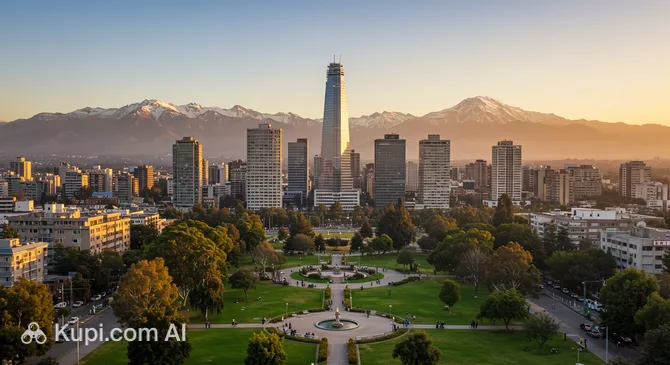
Las Condes is a showcase of modern Chile, a district where the rhythm of a business metropolis harmoniously blends with the comfort of upscale residential neighborhoods. Located in the eastern part of Santiago, this district is rightfully considered the financial heart of the capital. Here, skyscrapers of glass and steel stand alongside wide, leafy avenues, creating an atmosphere of prosperity and dynamic development.
Las Condes. Illustration.
Source: Kupi.com AI
The city's geographic location at the foot of the majestic Andes gives it a special charm: many offices and apartments offer breathtaking views of the mountain peaks. Las Condes covers an area of about 99 km² and has a population of nearly 300,000 people. It is a place where safety and comfort are top priorities, making it one of the most attractive areas to live and work in South America.
The rich history of this district follows a path from a quiet rural outskirts to an ultra-modern center. Among the city's main features are its well-maintained parks and modern architecture, known as "Sanhattan." Las Condes invites tourists to appreciate the high level of service, exquisite cuisine, and unique lifestyle that has become a benchmark for the entire region.
Weather Overview
A classic Mediterranean climate prevails in Las Condes, giving residents and guests a clear change of seasons. Summers are usually hot and dry, while winters are mild but fairly rainy. Due to its proximity to the Andes, the weather in Las Condes can be slightly cooler than in the historic center of Santiago, especially in the evening hours.
The summer period lasts from December to February, when daytime temperatures often fluctuate between 20°C and 30°C. Winter (from June to August) brings cooler temperatures ranging from 5°C to 15°C and the bulk of the annual rainfall. During the shoulder seasons, the weather remains comfortable—from 10°C to 25°C—which is ideal for walking through the commune's numerous parks.
It is worth noting that due to the terrain, temperature inversions sometimes occur in winter, affecting air clarity. Nevertheless, the abundance of greenery in Las Condes makes it one of the most environmentally friendly areas of the capital at any time of year.
Average monthly temperature
Average monthly precipitation
Interesting Facts
Official Status: Las Condes was granted the status of an independent commune on August 26, 1901, starting its history as a modest rural suburb of Santiago.
"Sanhattan" District: The business quarter earned its unofficial name due to its dense concentration of skyscrapers, reminiscent of Manhattan in New York.
Safety First: This district is considered one of the safest in the capital, and the police presence here is noticeably lower than in the center, thanks to overall prosperity and modern monitoring systems.
Urban Density: Despite the abundance of offices, Las Condes is one of the city's most spacious communes (99 km²), with nearly 3,000 residents per square kilometer.
Financial Pulse: The headquarters of most international corporations and banks operating in the Chilean market are concentrated here.
How to Get There
Las Condes is one of the most accessible districts in Santiago thanks to its developed transport network. The main way for international travelers to get here is by arriving at the capital's main airport, followed by using high-speed highways or the modern metro system. You can find more details on how to get to this part of the city on specialized transport resources.
The nearest and only major air hub is Arturo Merino Benítez International Airport (SCL). It is located approximately 25–30 kilometers from Las Condes. A taxi or transfer via the Costanera Norte highway will take between 40 and 90 minutes depending on traffic. Official shuttle buses are also available, taking passengers to major metro stations, from where it is easy to reach any point in the district.
Railway communication within the district itself is mainly represented by metro lines; however, Santiago's main train stations provide connections to the southern regions of the country. Reaching central stations like Estación Central from Las Condes is possible via a direct metro line in just 30 minutes. This is a convenient option for those planning to continue their journey by rail toward the wine regions or the coast.
Station
Passenger traffic
Distance
Estación Mapocho Cultural Center
6
11 km
Estación Central
10
14 km
Estación Rancagua
4
86 km
Estación Puerto
4
110 km
General Gutiérrez station
4
171 km
Main Attractions
Despite Las Condes being primarily a business center, it boasts unique sites that deserve attention. One such place is the Benedictine Monastery of the Holy Trinity. This architectural treasure is known for its minimalist design and incredible play of light inside the church, creating an atmosphere of absolute peace and contemplation against the backdrop of the city's hills.
Science and stargazing enthusiasts should definitely visit the National Astronomical Observatory. Located on Calán Hill, it not only offers informative tours about the universe but also serves as one of the best viewpoints, providing a panoramic view of all Santiago and its surrounding mountains.
Another gem of the district is the Church of San Vicente Ferrer in Los Dominicos. This historic building with its characteristic white towers is the center of the cultural village of the same name. Tourists come here to experience the spirit of the colonial past and visit the nearby craft workshops, where some of the city's best handmade products can be found.
Local Cuisine
The gastronomic scene in Las Condes is a true kaleidoscope of flavors, where traditional Chilean recipes meet world-class haute cuisine. You must try the classics here: Chilean ceviche made from the freshest fish and empanadas. The district is famous for its steakhouses serving choice meats and seafood restaurants with products delivered straight from the Pacific coast.
For lovers of Asian flavors and a cozy, home-like atmosphere, Mama Chau's will be a real discovery. This establishment has won the hearts of locals with its authentic dishes and sincere hospitality. If you are looking for something more dynamic and informal, you can stop by GoKarts, where food complements active recreation.
Dining culture in Las Condes is closely linked to modern gastro-markets, such as Mercado Urbano Tobalaba (MUT). Here, farm stalls, coffee shops, and street food corners are gathered under one roof. As for drinks, a visit to Las Condes is incomplete without tasting Chilean wines from the Maipo Valley. In the evening, locals prefer a refreshing Pisco Sour—the national cocktail made from grape brandy.
Travel Tips
A visit to Las Condes promises to be comfortable and safe if you follow a few simple recommendations from experienced travelers.
Clothing and Essentials: In Santiago, there are significant temperature fluctuations between day and night. Even in summer, it can be cool in the evening, so always bring a light jacket. Comfortable shoes are a must—the district is hilly, and you will likely do a lot of walking.
Transport: Buy a Bip! transport card immediately upon arrival, as cash is not accepted on buses. The metro is the fastest way to get around, but avoid it during peak hours.
Finances: The official currency is the Chilean Peso (CLP). Cards are accepted almost everywhere, including small coffee shops. However, for markets like Los Dominicos, it's worth having some cash on hand. Tips in restaurants are usually 10% and are often already included in the bill as "propina sugerida."
Health and Safety: Las Condes is a very safe area, but you should watch your bags in markets and on the metro. Tap water in Chile is considered drinkable, but due to its high mineral content, tourists are better off buying bottled water to avoid discomfort.
Communication: The official language is Spanish. In hotels and large restaurants in Las Condes, English is spoken, but knowing basic phrases ("Hola," "Gracias," "¿Cuánto cuesta?") will help you communicate with locals.
Local Etiquette: Greetings are often accompanied by a light kiss on the right cheek (even between people who barely know each other). Be polite and do not rush waiters—a measured pace of life is the norm here.
What to Avoid: It is best not to discuss sensitive political topics or historical conflicts. Also, refrain from smoking in public parks and enclosed spaces—fines can be high.
Sun Activity: Due to the proximity to the mountains and clear air, the sun here is very strong. Always use sunscreen, even if the sky appears cloudy.
By following these tips, you can fully focus on the beauty and hospitality of this amazing Chilean district!
Entertainment & Nightlife
Nightlife in Las Condes is characterized by sophistication and a calmer pace compared to the bohemian quarters of the city center. Most activity is concentrated around modern bars and restaurants, where the business elite and expats like to gather. Popular venues often offer signature cocktails and live lounge or jazz music.
For those looking for high-quality relaxation, a great choice is Alemán Experto Las Condes—a place with an excellent selection of drinks and the atmosphere of a classic European pub with a Chilean twist. If you want to experience local flavors in a stylish setting, it's worth visiting Bar Autóctono, which is famous for its attention to detail and cozy interior.
Daytime entertainment in the city includes visiting modern shopping galleries, cinemas, and cultural centers. Although locals sometimes head to the neighboring Providencia district for large-scale nightclubs, Las Condes remains the best place for safe evening walks and dining at world-class restaurants. Taxis and ride-sharing apps operate 24/7, ensuring comfortable travel at any time.
Parks & Museums
The green zones of Las Condes are its pride. The main natural site is Parque Natural San Carlos de Apoquindo. This reserve offers numerous hiking trails of varying difficulty. Here you can enjoy clean mountain air, see local flora and fauna, and admire the city panorama from a bird's-eye view. Within the city limits, there are also many well-kept squares that create a comfortable microclimate among the office buildings.
For cultural leisure, the district offers modern and unusual venues. One of the most popular spots for tourists is the Wax Museum, located in the Los Dominicos cultural center. Here you can see realistic figures of outstanding Chilean figures from history, sports, and culture. It is a great opportunity to get to know the key personalities who shaped the country in one visit.
Families with children and science buffs should visit the Museo Interactivo Mirador (MIM), which, although on the district's border, is a must-see. This is an interactive museum where complex laws of physics and biology are explained through play. Within Las Condes itself, the Centro Cultural Las Condes is also very active, regularly hosting contemporary art and photography exhibitions.
Getting Around
The transport system of Las Condes is integrated into Santiago's overall network and is considered one of the most efficient in Latin America. The backbone is the metro, specifically Line 1 (red) and Line 4 (blue). Metro stations such as Tobalaba, El Golf, and Manquehue are key hubs connecting the business center with the rest of the metropolis. Trains run frequently, and the stations themselves are clean and safe.
Surface transport is represented by the Red bus system (formerly Transantiago). For travel along main avenues such as Avenida Apoquindo, buses are very convenient. It is important to remember that fares are paid only with a special contactless Bip! card or via a QR code in the mobile app. You can buy and top up the card at any metro station. Drivers do not accept cash.
As an alternative, many residents and tourists choose taxis or popular mobile apps (Uber, Cabify). Within the Las Condes district, the infrastructure for cyclists is also well-developed: there are many dedicated lanes, and the terrain in the central part of the commune is flat enough for comfortable rides. During rush hours (mornings from 8:00 to 9:30 and evenings from 18:00 to 20:00), transport can be very crowded, so it is better to plan your trips in advance.
Accommodation
In Las Condes, accommodation options cater primarily to discerning travelers and business professionals. The best five-star hotels from international chains are concentrated here, offering exceptional service, panoramic rooftop pools, and conference rooms. It is an ideal place for those who value peace and security while remaining in the heart of the action.
In addition to luxury hotels, the district has a well-developed segment of apart-hotels and long-term apartment rentals through popular services. The areas around Apoquindo and Manquehue avenues are most convenient for tourists due to their proximity to the metro and major shopping centers. Accommodation here is usually modern, with good Wi-Fi and 24-hour security.
Accommodation prices in Las Condes are higher than the average in Santiago, which is justified by the prestige of the area. It is recommended to book your stay in advance, especially during major international forums and the summer season (December to March). For families with children, apartments in quiet residential blocks set back from the main thoroughfares are an excellent choice.
Nearby Cities
Las Condes serves as an excellent starting point for exploring the surroundings of Santiago and neighboring communes, each possessing its own unique character. The proximity to the mountains and a developed road network allow you to change the atmosphere from business to natural or historical in a matter of minutes.
Just a few kilometers away is the La Reina district, known for its quiet green streets and proximity to parks at the foot of the mountains. Another interesting destination is Lo Barnechea, the capital's most elite commune, where the roads to the famous Andean ski resorts begin. It's also worth visiting Bellavista to immerse yourself in the city's atmosphere of art and bohemian life.
Traveling through the surrounding areas will allow you to see the capital's contrasts: from ultra-modern quarters to cozy foothills where the air is cleaner and the pace of life is noticeably slower. Each of these destinations is easily accessible by taxi or public transport.
Shopping & Souvenirs
Shopping in Las Condes is a combination of luxury glamour and traditional craft. The district is rightfully considered the best place for shopping in Santiago. Here you will find everything: from exclusive boutiques of international brands on the "Golden Mile" (Nueva Costanera Street) to massive shopping malls where the whole family can spend an entire day.
One of the city's oldest and most beloved shopping centers is Apumanque. This place has a rich history and has preserved the spirit of a classic shopping passage while offering a wide selection of clothing and accessories. For those interested in interior design and modern architectural solutions, the Las Condes Design center is a must-visit.
If you are looking for authentic Chilean souvenirs, head to Los Dominicos Village. In this cozy market, artisans sell products made of lapis lazuli (Chile's national stone), high-quality leather shoes, alpaca wool ponchos, and unique ceramics. Most shops are open from 10:00 to 21:00, and international bank cards are accepted everywhere. Foreign tourists may be eligible for a tax refund on certain goods, so always check for the Tax Free form.