Support

Santiago

About

Santiago, the dynamic capital of Chile, is a city where history and modernity exist in perfect harmony. Nestled in a central valley and flanked by the majestic Andes Mountains, this sprawling metropolis offers a unique atmosphere that captivates travelers from around the globe. With a population exceeding 7 million, it serves as the cultural, political, and financial heart of the nation, pulsating with energy and life.

Santiago. Source: Kupi.Binoculars

The city's geography is defined by its stunning natural backdrop and a Mediterranean climate that provides distinct seasons. Visitors exploring the history of Santiago will discover a rich heritage dating back to its founding in 1541. This past is beautifully preserved in the historic center, particularly around the Plaza de Armas, which remains the focal point of city life and is surrounded by impressive colonial architecture.

Beyond its historical roots, Santiago boasts a variety of attractions that cater to all interests. The bohemian neighborhood of Bellavista is famous for its colorful street art, lively cafes, and the former home of poet Pablo Neruda. For breathtaking panoramic views of the skyline set against the snowy peaks, a trip to the top of Cerro San Cristóbal within the Metropolitan Park is a must-do experience for any tourist.

Whether you are wandering through its verdant parks, tasting world-class wines in nearby vineyards, or marveling at the modern skyscrapers of the Costanera Center, Santiago offers an unforgettable urban adventure. It is an ideal starting point for exploring the country and a destination that truly deserves a spot on your travel itinerary.

Weather Overview

The city enjoys a Mediterranean climate, characterized by distinct seasons that shape the local lifestyle. Before packing your bags, it is helpful to check the detailed weather in Santiago to plan your activities accordingly. Generally, you can expect warm, dry summers and cooler, more humid winters, making the city a year-round destination depending on your preferences.

Summer, spanning from December to February, is the warmest time of year with average temperatures hovering around 21°C and daily highs reaching up to 27.5°C. Rainfall is virtually non-existent during these months, with data showing 0mm of precipitation and only a couple of wet days. This makes it an excellent season for outdoor exploration and enjoying the city's parks.

In contrast, the winter months of June, July, and August bring cooler air and increased cloud cover. Average temperatures drop to approximately 8-9°C, with nighttime lows dipping as far as 2.8°C in July. While precipitation is still relatively moderate, the frequency of wet days increases significantly, peaking at 9 days in June. Visitors during this period should come prepared with layers to stay comfortable while touring the capital.

Interesting Facts

Beyond the well-trodden tourist paths, Santiago holds fascinating secrets and unique characteristics that surprise many visitors. Here are some intriguing facts that reveal the deeper character of the Chilean capital:
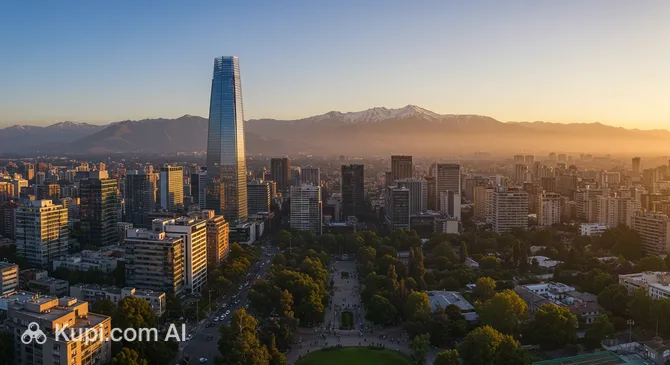
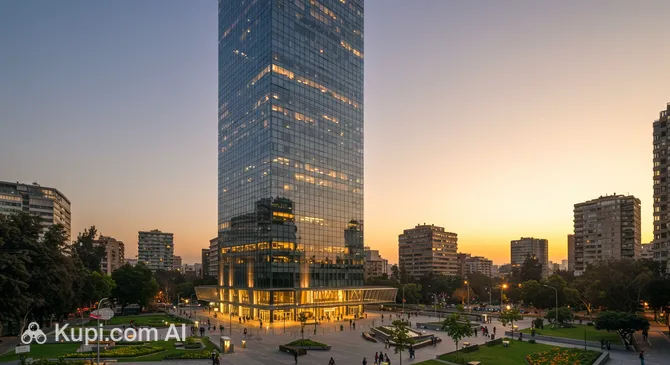
  • The city's modern financial district is affectionately nicknamed "Sanhattan" due to its dense concentration of glass skyscrapers. This skyline is dominated by the Costanera Center, which holds the title of the tallest building in South America and features a design capable of withstanding the region's powerful earthquakes.

  • The name of the presidential seat, La Moneda Palace, literally translates to "The Coin." This is because the grand neoclassical building was originally designed and constructed in the 18th century to serve as the colonial mint, not as a residence for the head of state.

  • Santiago is home to one of the largest urban parks in the world. The Metropolitan Park of Santiago covers over 700 hectares, making it significantly larger than New York City's Central Park and a vital green lung for the metropolis.

  • Locals have a unique and affectionate relationship with the city's stray dogs, known as "quiltros." These mixed-breed dogs are often community-cared for, and it is a common sight to see them wearing small vests or sweaters knitted by residents to keep them warm during the chilly winter months.

Costanera Center. Source: Kupi.Binoculars

How to Get There

Reaching the Chilean capital is the first step of your adventure, with the city serving as the primary entry point for most international visitors to the country. Whether you are arriving from overseas or a neighboring region, planning your arrival is essential. You can find more about how to get to Santiago and the various transport options in our detailed guide.

The most convenient and common way to arrive is via Arturo Merino Benitez Airport (SCL), which is the main international gateway located directly in Santiago. This bustling hub handles a large volume of passenger traffic and connects the capital with major cities worldwide. Situated just 12.5 km from the city center, the transfer is relatively quick; a trip by taxi or airport bus typically takes around 40 minutes, making it an easy commute to your accommodation.

Travelers exploring the wider Andean region might also encounter airports in neighboring cities, though these require significantly longer ground transfers. For example, El Plumerillo International Airport (MDZ) is located in the city of Mendoza, approximately 188 km away. A transfer from there would take roughly 5 hours by road. Similarly, San Juan Airport (UAQ) is situated in San Juan, about 297 km from Santiago, with a travel time of nearly 8 hours by car or bus.

For clarity, here is a summary of the main airports:

Airport Name City Passenger Traffic Km from City
Arturo Merino Benitez Airport Santiago High 12.5
El Plumerillo International Airport Mendoza Medium 188.0
San Juan Airport San Juan Small 296.8
San Rafael Airport San Rafael Small 244.4

Main Attractions

Santiago is a city where every corner offers a new discovery, blending its rich colonial heritage with modern urban energy. A perfect starting point for any tour is Santiago's Plaza de Armas, the historical heart of the capital. Founded in 1541, this bustling square is surrounded by architectural landmarks such as the Metropolitan Cathedral and the Central Post Office. It serves as a vibrant meeting place where tourists can watch street performers, painters, and locals enjoying the lively atmosphere under the shade of palm trees.

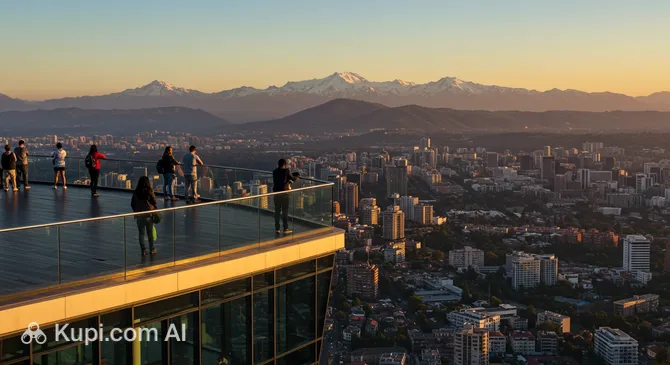
For those seeking the best vantage point in the city, a visit to Sky Costanera is essential. Located at the top of the Gran Torre Santiago, this observation deck is the highest in Latin America, offering breathtaking 360-degree views of the sprawling metropolis and the towering Andes Mountains. It is particularly magical at sunset, when the city lights begin to twinkle against the darkening peaks.

Sky Costanera. Source: Kupi.Binoculars

Nature lovers and outdoor enthusiasts will find a haven in the Metropolitan Park of Santiago. As one of the largest urban parks in the world, it dominates the cityscape from San Cristóbal Hill. Visitors can ride a funicular or cable car to the summit to see the iconic statue of the Virgin Mary, explore the botanical gardens, or visit the zoo. It is an ideal spot for hiking, cycling, or simply escaping the urban bustle for a few hours.

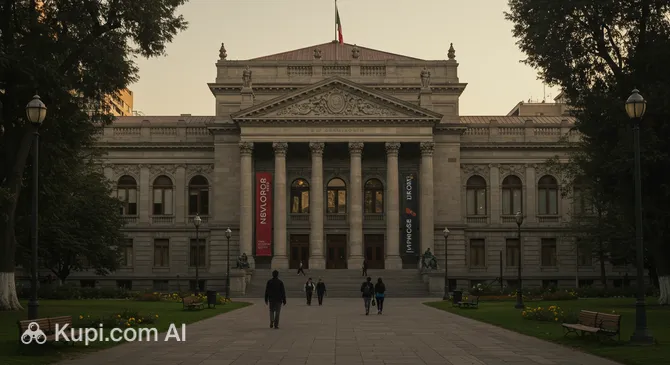
Art and culture aficionados should not miss the National Museum of Fine Arts. Housed in a magnificent Beaux-Arts palace that dates back to the centennial of Chile's independence, the museum holds an impressive collection of Chilean and international art. The building itself is a masterpiece, featuring a stunning glass cupola that illuminates the main hall, making it a visual treat both inside and out.

National Museum of Fine Arts. Source: Kupi.Binoculars

For families and thrill-seekers, Fantasilandia offers a day of excitement and fun. Located within O'Higgins Park, this is the largest amusement park in the country, featuring a wide array of roller coasters, water rides, and games suitable for all ages. It is a classic destination for local entertainment and provides a high-energy contrast to the city's museums and historical sites.

Local Cuisine

The culinary scene in Santiago is a delightful reflection of Chile's diverse geography, blending fresh seafood from the Pacific coast with the rich agricultural produce of the Central Valley. Gastronomy here is unpretentious yet flavorful, characterized by hearty portions and a deep respect for traditional recipes passed down through generations. For any visitor, exploring the local flavors is as essential as visiting the city's monuments.

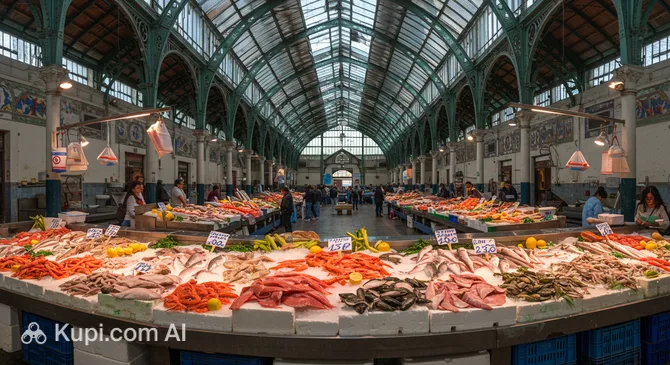
Given the country's extensive coastline, seafood is a cornerstone of the local diet. A visit to the historic Central Market of Santiago is the best way to dive into this maritime heritage. Under its wrought-iron grandeur, you can taste classic dishes like Caldillo de Congrio (conger eel soup), a favorite of the poet Pablo Neruda, or Machas a la Parmesana (razor clams baked with cheese). The market is not just a place to eat; it is a vibrant cultural experience filled with the sounds of fishmongers and the aroma of fresh ocean catch.

Central Market of Santiago. Source: Kupi.Binoculars

Beyond seafood, Santiago is famous for its comfort foods. A must-try is the Pastel de Choclo, a savory corn casserole filled with ground beef, chicken, onions, olives, and hard-boiled eggs, typically served piping hot in a clay bowl during the summer months. Another staple is the Empanada de Pino, a baked pastry stuffed with a similar meat mixture. For a quick and iconic bite, locals love the Completo Italiano, a hot dog loaded with avocado, tomatoes, and mayonnaise, mimicking the colors of the Italian flag. Places like Fuente Mardoqueo are legendary for serving these and other massive Chilean sandwiches known as Lomitos or Churrascos.

No culinary tour is complete without sampling the local beverages. The quintessential Chilean drink is the Pisco Sour, a zesty cocktail made from grape brandy, lemon juice, sugar, and egg white. For a non-alcoholic refreshing option, especially on warm days, look for street vendors selling Mote con Huesillo, a sweet drink made from dried peaches and husked wheat. Wine lovers will also find themselves at home, as Santiago is surrounded by world-class vineyards producing excellent Cabernet Sauvignon and Carmenere.

The city's dining landscape ranges from bustling street stalls to sophisticated gastronomic hubs. For a more upscale evening, many tourists and locals head to BordeRío, a gastronomic center located along the Mapocho River that offers a wide variety of restaurants and bars in a chic setting. Whether you are grabbing a quick snack at a corner shop or enjoying a fine dining experience, Santiago's food culture invites you to linger and enjoy the moment.

Travel Tips

Welcome to Santiago! To ensure your visit to this vibrant Andean capital is as smooth and enjoyable as possible, we have compiled a set of essential tips to help you navigate the city with confidence and ease.

  1. Clothing and Gear: Pack according to the season; summers (December to February) are hot and dry, requiring light clothing and strong sun protection due to high UV levels. Winters (June to August) can be chilly and damp, so bring warm layers and a waterproof jacket. Don't forget a universal travel adapter, as Chile uses Type C and L plugs with a standard voltage of 220V.
  2. Transportation: The most efficient way to get around is the Metro de Santiago, which is clean, safe, and extensive. You will need to purchase and top up a rechargeable Bip! card at any station, as cash is not accepted on the metro or buses. Ride-hailing apps like Uber and Cabify are widely available and often safer or easier than hailing street taxis, especially if you don't speak Spanish.
  3. Finances: The local currency is the Chilean Peso (CLP). While credit and debit cards are widely accepted in restaurants, hotels, and malls, it is wise to carry some cash for small purchases, street food, or tips. ATMs (Redbanc) are easy to find throughout the city. In restaurants, a tip (propina) of 10% is customary and is usually suggested on the bill.
  4. Health and Safety: Santiago is generally safe, but like any large metropolis, petty theft can occur. Keep your belongings secure and be vigilant in crowded areas like Plaza de Armas or Bellavista. Pharmacies (Farmacias) are plentiful, and major chains are easy to spot; look for a sign saying "de turno" if you need one open late at night.
  5. Communication: Spanish is the official language, and Chilean Spanish is known for being fast and full of slang. English is spoken in major hotels and tourist spots, but less so in local shops or by taxi drivers. It is highly recommended to learn a few basic phrases or use a translation app. You can easily buy a prepaid SIM card from providers like Entel or Movistar at the airport or city kiosks.
  6. Local Etiquette: Chileans are warm and polite people. The standard greeting, even among casual acquaintances, is often a single kiss on the right cheek (mostly between women or a man and a woman). When entering a shop or elevator, a friendly "Hola" or "Buenos días" goes a long way in establishing a good connection with locals.
  7. What to Avoid: Avoid changing money on the street or with unauthorized individuals; always use established Casas de Cambio (exchange houses) for safety and fair rates. Also, try to avoid the metro during peak rush hours (8:00–9:00 AM and 6:00–7:00 PM), as the trains can become extremely crowded.
  8. Useful Insight: Lunch is typically the main meal of the day in Chile. Many restaurants offer a set menu called a colación or menú ejecutivo during weekday lunch hours. This is an excellent and affordable way to try home-style local food for a fraction of the dinner price.

Armed with these practical tips, you are ready to explore the streets of Santiago like a seasoned traveler. Enjoy the warmth of the people, the efficiency of the city, and the unforgettable experiences that await you in Chile's capital.

Entertainment & Nightlife

Entertainment:

Santiago transforms as the sun sets, offering a vibrant nightlife and a plethora of leisure activities that cater to every taste. From pulsating dance floors and bohemian bars to sophisticated cultural centers and family-friendly parks, the city ensures that the excitement continues well beyond the sightseeing hours.

For those seeking the rhythm of the night, the city's diverse neighborhoods offer distinct vibes. While Bellavista is famous, Ñuñoa Square (Plaza Ñuñoa) provides a more relaxed, bohemian atmosphere. It is surrounded by pubs and restaurants where locals gather to enjoy live music and conversation. For a more energetic experience, venues like Club Ámbar in the Vitacura district offer state-of-the-art sound systems and electronic beats, while Backroom Bar serves up craft cocktails in an intimate setting perfect for unwinding.

Ñuñoa Square

Culture enthusiasts will find a haven in the Gabriela Mistral Cultural Centre (GAM). Located in the heart of the city, this striking architectural complex is a hub for contemporary art, theater, and dance performances. It also features open plazas and libraries that are free to the public. Another key venue is the Matucana 100 Cultural Center, which hosts avant-garde exhibitions, cinema screenings, and concerts in a converted industrial space.

Families traveling with children have excellent options to keep the little ones entertained. KidZania Santiago offers a unique interactive city where kids can role-play various professions, combining fun with learning. During the warm summer months, Aviva Water Park is the perfect escape, featuring pools and slides to cool off. Additionally, Aventura Park provides amusement rides and games suitable for younger children.

KidZania Santiago

Shopping in Santiago often doubles as entertainment, with malls designed as comprehensive lifestyle centers. Parque Arauco is one of the most exclusive, boasting an open-air luxury boulevard, a design district, and a wide array of cinemas and dining options. For a modern urban experience, the Mercado Urbano Tobalaba (MUT) offers a fresh concept connecting the subway directly to shops, markets, and green spaces, redefining the retail experience in the capital.

Parks & Museums

Santiago is a city that invites exploration not just through its bustling avenues, but through its impressive array of cultural institutions and verdant green spaces. Beyond the well-known landmarks, the capital offers a wealth of museums and parks that preserve its heritage and provide serene escapes from the urban pace.

For those interested in history and architecture, the Cousiño Palace is a stunning example of 19th-century opulence. Once the residence of a wealthy coal-mining family, this mansion features lavish European interiors and crystal chandeliers that transport visitors back in time. In contrast, the Museum of Memory and Human Rights offers a modern and poignant experience. Dedicated to the country's recent history, specifically the period between 1973 and 1990, it serves as a space for reflection with its powerful exhibits and striking copper-and-glass architecture.

Cousiño Palace

Families and science enthusiasts will find the Mirador Interactive Museum (MIM) to be a highlight. Located in the La Granja district, it encourages learning through touch and play with exhibits covering physics, biology, and art. Another fascinating stop is the National Aeronautics and Space Museum, which houses an extensive collection of aircraft, including historic planes and space exploration exhibits.

When it comes to outdoor relaxation, Santiago boasts several meticulously maintained urban parks. Bicentennial Park in Vitacura is a favorite among locals for its modern design, featuring artificial lagoons with flamingos, expansive lawns, and separate paths for walking and cycling. Nearby in Las Condes, Araucano Park offers diverse attractions ranging from beautiful rose gardens to skate parks and event spaces.

Bicentennial Park

For nature lovers seeking a more rugged experience, the Andean foothills provide excellent hiking opportunities within the city limits. Aguas de Ramón Natural Park is renowned for its trails leading to waterfalls and its rich native flora. Similarly, Quebrada de Macul Natural Park and Panul Park offer accessible trekking routes where visitors can immerse themselves in the sclerophyllous forest and enjoy panoramic views of the Santiago basin.

Getting Around

Santiago boasts one of the most modern and efficient public transport systems in Latin America, known as Red Metropolitana de Movilidad. This integrated network connects the subway, buses, and suburban trains, making it relatively easy for visitors to navigate the sprawling capital. The backbone of the system is the Metro de Santiago, which is widely praised for its cleanliness, safety, and reliability. With currently seven lines covering most major tourist areas, the metro is often the fastest way to travel, avoiding the city's surface traffic.

Complementing the underground trains is an extensive fleet of buses, locally referred to as "micros." These modern buses—many of which are electric—reach corners of the city that the metro does not. The system is fully integrated, meaning you can transfer between the metro and buses within a specific time window (usually two hours) without paying a second full fare. For shorter, specific routes within neighborhoods, you might see colectivos. These look like black sedans with signs on their roofs; they function as shared taxis with fixed routes and prices, offering a faster alternative to buses for local commutes, though they typically accept cash only.

To use the public transport system (Metro, Red buses, and Tren Nos), you must have a bip! card. Cash is not accepted on buses or at metro turnstiles. You can purchase and top up this card at any metro station ticket office or at designated "Puntos bip!" centers throughout the city. Recently, payment via QR codes using the official Red App has also become available, but for tourists, buying a physical card upon arrival is the most straightforward option.

Fares in Santiago are dynamic and depend on the time of day you travel. The day is divided into three brackets: Horario Bajo (Off-peak, early morning and late night), Horario Valle (Standard hours), and Horario Punta (Peak rush hour: roughly 7:00–9:00 AM and 6:00–8:00 PM). Traveling during peak times is slightly more expensive. It is important to validate your card every time you board a bus or enter a metro station; the system automatically calculates the transfer discount.

The metro generally operates from 6:00 AM to 11:00 PM on weekdays, with slightly reduced hours on weekends and holidays. While the transport network is excellent, visitors should also be aware of alternatives. Taxis are easily recognizable, painted black with yellow roofs; always ensure the meter is running. Ride-sharing apps are extremely popular and widely used, offering a convenient way to get around without language barriers. For short distances, the city offers public bike-rental systems, with stations located in many central districts.

A unique feature of Santiago's transport is the artistic dimension of its metro stations. Many stops feature large-scale murals and dioramas, turning a simple commute into a cultural experience. Additionally, for a scenic journey rather than a commute, the Teleférico (cable car) and Funicular in the Metropolitan Park offer historic and spectacular ways to traverse San Cristóbal Hill, providing some of the best views in the city.

Accommodation

Finding the perfect place to stay in the Chilean capital is relatively easy, as the city offers a wide spectrum of accommodation options to suit every budget and travel style. From vibrant backpacker hostels and cozy boutique guesthouses to modern serviced apartments and high-end international hotel chains, visitors will find plenty of choices. The standard of hospitality is generally high, with many establishments providing excellent amenities and service to ensure a comfortable visit.

Choosing the right neighborhood is key to enjoying your trip. For those who want to be in the heart of the action, the historic Centro district is ideal, placing you within walking distance of major museums and historical sites. Travelers seeking a balance between safety, connectivity, and dining often prefer Providencia, a central hub with tree-lined streets and easy access to the metro. Meanwhile, the districts of Las Condes and Vitacura are known for their upscale atmosphere, modern skyscrapers, and luxury hotels, making them popular among business travelers and those seeking a more exclusive experience.

If you are looking for specific accommodation examples, the city hosts various properties ranging from traditional hotels to apartment-style living. One such option is the Amistar Apart Hotel, which caters to visitors looking for the convenience of self-catering facilities combined with hotel services. Such establishments are particularly convenient for longer stays or families who appreciate a bit more space than a standard room provides.

A helpful tip for booking is to plan ahead, especially if you are visiting during the peak summer months (December to February) or the winter ski season (June to August). During these times, the most popular hotels in prime locations tend to fill up quickly. Additionally, check if your chosen accommodation offers air conditioning if you are visiting in summer, or central heating for the winter, as these features can significantly impact your comfort.

Regarding costs, prices in the city are reasonable compared to many other international capitals. Budget travelers can find dormitory beds or simple rooms for a modest fee, while mid-range hotels offer comfortable en-suite rooms at competitive rates. Luxury resorts and top-tier hotels in the financial district command higher prices but deliver world-class amenities. Most accommodations can be booked easily through major online travel platforms, though direct booking is also common and sometimes offers better deals.

Nearby Cities

While Santiago serves as the vibrant core of the nation, the surrounding {province_name} is home to several populous cities and communes that contribute to the dynamic character of the metropolitan area. These locations, ranging from bustling commercial districts to residential hubs, are easily accessible and offer a broader perspective on life in the capital region.

The following table provides details on some of the closest cities and localities, including their distances from Santiago and population figures, to help you navigate the area:

City Population Distance (km)
Puente Alto 573,935 19
Maipu 521,627 11
La Florida 366,916 10
San Bernardo 301,313 15
Las Condes 249,893 13

Shopping & Souvenirs

Shopping:

Santiago is a premier shopping destination in South America, offering a diverse mix of modern retail experiences and traditional commerce. From colossal glass-walled malls housing international luxury brands to quaint neighborhoods filled with independent boutiques and antique shops, the city caters to every type of shopper. Whether you are looking for the latest fashion trends, high-tech gadgets, or unique handcrafted gifts, the Chilean capital provides ample opportunities to indulge in some retail therapy.

For a world-class shopping experience, the city's malls are hard to beat. The towering Costanera Center is not only an architectural landmark but also a retail giant, featuring six floors of stores, a cinema, and a wide food court. It is the go-to place for mainstream international fashion and department stores. Alternatively, Parque Arauco offers a more open and sophisticated atmosphere. Located in the upscale Las Condes district, it is famous for its "Luxury District," where high-end designer brands reside, and its outdoor boulevard lined with chic restaurants and cafes.

A newer addition to the retail landscape is the Mercado Urbano Tobalaba (MUT). This innovative space redefines the concept of a mall by integrating it with the city's transport system and focusing on sustainability. It hosts a curated selection of shops, a market garden, and spaces for cultural activities, making it a trendy spot for those seeking a more community-oriented shopping environment.

Beyond the malls, specific neighborhoods offer a distinct charm. Barrio Italia is a must-visit for design lovers; this heritage neighborhood is packed with furniture restorers, interior design shops, bookstores, and boutique clothing stores hidden within charming old houses and interior courtyards. For luxury shopping on the street level, the avenue Alonso de Córdova in Vitacura is lined with exclusive boutiques and art galleries, offering a quiet and elegant strolling experience.

To discover local craftsmanship, visitors should head to the city's artisan markets. The Pueblito de Los Dominicos is perhaps the most famous, designed to look like a colonial village where you can watch artisans at work and buy high-quality handicrafts. While the Central Market of Santiago is primarily for food, it also hosts vendors selling local trinkets and souvenirs, perfect for a quick browse while exploring the historic center.

When it comes to souvenirs, Chile has several unique offerings. Lapis Lazuli, a deep blue semi-precious stone found primarily in Chile and Afghanistan, is crafted into beautiful jewelry and is a top choice for a special gift. Copper items, ranging from decorative plates to jewelry, are also popular, reflecting the country's status as a major copper producer. Additionally, a bottle of premium Chilean wine or a jar of Merkén (a smoked chili spice blend) makes for an excellent and consumable memento.

Most shopping malls in Santiago operate daily from approximately 10:00 AM to 9:00 PM. Street shops and smaller boutiques typically open around 10:00 AM and close by 7:00 PM or 8:00 PM, with many closing earlier on Saturdays and staying closed on Sundays. Credit and debit cards are widely accepted almost everywhere, including most market stalls, though carrying some cash is advisable for smaller purchases. Regarding taxes, while tourists can be exempt from VAT on hotel stays, there is generally no sales tax refund system (Tax-Free Shopping) for regular retail purchases like clothing or electronics for visitors leaving the country.
Reached the end of the page?

That means the route is fully explored