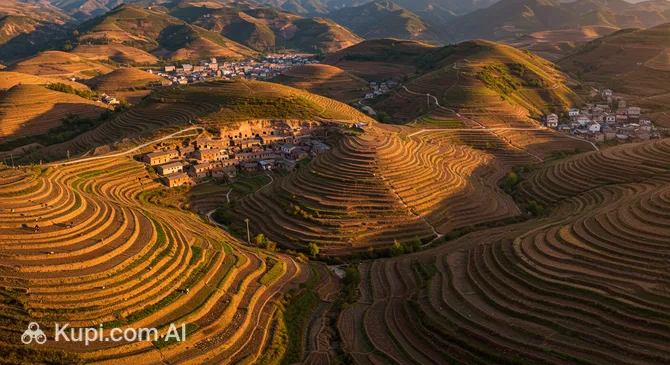
Located in the heart of Gansu Province, Dingxi is a fascinating blend of ancient history and the steady rhythm of modern life in Northwest China. Situated in the upper reaches of the Wei River, a tributary of the Yellow River, this city has long served as a vital strategic point on the legendary Silk Road. Its name, meaning "pacified western frontiers," recalls the times when the city was a key imperial outpost, guarding borders and facilitating cultural exchange between East and West.
The city's geographic position on the Loess Plateau has shaped its unique landscape and agricultural character. Today, with a population of over 2.6 million, Dingxi proudly holds the title of "China’s Potato Capital." The surrounding mountains and rolling fields, where not only potatoes but also hundreds of types of medicinal herbs are grown, create picturesque landscapes that attract nature lovers and those seeking the authentic atmosphere of provincial China.
Dingxi. Illustration.
Source: Kupi.com AI
The rich historical heritage of Dingxi dates back to the Qin Dynasty. Visitors can feel the breath of the past while walking along ancient city walls or exploring Neolithic sites near the Wei River. Dingxi invites travelers to discover a real, off-the-beaten-path China, where ancestral traditions are closely interwoven with the hospitality of local residents and the serene beauty of the northwestern lands.
Weather Overview
The climate in Dingxi is distinctly continental, which is typical for the high-altitude Loess Plateau. Travelers should prepare for significant seasonal temperature fluctuations. Winters here are cold and dry: in January, the thermometer typically drops to -5°C...-10°C, and heavy snow is not uncommon in the mountains.
Summers in the city are moderately warm and pleasant, without exhausting heat. In July and August, the average temperature is around +20°C...+25°C, making this an ideal period for walking and exploring natural beauty. However, the majority of precipitation falls during the summer months, so a light raincoat in your backpack won't go amiss.
Spring and autumn are considered the most comfortable seasons for tourism in the region due to moderate temperatures and dry weather. If you want to check a more detailed weather forecast for Dingxi before your trip, we recommend monitoring updates, as weather in the foothills can be unpredictable. Even in summer, it can get chilly in the evenings, so always bring a light jacket with you.
Average monthly temperature
Average monthly precipitation
Interesting Facts
Dingxi is officially recognized as the "Potato Capital of China"—it not only produces enormous quantities of this vegetable but also hosts specialized exhibitions and forums.
The region is home to more than 300 species of medicinal plants, making the city an important center for Traditional Chinese Medicine.
The city is a cradle of ancient civilizations: artifacts from Neolithic cultures dating back thousands of years have been found in its vicinity.
The city's economic significance extends beyond the country—freight trains pass through the local railway hub, connecting the region with Kazakhstan and other Central Asian countries.
The first fortified settlements in this area appeared as early as the 11th century during the Song Dynasty, making Dingxi one of the oldest inhabited points in the upper Wei River valley.
How to Get There
The transport accessibility of Dingxi makes it a convenient stop on the travel map of the northwestern region. The city is a major railway hub served by both high-speed and regular passenger trains, connecting Gansu Province with the country's central regions. To plan your route most effectively, we recommend checking the sections on how to get to the city in advance.
There is no airport directly within the city limits. Travelers find it most convenient to use the Lanzhou Zhongchuan International Airport, located about 150 kilometers away. From there, you can reach central Dingxi by taxi, intercity bus, or high-speed train in about 2–3 hours. Direct flights to Lanzhou are available from Beijing, Shanghai, and other major hubs across the country.
Dingxi Railway Station receives trains from Lanzhou, Tianshui, and Xi'an. High-speed rail lines significantly reduce travel time, making the journey fast and comfortable. Bus services are also well-developed, with the city's bus stations serving dozens of routes from neighboring counties and major provincial cities every day.
The primary historical treasures of Dingxi are its ancient fortifications. The city walls and surviving fragments of defensive structures, built during the Song Dynasty, stand as silent witnesses to the city's former grandeur as a frontier hub. Strolling through the old quarters, you can see traditional architecture that transports you back to the era of flourishing trade caravans.
For nature enthusiasts, the upper reaches of the Wei River are a must-visit. Picturesque trails along the riverbed are perfect for trekking and taking in panoramic views. This is where archaeologists discover traces of ancient Neolithic cultures, adding a sense of exploration to a simple walk in the fresh air.
The agricultural lands surrounding the city are also a unique attraction in their own right. Vast potato fields and medicinal herb plantations transform the Loess Plateau landscape during the flowering season, offering unique opportunities for photography and a glimpse into the traditional way of life for Gansu farmers.
Local Cuisine
The culinary traditions of Dingxi are inextricably linked to its agricultural wealth. The main ingredient of the local cuisine is undoubtedly the potato. It is prepared here in dozens of ways: from delicate spiced mashes to crispy side dishes and complex vegetable stews. Potato dishes in Dingxi are a true gastronomic hallmark that every visitor should experience.
Another local pride is mutton from Zhang County. It is believed that meat from animals raised on mountain pastures possesses an exceptional aroma and juiciness. It is often cooked over an open fire or stewed with local medicinal herbs, giving the dish unique health-promoting properties and a distinctive flavor. This combination of gastronomy and folk medicine is characteristic of the entire province.
A hearty meal in Dingxi is typically washed down with local herbal teas. Blends made from plants grown on the ecologically clean slopes of the Loess Plateau are famous for their tonic properties. You can try authentic food in cozy restaurants in the city center or at bustling markets, where street food is always fresh and prepared right in front of you.
Travel Tips
Dingxi is a destination for those seeking authenticity, and a little preparation will make your journey truly comfortable and memorable.
Clothing and Gear: Due to the continental climate, bring layered clothing. Light clothes and sun protection are useful in summer, while a warm down jacket is needed in winter. Comfortable shoes are a must for walking on hilly trails and embankments.
Transport: The main ways to get around are buses and taxis. If you plan to travel to neighboring cities, choose high-speed trains—this will save a lot of time.
Finances: Always have cash (Yuan) with you. Although WeChat Pay and Alipay are used everywhere in China, international cards are only accepted in very large hotels.
Health: There are many pharmacies in the city selling traditional herbs. If you need standard Western medicine, it's better to bring a basic first-aid kit. Drink only bottled water.
Communication: English is a rarity here. Download an offline translation app in advance and save your hotel and attraction names in Chinese characters.
Etiquette: Be polite and patient. A traditional greeting is a slight nod. Respect the local pace of life: provincial China wakes up and goes to sleep early.
What to Avoid: Avoid discussing sensitive political topics. Also, refrain from taking photos of people without their consent, especially in temples or private courtyards.
Useful Tip: Visit Dingxi during the field blooming season or local potato harvest festivals—it's the best time to see the city in all its glory.
Dingxi will reveal its secrets if you show curiosity and openness to its traditions. Enjoy your journey through the ancient paths of Gansu!
Entertainment & Nightlife
Entertainment in Dingxi reflects its quiet, provincial character. You won't find the neon-lit drive of a bustling metropolis here; instead, you can immerse yourself in traditional leisure culture. The heart of evening life revolves around tea houses, where locals gather for slow conversations, games of mahjong, and tastings of herbal infusions.
As dusk falls, local markets come to life. These are not just places to shop, but social hubs where, on holidays, you might catch performances by folk groups showcasing traditional music and dance. For those who prefer active recreation, evening walks to the nearby hills offer peaceful views of the city lights.
Daytime leisure can be spent in local parks or with a short trip to the banks of the Wei River for a picnic. Safety in the city is high, making evening strolls through the central streets perfectly comfortable. For late-night travel, it is best to use official taxis, which are readily available near the railway station and major shopping areas.
Parks & Museums
The natural charm of Dingxi is best revealed in its park zones. The embankments along the Wei River have been transformed into well-maintained recreational areas where green alleys harmonize with views of the majestic mountains. This is a favorite spot for locals for morning exercises and evening walks, offering a sense of connection with nature in the heart of the city.
Curious tourists will find interest in the local exhibition halls and small historical museums. These house unique artifacts found during archaeological excavations in the region: from Neolithic pottery to everyday items from the heyday of the Silk Road. The exhibits vividly tell the story of how the culture of the upper Wei River has been shaped over thousands of years.
It is also worth visiting the botanical corners where medicinal herbs are grown. These mini-gardens allow you not only to see rare Gansu plants but also to learn about their healing properties, which have been used in traditional Chinese medicine for centuries. The combination of green spaces and cultural sites makes Dingxi a great place for educational and peaceful leisure.
Getting Around
The public transport system in Dingxi is represented by an extensive network of bus routes. Buses are the most affordable and popular way to get around, connecting residential areas, shopping zones, and the railway station. Fares are inexpensive, and routes cover almost the entire city territory and some suburban counties.
For faster and more comfortable trips, tourists often choose taxis. Cars are easy to find on the streets or can be hailed through specialized apps. In Dingxi, taxis are a reliable and budget-friendly option, especially if you need to reach remote attractions or scenic spots on the banks of the Wei River. Ride-sharing is also popular among younger people and active travelers.
In central areas with flat terrain, renting a bicycle is an excellent solution. This allows you to explore city streets and embankments at a leisurely pace. Regarding bus fares, it is recommended to have small change for the driver or to pay via terminals. Transport starts early in the morning and finishes around 8:00 PM – 9:00 PM, so plan your evening trips in advance.
Accommodation
The accommodation options in Dingxi are primarily geared toward business travelers and transit tourists, offering a decent level of comfort. Most hotels are concentrated in the city center and near the railway station, which is particularly convenient for those with early departures or late arrivals.
For those seeking maximum convenience, modern 3- and 4-star hotels are available, often featuring views of the surrounding mountains and valleys. Budget-conscious travelers can stay in guesthouses and hostels, which are known for their hospitality and provide a better look at the local way of life.
If your trip coincides with Chinese national holidays, it is highly recommended to book your accommodation well in advance. During normal periods, rooms can be found without much trouble. When choosing a hotel, look for those that offer services for international tourists and are located near public transport stops.
Nearby Cities
The city of Dingxi serves as an excellent base for exploring the northwestern reaches of Gansu Province. Convenient transport links allow for exciting day trips to neighboring cultural and administrative centers, each possessing its own unique charm.
The most popular destination is Lanzhou—the provincial capital, located just a couple of hours away. It is a dynamic metropolis on the banks of the Yellow River, famous for its parks, museums, and legendary hand-pulled noodles. Also worth noting is Tianshui, home to unique cave temples that are of immense value to Buddhist heritage.
For those who prefer smaller towns, Chankou or Xiaguanying may be of interest, offering a glimpse into rural Chinese life. Exploring the surrounding areas will provide plenty of new experiences and a deeper understanding of the diversity of this unique region.
Shopping & Souvenirs
Shopping in Dingxi is primarily about hunting for unique gifts from nature. The city won't overwhelm you with an abundance of global brand boutiques, but it offers something far more valuable—authentic regional products. The main shopping venues are local markets, where medicinal herbs and blends for which this land is so famous are presented in abundance.
As souvenirs from Dingxi, it is worth bringing back traditional folk crafts and, of course, local delicacies. Farmers' stalls offer dried herbs, seeds, and potato-based products that make for original and useful gifts. A walk through the shopping rows in the city center will lead you to workshops where decorative items are made in the traditional Gansu style.
Shops typically operate from morning until late evening, while the markets are liveliest in the first half of the day. It is best to have cash (Yuan) on hand or use popular Chinese payment apps, as international bank cards are not accepted in all stalls. Don't forget to bargain at the markets—it is an essential part of the local trading culture.