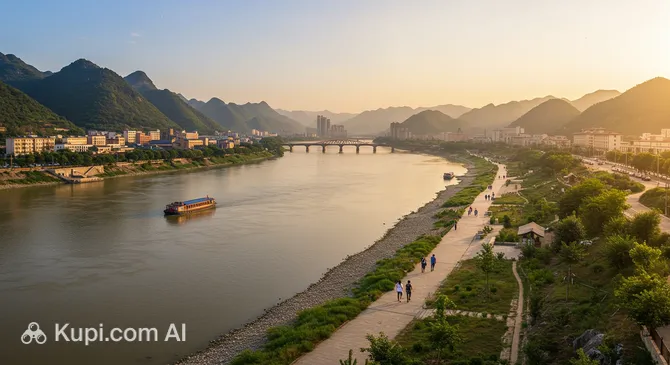
Located in the heart of Gansu Province, Baiyin is a city where a rugged industrial past harmoniously intertwines with the pristine natural beauty of China. Known as one of the region's most important industrial centers, it has grown from a small settlement into a modern prefecture-level city with a population of over 1.7 million people. The city's name poetically translates as "White Silver," a direct reference to the richness of its mineral resources that have supplied the country with precious metals for centuries.
Baiyin. Illustration.
Source: Kupi.com AI
Baiyin's geographical location is unique: it stretches across the junction of the Loess Plateau and the majestic Yellow River. Exploring the local history, one can learn how this region transformed into a powerful industrial hub in the mid-20th century. However, today the city attracts travelers not only for its industrial scale but also for its calm, majestic atmosphere, which is particularly palpable against the backdrop of ancient cultural landscapes.
Among Baiyin's main treasures are the amazing Yellow River Stone Forest and the ruins of ancient settlements preserved from the era of the Great Silk Road. The city offers a rare opportunity to see modern China in its dynamic development while maintaining a connection to deep historical heritage and natural wonders. Baiyin is an excellent discovery for those seeking off-the-beaten-path routes and who value authenticity.
Weather Overview
Baiyin is characterized by a pronounced continental climate, typical of Gansu Province. The city delights travelers with a high number of sunny days per year and low air humidity, which makes even hot weather quite bearable. However, it is worth remembering the significant temperature fluctuations between day and night.
Summer here is usually warm and dry, with temperatures ranging from +16°C at night to +28°C during the day, although in July and August the mercury can rise higher. Winters in the region are harsh and frosty: in January, the average temperature drops to -6°C, and nightly minimums can reach -11°C. Precipitation is sparse, with most rain occurring in August and September.
The best time to visit is considered to be spring and autumn, when the city's climate is most comfortable. During these periods, the air is fresh and clean, and moderate temperatures allow for long walks through natural parks. Before your trip, we recommend checking the current weather in Baiyin to choose the right wardrobe for your journey.
Average monthly temperature
Average monthly precipitation
Interesting Facts
Baiyin officially holds the honorary title of "China's Copper Capital" due to its colossal deposits of non-ferrous metals and rare earth elements.
The city was officially founded in 1958, but its territory remembers events from the 5th century when the ancient states of Northern and Western Wei were located here.
Thanks to the clean mountain air and distance from major metropolises, the night sky over Baiyin is considered one of the best in the province for stargazing.
The nearby ancient Yongtai Fortress earned the nickname "Turtle City" because of the unique shape of its walls, which resemble the shell of the animal from a bird's-eye view.
Baiyin is a key transport hub on the historical Silk Road, connecting the inland regions of China with the western territories.
How to Get There
Baiyin enjoys good transport accessibility, making it a convenient stop on a route through Gansu Province. Most tourists arrive here via neighboring major hubs using the developed network of roads and railways. The city is located relatively close to the regional administrative center, which significantly simplifies trip planning.
The nearest major air hub is Lanzhou Zhongchuan International Airport (LHW), located approximately 100 kilometers from the city. From there, Baiyin's center can be reached by taxi or regular intercity buses, with a travel time of about two hours. This airport receives flights from most major Chinese cities, providing a convenient connection to the rest of the country.
Rail travel is one of the most budget-friendly and reliable ways to reach the city. Regular trains from Lanzhou arrive at Baiyin station in just 1–2 hours. The railway connects the city not only with the provincial capital but also with other important points in the region, making trains an excellent choice for independent travelers.
For those who prefer maximum flexibility, renting a car or taking intercity buses that depart from Lanzhou throughout the day is the optimal variant. The roads along the Yellow River are in good condition and offer scenic views, turning an ordinary transfer into an exciting journey.
Main Attractions
One of the region's most breathtaking attractions is the Yellow River Stone Forest. This natural wonder, over 2 million years old, is a collection of giant rock columns between which the great river winds. Travelers can take an excursion on traditional sheepskin rafts or walk along the trails to fully appreciate the scale of these natural "skyscrapers."
For lovers of antiquity, the legendary Turtle City (Yongtai) is a must-visit. This Ming Dynasty fortress is surrounded by a massive 12-meter wall that resembles a turtle when viewed from above. The site has preserved the spirit of old China: here you can walk through authentic streets, see ancient houses, and even observe the incredibly bright starry sky, which seems particularly close in this part of the province.
The city's cultural heritage is complemented by the Iron Buddha Temple, located on a picturesque cliff. The temple is famous not only for its ancient statues and grottoes but also for its sacred springs surrounded by centuries-old cypresses. This place is ideal for those seeking solitude and wanting to touch the spiritual traditions of the region.
The industrial heart of the city is revealed in the "Flaming Mountains" National Mining Park. Here, tourists can see huge open-pit mines and learn about the machinery used for copper mining. This is a unique example of how an industrial site can be transformed into an interesting educational space, demonstrating the power of human labor against the backdrop of Gansu's rugged nature.
Local Cuisine
Baiyin's gastronomic map is a vivid reflection of the culinary traditions of Northwest China, where dishes made from wheat flour and tender lamb play a key role. The first thing every tourist should try is Bianzi noodles, served with a thick meat sauce and plenty of seasonal vegetables. Due to the noticeable influence of Muslim culture in the region, many halal restaurants can be found in the city, offering perfectly prepared meat.
A special place in local cuisine is held by roasted lamb (yangrou chuan), seasoned with aromatic cumin and chili pepper. In markets and street stalls, look for freshly baked flatbreads and sweets made from local nuts and dried fruits. These snacks are perfect for long walks through canyons and exploring ancient ruins.
As for drinks, locals prefer strong green tea, which perfectly quenches thirst in Gansu's arid climate. Unique fruit liqueurs produced in the province can also be found in specialty shops. Street food in Baiyin is not just a way to satisfy hunger, but an entire culture that allows you to experience the true taste of life in this industrial region.
Travel Tips
Baiyin is a city with a unique character, and to make your trip as comfortable as possible, we have prepared a list of practical recommendations from experienced travelers.
Clothing and Essentials: Pack your suitcase based on the continental climate. Sunglasses and light clothing are mandatory in summer, while a jacket will be needed for spring and autumn evenings. Don't forget comfortable shoes with a firm sole for walking through canyons and ruins.
Transport: Within the city, it is most convenient to move by bus or taxi. For trips to remote attractions such as the Yellow River Stone Forest, it is better to book an excursion shuttle or use trains.
Finance: The main currency is the Chinese Yuan. International payment cards are rarely accepted, so be sure to install the Alipay or WeChat Pay apps and link your card to them. Always keep a small supply of cash for payments at markets.
Health: The air in the region can be dry and dusty, so bring moisturizing products and drink only bottled water. Pharmacies are common, but the names of medicines in them are listed in Chinese.
Communication: English is not widely spoken. We recommend downloading an offline translator and maps (such as Baidu Maps or Amap) in advance. It is useful to have a hotel business card with the address in characters.
Local Etiquette: Baiyin residents are friendly to foreigners. When visiting Buddhist temples, observe silence, dress modestly, and do not take photos where there are prohibitive signs.
What to Avoid: Do not attempt to independently enter closed areas of industrial enterprises—these are restricted facilities. Also, refrain from discussing political topics with strangers.
Additional Tip: Try to be in Turtle City after sunset—the view of the starry sky over the ancient walls will be one of the brightest impressions of the trip.
By following these simple rules, you will be able to fully immerse yourself in the atmosphere of this amazing land and discover the real, non-tourist China.
Entertainment & Nightlife
Entertainment in Baiyin is calm and contemplative, differing greatly from the noise of megacities like Beijing or Shanghai. The main emphasis here is on outdoor activities and enjoying nature. During the day, walks along the banks of the Yellow River and rafting are popular, while history buffs can try their hand at archery right on the walls of the ancient Turtle City, allowing them to briefly feel like a fortress defender.
Evening time in Baiyin is best spent discovering local culinary delights in restaurants or taking cultural walks. Nightlife in the classic sense is limited here; however, the city offers something rarer—incredible opportunities for astro-tourism. The lack of heavy light pollution makes the outskirts of Baiyin, especially the area around the ancient Yongtai Fortress, an ideal place for observing the Milky Way under the open sky.
City parks are perfect for family vacations, where locals gather for picnics and evening strolls. In the city center, you can find cozy cafes and small karaoke venues that stay open until late evening. Despite the absence of large nightclubs, the safety and friendliness of the locals make evening walks through Baiyin pleasant and comfortable.
Parks & Museums
The city's main cultural center is the Baiyin Museum. Its exhibits tell in detail about the region's transformation into a mining hub, displaying unique minerals and miners' tools. However, the museum also covers more ancient eras: artifacts from the Silk Road era and items belonging to ethnic groups that have inhabited these lands for centuries are presented here.
For those who prefer outdoor walks with historical context, the ruins of Turtle City are the ideal place. This is a kind of open-air museum where you can wander along ancient walls for hours and imagine garrison life hundreds of years ago. The atmosphere is complemented by an arched bridge and preserved buildings that look particularly expressive in the rays of the setting sun.
Natural recreation within the city limits is represented by Baitashan Park (White Pagoda Mountain Park). Its observation decks offer a breathtaking panorama of the city blocks and the bends of the Yellow River. Another notable spot is the gardens at the Iron Buddha Temple, where ancient cypresses and quiet springs create ideal conditions for peaceful contemplation and a break from the city bustle.
Getting Around
Baiyin's transport system is simple and efficient, allowing tourists to move between key points without difficulty. The basis of urban transport is buses, whose routes cover both residential blocks in the center and industrial zones. The fare is very inexpensive, and mobile navigation apps in Chinese will help you understand the traffic patterns.
For trips to main attractions located outside the city limits, special electric vehicles and tourist shuttles are often used. For example, visiting natural parks usually involves purchasing a combo ticket that already includes the cost of internal transport. This eliminates the need for travelers to look for private drivers.
Taxis in Baiyin are an affordable and convenient way to get around, especially if you are traveling in a group or with luggage. A car can be hailed on the street or called through popular ride-sharing apps in China. Additionally, bicycle rentals are developed in park zones and near the Yellow River embankment, allowing for leisurely rides and enjoying city views at your own pace.
Accommodation
Guests in Baiyin have a decent choice of accommodation options, primarily catering to business travelers and tourists exploring Gansu Province. Most high-quality hotels are concentrated in the central part of the city and in areas adjacent to major transport routes. Here you can find both modern four-star hotels with panoramic views and cozy budget options.
The price range in the city is very democratic. A night in a simple but clean hostel or guesthouse will cost about 100–200 yuan. For those who value increased comfort, it is worth looking at mid-range hotels located closer to the Yellow River embankment—they offer quality service and convenient access to walking areas.
Travelers planning to visit natural attractions such as the Yellow River Stone Forest may consider staying in authentic guesthouses in the nearest counties. It is recommended to book accommodation in advance through popular Chinese apps or international services, especially if your trip coincides with Chinese public holidays when demand for rooms increases significantly.
Nearby Cities
Baiyin is an excellent starting point for exploring the central part of Gansu Province. Its convenient location allows tourists to make interesting day trips to neighboring settlements, each of which has its own unique character and history.
The most obvious and popular destination for a trip is Lanzhou—the provincial capital, located just 60–70 kilometers away. Here you can see the famous Zhongshan Bridge over the Yellow River, visit magnificent Buddhist temples, and try the authentic beef noodles that have become a gastronomic symbol of the region.
It is also worth paying attention to the city of Shidong and Huining County. The latter is particularly interesting for history buffs with its memorial complexes and ancient towers. A bus trip to these places takes no more than an hour and allows for a deeper immersion into the atmosphere of the historic Silk Road.
Exploring the surroundings of Baiyin will give you plenty of impressions: from modern urban landscapes to quiet rural settings. Short trips to neighboring counties like Gaolan will help complete the overall picture of life in Northwest China and reveal architectural monuments hidden from mass tourism.
Shopping & Souvenirs
Shopping in Baiyin is not like walking through luxury boutiques in megacities; it is more like a hunt for rare and authentic items. The city is famous for its copper and silver products, produced by local craftsmen for many decades. In specialty shops, you can find elegant tableware, jewelry, and interior items that will serve as a great reminder of your visit to the "copper capital."
In the central districts of the city, there are markets where it is worth buying local delicacies: pine nuts, dried fruits, and unique varieties of tea from Gansu Province. Particularly popular with tourists are souvenirs related to Buddhist culture, such as prayer beads or small figurines, as well as maps of the region's ancient cities executed in a traditional style.
Typical store hours are from 9:00 AM to 8:00 PM, although large shopping centers in the city center may stay open longer. Payment is most often made through mobile apps (Alipay or WeChat Pay), which are accepted even in the smallest shops. For those who prefer traditional markets, it is better to have some cash yuan for small purchases.