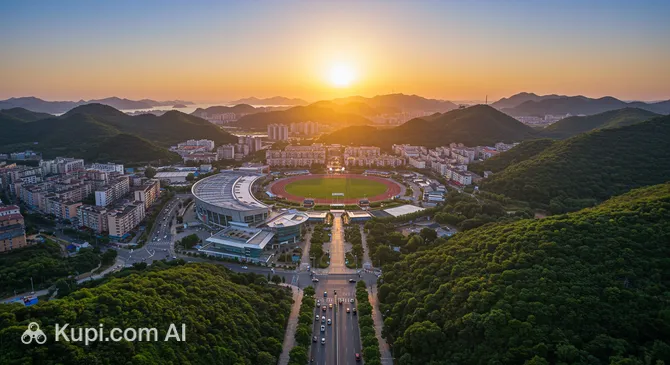
Maoming is a fascinating coastal city located in the southwest of Guangdong Province, on the shores of the South China Sea. Known as the "Southern Oil City," it harmoniously combines the power of an industrial center with the natural charm of a seaside resort. Part of the vast China, Maoming attracts travelers with its unique character, where modern achievements intertwine with the rich traditions of the Lingnan region.
Maoming. Illustration.
Source: Kupi.com AI
Officially founded in 1959, the city grew rapidly around rich oil and shale deposits. However, the history of the city has much deeper roots, dating back to the Qin Dynasty. Today, about 6.3 million people live here, and Maoming is ranked among the top 100 most developed cities in the country, while maintaining its prestigious status as a "National Garden City" due to its abundance of parks and forest areas.
Tourists come here for the endless sandy beaches, considered some of the best in the province, and for the famous hot springs. A visit to Maoming is an opportunity to see another side of China: hardworking, green, and truly hospitable.
Weather Overview
Maoming is under the influence of a subtropical oceanic climate, characterized by long, hot, and fairly humid summers, followed by short and mild winters. The average temperature during the hottest period (July-August) reaches +31...32°C, while in January, the thermometer usually stays around +17°C. This mild weather in Maoming makes it accessible for visiting year-round, although the spring and autumn months are considered the most comfortable.
It is important to consider the influence of the East Asian monsoons. Most of the precipitation falls between May and September, and in late summer and early autumn, the region is often in the path of typhoons. If you are planning a trip, it is worth studying the detailed climate of the city in advance to avoid the storm season and fully enjoy your seaside holiday.
Average monthly temperature
Average monthly precipitation
Interesting Facts
Maoming is full of surprises hidden behind its industrial facade. Here are some curious facts to help you get to know this city better:
World Fruit Capital: Maoming ranks first in China for the production of lychees and longans. Local "Lingnan fruits" are famous for their quality far beyond the country's borders.
Cradle of the Oil Industry: The city received a powerful boost to its development in 1954 when huge deposits of oil shale were discovered here, turning it into the largest petrochemical center in the south of the country.
Ethnic Diversity: Representatives of various ethnic groups live here, including the Hakka, Yao, Zhuang, and Miao, which is reflected in unique folklore traditions and local festivals.
Ancient Heritage: Although it only gained city status in the 20th century, a county with this name existed as far back as the Sui Dynasty in the 6th century AD.
Garden City: Despite its industrial status, Maoming is recognized as a "National Garden City" for its efforts in landscaping and environmental preservation.
How to Get There
Thanks to its strategic position on the coast of Guangdong Province, Maoming is well-integrated into the transport network of southern China. The city is an important hub connecting the coast with the inland areas of the province, making travel here convenient by both land and sea. You can find more detailed information about routes on the page dedicated to how to get to the city.
Rail connections link the city with major metropolises in the region, such as Guangzhou and Shenzhen. High-speed trains allow travelers to cover significant distances quickly, making Maoming accessible to tourists traveling throughout the south of the country.
One of Maoming's gems is its magnificent coastline, stretching for 220 kilometers. Zigzagging bays, such as Shuidong and Bohe, hide cozy beaches with crystal-clear water. The main attraction for seaside lovers is the Maoming Coastal Park, which is often called "Beach No. 1" in China for its cleanliness and well-developed infrastructure.
For those who prefer a quiet retreat in nature, the city offers visits to dense forest areas. The local hot springs, known for their healing properties, are of particular value. Sanatoriums and spa centers located in ecologically clean areas allow visitors to restore their strength and enjoy the silence away from the city noise.
Maoming's cultural component is equally interesting. Travelers should pay attention to the architectural monuments and temples reflecting the history of different eras and peoples. The rich traditions of national minorities are evident in the local religious buildings and authentic villages scattered throughout the city's surroundings.
Local Cuisine
A gastronomic journey to Maoming is unimaginable without tasting the local gifts of nature. First and foremost, try the rice noodles—a traditional dish prepared by locals according to ancient recipes. They have a unique texture and are served with various toppings of fresh meat and vegetables.
The city is rightfully proud of its fruit. If your trip coincides with the harvest season, be sure to taste fresh lychees and longans. These fruits here possess an incredible aroma and sweetness. Cinnamon, grown in the region, is also widely used in local cuisine, giving dishes a characteristic spicy touch.
Due to its proximity to the sea, Maoming's restaurants offer a rich selection of seafood. Particular attention should be paid to tilapia—the city is one of the leaders in its processing. Fish dishes here are prepared with minimal spices to emphasize the natural taste of the fresh product. In the evening, we recommend visiting local markets, where street food is presented in all its diversity.
Travel Tips
To ensure your trip to Maoming is as comfortable as possible and leaves only pleasant impressions, check out our practical recommendations:
Clothing: Choose light items made from natural fabrics (cotton, linen), as the city almost always has high humidity. In summer, be sure to bring sunscreen, sunglasses, and an umbrella—it will save you from both the sun and sudden tropical downpours.
Transport: The main ways to get around the city are buses and taxis. To call a car, it is convenient to use the DiDi app. If you plan to visit the beaches, it is better to check the schedules of suburban routes in advance.
Finances: The official currency is the Chinese Yuan. International payment system cards are not accepted everywhere, so it is better to have cash or set up mobile payments via Alipay or WeChat Pay.
Safety: Maoming is a peaceful city, but during the summer and autumn period, it is important to monitor weather forecasts for typhoons. In the event of a storm warning, it is better to stay in your hotel.
Connectivity: For stable internet, it is worth purchasing a local SIM card (such as China Unicom or China Mobile) directly at the airport or at specialized stores in the city center.
Etiquette: Residents of Guangdong value politeness. Greet people with a slight nod of the head. In restaurants, do not stick your chopsticks vertically into your rice—this is considered a bad omen.
What to avoid: Do not plan long walks during the peak of the day (from 12:00 PM to 3:00 PM) to avoid heatstroke. It is also worth avoiding swimming in undesignated areas due to potential currents.
Local advice: Be sure to visit one of the rural markets in the morning—it is the best place to buy the freshest exotic fruits at very low prices.
By following these simple tips, you can fully immerse yourself in the atmosphere of this dynamic southern city!
Entertainment & Nightlife
Life in Maoming after sunset shifts toward its embankments and central squares. The main focus of night-time leisure is on leisurely walks along the sea and outdoor dinners. The coastal districts of Maonan and Dianbai offer guests many small bars and cozy cafes where they can enjoy the sound of the surf with a glass of a local drink. The atmosphere here is friendly and relaxed, with no strict dress code.
For those seeking cultural entertainment, Maoming offers a unique opportunity to get acquainted with the traditions of ethnic minorities. The city regularly hosts folklore festivals and religious holidays, accompanied by colorful processions and folk dances. This is the best time to see the "living" history of the region and feel its authentic energy.
Daytime entertainment is concentrated in numerous amusement parks and water parks, making the city a great place for a family holiday. If you prefer a more tranquil pastime, head to the hot springs—many resort complexes are open until late evening, offering relaxing treatments under the open sky.
Parks & Museums
Maoming is rightfully proud of its green spaces. The most significant place for walking is the Coastal Park, which combines forest trails and magnificent beaches. You can spend the whole day here, moving from shaded alleys to the seashore. Another natural attraction is the extensive fruit orchards in the city's outskirts, which turn into true open-air botanical monuments during the flowering period.
The region's cultural heritage is presented in local exhibition halls and memorial complexes. Although there are no giant museum clusters in the city, small exhibitions dedicated to the history of oil production and the development of the petrochemical industry deserve attention. They help in understanding how natural wealth transformed a provincial county into a modern industrial center.
Ethnographic corners where you can learn about the life and culture of the Hakka and Miao peoples are of particular interest. Their traditional art, costumes, and household items are carefully preserved in local cultural centers, reflecting the centuries-old history of settling these lands.
Getting Around
Maoming's public transport system is focused on connecting central districts with the coastal zone and neighboring satellite towns. The main mode of transport is buses, with routes covering all key attractions and residential areas. Payment is usually made in cash (it's better to have small bills) or through popular mobile apps like Alipay.
Due to its coastal location, maritime connections are also well-developed in Maoming. The port areas of Shuidong and Bohe play an important role not only in trade but also in the region's logistics. For tourists, this is an opportunity to see the workings of one of the largest port hubs in southern China.
Taxis and ride-hailing services via smartphone serve as a convenient alternative to buses. This is the fastest way to get to remote beaches or forest parks. Bicycle rentals are also gaining popularity, especially in the coastal zone, where paths are laid out for leisurely rides along the bay.
Accommodation
The choice of accommodation in Maoming largely depends on the purpose of your visit. Travelers visiting for a beach holiday should look at the Maonan and Dianbai districts. This is where the main resort hotels are concentrated, offering sea views and easy access to the Coastal Park. Along the shoreline, you can find everything from luxury complexes with private pools to cozy middle-class guesthouses.
For those visiting the city for business or wishing to be at the center of city life, hotels in the business districts are suitable. Modern chain hotels with high service levels and business infrastructure predominate here. Prices in Maoming remain quite affordable compared to megacities like Guangzhou, allowing you to find a high-quality option for any budget.
It is recommended to book accommodation in advance, especially if your trip coincides with major festivals or national holidays. During these periods, popular seaside hotels can be fully booked. For searching and booking, it is best to use trusted international and Chinese online services.
Nearby Cities
Maoming serves as an excellent starting point for exploring the southwest of Guangdong Province. The city's strategic position makes it easy to take day trips to interesting neighboring places, each with its own unique character.
Just 30 kilometers away is the city of Wuchuan, known for its picturesque views and cultural traditions. It is also worth visiting Gaozhou, where you can delve deeper into the history of the Lingnan region. An equally interesting destination is Huazhou, famous for its agricultural lands and hospitality.
For those ready to travel a little further, the roads are open to Lianjiang and the major port center of Zhanjiang. Exploring these surroundings will allow you to see the full diversity of southern China, from quiet agrarian settlements to bustling modern ports.
Shopping & Souvenirs
Shopping in Maoming is primarily a hunt for the freshest products and unique handicrafts. The city is known as a major trade center for agricultural products. Local markets are a real treasure trove for lovers of exotic finds. Here, it's worth buying the famous rice noodles, handmade fabrics, and ceramics created by local masters using traditional techniques.
The main souvenirs from Maoming are undoubtedly lychees and longans. In dried or canned form, these fruits make an excellent gift for loved ones. Also, look out for products made from cinnamon grown in the vicinity—its aroma here is particularly intense. In the city's shopping malls, you can find goods from well-known brands, but for authentic flavor, it's better to head to the shopping stalls of the old quarters.
Typical store hours are from 9:00 or 10:00 AM until late evening (9:00–10:00 PM). In the markets, life begins at dawn and winds down by midday. Payments are most often accepted via mobile services like Alipay or WeChat, but you may still need cash Yuan at small stalls.