Support

Wuzhou

About

Nestled in the eastern part of the Guangxi Zhuang Autonomous Region, Wuzhou is a city defined by its waterways and vibrant culture. As a historic gateway to southwest China, this bustling metropolis sits uniquely at the confluence of the Gui and Xun rivers, which merge here to form the mighty Xi River. Its strategic location has long made it a vital center for trade and transportation, creating a dynamic atmosphere where commerce and tradition meet.

With a population exceeding 3 million residents, Wuzhou offers a lively environment that balances urban energy with scenic beauty. The city enjoys a subtropical monsoon climate, ensuring lush greenery and generally mild weather year-round, although summers can be quite warm and humid. This pleasant climate makes it an inviting destination for travelers looking to explore the natural landscapes of the region.

Visitors are often charmed by the unique architectural heritage found here. The history of Wuzhou is beautifully preserved in its famous Qilou (Arcade) buildings. These distinctive structures, which blend Chinese and Western styles, line the historic streets and protect pedestrians from both rain and intense sun. This well-preserved district has earned the city the nickname "Little Hong Kong" and offers a nostalgic glimpse into the past.
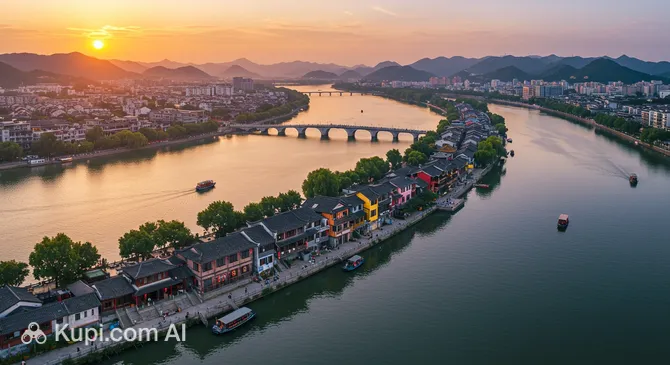
Wuzhou. Source: Kupi.Binoculars

Beyond its architecture, Wuzhou is globally renowned as the "World Capital of Artificial Gems," processing a vast majority of the world's synthetic stones. Travelers can explore the dazzling markets dedicated to this industry. For those seeking spiritual tranquility, the Dragon Mother Temple (Longmu Temple) stands as a significant cultural site, attracting pilgrims and tourists alike with its grand statue and commanding views over the river.

Whether you are wandering through the historic arcade streets or admiring the sparkling craftsmanship of local jewelers, Wuzhou promises a memorable journey. It is a destination that authentically showcases the charm of the south, inviting travelers to discover its hidden treasures and warm hospitality.

Weather Overview

Wuzhou experiences a subtropical climate characterized by warm, humid summers and mild winters. Checking the weather in Wuzhou before your trip is recommended, as conditions vary significantly across the seasons.

The summer months, spanning from June to August, are the hottest time of the year. During this period, average temperatures hover around 28°C to 29°C, with July highs often reaching 32.4°C. It is also the season with the most frequent precipitation; June and August can see rain on up to 24 days each month, so travelers should expect warm days accompanied by regular showers.

In contrast, winters are quite mild and drier. January is typically the coolest month, yet it remains comfortable with an average temperature of 13.6°C and lows rarely dropping below 9.7°C. December stands out as the driest month, featuring only about 4 wet days. Autumn offers a pleasant middle ground, particularly in October, when the average temperature settles at a comfortable 23.3°C with fewer rainy days compared to the summer peak.

Interesting Facts

Beyond the main attractions, Wuzhou holds many fascinating secrets that reveal its deep cultural roots and industrial significance. From culinary origins to historical architectural firsts, the city offers unique stories that surprise many visitors.

  • Wuzhou is home to the earliest Sun Yat-sen Memorial Hall in China. Completed in 1930, this distinctive structure predates the more famous memorials found in larger cities, serving as a testament to the city's historical importance during the early 20th century.

  • The city is widely recognized as the birthplace of Guilinggao, or Tortoise Jelly. This famous traditional herbal dessert, known for its cooling properties and slightly bitter taste, was originally created here and has since become a beloved treat throughout Asia.

  • While the gem industry is well-known, the scale is staggering: Wuzhou processes an estimated 70% to 80% of the world's artificial gems. To celebrate this sparkling trade, the city hosts an annual International Jewel Festival that transforms the town into a global marketplace for synthetic stones.

  • Wuzhou is historically considered a cradle of the Cantonese language and culture. Due to its strategic location bordering Guangdong province, the local dialect is remarkably similar to standard Cantonese, and the city has long served as a cultural bridge connecting the "Two Guangs" regions.

How to Get There

Reaching Wuzhou is relatively straightforward due to its strategic location at the confluence of major rivers and its proximity to key transport hubs in southern China. While the city itself is a regional connector, many visitors choose to arrive via larger neighboring cities and complete their journey by road or rail. For a detailed overview of all travel options, you can read more about how to get to Wuzhou to plan the most convenient route for your trip.

The city of Wuzhou does not have a major international airport listed in the immediate vicinity, so international travelers often fly into Guangzhou Baiyun International Airport (CAN) in Guangzhou. This major global hub is located approximately 206 km from Wuzhou. From the airport, a journey by taxi or bus would take roughly 5 hours and 30 minutes. Another viable option is Guilin Liangjiang International Airport (KWL) in Guilin, situated about 230 km away. Traveling from Guilin to Wuzhou by road typically takes around 6 hours.

For clarity, here is a summary of the main airports:

Airport Name City Passenger Traffic Km from City
Guangzhou Baiyun International AirportGuangzhouVery High206.6
Guilin Liangjiang International AirportGuilinHigh230.2
Zhanjiang AirportZhanjiangMedium267.9
Foshan AirportFoshanMedium188.3
Liuzhou AirportLiuzhouMedium208.7

Traveling by train is often the most convenient method for reaching the city directly. Wuzhou Railway Station is located within Wuzhou itself, just 4.7 km from the city center, making it an easy entry point for visitors. For those connecting from other parts of the region, Liuzhou Railway Station in Liuzhou is a significant hub handling a large volume of passengers, though it is located about 214 km away. Travelers arriving there would need to transfer to a bus or another train to reach Wuzhou, a journey that takes approximately 5 hours and 40 minutes by road.

Below is a list of relevant railway stations:

Station City Passenger Traffic Km to Center
Liuzhou Railway StationLiuzhouHigh213.9
Guilin Railway StationGuilinMedium222.5
Wuzhou Railway StationWuzhou4.7

Main Attractions

Wuzhou offers a fascinating mix of cultural heritage and natural beauty, with sites that reflect its long history as a trading hub. From ancient temples to unique architectural districts, the city provides travelers with a variety of engaging experiences.

One of the most revered sites in the city is the Longmu Temple, or Dragon Mother Temple. Situated on the banks of the Gui River, this architectural marvel is dedicated to the legendary Dragon Mother, a figure symbolizing benevolence and protection in local folklore. Tourists are drawn here not only for the spiritual atmosphere but also to admire the massive statue standing atop the hill. The temple complex offers stunning panoramic views of the river and the city below, making it a perfect spot for photography and quiet reflection.

For a glimpse into the city's commercial past, a walk through the Wuzhou Arcade City is essential. This historic district features a vast collection of Qilou buildings, which represent a unique fusion of traditional Chinese and European architectural styles. The characteristic covered walkways allow visitors to explore the bustling shops and local eateries comfortably, regardless of the weather. It is a living museum where the charm of old Wuzhou meets the vibrancy of modern daily life, offering a truly immersive cultural experience.

Nature lovers should not miss Baiyun Mountain Park, the highest point in the city center. Known as "White Cloud Mountain," it provides a refreshing escape with its lush vegetation and well-maintained hiking trails. The summit rewards climbers with a breathtaking bird's-eye view of Wuzhou and the spectacular confluence of the Xun, Gui, and Xi rivers. The park is also home to the serene Si En Temple and the Yunfeng Pavilion, making it an ideal location for a leisurely afternoon surrounded by natural beauty.

History enthusiasts will appreciate the Sun Yat-sen Memorial Hall, which holds the distinction of being the earliest memorial dedicated to Dr. Sun Yat-sen in China. Nestled on the northern slope of Baiyun Mountain, the hall combines Chinese palace-style design with Western construction techniques. The site offers insightful exhibitions about the revolutionary leader's activities in the region and provides a serene environment to learn about the pivotal moments that shaped modern Chinese history.

Local Cuisine

The culinary landscape of Wuzhou is a delightful fusion of Guangxi's rustic ingredients and the refined traditions of Cantonese cuisine. Due to its location in southern China, near the Guangdong border, the city shares a deep love for fresh flavors and the celebrated "Yum Cha" (morning tea) culture. The abundance of rivers surrounding the city also means that freshwater fish plays a significant role in local dining, often prepared simply to highlight its natural sweetness.

A true signature dish that every visitor must try is Paper-wrapped Chicken (Zhi Bao Ji). This unique delicacy involves marinating pieces of chicken in a savory blend of spices and sauces, wrapping them in special paper, and then deep-frying the parcels. The paper acts as a seal, locking in the juices and intense aroma, resulting in meat that is incredibly tender and flavorful. It is widely regarded as a masterpiece of Wuzhou gastronomy.

For a distinctively local dessert, Wuzhou is famous as the birthplace of Guilinggao, or Tortoise Jelly. This dark, herbal jelly is prized for its cooling properties, making it the perfect treat for the region's humid climate. While it has a slightly bitter herbal taste, it is typically served with honey, condensed milk, or syrup to create a refreshing and balanced snack. Trying a bowl in its city of origin is a culinary rite of passage.

When it comes to beverages, Bingquan Soy Milk is legendary among locals and tourists alike. There is a popular saying that "not tasting Bingquan Soy Milk is like not visiting Wuzhou." Made using high-quality soybeans and local spring water, this drink is renowned for its rich, smooth texture and fragrant aroma. It is a breakfast staple, best enjoyed hot alongside fried dough sticks or sweet buns.

The food culture here is vibrant and social, centered around bustling tea houses and street markets. Mornings usually begin with locals gathering for dim sum, enjoying small steamer baskets of dumplings and buns. In the evenings, the historic arcade streets (Qilou) transform into lively culinary hubs where you can sample street food favorites like river snails, sour pickles, and rice noodles while soaking in the old-world atmosphere.

Travel Tips

Planning a trip to Wuzhou offers a chance to explore a unique blend of Cantonese culture and scenic river landscapes, but a smooth journey requires a bit of local know-how. To help you navigate the city with ease and confidence, here are some essential practical tips for your visit.

  1. Clothing and Gear: Wuzhou has a subtropical climate, so lightweight, breathable fabrics are essential for the hot and humid summers. Since rainfall is frequent, especially from April to August, always carry a compact umbrella or a light raincoat. Winters are mild but can feel damp, so bringing a sweater or a light jacket is advisable. Comfortable walking shoes are a must for exploring the hilly parks and the historic arcade streets.
  2. Transportation: The city does not have a metro system, but it is well-connected by an extensive and affordable bus network. Taxis are readily available and inexpensive compared to Western standards, though few drivers speak English. For convenience, download a ride-hailing app like DiDi (often accessible via Alipay), which allows you to input destinations in English. Walking is also a great option, particularly in the pedestrian-friendly Qilou district.
  3. Finances: The local currency is the Renminbi (RMB/CNY). While cash is still accepted, China has largely moved to a cashless society. It is highly recommended to set up mobile payment apps like Alipay or WeChat Pay and link your international credit card before you arrive, as most local vendors, from street stalls to restaurants, prefer digital payments. International cards are rarely accepted directly at merchant terminals outside of high-end hotels.
  4. Health and Safety: Wuzhou is generally a very safe city for tourists. However, tap water is not safe to drink; always opt for bottled or boiled water. Pharmacies are common and can be identified by a green cross sign, but bring a supply of any prescription medications you need. Mosquito repellent is recommended, especially if you plan to visit parks like Baiyun Mountain or walk along the riverbanks in the evening.
  5. Communication: The primary languages spoken are Mandarin and the local Cantonese dialect (Wuzhou dialect). English proficiency is relatively low outside of major hotels. It is crucial to have a translation app installed on your phone that works offline. Additionally, ensure you have a roaming plan or a local SIM card with data, as many Western apps and websites may be inaccessible without a specific roaming package or VPN service.
  6. Local Etiquette: Wuzhou shares the "Yum Cha" (morning tea) culture with neighboring Guangdong. When dining, if someone pours tea for you, tap two fingers on the table as a silent gesture of thanks. In public, avoid loud or boisterous behavior, which is generally frowned upon. Greeting locals with a simple nod or a smile is polite and well-received.
  7. What to Avoid: Do not leave chopsticks sticking vertically upright in your rice bowl, as this resembles incense burned for the dead and is considered very bad luck. Also, avoid tipping in restaurants or taxis; it is not part of the local culture and can sometimes be seen as confusing or unnecessary.
  8. Additional Tip: If you are visiting the famous gemstone markets to buy synthetic gems, bargaining is expected and acceptable. However, do so with a smile and a friendly attitude. Also, remember that shops in the Qilou district often stay open late, making the evening a perfect time for shopping and soaking in the illuminated architecture.

By keeping these practical tips in mind, you will be well-prepared to embrace the local lifestyle and enjoy everything Wuzhou has to offer. Safe travels and enjoy your discovery of this hidden gem in Southern China!

Entertainment & Nightlife

Nightlife in Wuzhou is defined by a relaxed and inviting atmosphere that centers around its vibrant street food culture and scenic riverfronts rather than high-octane clubbing. As the sun sets, the city transforms into a luminous landscape where locals gather to socialize, dine, and enjoy the cool river breezes. The energy here is authentic and friendly, offering visitors a chance to experience the "slow life" of southern China.

The heart of the evening action is undoubtedly the historic Qilou City (Arcade City). By day, it is a living museum of architectural heritage, but at night, the district truly comes alive. The colonial-style arcade buildings are beautifully illuminated with golden lights, creating a nostalgic backdrop for a night out. This area is perfect for a leisurely stroll, where you can explore small shops selling local crafts or stop at one of the many dessert houses for a bowl of traditional herbal jelly.

For those seeking a bustling culinary adventure, the Shuiyun Tian Night Market is a must-visit destination. This lively spot is a sensory delight, packed with rows of stalls offering everything from grilled oysters and spicy river snails to fresh tropical fruits. The atmosphere is casual and boisterous, with the air filled with the aroma of sizzling skewers and the sound of happy chatter. It is the perfect place to mingle with locals and sample an array of affordable snacks late into the night.

Another popular way to spend the evening is along the banks of the Xijiang River. The riverside promenades in the Hedong district offer stunning views of the city skyline reflected in the water. Visitors can embark on a Xijiang River Night Cruise, which provides a unique vantage point to admire the illuminated bridges and the Dragon Mother Temple glowing in the distance. For a more stationary experience, numerous open-air tea stalls and casual bars line the waterfront, where you can sip on local beer or tea while watching the ships pass by.

Practical advice for enjoying Wuzhou at night includes heading out after 8:00 PM when the streets are most vibrant. The dress code is almost exclusively casual, so comfortable walking shoes and light clothing are appropriate. Taxis and ride-hailing apps like DiDi are plentiful and inexpensive, making it easy to hop between the night markets and your hotel. The city is generally very safe for night walks, even in less crowded areas, but it is always wise to keep an eye on your belongings in busy markets.

While the nightlife is charming, Wuzhou also offers plenty of daytime entertainment. Cultural enthusiasts can visit the Wuzhou Museum to learn about the region's trading history or climb Baiyun Mountain for panoramic views and fresh air. Whether exploring ancient temples by day or savoring street food by night, the city provides a well-rounded and memorable travel experience.

Parks & Museums

Wuzhou is a city where urban energy meets natural tranquility, offering visitors a delightful mix of lush green spaces and institutions that preserve its rich heritage. The city’s hilly terrain and riverfront location provide the perfect backdrop for scenic parks, while its museums offer deep insights into its past as a pivotal trading port in southern China.

Baiyun Mountain Park (White Cloud Mountain) remains the city's premier natural retreat. While known for its panoramic views, the park is also a botanical haven, featuring dense subtropical forests that act as the "green lungs" of Wuzhou. Visitors can enjoy a refreshing hike along shaded paths that lead to the summit, where the air is noticeably cooler and cleaner. The park is not just for hiking; it is a cultural landscape dotted with pavilions and inscribed tablets that tell stories of the city's literary and political past.

For a more local and leisurely experience, Rose Lake Park (Meigui Hu) is a favorite among residents. Centered around a sprawling man-made lake, this park features picturesque bridges, winding willow-lined embankments, and vibrant flower gardens. It is an excellent spot for families and travelers seeking a quiet afternoon; you can rent a small boat to drift on the water or simply watch locals practicing dance and calligraphy in the open plazas.

Delving into the region's history, the Wuzhou Museum is an essential stop for cultural exploration. Located near the city center, this facility houses a comprehensive collection of artifacts ranging from the Han Dynasty to the present day. The exhibits place a strong emphasis on Wuzhou’s role as a historic gateway for the Maritime Silk Road, showcasing ancient pottery, bronze drums, and relics that highlight the cultural exchange between the Central Plains and the Lingnan region.

Another significant site is the Former British Consulate, situated on the scenic Baihe Mountain. This well-preserved colonial-style building stands as a testament to Wuzhou's history as a treaty port opened to foreign trade in the late 19th century. Today, it serves as a museum and a protected historical site, offering visitors a chance to explore European architecture and learn about the diplomatic and commercial history of the era through various displays and photographs.

For those interested in unique local biology, the Wuzhou Snake Garden offers a distinctive experience. Wuzhou is famous for its snake-based cuisine and medicine, and this facility serves as both a research center and a zoo. It provides a fascinating, albeit niche, look into the region's relationship with these reptiles, showcasing various species and educating visitors on their ecological and medicinal importance.

An insider tip for nature lovers is to visit the riverside promenades at dawn. Before the city fully wakes up, the banks of the Gui River are filled with locals practicing Tai Chi and sword dancing in the mist. It is a moment of pure authenticity that offers a peaceful contrast to the bustling activity of the day.

Getting Around

Navigating Wuzhou is relatively simple and convenient, as the city is compact and well-connected. Unlike China's mega-cities, Wuzhou does not currently have a metro system, so the public transportation network relies primarily on an extensive bus system and a plentiful supply of taxis. This straightforward infrastructure allows visitors to reach major attractions, the historic arcade district, and railway stations with ease.

The public bus is the backbone of local transit, offering a comprehensive network that covers the city center and suburban areas. Buses are generally modern, air-conditioned, and clean. Most routes operate from early morning, around 6:30 AM, until late evening, typically ending between 9:30 PM and 10:30 PM. For tourists, routes connecting the Wuzhou South Railway Station to the city center are particularly useful, though they can take some time due to the distance.

The payment system for buses is designed for efficiency. The standard fare is very affordable, usually costing 2 RMB per ride regardless of distance. While you can still pay with cash by dropping the exact change into the coin box upon entry, most locals and travelers now use mobile payment methods. The "Transport" code within the Alipay or WeChat apps is widely accepted; you simply scan the QR code on the bus reader to pay. Physical transit cards exist for residents, but they are generally unnecessary for short-term visitors equipped with a smartphone.

For those seeking a more direct and comfortable option, taxis are abundant and inexpensive compared to Western standards. You can easily hail a taxi on the street; they are typically distinctively painted and easy to spot. All legitimate taxis are equipped with meters, and you should ensure the driver uses it at the start of the journey. Fares start at a low base rate, making it a cost-effective choice for groups or families carrying luggage.

Ride-hailing apps offer a popular alternative to traditional street taxis. Services like DiDi (often accessible via the Alipay app) are highly recommended for international tourists. The app allows you to input your destination in English and pays automatically through the platform, eliminating language barriers and the need to handle cash. This is often the most stress-free way to travel between specific points of interest like the Longmu Temple and your hotel.

For short distances, especially along the scenic riverbanks or within the city center, shared bicycles are a fantastic option. You will find rows of yellow or blue electric and pedal bikes parked on sidewalks throughout the city. These can be unlocked by scanning a QR code with a relevant app (such as Alipay or Meituan). They provide a flexible and leisurely way to explore the streets at your own pace, enjoying the local atmosphere up close.

A practical tip for visitors is to carry small denominations of cash (1 RMB coins or 5/10 RMB notes) if you plan to use taxis or buses without mobile payments, as drivers rarely have change. Additionally, since English signage at bus stops can be limited, it is wise to have your destination written in Chinese characters or saved on a map app to show the driver or to cross-reference with bus route displays.

Accommodation

Finding accommodation in Wuzhou is generally a straightforward and affordable experience, offering a range of options that cater to different travel styles. The city primarily features mid-range business hotels and budget-friendly guesthouses, though there are a few upscale establishments providing higher standards of comfort. While you won't find an abundance of ultra-luxury international chains, the local hospitality sector is well-developed, ensuring clean and convenient places to rest after a day of exploring.

For tourists, the most desirable area to stay is undoubtedly the Wanxiu District, particularly near the historic Arcade City (Qilou) and the riverfront. Staying here places you within walking distance of the city's main cultural attractions, bustling night markets, and the scenic confluence of the rivers. This area offers a mix of refurbished boutique hotels set in older buildings and modern lodgings that provide easy access to the vibrant local life and morning tea culture.

If you are visiting for business or require quick access to transportation, the Changzhou District or the area around the Wuzhou South Railway Station (located in the Longxu District) might be more practical. These areas are newer and feature modern high-rise hotels with ample parking and business amenities. However, be aware that staying near the high-speed railway station places you quite far from the historic center and the main scenic spots.

Accommodation prices in Wuzhou are generally very reasonable compared to China's major tourist hubs like Guilin or Guangzhou. A comfortable stay in a well-rated mid-range hotel is quite budget-friendly. It is highly recommended to book your room in advance through major online travel platforms, especially during Chinese national holidays when availability can tighten. A crucial tip for international travelers is to confirm beforehand that your chosen hotel is licensed to accept foreign guests, as some smaller budget inns may only be authorized to host mainland Chinese citizens.

Nearby Cities

For those looking to explore the surroundings, Wuzhou serves as an excellent base for day trips to several interesting nearby locations:

One of the most popular nearby destinations is Zhaoqing, located just across the border in Guangdong province. This city is renowned for its stunning natural landscapes, particularly the Seven Star Crags, which feature limestone peaks rising dramatically from a vast lake, often compared to a miniature Guilin. Visitors also flock to Dinghu Mountain, a lush biosphere reserve known for its ancient Buddhist temples, refreshing waterfalls, and clean air, making it a perfect retreat for nature lovers.

To the north lies Hezhou, a city that offers a deep dive into traditional Chinese culture. The highlight here is undoubtedly the Huangyao Ancient Town, a remarkably well-preserved village with a history spanning over a thousand years. Walking through its labyrinth of slate-paved streets, visitors can admire ancestral halls, ancient banyan trees, and rustic stone bridges that seem frozen in time. It provides a tranquil contrast to the bustling city life and is ideal for photography and cultural immersion.

Another option is Yunfu, known as the "Stone Kingdom" of China due to its rich resources and stone carving industry. Beyond its industrial fame, the area offers relaxing hot springs and the intriguing Panlong Cavern, a karst cave filled with unique rock formations. It is a great spot for travelers seeking a mix of geological wonders and relaxation.

City Population Distance (km)
Yulin 5,849,700 145
Guigang 4,409,200 177
Zhaoqing 4,151,700 130
Yunfu 2,526,900 100
Hezhou 2,072,600 107

These nearby destinations offer a glimpse into the diverse culture and landscapes of the region, allowing travelers to easily expand their itinerary beyond Wuzhou.

Shopping & Souvenirs

Shopping in Wuzhou offers a unique experience that blends its heritage as a historic trading port with its modern status as an industrial hub. Unlike the high-end luxury retail scenes of China's mega-cities, the shopping culture here is grounded in local craftsmanship, regional specialties, and bustling wholesale trade. Visitors can explore a mix of atmospheric historic streets, specialized markets, and contemporary malls. The city is globally renowned as the "World Capital of Artificial Gems," making it a premier destination for those interested in jewelry and synthetic stones.

The most iconic place to shop is undoubtedly the Qilou City (Arcade City). This historic district is not just a sightseeing attraction but a functioning commercial center where traditional shops have operated for decades. Walking beneath the sheltered arcades, you can find a variety of goods ranging from dried seafood and traditional herbal medicines to local handicrafts and daily necessities. The area retains an old-world charm, perfect for leisurely browsing while protected from the sun or rain.

For a more modern retail experience, visitors can head to the city's major shopping centers. Wangcheng Plaza is a popular destination in the city center, offering a wide selection of domestic fashion brands, electronics, and dining options. It serves as a convenient one-stop spot for travelers needing general supplies or a break from the heat. Another notable complex is Gowin Plaza, which features a contemporary environment with a large supermarket, cinema, and numerous lifestyle stores.

A visit to Wuzhou would be incomplete without seeing the Wuzhou Gem City. This vast market complex is the heart of the global artificial gem trade, where cubic zirconia, synthetic corundum, and glass stones are traded in massive quantities. While it is primarily a wholesale hub for international buyers, many shops welcome retail customers, allowing tourists to purchase dazzling loose stones or finished jewelry at very competitive prices. Additionally, local night markets, such as the one at Shuiyun Tian, offer a lively atmosphere to shop for inexpensive accessories, clothes, and souvenirs.

When looking for authentic souvenirs to bring home, Liubao Tea is a top recommendation. This dark, fermented tea originates from the Wuzhou region and is famous throughout China for its distinct betel nut aroma and health benefits. Another popular edible souvenir is Guilinggao (Tortoise Jelly) powder or Bingquan Soy Milk powder; these packaged goods allow you to recreate the city's signature flavors back home. Of course, a piece of jewelry set with locally cut artificial gems also makes for a sparkling and memorable keepsake.

Standard shopping hours in Wuzhou typically run from 10:00 AM to 10:00 PM for malls and major retail stores. Smaller independent shops in the historic districts may open earlier and close around 9:00 PM. In terms of payment, the city is highly digitized. WeChat Pay and Alipay are the primary payment methods accepted almost everywhere, from large department stores to street stalls. Cash is still accepted but less commonly used, and international credit cards are rarely accepted outside of high-end hotels, so having a mobile payment app set up is highly advisable.

Tax-free shopping services for international tourists are generally not available in Wuzhou. Unlike in major global hubs like Shanghai or Beijing, visitors should not expect to find VAT refund counters at local malls or markets. The listed price is typically the final price, though bargaining is common and expected in markets like the Gem City or when buying from street vendors.

Reached the end of the page?

That means the route is fully explored