Support

Macau

About

Welcome to a dazzling metropolis where East meets West in a seamless blend of heritage and modernity. As a unique destination, Macau offers travelers an experience unlike any other, characterized by its vibrant street life, culinary delights, and world-class entertainment. This city is renowned for its ability to balance old-world charm with futuristic glamour, making it a captivating stop for any globetrotter.

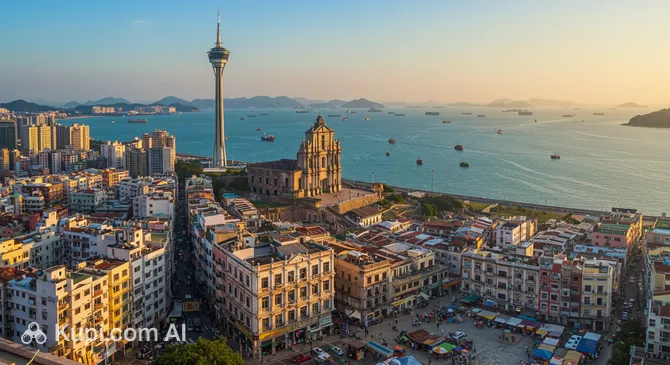
Geographically situated on the western bank of the Pearl River Delta, the city enjoys a humid subtropical climate with mild winters and warm, humid summers. With a population of approximately 568,700 residents, it is a densely populated and energetic urban center. Its strategic location serves as a gateway to the region, offering stunning views of the surrounding waters and easy access to neighboring areas.
Macau. Illustration.
Source: Kupi.com AI

The rich history of Macau is deeply rooted in its past as a prominent Portuguese trading post, a legacy that endures in its stunning colonial architecture and cobblestone streets. Walking through the city feels like traversing two continents at once, with Mediterranean-style buildings standing harmoniously alongside traditional Chinese temples, creating a cultural landscape recognized by UNESCO.

Visitors are often drawn to the iconic Ruins of St. Paul's, a magnificent stone façade that serves as a symbol of the city, and the picturesque Senado Square, which is the beating heart of the historic center. Beyond its historical treasures, the city is famous as a global gaming and resort hub, often referred to as the "Las Vegas of Asia," featuring spectacular entertainment complexes along the glittering Cotai Strip.

Whether you are a history enthusiast, a foodie eager to try Macanese egg tarts, or a seeker of luxury entertainment, this dynamic city promises an unforgettable journey. We invite you to explore the fascinating fusion of cultures and the electrifying energy that defines this remarkable special administrative region.
Weather Overview

Travelers planning a visit should expect a climate characterized by distinct seasonal variations, offering different experiences depending on the time of year. Generally, the city experiences warm, humid summers with frequent rainfall and mild, relatively dry winters. To help you pack appropriately, it is useful to consult the detailed guide to weather in Macau before your departure.

The summer months, particularly from June to August, are the hottest and wettest. During this period, average temperatures typically hover around 29°C, with daily highs often exceeding 30°C. Humidity is high, and precipitation is frequent; June and August can see up to 26 wet days per month, making waterproof gear an essential part of your luggage.

In contrast, the winter season from December to February brings cooler and significantly drier conditions. January is usually the coldest month, with average temperatures dipping to approximately 16.4°C and lows around 13.7°C. Rainfall is minimal during these months, often recorded at just 1mm, which creates pleasant weather for walking tours and outdoor sightseeing.

Spring and autumn serve as transitional periods with changing patterns. Spring sees temperatures rising from 21°C in March to nearly 27°C by May, accompanied by an increase in rainy days. Conversely, autumn offers a comfortable retreat; by November, the average temperature settles at a mild 21.9°C, and the frequency of wet days drops significantly, marking it as one of the most comfortable times to visit.

Average monthly temperature

Average monthly precipitation

Interesting Facts

Beyond the dazzling lights of the casinos and the historic Portuguese streets, Macau holds many fascinating secrets that often escape the casual visitor's eye. Here are a few unique details that make this destination truly one of a kind.

Eiffel Tower Macau. Illustration.
Source: Kupi.com AI

Traveler photos:

  • World's Highest Population Density: This small region is consistently ranked as the most densely populated territory on Earth, packing a vibrant mix of cultures and communities into a remarkably compact land area of just over 30 square kilometers.

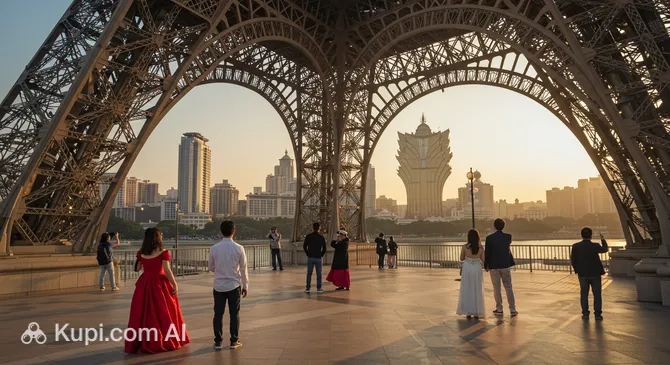
  • A Taste of Paris: You can experience a slice of France in Asia by visiting the Eiffel Tower Macau, a faithful half-scale replica of the original landmark that illuminates the Cotai Strip with spectacular light shows every night.

  • The Created Land of Cotai: The bustling Cotai district, now the heart of the city's entertainment scene, did not exist a few decades ago; it is built entirely on reclaimed land that filled the channel between the islands of Taipa and Coloane.

  • The First and Last Colony: Macau holds the historical distinction of being the first European settlement in East Asia established in the 16th century, as well as the last to be handed back, marking the end of a colonial era in 1999.

How to Get There

Reaching this unique destination is convenient thanks to its well-connected transport network and proximity to major regional hubs. For a comprehensive overview of all travel options, routes, and tips, you can read more about how to get to Macau to plan your journey effectively.

The most direct way to arrive is via Macau International Airport (MFM), which is located within the city itself, approximately 7.3 km from the center. This regional hub handles millions of passengers annually and offers easy access to the downtown area. A taxi or shuttle bus ride from here is quick, typically taking about 20 to 30 minutes depending on traffic.

Many visitors also choose to fly into Hong Kong International Airport (HKG) in Hong Kong, situated about 42.2 km away. As one of the busiest international airports in the world, it provides extensive global connections. From there, you can reach Macau directly via a high-speed ferry or a bus across the Hong Kong-Zhuhai-Macau Bridge, with the transfer taking roughly an hour.

Another viable option is Zhuhai Jinwan Airport (ZUH) in the neighboring city of Zhuhai, located 27.5 km from Macau. It is particularly useful for travelers arriving from mainland China. The journey from Zhuhai to the Macau border is short, usually taking about 40 to 50 minutes by road.

For clarity, here is a summary of the main airports:

AirportPassenger trafficDistance
Macau International Airport7.6 mln7 km
Zhuhai Jinwan Airport11.5 mln27 km
Hong Kong International Airport58.4 mln42 km
Shenzhen Bao'an International Airport61.5 mln56 km
Foshan Airport1.3 mln109 km
Guangzhou Baiyun International Airport63.2 mln135 km

The city of Macau does not have its own long-distance railway station, but you can arrive at stations in the wider region. One option is the Wuzhou Railway Station (KZZ) in the city of Wuzhou, which is approximately 276.8 km from Macau. Another is the Puning Railway Station (OPQ) in Puning, located about 297.0 km away. Due to the significant distances, traveling from these stations would require a long subsequent journey by bus or car, taking several hours.

Below is a list of these railway stations:

StationPassenger trafficDistance
Dongguan Nancheng Railway Station90 km
Songshanhu Railway Station91 km
Qingyuan City Terminal174 km
Wuzhou Railway Station277 km
Puning Railway Station4.5 mln297 km

Main Attractions

Macau is a destination that thrives on entertainment and leisure, offering a spectacular array of attractions that range from world-record-breaking water parks to charming culinary spots. Whether you are looking for high-energy fun or a taste of local culture, the city's diverse offerings ensure there is something for every traveler to enjoy.

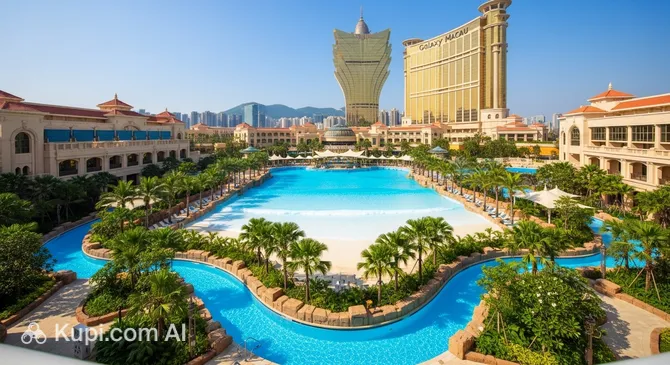
One of the top destinations for families and thrill-seekers is the Grand Resort Deck. Located within the Galaxy Macau complex, this expansive water park is famous for housing the world's longest Skytop Aquatic Adventure River and the largest Skytop Wave Pool. It is a perfect tropical escape where visitors can relax on the white sand beach or enjoy exhilarating water slides, making it a must-visit for those looking to cool off in style.

Grand Resort Deck. Illustration.
Source: Kupi.com AI

Traveler photos:

For a touch of European flair in the heart of Asia, the Eiffel Tower Macau at The Parisian Macao is an iconic landmark. This realistic half-scale replica of the famous French monument offers breathtaking panoramic views of the Cotai Strip from its observation decks on the 7th and 37th floors. In the evening, the tower comes alive with a dazzling light show, providing a romantic and picturesque backdrop for your travel photos.

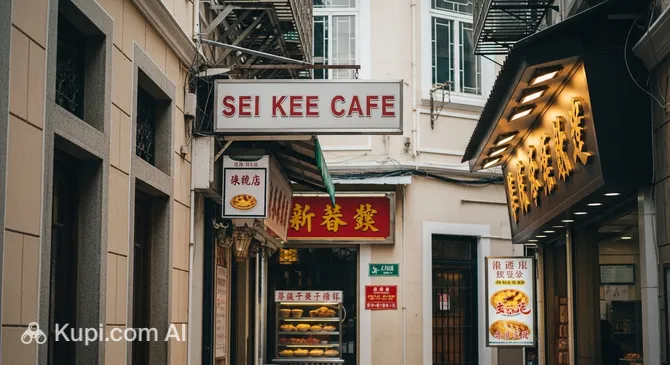
To experience the authentic flavors of the city, a stop at Sei Kee Café is highly recommended. This beloved eatery is renowned for preserving traditional cooking methods, particularly its signature clay pot coffee and tea, which are brewed over charcoal for a distinct, rich aroma. It is also one of the best places to try the famous pork chop bun, a simple yet delicious snack that has become a culinary symbol of the region.

Sei Kee Café. Illustration.
Source: Kupi.com AI

Traveler photos:

Local Cuisine

Macanese cuisine is often regarded as the world's first true fusion food, a delicious legacy of over 400 years of cultural exchange. Blending traditional Cantonese ingredients with Portuguese spices and cooking techniques gathered from Africa, India, and Southeast Asia, the city's food scene is unique and incredibly flavorful. Exploring the local gastronomy is not just about eating; it is a journey through the region's rich history served on a plate.

No visit is complete without trying the iconic Portuguese egg tart. These flaky, buttery pastries filled with rich, caramelized egg custard are sold on nearly every street corner and are best enjoyed warm. Another staple is the pork chop bun, a simple yet satisfying sandwich featuring a seasoned, fried pork chop nestled inside a crispy, toasted bun. For a hearty main course, travelers should look for Minchi, a comforting dish of minced meat stir-fried with potatoes, onions, and spices, often topped with a fried egg.

The city also boasts a vibrant beverage culture. Portuguese wines, particularly Vinho Verde (green wine), are widely available and pair perfectly with Macanese dishes. For non-alcoholic options, the local style of milk tea and coffee is a must-try. Visitors can head to the famous Sei Kee Café to experience traditional clay pot coffee and tea, which are brewed over charcoal to produce a smooth and distinctive flavor that has delighted locals for decades.

Dining in this city ranges from humble street food stalls to high-end Michelin-starred restaurants. The narrow streets around the historic center and Taipa Village are packed with vendors selling almond cookies, meat jerky, and curry fish balls, creating an aroma that tempts passersby at every turn. Whether you prefer a quick bite at a bustling market or a leisurely dinner in a colonial-style building, the culinary landscape offers a feast for every palate.

Travel Tips

Traveling to this vibrant fusion of cultures is an exciting adventure, but a little local knowledge goes a long way in ensuring a smooth trip. To help you navigate the city like a pro and make the most of your time, here are some essential practical tips covering everything from getting around to managing your money.

  1. Clothing and Gear: The climate is generally humid, so breathable, light clothing is best for summer, along with a portable umbrella for sudden showers. However, indoor venues like casinos and malls often have very strong air conditioning, so always carry a light jacket or scarf. Since the historic center features hilly, cobblestone streets, bringing a pair of comfortable, sturdy walking shoes is absolutely essential. If you plan to visit religious sites or high-end dining venues, pack modest attire and smart-casual wear.
  2. Transportation: Walking is the best way to explore the historic peninsula, but for longer distances, the city offers excellent options. A great money-saving hack is to use the free shuttle buses operated by major hotels and casinos; they connect the airport, ferry terminals, and major sights, even if you aren't staying there. Public buses are efficient and cheap, but you must have the exact fare in coins (MOP or HKD). Taxis are available, but it is highly recommended to have your destination written in Chinese, as many drivers have limited English proficiency.
  3. Finances: The official currency is the Macanese Pataca (MOP), but Hong Kong Dollars (HKD) are accepted almost everywhere at a 1:1 exchange rate. It is convenient to use HKD, but be aware that change is often given in MOP, which cannot be used outside of Macau. While credit cards are widely accepted in hotels and large restaurants, you will need cash for street food stalls, small local eateries, and taxis. ATMs are plentiful throughout the city.
  4. Health and Safety: Macau is considered one of the safest cities in the world for tourists, with low crime rates. Pharmacies, often marked with a green cross, are easy to find and stock many Western brands. For emergencies, the government hospital (Conde S. Januário) provides good standard care. Tap water is generally safe to boil, but most locals and tourists prefer drinking affordable bottled water, which is widely available.
  5. Communication: The primary language spoken is Cantonese. While Portuguese is an official language, it is not widely spoken in daily life. English is generally understood in major tourist areas and hotels but can be limited in local shops and taxis. It is very useful to download an offline translation app and a map on your phone. Look for the "WiFi Go" network, which provides free internet access in many public parks, museums, and tourist spots.
  6. Local Etiquette: Politeness is valued here. When visiting temples, keep your voice down, remove your hat, and do not take photos of people praying without permission. In casinos, strict rules apply; ensure you have your passport with you for age verification. When handing over money or a card, doing so with both hands is a sign of respect, though not strictly mandatory for tourists.
  7. What to Avoid: Strictly avoid taking photos or videos inside casinos; this is prohibited and security will intervene immediately. Also, try to avoid visiting popular landmarks like the Ruins of St. Paul's during peak hours on weekends if you dislike crowds; early morning is much more peaceful. Do not assume you can use MOP notes in Hong Kong or mainland China—spend them before you leave.
  8. Additional Tip: Take advantage of the "sample street" leading up to the Ruins of St. Paul's. Vendors here are famous for offering generous free samples of almond cookies and beef jerky. It is a great way to taste local snacks before buying souvenirs. Also, remember that traffic drives on the left side of the road, which is important to note when crossing streets.

Armed with these practical insights, you are ready to explore the winding streets and glittering avenues of this unique destination with confidence. Embrace the local rhythm, enjoy the delicious food, and have a safe and memorable journey in the heart of the Pearl River Delta!

Entertainment & Nightlife

As the sun sets, Macau transforms into a mesmerizing playground of neon lights and pulsating energy, earning its reputation as one of Asia's premier nightlife destinations. The city offers a dual experience: the ultra-modern, high-end entertainment complexes of the Cotai Strip and the more relaxed, sociable bar scenes on the Macau Peninsula. Whether you are looking for world-class clubbing, sophisticated rooftop lounges, or a simple pint with locals, the city's diverse nocturnal landscape caters to every mood.

The epicenter of evening entertainment is undoubtedly the Cotai Strip. Here, the nightlife is characterized by opulence and grandeur, with massive resorts housing some of the region's most exclusive clubs and bars. A highlight of the skyline is the Eiffel Tower Macau. At night, this landmark becomes a spectacular beacon, dazzling visitors with a choreographed light and sound show that runs every 15 minutes. It is an ideal spot for a romantic evening stroll or for capturing stunning photos of the glittering cityscape.

For those seeking a more street-level vibe, the bustling district around Avenida Dr. Sun Yat-Sen on the Macau Peninsula, often referred to as the "Lan Kwai Fong" of Macau, is the place to be. This waterfront area near the Kun Iam Statue is lined with a variety of bars, pubs, and karaoke lounges that attract a lively mix of locals, expats, and tourists. The atmosphere here is vibrant yet unpretentious, making it perfect for bar-hopping or enjoying live music while overlooking the Outer Harbour.

When planning a night out, it is important to note the dress code. While street bars are casual, the upscale clubs and casino lounges in Cotai typically enforce a smart casual policy; flip-flops and shorts are generally not permitted for men. Nightlife peaks on Fridays and Saturdays, with venues staying open until the early hours of the morning. Prices can vary significantly; expect to pay premium rates for drinks in the luxury hotels of Cotai, whereas the bars in the NAPE area (near the Dr. Sun Yat-Sen Avenue) offer more moderate pricing.

Getting around at night is relatively easy, though it requires some patience. Taxis are the most convenient option for late-night travel, but demand can be high after midnight when the clubs empty out. It is advisable to have your destination written in Chinese to show the driver. Alternatively, many large casino resorts operate free shuttle buses that run late into the evening, connecting major properties and transport hubs. The city is generally very safe for night walks, even in the bustling tourist districts, thanks to a strong police presence and well-lit streets.

While the nights are electric, the city also offers thrilling daytime entertainment. Before the evening festivities begin, thrill-seekers and families can visit the Grand Resort Deck. This massive aquatic playground features the world's largest skytop wave pool and white sand beaches, providing a perfect tropical escape in the heart of the city. Additionally, the region is home to numerous museums, theaters hosting international shows, and giant shopping promenades that offer endless amusement while the sun is up.

Parks & Museums

While the city is globally famous for its glittering casinos, it also boasts a surprising abundance of serene green spaces and rich cultural institutions. Beyond the neon lights, visitors can discover tranquil gardens that blend Chinese and European aesthetics, as well as museums that eloquently narrate the region's unique history as a crossroad of civilizations.

One of the most picturesque green retreats is the Lou Lim Ioc Garden. Modeled after the classical gardens of Suzhou, this walled oasis features winding corridors, bamboo groves, and a central lotus pond crossed by a traditional nine-turn bridge. It is a favorite spot for locals to practice Tai Chi or play traditional music, offering tourists a peaceful glimpse into the daily life and aesthetic traditions of the Chinese community.

For a blend of history and nature, the Camões Garden is a significant landmark. Named after the renowned Portuguese poet Luís de Camões, who is said to have written part of his epic "Os Lusíadas" here, it is the city's oldest park. The grounds are hilly and lush, providing plenty of shade and walking paths. It is an excellent place to observe the local culture, as residents often gather here for bird-walking and morning exercises.

Nature lovers willing to venture further should visit Hac Sa Beach on Coloane Island. Known for its unique black sand, which gets its color from natural minerals washed ashore, it offers a stark contrast to the urban center. Nearby, the Seac Pai Van Park houses the Macao Giant Panda Pavilion, where visitors can see these majestic creatures in a carefully maintained habitat, making it a perfect excursion for families.

To truly understand the city's soul, a visit to the Macao Museum is essential. Located within the historic Mount Fortress, just beside the Ruins of St. Paul's, this museum provides a comprehensive overview of the territory's history and the coexistence of Portuguese and Chinese cultures. The exhibits range from traditional industries and religious ceremonies to the evolution of the city's architecture, making it a fascinating stop for history buffs.

Another highlight is the Macao Grand Prix Museum, which celebrates the city's deep connection with motorsport. Recently renovated, it features vintage racing cars, motorcycles, and interactive simulators that allow visitors to experience the thrill of the famous Guia Circuit. It is a unique attraction that appeals not only to racing fans but also to those interested in the social history of this major international event.

Among the architectural gems, the Guia Fortress stands out with its 17th-century chapel and the Guia Lighthouse, the oldest modern lighthouse on the Chinese coast. Perched on the highest point of the peninsula, it offers panoramic views of the city and the Pearl River Delta. Exploring this site provides a tangible connection to the city's maritime past and military heritage.

For an authentic and lesser-known experience, take a stroll through the Taipa Houses-Museum. This row of five mint-colored colonial residences, built in the early 20th century, has been preserved to recreate the lifestyle of wealthy Macanese families. Set against a wetland backdrop, it offers a charming and photogenic escape from the bustle of the Cotai Strip.

Getting Around

Navigating Macau is surprisingly convenient and affordable, thanks to a well-integrated transport network designed to serve both the dense urban center and the outlying islands. The city is compact, meaning travel times are generally short, and visitors have a variety of options ranging from modern rail systems to unique, budget-friendly shuttle services.

The backbone of the public transport system is the public bus network. Buses are frequent, air-conditioned, and cover nearly every corner of the territory, including the Macau Peninsula, Taipa, and Coloane. Route numbers are clearly displayed, and most stops feature information in Portuguese and Chinese, with some newer digital signs including English. This makes buses the most practical way to reach local neighborhoods, beaches, and heritage sites that are further afield. The fare is a flat rate, currently 6 MOP per ride regardless of the distance, making it incredibly economical.

For those traveling between the ferry terminals, the airport, and the major resorts in Cotai, the Macau Light Rapid Transit (LRT) is a modern and comfortable option. Currently, the main Taipa line serves the hotel strip and key transport hubs, offering scenic views of the glitzy architecture along the way. While the network is still expanding to better connect with the historic peninsula, it is an excellent way to beat the traffic when moving between the casinos and the airport. Tickets for the LRT are purchased as tokens at the station vending machines.

A unique feature of the city's transport landscape is the extensive network of free casino shuttle buses. Operated by major hotel and gaming resorts, these bright and comfortable buses run frequently between the Border Gate, ferry terminals, the airport, and the respective hotels. They are completely free to use for anyone, not just hotel guests. For budget-conscious tourists, these shuttles are a fantastic "hack" for moving between major entry points and the tourist centers in Cotai or the central peninsula without spending a cent.

Regarding payment, while cash is accepted on buses, you must provide the exact fare in coins as drivers do not give change. To avoid the hassle of counting coins, it is highly recommended to purchase a Macau Pass. This contactless smart card can be bought at convenience stores like 7-Eleven or Circle K and at the customer service centers of bus companies. It costs approximately 130 MOP (including a refundable deposit and initial credit). Using the card offers discounted bus fares and can also be used for payments in many supermarkets, vending machines, and restaurants.

Taxis are another popular alternative, especially for families or late-night travel. They are generally metered and reasonably priced compared to many international cities. There are two types: the standard black taxis which can be flagged down on the street, and special radio taxis (often blue or red) which must be booked via phone or app. A practical tip for tourists is to have your destination written in Chinese or show a picture of the landmark to the driver, as English proficiency can vary.

For a slower, more nostalgic experience, you might see pedicabs (trishaws) waiting near popular tourist spots like the Ferry Terminal or the Ruins of St. Paul's. These are not practical for commuting but serve as a charming way to take a sightseeing tour around the historic harbor areas. Be sure to negotiate the price firmly before hopping in.

Lastly, do not miss the Guia Cable Car, which provides a short but delightful ride up to Guia Hill. It is one of the shortest cable car systems in the world but offers a effortless way to reach the Guia Fortress and Lighthouse, combining transport with panoramic views of the city. With these diverse options, getting around is not just easy, but part of the adventure itself.

Accommodation

Finding the perfect place to stay in Macau is an adventure in itself, as the city offers a striking contrast between ultra-luxurious integrated resorts and modest, traditional guesthouses. While the destination is globally famous for its glitzy, five-star casino hotels that rival those in Las Vegas, travelers on a tighter budget will also find a reasonable selection of mid-range hotels and clean, affordable hostels, particularly in the older parts of the city.

The choice of location largely depends on the type of experience you are seeking. The Macau Peninsula is the historic heart of the territory and is ideal for culture vultures who want to be within walking distance of UNESCO World Heritage sites, museums, and authentic local eateries. This area hosts a mix of older, established luxury hotels and numerous budget-friendly "villas" (guesthouses) tucked away in bustling residential neighborhoods.

For those looking for glitz, glamour, and world-class entertainment, the Cotai Strip is the undisputed center of action. This reclaimed area connecting the islands of Taipa and Coloane is home to massive resort complexes. Staying here means you rarely need to leave your hotel, as these properties typically encompass shopping malls, theaters, restaurants, and casinos all under one roof. Guests here can enjoy staying near iconic landmarks like the Eiffel Tower Macau or having direct access to the expansive Grand Resort Deck, making it a favorite for leisure travelers.

Just a stone's throw away is Taipa Village, which offers a quieter, more charming atmosphere with its colonial architecture and Portuguese restaurants. It serves as a nice compromise between the bustling strip and the historic center, and is often close to beloved local spots like Sei Kee Café. Travelers seeking a peaceful retreat might consider Coloane. Known as the "green lung" of Macau, this area feels worlds apart from the neon lights, perfect for families or couples looking for a relaxed beachside stay or a boutique hotel experience near nature trails.

When planning your trip, it is crucial to be aware of the significant price fluctuations based on the day of the week. Room rates on weekdays (Sunday through Thursday) are often surprisingly affordable, even at high-end properties. However, prices can double or triple on Fridays and Saturdays. Therefore, a top tip for budget-conscious travelers is to schedule your visit during the week if possible.

Booking in advance is highly recommended, especially if you plan to visit during weekends, public holidays, or major festivals like the Lunar New Year and the Grand Prix in November. During these peak times, hotels reach full capacity very quickly. Most accommodations can be easily booked through major international online platforms, which often offer better rates than booking directly upon arrival.

Nearby Cities

Situated in the heart of the dynamic Greater Bay Area, the city serves as an excellent launchpad for exploring the wider Pearl River Delta. Its strategic location means that some of Asia's most exciting destinations are just a short ferry ride, drive, or train journey away, offering a diverse range of experiences from theme parks to shopping extravaganzas.

Directly across the northern border lies Zhuhai, often referred to as the "Chinese Riviera." It is the most accessible neighbor, reachable simply by walking through the Border Gate. Zhuhai is famous for the massive Chimelong Ocean Kingdom, one of the world's largest marine theme parks, making it a fantastic day trip for families. Additionally, the Gongbei Underground Shopping Complex, located right at the border crossing, offers endless aisles of clothing, electronics, and souvenirs at bargain prices.

To the east, connected by the engineering marvel of the Hong Kong-Zhuhai-Macau Bridge and high-speed ferries, is the vibrant metropolis of Hong Kong. The journey takes approximately one hour, transporting you to a world of towering skyscrapers and colonial history. Visitors can spend the day exploring Hong Kong Disneyland, taking the tram up to Victoria Peak for stunning harbor views, or indulging in world-class dining and shopping in districts like Central and Tsim Sha Tsui.

For a glimpse into modern innovation, a ferry ride can take you to Shenzhen. Known as a global technology hub, this city also offers unique cultural attractions such as the "Window of the World" theme park, which features large-scale replicas of famous global landmarks. It is also a popular destination for those seeking high-quality electronics and fashion.

Travelers willing to venture a bit further inland can visit Guangzhou, the historic capital of the province. As the birthplace of Cantonese cuisine, it is a paradise for food lovers who want to taste authentic dim sum and roast goose. The city seamlessly blends the old and new, with ancient temples standing in the shadow of the futuristic Canton Tower, offering a rich cultural experience to complement your stay.

Shopping & Souvenirs

Macau is a shopper's paradise, largely because it is a free port with low taxation. This makes it an excellent destination for purchasing jewelry, luxury watches, cameras, and electronic gadgets at competitive prices. The city offers a diverse retail landscape, ranging from opulent high-end boutiques in massive resort complexes to traditional Chinese shops selling dried seafood and local delicacies.

For a lively street shopping experience, head to the bustling narrow streets surrounding Senado Square and leading up to the Ruins of St. Paul's. This area, particularly Rua de S. Paulo, is packed with vendors offering almond cookies and meat jerky, often encouraging passersby to taste samples. Another vibrant area is the neighborhood around Avenida de Horta e Costa, which serves as a more local-centric commercial hub offering clothing, shoes, and electronics at reasonable prices.

The city is famous for its extravagant indoor shopping malls that are attractions in themselves. The Grand Canal Shoppes at The Venetian is the largest indoor shopping mall in the region, featuring hundreds of stores set against a backdrop of Venetian architecture and gondola rides. For those seeking French elegance, the retail area connected to the Eiffel Tower Macau, known as Shoppes at Parisian, offers the latest in luxury fashion and lifestyle brands along a replica of the Champs-Élysées.

For a more traditional vibe, visit the Taipa Flea Market held in Bombeiros Square on Sundays. It is a charming spot to browse for handicrafts, accessories, and souvenirs amidst the colonial backdrop of Taipa Village. While not a typical shopping market, the streets surrounding the historic Red Market are fascinating for those who want to see where locals buy fresh produce, clothing, and dried goods in a lively, authentic atmosphere.

When it comes to gifts, edible souvenirs are the most popular choice. Boxes of almond cookies, egg rolls, and sheets of savory meat jerky (bakkwa) are essential buys that you will see everywhere. For non-food items, look for Portuguese-style ceramics, particularly the iconic Galo de Barcelos (rooster) figurines, or antiques and Chinese calligraphy supplies found in the quieter shops near the base of Mount Fortress.

Most shops and malls typically open from 10:00 AM to 10:00 PM daily, giving you plenty of time to browse after a day of sightseeing. Payment is convenient, with major credit cards widely accepted in malls and hotels. In smaller shops and street stalls, cash is preferred. Both Macanese Patacas (MOP) and Hong Kong Dollars (HKD) are accepted almost interchangeably, though change is usually given in MOP. Mobile payments like Alipay are also becoming increasingly common.

One of the biggest advantages of shopping here is the tax policy. As a free port, the city does not impose sales tax on most goods, meaning the price you see is generally the final price. There is no need to go through a tax refund process at the airport or ferry terminal, making the shopping experience hassle-free and often cheaper than in neighboring regions.

Reached the end of the page?

That means the route is fully explored