Support

Nansha

About

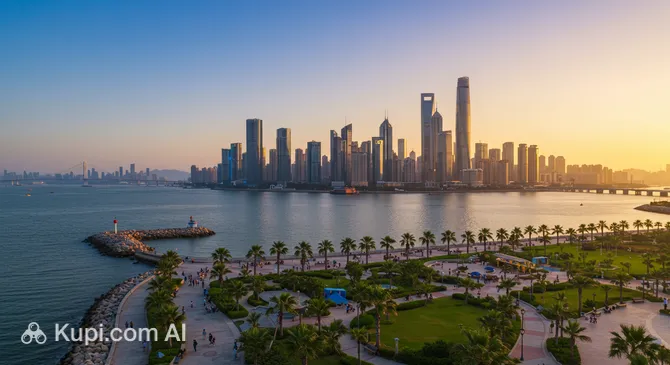
Nansha is a true southern gem of the Guangzhou metropolis and the symbolic gateway to the South China Sea. Situated in the picturesque Pearl River Delta, this district wonderfully combines the dynamics of modern development with the serenity of a coastal resort. When planning a trip to China, it is worth paying attention to this unique place where fresh river waters meet salty sea currents, creating a unique microclimate and a refreshing atmosphere.

Nansha. Illustration.
Source: Kupi.com AI

With a population of about 1.8 million people, the city is an important economic center, yet it retains a sense of coziness and plenty of space for relaxation. Here, urban landscapes and modern ports harmoniously coexist with dense mangroves and well-maintained parks. The history of Nansha and its rapid transformation have turned the district into a space where both fans of progress and tourists seeking a connection with nature feel comfortable.

Travelers are drawn here not only by prestigious yacht clubs and modern embankments but also by the opportunity to immerse themselves in the atmosphere of traditional culture by visiting secluded temples or blooming gardens. Nansha is perfect for family walks and romantic weekends: quiet beaches and an abundance of greenery allow you to feel like you're at a real seaside resort without leaving the city limits. This place is definitely worth a visit to see a different, relaxed, and picturesque side of the industrial giant.

Weather Overview

The climate of this coastal district can be described as humid subtropical, which ensures lush greenery and blooming year-round. In general, the weather in Nansha is favorable for travel, however, it is important to consider seasonality: there is a clearly defined hot, humid season and a drier, cooler period.

Winter here is incredibly mild and comfortable, not at all like the severe cold of northern latitudes. In December and January, the average temperature stays around 16°C, and nights rarely get colder than 12°C. This is the driest period of the year: precipitation is practically non-existent (0–1 mm), and the number of rainy days is minimal (only 3–4 per month), making winter an ideal time for long walks.

With the arrival of summer, the picture changes dramatically. From June to August, the air warms up to 29–32°C, and humidity rises significantly. This is the monsoon time: in the summer months, it can rain up to 26 days a month, bringing freshness but requiring an umbrella. Expect hot summers with frequent rainfall and mild, dry winters that will provide you with a comfortable vacation without extreme temperatures.

Average monthly temperature

Average monthly precipitation

Interesting Facts

Beyond the main attractions, Nansha hides many fascinating secrets that reveal themselves only to the most curious travelers. This district will surprise you with its contrasts—from record-scale flower fields to ancient maritime traditions set in stone.

  • A million "suns" in one garden. The Sunflower Garden in Nansha is not just a flowerbed, but the first theme park in China entirely dedicated to sunflowers. More than a million of these plants are planted here, with seeds collected from various corners of the world to ensure continuous blooming all year round. In spring, this place turns into an endless yellow sea, creating surreal landscapes for photography.

  • The palace of the sea goddess. Nansha Tianhou Temple is considered one of the largest complexes in Southeast Asia dedicated to Mazu, the patron saint of sailors. Interestingly, the huge statue of the goddess towering over the complex looks directly out to sea, as if welcoming and blessing passing ships, while the temple's architecture echoes the majestic style of the Forbidden City.

  • A paradise for migratory birds. Nansha Wetland Nature Park, located at the mouth of the river, is often called the "kidneys of Guangzhou" for its ecological significance. This place serves as a vital stopover for tens of thousands of migratory birds traveling from the north. Travelers can take a boat trip through dense mangroves, observing rare birds in complete silence, far from city noise.

  • Elite yachting. Nansha Marina is more than just a pier; it is one of the most prestigious yacht clubs in the region, recognized with high international awards. Here, you can not only admire luxury vessels from around the world but also receive professional yacht management training, making Nansha a hub for sailing enthusiasts.

How to Get There

Nansha, as an important district in the Pearl River Delta, enjoys excellent transport accessibility, although it does not have its own airport within the city limits. Travelers usually arrive via the major transport hubs of neighboring metropolises, from which convenient connections are established. You can find out all the ways to get to the city by studying the detailed guide, and below we will look at the main arrival options via the nearest air gateways.

The most convenient option in terms of distance is Shenzhen Bao'an International Airport (IATA: SZX). It is located not in Nansha, but in the neighboring city of Shenzhen, just 34.4 km from the destination. Thanks to this proximity, the journey by taxi or bus will take about 72 minutes. This is a modern and large aviation hub receiving flights from all over the world.

Another popular route is via Guangzhou Baiyun International Airport (IATA: CAN). Located in Guangzhou, about 69.4 km from Nansha, this airport is one of China's main hubs. Travel time by car is approximately 2 hours. The high passenger traffic guarantees many flight options.

It is also worth considering Hong Kong International Airport (IATA: HKG), located in Hong Kong (about 68.3 km from Nansha). The journey from there will take about 2 hours, although border formalities should be taken into account. This is an excellent choice for those combining their trip with a visit to Hong Kong.

For clarity, here is a summary of the main airports:

AirportPassenger trafficDistance
Shenzhen Bao'an International Airport61.5 mln34 km
Foshan Airport1.3 mln56 km
Hong Kong International Airport58.4 mln68 km
Guangzhou Baiyun International Airport63.2 mln69 km
Macau International Airport7.6 mln73 km

If you are planning a trip by train, keep in mind that the nearest major railway stations from the available list are quite far from Nansha. For example, Puning Railway Station (IATA: OPQ) is located in Puning, which is about 278.5 km away. A taxi ride from there will take over 7 hours, so this option is only suitable as part of a complex route.

Also available is Wuzhou Railway Station (IATA: KZZ) in the city of Wuzhou, located about 246.6 km from Nansha. Travel time by car is approximately 6.5 hours. For faster access to Nansha, it is recommended to look for routes via Guangzhou's central stations, which have better connections to the district.

Below is the information about the railway stations:

StationPassenger trafficDistance
Wuzhou Railway Station247 km
Puning Railway Station4.5 mln279 km

Main Attractions

Nansha offers tourists an amazing mix of cultural heritage, natural beauty, and modern entertainment. This district of Guangzhou is perfect for those who want to take a break from the hustle and bustle of the metropolis and enjoy coastal scenery. Here are the main places you should definitely include in your travel itinerary.

One of the most majestic attractions is the Nansha Tianhou Palace. This temple complex, located at the foot of Dajiao Mountain, is dedicated to the sea goddess Mazu and is considered one of the largest such structures in Southeast Asia. Tourists are impressed by the scale of the architecture, which resembles the style of the Forbidden City, and the huge statue of the goddess towering over the coast. A walk through the temple grounds offers not only spiritual peace but also stunning panoramic views of the Pearl River estuary and the Humen Bridge.

Nature lovers should head to the Nansha Wetland Park. This is a true ecological treasure where you can see rare mangrove forests and thousands of migratory birds. The best way to explore the park is to rent a boat and slowly sail through the labyrinths of water channels. This place attracts visitors with its silence, fresh air, and the opportunity to observe wildlife in its natural habitat, making it an excellent choice for ecotourism.

For vivid impressions and colorful photos, the Sunflower Garden is ideal. This is the country's first theme park where millions of sunflowers bloom year-round thanks to special technologies. In addition to the "sunny" flowers, there are rose and lavender gardens, as well as attractions for children. A visit to this park will provide a boost of positivity and is a great option for family vacations, allowing you to dive into a sea of colors and scents.

For those who prefer active recreation and hiking, Huangshanlu Forest Park is recommended. These are the "lungs" of the city, featuring dense vegetation, picturesque lakes, and well-maintained hiking trails. Climbing to the top of the main peak, you will be rewarded with a breathtaking view of the entire Nansha district and the endless sea. It is a wonderful place for a picnic and to recharge your batteries in the heart of nature.

Local Cuisine

Nansha's cuisine is a magnificent example of how geographical location shapes gastronomic culture. Located at the junction of river and sea, this district is famous for its amazing combination of classical Cantonese traditions and an abundance of the freshest seafood. For gourmets, it is a real paradise: local chefs masterfully emphasize the natural taste of the products using delicate steaming, aromatic herbs, and light spices, avoiding excessive heat or greasiness.

The stars of any feast here are the gifts of the sea. Be sure to order garlic roasted oysters—this is a signature dish of the region that can be found in both fine restaurants and simple street cafes. No less popular is steamed fish in a savory black bean sauce, as well as various variations of crabs and shellfish. Lovers of unusual flavors should pay attention to the rich seaweed soups, which locals value for their health benefits.

It is impossible to imagine a trip to this part of Guangdong province without tasting dim sum. In Nansha, shrimp dim sum with thin dough are especially good, often served in woven baskets in establishments on the embankment. For dessert, try traditional Cantonese sweets: refreshing herb jelly, sweet beans, delicate rice pudding, or coconut-based treats. These desserts are not overly sweet and provide a perfect finish to a hearty meal.

As for drinks, tea remains the king of the table. The "yam cha" tradition (tea drinking with snacks) is very strong here: green tea or pu-erh is served almost everywhere; it aids digestion and is refreshing. On hot days, cold herbal infusions are popular. If you want to pair something with a seafood dinner, locals often choose a light lager or traditional Chinese rice wine, which highlights the flavor of the fish.

The best places to get to know Nansha's cuisine are the lively farmers' markets and waterfront restaurants. Here, you can not only eat but also immerse yourself in the city's atmosphere. The gastronomic life is especially vibrant during seafood festivals and harvest festivals, when chefs compete in skill and the air is filled with the aromas of grilled delicacies. This is a great opportunity to chat with hospitable residents and see the real, non-touristy side of life in the region.

Travel Tips

Preparing for a trip to Nansha requires attention to detail, as this district combines the features of a major Chinese metropolis with the specifics of a coastal area. To ensure your trip is as comfortable and worry-free as possible, we have gathered the most relevant and proven recommendations to help you easily navigate the local environment.

  1. Clothing and Essentials. The climate here is humid and warm, so even in winter, you'll unlikely need heavy clothing—a layered outfit with a windbreaker is enough. In summer, opt for light natural fabrics that dry quickly. Be sure to bring comfortable, broken-in shoes for walking in parks and on embankments. If you plan to visit Tianhou Temple, remember the dress code: shoulders and knees should be covered. Also, don't forget a universal power adapter (types A, I, and G are used in China).

  2. Transport. Nansha is well-integrated into Guangzhou's transport network. For moving around, it is most convenient to use the metro (especially Line 4 and the high-speed Line 18), which connect the district with the city center. For local trips, download the Alipay app or use mini-programs in WeChat to call a taxi (DiDi), as hailing a car on the street can be difficult, and explaining your destination to a driver without knowing the language is problematic.

  3. Finance. Be prepared for the fact that paper money has practically gone out of use here. We strongly recommend setting up Alipay or WeChat Pay in advance and linking your international card—this is the main way to pay everywhere, from the metro to street stalls. Nevertheless, it's worth having a small supply of cash yuan (in small bills) in case of technical failures. Tipping is not expected.

  4. Health and Safety. The area is safe for tourists, but the humid climate and abundance of water bodies encourage insects. Be sure to carry repellent, especially when visiting wetlands. Drink only bottled water; tap water should not be consumed even after boiling. Pharmacies can be identified by a green cross sign, but it's better to bring basic medications with you, as finding familiar Western brands can be difficult.

  5. Communication. Few people in Nansha know English, mainly only the staff of large hotels. Your main assistant will be an offline translator on your smartphone with voice input and translation-by-photo functions. To access your usual social networks and maps (Google Maps works poorly here), take care of buying an eSIM or roaming in advance, or install local mapping services like Baidu Maps or Amap.

  6. Local Etiquette. Chinese people value restraint. A greeting is usually limited to a nod or a light handshake. An important nuance: business cards, money, or a gift should be given and received with two hands—this is a sign of deep respect for the person. In public places, try not to raise your voice or show intense emotions.

  7. What to Avoid. Never stick your chopsticks vertically into a bowl of rice—this resembles a funeral rite and is considered a very bad omen. Also, avoid public arguments or criticism of local residents: saving "face" (dignity) is of critical importance in Chinese culture, and open conflict will put you in an extremely awkward position.

  8. Gastronomic Life-hack. When visiting the famous seafood market in Nansha (Nansha Seafood Market), you can choose live fish or crabs yourself and then take them to any nearby restaurant. For a small fee, chefs will prepare your purchases according to traditional recipes. This is the surest way to try the freshest delicacies at a reasonable price.

Following these simple rules will help you avoid cultural misunderstandings and everyday difficulties. Nansha is a hospitable and modern district, and by showing a little respect for local traditions and being technically prepared, you will get only the warmest and brightest impressions from your trip.

Entertainment & Nightlife

Nightlife in Nansha is noticeably different from the noisy and never-sleeping center of Guangzhou. You won't find endless rows of thumping night clubs here like at Party Pier, but instead, you'll discover a unique resort-like atmosphere. Evenings in this coastal district mean either an elegant dinner overlooking the yachts or a colorful immersion into the gastronomic chaos of local night markets. It is an ideal place for those who prefer a relaxed evening with a glass of wine or authentic adventures with street food.

The center of attraction for lovers of the high life is the Nansha Marina. This place feels like it teleports you to Europe: colonial-style architecture, the embankment, and snow-white yachts create a romantic setting. There are bars and restaurants at the club where you can spend the evening on an open terrace, enjoying the sea breeze and quiet music. The crowd here is respectable, so it's best to stick to a smart casual style. This is the best location for dates or business meetings in an informal setting, where the average check will be higher than the city average, but the view is worth it.

If you're looking for real Chinese fun and affordable prices, head to the Dongchong Night Market. Located near Zhudian Road, this market comes alive as the sun sets. The atmosphere is bustling: the smell of grilled oysters and skewers mingles with loud conversation and laughter. There is no dress code, and you'll often have to sit on simple plastic chairs, but this is exactly where you can try the freshest seafood for pennies. It is a safe and friendly place where tourists can mingle with the locals.

For classic city entertainment, Nansha Wanda Plaza is worth a visit. This huge shopping and entertainment complex is the heart of the district's modern life. In the evening, young people gather here to visit the IMAX cinema or spend time in one of the many KTVs (karaoke clubs) that are very popular in China. There are also many restaurants around Wanda that stay open late, where you can order Peking duck or spicy Sichuan hot pot after a long day.

Travelers should keep a few practical points in mind. Public transport (metro and buses) in Nansha stops running earlier than in the city center, usually around 22:30–23:00. For night travel, it is best to use taxis or ride-hailing apps (DiDi), which operate 24/7 and are safe. The area is considered very peaceful, and night walks here pose no threat, though basic precautions are always wise.

While Nansha is famous for its evening lights, don't forget the daytime activities that provide a contrast to the nightlife. The majestic Tianhou Temple and the quiet mangrove forests of the nature park mentioned earlier are perfect for recharging before another eventful evening.

Parks & Museums

Despite its status as a developing economic center, Nansha pays great attention to ecology and the preservation of cultural heritage. This district is often called the "green lungs" of the region: here, urbanism gives way to extensive gardens, and modern art spaces coexist with monuments of a heroic past. For tourists tired of skyscrapers, local parks and cultural sites will be a breath of fresh air in both the literal and figurative sense.

Among the green zones, Puzhou Garden deserves special attention. Located at the foot of a mountain, near the ferry terminal, this park is an amazing landscape experiment. Traditions of classical Chinese Suzhou gardening and elements of Western European park art are harmoniously intertwined here. Strolling through its alleys, you will see elegant gazebos, bridges, and well-kept lawns that create the perfect backdrop for relaxation and photo sessions.

If you want to feel the proximity of the ocean, head to Nansha Binhai Park. This is a spacious coastal zone stretching along the shoreline. The park is famous for its long walking paths framed by palm trees and flowering shrubs. It is the best place in the city to enjoy the sea breeze, have a picnic on the grass, or simply watch the passing ships, feeling the rhythm of a port city.

Speaking of museums and history, it is impossible not to mention the Humen Forts. Although the main museum complex is on the opposite bank, the Nansha side (especially the Hendang Islands) was historically part of South China's "Sea Defense Gates." The ancient artillery batteries and ruins of fortifications preserved here serve as a silent reminder of the Opium Wars period. This is a real open-air museum where the history of the Pearl River's defense comes to life among stones and ancient cannons.

The modern culture of the region is personified by the New Nansha Library. This is not just a book repository, but an impressive architectural object whose design was inspired by a traditional Chinese inkstone. The building has become a hub for art and design lovers: exhibitions, lectures, and cultural events are held here regularly. Tourists should stop by to appreciate the futuristic interiors and learn more about the development path of this district.

For those looking for non-touristy routes, we suggest renting a bicycle and riding along the local "Greenways." These dedicated bike paths link the main parks (for example, from Puzhou Garden to Binhai Park) and pass through picturesque, shaded areas that often go unnoticed when traveling by taxi.

Getting Around

The transport system in Nansha is part of Guangzhou's extensive network, making it convenient, fast, and inexpensive to get around. The main artery for tourists is the metro. The district is served primarily by Line 4, which passes through major residential and tourist zones, and the ultra-modern high-speed Line 18. The latter deserves special attention: trains here reach speeds of up to 160 km/h, allowing you to get to the center of Guangzhou in just 30 minutes. Stations are announced in English, and navigation is intuitive, making the subway the most reliable way to travel.

For trips to specific attractions not reached by the metro (for example, the Wetland Park or Tianhou Temple), the bus network is ideal. Buses in Nansha are modern, air-conditioned, and run on schedule. Tourist routes, often marked with special icons, are particularly convenient. The bus fare is usually fixed at a symbolic 2–3 yuan regardless of distance, while the metro ticket price depends on the distance and varies from 2 to 10 yuan or more.

The payment system here is high-tech. While you can buy single-trip tokens for cash at metro machines (you'll need small bills or coins), the most convenient way is to use transport QR codes in the Alipay or WeChat apps. Simply find the "Transport" section, select Guangzhou, and scan the code at the turnstile or the bus validator. An alternative is the physical Yang Cheng Tong transport card, which can be bought at 7-Eleven stores or metro stations; it works on all types of transport, including river buses.

If you prefer comfort and privacy, taxis and ride-hailing services are at your service. You can hail a car on the street, but it's much more reliable to use the DiDi app (the Chinese equivalent of Uber) built into Alipay. This removes the language barrier: you just point to a spot on the map, and the driver takes you there via GPS. Payment is automatically deducted from your linked card. Regular taxis also run on a meter, but drivers rarely speak English, so prepare the name of your hotel or attraction in Chinese characters in advance.

A unique feature of Nansha is the opportunity to ride in a robotaxi. This district became one of the first pilot zones in the world for fully autonomous driving. Companies like Pony.ai offer driverless rides (or with a safety operator) through special apps. This is not just transport, but a real attraction of the future, available today. For active holiday lovers, rental bikes (blue or yellow) are available on every corner, unlocked via the same payment apps.

When planning your route, consider the transport operating hours. The metro usually opens around 6:00 AM and finishes around 11:00–11:30 PM, which is a bit earlier than in the city center. Buses on secondary routes may stop running as early as 9:00–10:00 PM. During rush hours (7:30 to 9:00 AM and 5:30 to 7:00 PM), Line 18 can be crowded, so it's better to choose daytime for comfortable travel with luggage.

Accommodation

The choice of accommodation in Nansha will pleasantly surprise travelers with its diversity and quality. As this district is developing as an important tourist and business hub, the hotel infrastructure here is new and modern. Unlike the overcrowded city center, you can find spacious rooms and excellent service here at more attractive prices. The main range of offers varies from solid business hotels and luxury five-star coastal resorts to comfortable apartments and mid-range hotels.

When choosing a place to stay, you should be guided by the purpose of your trip. If you are planning an active sightseeing holiday and want to be closer to civilization, choose hotels in the Wanda Plaza area and the Jinzhou metro station. This is a bustling center with many shops, restaurants, and excellent transport accessibility. Here, you will always be in the thick of things and can easily reach any point in the city by metro.

For those seeking privacy and a resort atmosphere, the coastal zone near the ferry terminal and Binhai Park is ideal. Hotels in this part of Nansha often have their own gardens, swimming pools, and offer rooms with panoramic views of the Pearl River estuary. This is the best choice for a romantic weekend or a family holiday when you want to enjoy the sea breeze and silence away from the city bustle.

The pricing policy in Nansha is generally more democratic than in central Guangzhou or neighboring Hong Kong. Here, you can stay in a high-level hotel (luxury or premium category) for the cost of a standard room in the center of the metropolis. Budget options are mainly represented by local hotel chains and apartments that offer clean and functional accommodation at affordable prices.

Booking tip: Although Nansha is not as crowded with tourists as central Guangzhou, it is worth remembering the periods of the Canton Fair (usually April-May and October-November). At this time, demand for housing across the region rises sharply, and prices can double or triple. If you are planning a trip during these dates, book your room several months in advance. For booking, it is most convenient to use large international aggregators or Chinese platforms (like Trip.com), which often offer special discounts for this region.

Nearby Cities

For those who want to explore the surrounding area, Nansha serves as an excellent starting point for day trips to several interesting nearby places:

CityPopulationDistance
Humen1 800 00015 km
Lianhuashan20 km
Shiqiao29 05023 km
Shunde3 000 00024 km
Dongguan10 646 00034 km

Although Nansha is administratively part of the metropolis, a trip to the historical center of Guangzhou will provide a completely different experience. Here, you can see the famous Canton Tower, stroll through the colonial Shamian Island, and immerse yourself in the bustling life of one of the world's largest trading cities. This is an ideal choice for those who want to combine shopping with sightseeing of iconic landmarks.

Just 24 km away is Shunde, which is often called the cradle of Cantonese cuisine. This city is officially recognized by UNESCO as a Creative City of Gastronomy. People come here specifically to try authentic dishes such as buffalo milk with ginger or special fish dishes. Besides food, Shunde is famous for the beautiful Qinghui Garden—one of the four great gardens of Guangdong Province.

History and culture lovers should head to Foshan. This city is known as the birthplace of the legendary martial arts master Ip Man and a center for ceramics production with a centuries-old history. A visit to the Ancestral Temple (Zu Miao) and the ancient Nanfeng Kiln will allow you to touch the traditional way of life in the region, which is carefully preserved here amidst modern development.

These nearby destinations provide an insight into the diverse culture and landscapes of the region, making your trip even more fulfilling.

Shopping & Souvenirs

Shopping in the Nansha district has its own unique character, different from the traditional shopping routes of metropolises. As this district is a free trade zone, centers for selling imported goods are actively developing here, along with modern shopping and entertainment complexes. For tourists, this is an opportunity to combine buying brand-name items with acquiring authentic local products for which the Pearl River Delta is famous.

The main commercial life is concentrated around the Jinzhou commercial circle. This is the busiest area of the city, where numerous clothing, cosmetics, and electronics stores are located along Jinsha Road and adjacent blocks. It's pleasant to stroll here in the evening: bright signs, many cafes, and the accessibility of the metro make this place a magnet for both locals and visitors.

Among the large shopping venues, the undisputed leader is Nansha Wanda Plaza. This is a classic huge mall for China, where international mass-market brands, sports stores, an IMAX cinema, and dozens of restaurants are gathered under one roof. If you need to buy something familiar—from clothes to gadgets—or just hide from the heat in a comfortable environment, this is the best choice. Also, pay attention to the shopping zones in the Nansha Marina area, where you can find more exclusive boutiques and yachting goods.

The true flavor of Nansha is revealed in its markets, and the most famous of them is the Shijiuyong Seafood Market (19th Stream Seafood Market). This is not just a place for trade, but a tourist attraction. People come here specifically to buy the freshest seafood, dried delicacies, and local fruits. The atmosphere is noisy and lively, and the variety is mind-boggling: from giant shrimp to rare types of shellfish, which can be prepared in nearby restaurants.

Gastronomic gifts are the most common souvenirs brought from Nansha. Be sure to look at the dried seafood: scallops, oysters, shrimp, and fish—they are of excellent quality here and are sold in beautiful gift packaging. The district is also famous for its tropical fruits, especially guava and bananas grown on local plantations. Local tea or pearl jewelry, often sold in tourist zones near the Tianhou Temple, also make good gifts.

Most shopping centers and stores are open daily from 10:00 to 22:00. Markets open much earlier, at sunrise, and work until evening. As for payment, as elsewhere in the country, cashless payment reigns supreme. The main payment methods are the mobile apps Alipay and WeChat Pay. Cash is accepted reluctantly, especially in small shops, and international Visa or Mastercard cards will only work in large supermarkets or brand boutiques in malls.

Nansha is part of a pilot Free Trade Zone (FTZ), which creates special conditions for shopping. So-called Cross-border E-commerce Experience Centers are popular here. In such stores, tourists can purchase imported goods (cosmetics, baby food, wine, luxury goods) at prices lower than in regular stores thanks to preferential taxation. Be sure to check out these centers if you are interested in high-quality imports.
Reached the end of the page?

That means the route is fully explored