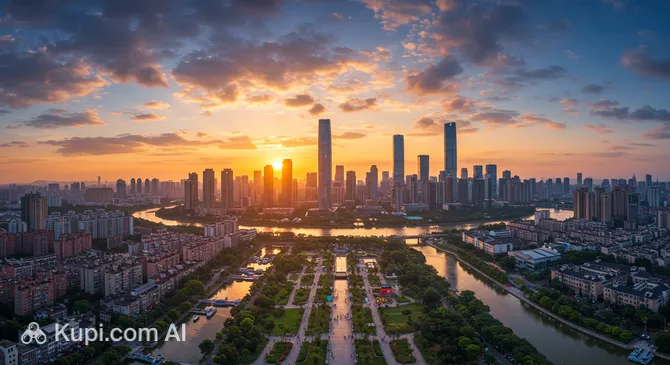
Dongguan is a dynamically developing metropolis in China, located in the heart of the Pearl River Delta. Situated between giants such as Guangzhou and Shenzhen, the city has gained global fame as "the world's factory." An incredible number of manufacturing facilities are concentrated here, having transformed a former agricultural region into a powerful industrial hub with a population of over 10 million people.
Despite its industrial appearance, Dongguan preserves cozy corners where Dongguan's history, dating back more than 1,700 years, comes to life. The city offers travelers a unique contrast between ultra-modern shopping complexes and ancient Ming and Qing dynasty villages that have miraculously survived amidst the urban landscapes.
Dongguan. Illustration.
Source: Kupi.com AI
The atmosphere here is imbued with the spirit of creation and commerce. Dongguan can hardly be called a classic resort, but it attracts those who want to see the "real" modern China from the inside. A journey here is an excellent opportunity to explore the business center of Guangdong province and discover its rich cultural heritage hidden behind the facades of skyscrapers.
Weather Overview
Climatic conditions in Dongguan are determined by its location in a humid subtropical zone. The city is characterized by hot, long summers and mild, short winters. The weather in Dongguan is significantly influenced by monsoons, which bring heavy rainfall during the warm period of the year.
The summer months (from May to September) are marked by high humidity and temperatures that often exceed 30–32°C. June is traditionally considered the rainiest month, when downpours can be particularly intense. Winter in Dongguan is very comfortable: in December and January, the thermometer usually stays around 15–20°C, making this period ideal for walks and sightseeing.
Spring and autumn are transitional seasons when the weather is most changeable. When planning a trip, consider the high air humidity, which can make the heat feel more intense. It is recommended to bring light clothing and always have an umbrella on hand, especially if your visit falls during the spring-summer period.
Average monthly temperature
Average monthly precipitation
Interesting Facts
"The World's Factory": Dongguan earned this nickname because a huge portion of the consumer goods, electronics, and clothing sold worldwide is produced right here.
Ancient Roots: Despite its modern look, the history of the settlement can be traced back 1,700 years, and its current name was established as far back as the 8th century.
Giant Mall: The city is home to the South China Mall, which is one of the largest shopping complexes on the planet by gross leasable area.
Transport Hub: The city occupies a strategic position in the "corridor" between Guangzhou and Shenzhen, making it a crucial logistical link for the entire Guangdong province.
How to Get There
Thanks to its location in the world's most populous region, Dongguan enjoys excellent transport accessibility. Although the city has its own airport, most tourists prefer to use ways to get to Dongguan via neighboring metropolises, which are connected to it by high-speed highways and railways.
The most convenient air gateways are Guangzhou Baiyun International Airport (CAN) and Shenzhen Bao'an International Airport (SZX). Both hubs receive flights from all over the world and are within a 1-1.5 hour drive from central Dongguan. From the airports, you can get there by special shuttle buses, intercity metro, or taxi.
The railway connection in the region is excellently developed. There are several major stations in Dongguan, including Dongguan Railway Station and Humen Station, which is served by high-speed trains connecting Hong Kong, Guangzhou, and other Chinese cities. A trip on such a train from neighboring centers often takes less than half an hour.
Although Dongguan is primarily known as an industrial center, there are several locations here that can surprise a curious tourist. One of the most picturesque spots is the Nanshe Ming and Qing Ancient Village. This is a living architectural monument of the Ming and Qing eras, where traditional ancestral temples, residential houses with exquisite carvings, and quiet ponds create the atmosphere of old China.
For those who prefer modern scales, the South China Mall is a must-see. For a long time, it held the title of one of the largest shopping centers in the world by area. It is not just a place for shopping, but an entire entertainment district with attractions, canals, and zones styled after different cities around the world.
Nature lovers should visit Dongguan Park. This is the city's central green zone, where locals practice tai chi and tourists can take a break from the hustle and bustle of the metropolis among well-maintained alleys and ponds. The combination of such authentic villages, giant malls, and city parks forms the special, multi-faceted character of the city.
Local Cuisine
The culinary traditions of Dongguan are rooted in the classic Cantonese cuisine of Guangdong province. The main emphasis here is on the freshness of ingredients and delicacy of flavor. Be sure to try the famous dim sum — various steamed snacks served in bamboo baskets, which are a symbol of a South Chinese breakfast.
Thanks to its proximity to rivers and the sea, the local cuisine is famous for fish and seafood dishes. Roasted pork and goose with crispy skin are also popular in the city. In the old quarters, you can find traditional stalls preparing rice noodles according to ancient recipes dating back to the region's agricultural past.
The city's gastronomic scene is represented by both fashionable restaurants in shopping centers and bustling street markets. Be sure to visit a local tea house to enjoy the "yum cha" (tea drinking) culture, and don't forget to try the local fruits, especially the bananas for which this area was historically famous.
Travel Tips
A trip to Dongguan requires some preparation to ensure your stay in this industrial giant is as comfortable and productive as possible.
Clothing and Essentials: Dongguan has a humid subtropical climate, so bring light clothing made of natural fabrics. In summer, sunglasses and an umbrella (for sun and sudden downpours) are essential. In winter, a light jacket or sweater is sufficient.
Transport: Install the Didi app for ride-hailing and Alipay for paying for metro and bus fares. Traveling by metro is the most reliable way to avoid traffic jams.
Finances: In China, payment via WeChat Pay and Alipay is accepted almost everywhere. Cash is useful only as a backup, and international system cards work in very few places (mainly in large hotels).
Health and Safety: Do not drink tap water — use only bottled water. Overall, the city is safe, but avoid walking alone in dark industrial outskirts late at night.
Communication: English is not widely spoken. Download an offline translator in advance and save the addresses of your hotel and desired locations in Chinese (characters).
Local Etiquette: Chinese people value politeness and restraint. Avoid loud conversations and arguments in public places. A greeting with a slight bow or nod is quite appropriate.
What to Avoid: Do not photograph government buildings or people without their explicit consent. You should also avoid criticizing local traditions or discussing sensitive social topics.
Extra Tip: When buying electronics at markets, always check the product's functionality on the spot and don't be afraid to bargain — it's part of the local culture.
By following these simple rules, you will be able to fully appreciate the power and hospitality of this unique Chinese metropolis.
Entertainment & Nightlife
The entertainment scene in Dongguan is primarily geared toward business people and local youth. The city's nightlife is concentrated around major shopping districts and high-density office areas. Here you will find many karaoke bars (KTV), which are an integral part of Chinese leisure culture, as well as modern cinemas and concept cafes.
For those seeking classic bars and clubs, the areas near the central squares and the South China Mall are best. The atmosphere in these venues is usually relaxed, with a crowd consisting of expats and office workers. In the evening, Dongguan is transformed by neon signs, and a walk through the busy streets allows you to feel the rhythm of a city that never fully sleeps.
Daytime entertainment includes visiting modern art spaces and amusement parks within shopping centers. While the city doesn't claim to be a party capital, its infrastructure allows for high-quality recreation for every taste — from quiet tea houses to bustling discos that stay open until morning.
Parks & Museums
In the dense industrial development of Dongguan, green zones play the role of important oases of tranquility. One of the most significant places is Dongguan Park — a well-maintained municipal area ideal for leisurely walks. Here you can see how the city lives outside of offices: from outdoor sports to traditional Chinese games in the shade of trees.
The Nanshe Ming and Qing Ancient Village holds special cultural value. It is a kind of open-air museum where you can study the architectural heritage of past centuries. Ancient ancestral temples and residential buildings tell the history of the region much more vividly than any textbook, immersing visitors in the atmosphere of traditional China.
Even though the city does not position itself as a "green resort," its parks and historical locations play an important compensatory role. Visiting these places allows you to balance the impressions of a high-tech metropolis, discovering its quieter and more traditional side.
Getting Around
The transport system of Dongguan is designed to ensure the mobility of millions of residents and workers. The basis of rail transport is the metro (specifically Line 2), which connects key areas of the city with railway stations. This is the fastest way to avoid the famous traffic jams on the main highways, especially during peak hours.
The city's bus network covers even the most remote industrial zones. Routes are numerous, and fares are usually paid using local transport cards or via QR codes in mobile apps. For tourists, buses may seem complicated due to the lack of information in English, so the metro remains the priority option.
Taxis and ride-hailing services (equivalents of Uber, such as Didi) are very popular and affordable. They are a convenient alternative for trips between districts not yet covered by metro lines. Given the vast distances within the city prefecture, always allow extra time for travel, as heavy traffic in industrial quarters is a common occurrence.
Accommodation
Due to its status as a major industrial hub, Dongguan offers a wide choice of accommodation, oriented primarily toward business travelers. Modern mid-range and high-end hotels predominate here, offering comfortable conditions for work and leisure, including conference rooms and spa centers.
For tourists, the most convenient areas to stay are Nancheng and Dongcheng. The main city infrastructure, shopping centers, and best restaurants are concentrated here. In these districts, you can find both luxury chain hotels and more budget-friendly city hotel options.
If you are planning a long stay, it is worth looking at serviced apartments, which are often chosen by expats. It is recommended to book accommodation in advance, especially during major industrial exhibitions and trade fairs, when the demand for rooms in central areas rises sharply.
Nearby Cities
Dongguan serves as an excellent starting point for exploring the vibrant metropolises of the Pearl River Delta. In just 30–40 minutes by high-speed train, you can reach Guangzhou, the provincial capital, to see the famous Canton Tower and stroll through the historic Shamian Island.
For a day trip, the industrial suburb of Humen, known for its historic past and museums, or Changping, which is an important transport hub, are also ideal. If you want a bit of nature amidst the urban landscape, you can head to the Lianhuashan area, which features picturesque hills and ancient stone quarries.
The proximity of such major centers allows tourists to combine a business visit to Dongguan with a rich cultural program in neighboring cities. Regular connections and a developed road network make traveling around the surrounding areas easy and comfortable.
Shopping & Souvenirs
Shopping in Dongguan is an experience on a planetary scale. The city is home to the South China Mall, one of the largest shopping centers in the world. Here you can spend an entire day moving between hundreds of international brand stores, food courts, and entertainment areas. It is a true paradise for those looking for modern goods in one place.
For a more authentic experience, it's worth heading to the city markets. Dongguan is famous for its everyday consumer goods, electronics, and textiles. Popular souvenirs to bring back include the famous local tea, traditional sweets, and silk products. In the old districts of the city, you can find shops selling incense, the production of which was historically developed in this area.
Shops and shopping centers usually operate from morning until late evening, seven days a week. Large complexes accept international bank cards, however, for purchases at markets and small shops, it is better to have cash or set up WeChat Pay or Alipay payment systems, which dominate local commerce.