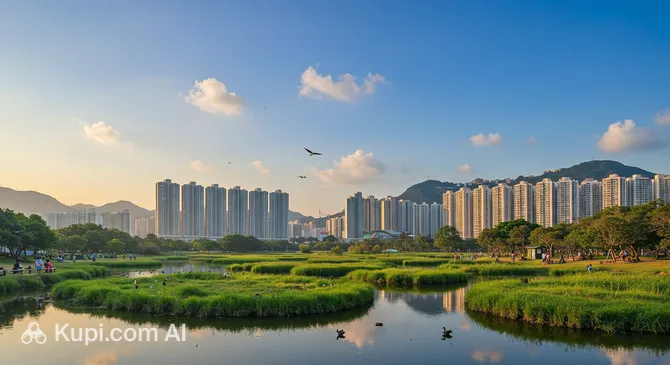
Located in the northwest of the New Territories, Tin Shui Wai is one of the youngest and most rapidly developing residential areas in Hong Kong. Developed in the early 1990s as a "new town," it has become home to more than 286,000 people. Here, you won't find the frantic bustle of the island's central districts; instead, you can experience the true rhythm of the metropolis's daily life, with its functional urbanism and modern residential complexes.
Tin Shui Wai. Illustration.
Source: Kupi.com AI
Despite its reputation as a "bedroom" community, Tin Shui Wai attracts travelers with its proximity to nature reserves and its authentic atmosphere. By exploring the history of the area's development, one can see how futuristic skyscrapers, surrounded by green parks and modern shopping centers, have risen on the site of former fish ponds.
Visiting this district is an excellent way to see Hong Kong through the eyes of the locals. Walks along spacious alleys, a taste of local gastronomy, and convenient transport links make Tin Shui Wai an interesting spot on the map for those who want to venture off the beaten path.
Weather Overview
The climate in Tin Shui Wai is typical for Hong Kong and is classified as humid subtropical. The seasons are well-defined: summers are hot and very humid, while winters are mild and relatively dry. You can check the current weather forecast in the city on a dedicated page, which will help you better plan your wardrobe.
The hottest months are from June to September, when average temperatures are around 28–30°C and humidity reaches its peak. Typhoons and heavy rains are possible during this period. In winter, during January and February, a pleasant coolness sets in with average temperatures around 16–17°C, making this time ideal for walking.
It is worth noting that due to the dense construction and distance from the open sea, air quality in the dry season can be lower than in coastal areas. During calm periods, a light haze may be observed, so weather-sensitive travelers are advised to monitor air quality indices.
Average monthly temperature
Average monthly precipitation
Interesting Facts
Tin Shui Wai hides several curious features that set it apart from other districts in Hong Kong. Here are a few interesting facts:
Young Status: The district was designed and built almost "from scratch" in the early 1990s on former reclaimed land and fish ponds.
Plum Garden: There are 14 plum trees in the district's central park, whose vibrant blooming early in the year is a major event for locals and photographers.
Special Transport: Tin Shui Wai is one of the few districts where the primary internal transport is the Light Rail, with a network that permeates all residential blocks.
Remoteness: Due to its geographical position in the northwest, it is one of the residential areas furthest from Hong Kong's Central Business District, which led to its self-contained infrastructure.
How to Get There
The transport accessibility of the Tin Shui Wai district is ensured by a modern network of railways and bus routes connecting the northwest of Hong Kong with the central parts of the metropolis. You can find more details about routes on the how to get to the district page.
For travelers arriving by air, it is most convenient to use Hong Kong International Airport (HKG). From there, buses (such as route A33) run regularly to Tin Shui Wai, with the journey taking about 40–50 minutes. You can also take a taxi, which is faster but more expensive, especially during peak traffic in the New Territories.
The main artery connecting the district to the city is the MTR Tuen Ma Line. The Tin Shui Wai railway station is a key transport hub. The trip to Kowloon takes approximately 45 minutes, and the modern transfer system allows for easy travel to any point in the city.
Station
Passenger traffic
Distance
Shenzhen Railway Station
10
14 km
Shenzhen North station
12
17 km
Hong Kong West Kowloon railway station
14
24 km
Hung Hom station
17
25 km
Hung Hom station
17
25 km
Main Attractions
Although Tin Shui Wai is primarily a residential area, there are surprising places for relaxation and exploration both in its heart and surroundings. One of the most picturesque destinations is Nam Sang Wai—a unique natural area with wetlands, river landscapes, and eucalyptus-lined paths. It is a favorite spot for photographers and nature lovers looking for a break from urban development.
Nam Sang Wai. Illustration.
Source: Kupi.com AI
Traveler photos:
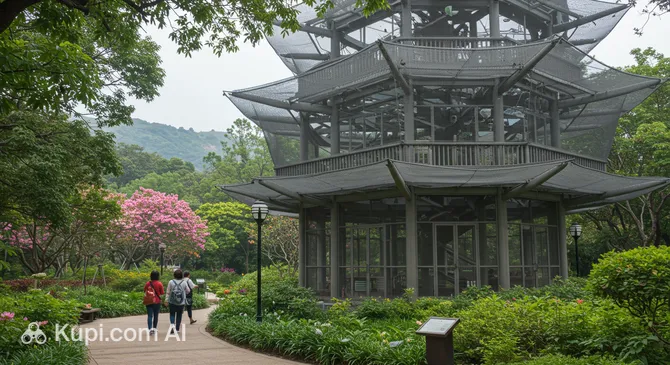
For those who prefer managed urban spaces, Yuen Long Park is an ideal choice. This extensive green territory features the Aviary Pagoda as its crown jewel. This tall, vibrant structure serves as both a viewpoint and a home to many bird species that can be observed up close.
Aviary Pagoda. Illustration.
Source: Kupi.com AI
Traveler photos:
The central meeting point for residents is Tin Shui Wai Park. It is famous for its recreation areas and fountains, and during the plum blossom season, it becomes a true magnet for visitors. This functional and cozy space perfectly reflects the concept of a modern "new town," where nature is harmoniously integrated into a dense architectural environment.
Local Cuisine
The culinary scene in Tin Shui Wai is a classic kaleidoscope of Cantonese flavors, adapted for the everyday needs of residents. The main activity centers around the food courts of large shopping malls, where you can try everything from famous dim sum to aromatic wok-fried noodles. The overall character of the cuisine here is affordable, with an emphasis on freshness and speed of service.
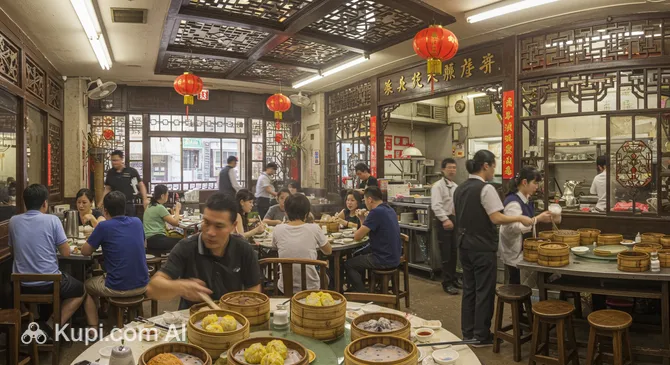
Be sure to try traditional "nai cha"—Hong Kong-style milk tea—and visit local tea houses known as "cha chaan tengs." For an authentic atmosphere and a hearty meal, head to Wing Shun Restaurant, which is popular among locals for its straightforward and high-quality local cuisine.
Wing Shun Restaurant. Illustration.
Source: Kupi.com AI
Traveler photos:
If you are looking for something more traditional, check out Ping Shan Lao Di Fang. The food culture here involves simple but filling dishes, such as congee (rice porridge) or seafood dishes. Despite the absence of fine dining, Tin Shui Wai delights with honest prices and a truly homemade approach to classic Hong Kong hits.
Travel Tips
Preparing for a trip to Tin Shui Wai will help you feel confident in this modern residential district of Hong Kong. Here are some practical tips for your comfort:
Clothing and Essentials: In summer, bring light clothing made of natural fabrics, as the humidity is very high. In winter (December–February), it can be cool, so a windbreaker is recommended. Be sure to wear comfortable shoes for long walks and carry a power adapter (Type G, British plug).
Transport: Purchase an Octopus card immediately upon arrival. It works on the MTR, Light Rail, buses, and even in shops. This will save you a lot of time and eliminate the need to look for spare change.
Finance: The local currency is the Hong Kong Dollar (HKD). Cards are accepted almost everywhere in malls, but it is better to have cash at markets and small eateries.
Health and Safety: The area is safe, but it is better to stick to well-lit central streets after dark. Pharmacies are easy to find in shopping centers like V City.
Communication: The main language is Cantonese, but young people and staff in large stores understand basic English. Free Wi-Fi is available in most shopping complexes and MTR stations.
Local Etiquette: Greetings are usually reserved. It is customary to maintain order and not push in transport queues—Hong Kongers highly value discipline.
What to Avoid: Do not attempt to smoke in public places and parks—this carries high fines. Also, avoid traveling on the MTR during rush hours (07:30–09:00 and 17:30–19:00).
Additional Tip: Always carry a bottle of water during the hot season and monitor typhoon warnings via official weather apps.
By following these simple rules, you can fully enjoy the hospitality and rhythm of life in this amazing corner of the New Territories.
Entertainment & Nightlife
Nightlife in the residential district of Tin Shui Wai is characterized by its quiet, family-oriented nature. You won't find loud nightclubs or bars with blasting music here, as most activity after sunset is centered around shopping malls and parks. Locals prefer to spend their evenings having late dinners at restaurants or strolling along the illuminated paths of Tin Shui Wai Park.
For those seeking more active evening entertainment, it's best to head to the neighboring Yuen Long district, which is no more than 15–20 minutes away by Light Rail. There, you will find cinemas, karaoke bars, and lively night markets with street food. If your goal is large-scale parties and high-end bars, you should head to central Kowloon or Hong Kong Island, though keep in mind that the one-way journey will take about an hour.
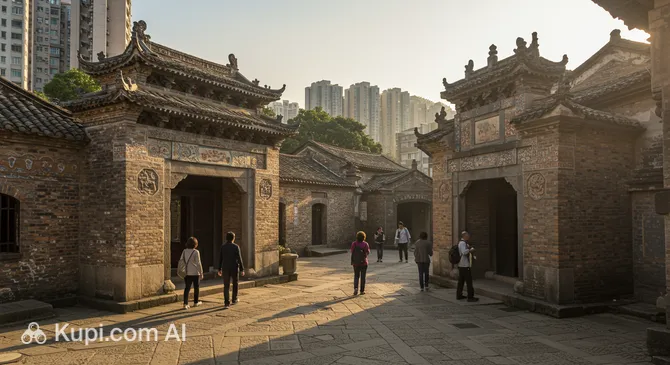
Daytime entertainment in the area mainly consists of modern cinemas in large shopping complexes, such as YOHO Mall II, and play zones for children in Dragon Park. For food enthusiasts, an evening can be spent at the cozy Ping Shan Lao Di Fang, which serves traditional dishes in a relaxed setting.
Ping Shan Old Place. Illustration.
Source: Kupi.com AI
Traveler photos:
Parks & Museums
The main place for relaxation in the district is Tin Shui Wai Park. This is a spacious green zone right in the center, where artificial lakes, fountains, and cozy paths find their place among the skyscrapers. The park is especially beautiful in spring when the plum trees bloom, creating a wonderful contrast with the urban architecture.
Nature and quiet seekers should definitely visit Nam Sang Wai. Although technically a natural area on the outskirts, it offers a sense of complete seclusion. Here, you can see migratory birds and enjoy views of the river and mangroves. Another interesting spot is Yuen Long Park, home to the famous Aviary Pagoda, which offers a panoramic view of the area and exotic birds.
Aviary Pagoda. Illustration.
Source: Kupi.com AI
Traveler photos:
There are no major museums within Tin Shui Wai itself, as the district is very young. However, culture lovers can easily reach the historical attractions of neighboring Yuen Long or head to the center of Hong Kong, where world-class galleries and museums are located. Residents and visitors have access to a modern public library, which often hosts local exhibitions.
Getting Around
The transport system of Tin Shui Wai is a model of efficiency and design. The district's main feature is the Light Rail network, which connects residential blocks to one another. It is a fast and convenient way to get around, with cars running every 5–10 minutes, and fares are paid using the universal Octopus card.
For trips to other parts of Hong Kong, the Tin Shui Wai MTR station (Tuen Ma Line) is of key importance. The metro trains are modern, air-conditioned, and run on a precise schedule. Keep in mind that during peak hours (morning and evening), transport can be very crowded, so tourists are advised to plan their trips during off-peak times to avoid the crowds.
In addition to rail transport, the district has an excellently developed network of buses and minibuses that complement the main routes. Taxis are available everywhere and can be easily called via an app or hailed on the street. Cycling paths are present in park areas, but they are currently limited for long-distance travel through the district due to the high density of buildings.
Accommodation
Tin Shui Wai is primarily a residential area, so the selection of traditional hotels is limited. Most accommodation options consist of apartments or serviced flats geared toward long-term stays. This is an excellent choice for those who want to feel like a local and save on accommodation costs compared to the central districts of the island.
The main concentration of short-term rental housing and guest houses is located near major commercial hubs like Kingswood Ginza. Staying in this part of the district is convenient because supermarkets, pharmacies, and Light Rail stops are always nearby, providing quick access to the MTR station.
If you are planning a trip during peak seasons, such as Chinese New Year, it is advisable to book accommodation in advance, as demand for budget options in the New Territories is consistently high. For a wider selection of five-star hotels, travelers often look to the neighboring Yuen Long district or more central locations.
Nearby Cities
Tin Shui Wai serves as a convenient starting point for exploring the northwestern part of the New Territories and even neighboring mainland China. Thanks to the developed transport network, you can easily plan a variety of day trips.
Just a few kilometers away is Shenzhen—a massive metropolis in China known for its incredible shopping and amusement parks. You should also visit the quiet area of Tung Tau Tsuen to see a more traditional way of life. For those interested in history, a trip to Yuen Long, where ancient temples and walled villages are preserved, is an excellent choice.
The surroundings of the city offer a striking contrast between ultra-modern skyscrapers and protected natural areas. Don't miss the chance to broaden your horizons and see how diverse this region can be.
Shopping & Souvenirs
Shopping in Tin Shui Wai is oriented toward daily needs and offers everything required for a comfortable life. You won't find high-end boutiques here, but there is an abundance of popular international mass-market brands and high-quality local goods at reasonable prices.
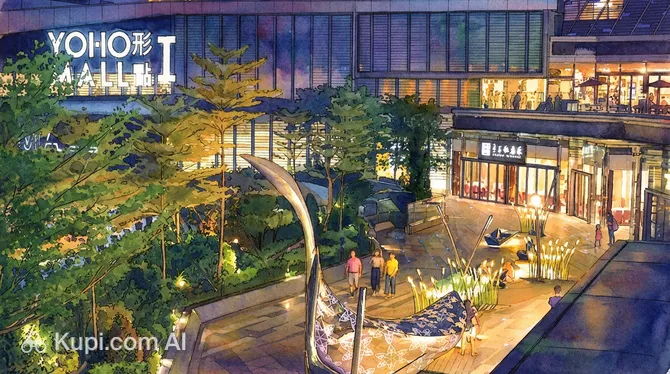
The primary shopping hubs are the large complexes of V City and Kingswood Ginza. Inside, you'll find not only clothing and cosmetics stores but also huge supermarkets with exotic products. It is also worth visiting YOHO Mall II, which is within walking distance and offers a wide range of electronics and accessories.
YOHO Mall II. Illustration.
Source: Kupi.com AI
Traveler photos:
Local markets deserve special attention—you can always buy the freshest fruit and seafood there, as well as find simple household items. Shops usually operate from 10:00 to 22:00, and most places accept both bank cards and the local Octopus card. Remember that it's better to head to more touristy areas for souvenirs, while here you should buy what the Hong Kongers use themselves.