Support

Kowloon

About

Kowloon is the pulsing heart of Hong Kong, a district where ultra-modern glass-and-steel skyscrapers blend seamlessly with traditional Chinese markets and neon signs. Located on a peninsula, it offers travelers a completely different atmosphere from the formal financial center of the island: life here is in full swing 24/7, and the air is filled with the aromas of street food and the sea breeze of Victoria Harbour. The district's name translates as "Nine Dragons"—according to legend, a young Song dynasty emperor counted eight dragon hills here and proclaimed himself the ninth.

With a population of over 2.1 million people, Kowloon is considered one of the most densely populated places in the world, creating a unique effect of constant motion. The best way to begin exploring the rich heritage and developmental milestones of this area is by diving into the pages of Kowloon's history, which remembers its days as a fortified outpost against pirates as well as its period of rapid industrial growth. Today, it is a major tourist hub where luxury shopping malls sit side-by-side with quiet Buddhist temples.
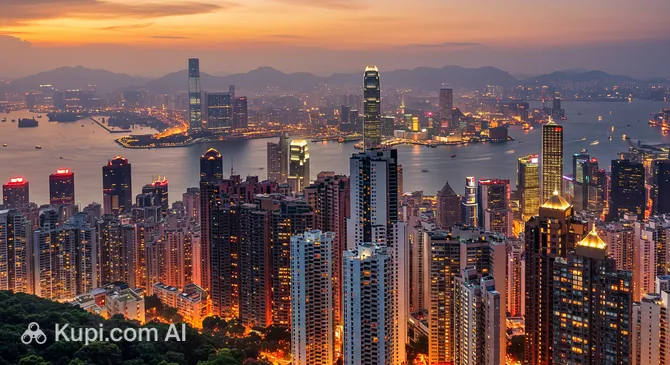
Kowloon. Illustration.
Source: Kupi.com AI

A visit to this district is unthinkable without a stroll along the famous Tsim Sha Tsui Promenade, which offers the best views of the Hong Kong Island skyline, or without immersing yourself in the bustle of the night markets. Kowloon invites everyone to feel the true spirit of a metropolis where ancient ancestral traditions still dictate the rhythm of modern city life. This is a place that never sleeps and always finds something to surprise even the most seasoned traveler.

Weather Overview

Kowloon is located in a subtropical monsoon climate zone, which determines a clear change of seasons. Summer here is long, hot, and very humid: from May to September, temperatures often exceed 30°C, and tropical downpours bring temporary relief. Typhoons are possible during this period, so tourists should monitor local weather warnings.

Winter in the district is mild and dry, with pleasant temperatures ranging from 15-20°C, making December and January an excellent time for long walks. The most comfortable seasons are spring and autumn, when humidity drops and the sky remains clear. A detailed forecast and current data on the weather in Kowloon will help you pack your suitcase correctly before your trip.

Expect warm and humid summers with frequent rainfall in August (up to 330 mm) and cool, sunny winters when rain is very rare. March and April can be foggy, but it is at this time that the city parks look most picturesque.

Average monthly temperature

Average monthly precipitation

Interesting Facts

Kowloon is a place full of mysteries and surprising records that make it one of the most interesting districts in the world.

  • "Nine Dragons": The district's name comes from a legend about a young Song dynasty emperor who counted eight hills around the city and called them dragons. An advisor reminded him that the emperor himself was the ninth dragon, which gave the area its name.

  • World Light Record: Every day at 8:00 PM, you can watch "A Symphony of Lights" in Kowloon. This show is officially recognized by the Guinness World Records as the world's largest permanent light and sound show.

  • The Lawless City: On the site of the current "Walled City" park, there used to be the Kowloon Walled City—a unique enclave that went ungoverned by any state for decades, becoming the most densely built-up place on Earth.

  • The Green Giant: Despite the dense development, the 13.5-hectare Kowloon Park is located right in the heart of the district, home to pink flamingos and Olympic-standard outdoor swimming pools.

  • The Golden Mile: Nathan Road earned its nickname due to the incredible concentration of shops and hotels, and the fact that after dark, it is literally bathed in the golden light of neon signs.

How to Get There

Kowloon is one of the most accessible areas in the region, boasting excellent connections to international and regional transport hubs. Most travelers arrive via Hong Kong International Airport (HKG). The fastest way to get to the center of Kowloon is to take the Airport Express train, which will take you to Kowloon Station in 20-25 minutes, where free shuttles run to many hotels.

AirportPassenger trafficDistance
Hong Kong International Airport58.4 mln25 km
Shenzhen Bao'an International Airport61.5 mln52 km
Macau International Airport7.6 mln63 km
Zhuhai Jinwan Airport11.5 mln90 km
Huizhou Airport2.6 mln92 km

If you are planning a trip from mainland China, it is most convenient to use the high-speed rail. Trains arrive at the modern West Kowloon station, which is an architectural masterpiece in itself. The station is integrated into the city's metro system, allowing for an instant transfer to the desired line. It is also worth checking out detailed information on how to get to Kowloon by various means of transport, including express buses and taxis.

StationPassenger trafficDistance
Songshanhu Railway Station77 km
Dongguan Nancheng Railway Station86 km
Qingyuan City Terminal192 km
Puning Railway Station4.5 mln232 km
Chaoyang Railway Station (Guangdong)817 600258 km

Don't forget the most romantic way to arrive—on the historic Star Ferry. Operating since 1888 between Hong Kong Island and the Tsim Sha Tsui pier, this ferry offers a ten-minute ride for a symbolic fee with the best views of the cityscapes. It is a mandatory ritual for any tourist, allowing you to feel the atmosphere of the port right from the deck of a vintage vessel.

Main Attractions

One of the most recognizable landmarks in Kowloon is the promenade in the Tsim Sha Tsui district. This is where the Avenue of Stars is located, dedicated to Hong Kong cinema legends like Bruce Lee. It is an ideal spot for evening walks, offering breathtaking views of Victoria Harbour and the famous light show. Nearby is Harbour City, the largest shopping complex, offering not only endless shopping but also excellent observation decks.

For those who want to experience the old city atmosphere, the Temple Street Night Market is a must-visit. Here, under the glow of neon lamps, you can find everything from electronics to antiques. The market is famous for its street fortune tellers, opera singers, and an incredible selection of fresh seafood in improvised open-air cafes. This is the quintessence of Kowloon's nightlife and local color.

The historical depth of the area is revealed at Kowloon Walled City Park. It was built on the site of the legendary walled city, which was once the most densely populated place on the planet. Today, it is an oasis of tranquility designed in the classical Qing dynasty style. Visitors can see preserved 19th-century South Gate ruins, an ancient yamen building, and picturesque gardens with zodiac sculptures that tell the story of this unique piece of land's complex fate.

Equally impressive is Nathan Road, often called the "Golden Mile." This main artery of the city pierces through Kowloon, dazzling with its abundance of advertisements, signs, and storefronts. The energy of a modern metropolis is concentrated here: from luxury hotels to tiny electronics shops, creating a unique rhythm that keeps people coming back again and again.

Local Cuisine

The gastronomy of Kowloon is a true paradise for food lovers, where fine dining meets unpretentious street food. You should definitely start your acquaintance with local traditions by trying dim sum—a variety of dumplings and snacks steamed in bamboo baskets. It's best to do this in traditional tea houses during the first half of the day. No less famous are Hong Kong roasted duck and BBQ pork (char siu), which can be found in specialized shops with characteristic window displays.

Street food culture thrives at the Temple Street Night Market. Be sure to try Claypot Rice and spicy fried crabs here—these are signature dishes of local open-air cafes known as "dai pai dongs." For a snack on the go, egg waffles with sweet fillings or fish balls in curry sauce, sold on almost every corner in Mong Kok, are perfect.

For more variety, head to the Harbour City mall, which features food courts with cuisines from around the world and high-end restaurants overlooking the bay. As for drinks, it's impossible to pass by the classic Hong Kong milk tea—a strong black tea with evaporated or condensed milk, which is a symbol of local culinary culture. In the evenings, the Tsim Sha Tsui and Yau Ma Tei districts are buzzing with life in small cafes where locals gather for late dinners, creating the unique atmosphere of a vibrant and eternally hungry metropolis.

Travel Tips

Preparing for your trip to Kowloon will be easier if you use these practical tips, designed specifically to ensure your journey goes smoothly and stays interesting.

  1. Clothing and Comfort: Choose light, breathable cotton clothing for the summer, while a light jacket is sufficient for the winter (December-February). Be sure to bring comfortable shoes, as you will be walking a lot. Don't forget a power adapter (British Type G) and always carry a light cardigan—air conditioning in the metro and malls runs at full power.
  2. The Universal Card: Buy an Octopus card immediately upon arrival. It works on the metro, buses, ferries, and even in 7-Eleven stores. This will save you from constantly searching for change to pay for travel.
  3. Currency and Payment: The main currency is the Hong Kong Dollar (HKD). Cards are accepted almost everywhere, but you will need cash at Temple Street markets or in small "dai pai dong" cafes. Service charges in restaurants are usually included in the bill (10%), but a small amount of change for the waiter is appreciated.
  4. Connectivity: You can buy a local SIM card right at the airport or at any Circle K store. Wi-Fi is available for free in many public places, parks, and MTR stations.
  5. Safety: Kowloon is very safe, even at night. However, in crowded places (like Mong Kok), keep an eye on your bags. If you need assistance, pharmacies (Watsons or Mannings) are easy to find throughout the district.
  6. Etiquette: Be prepared for fast speech and a certain directness from locals—it's not rudeness, but the rhythm of the metropolis. When entering residential buildings or certain temples, it is customary to remove your shoes if indicated by signs.
  7. What to Avoid: Do not try to smoke in public parks, at bus stops, or in enclosed spaces—the fines for this are very high. Also, avoid getting into arguments with street touts near Chungking Mansions; just politely decline.
  8. Best Time for Walks: Visit the promenade around 7:45 PM to get a good spot before the "A Symphony of Lights" show, and head to the markets after 8:00 PM when they reach their peak activity.

Kowloon is a city of contrasts that will surely win you over with its energy. Just relax and let the "Nine Dragons" lead you through its vibrant streets!

Entertainment & Nightlife

Nightlife in Kowloon is an extravaganza of lights and sounds that begins as soon as the sun goes down. The main event of the evening is invariably "A Symphony of Lights"—a massive light and sound show involving skyscrapers on both sides of Victoria Harbour. The best vantage points are on the Tsim Sha Tsui Promenade, where hundreds of spectators gather by 8:00 PM to watch laser beams pierce the night sky in time with the music.

For those seeking evening entertainment, Knutsford Terrace is the place to go. This pedestrian street is often called Kowloon's answer to the island's Lan Kwai Fong. It is packed with bars, pubs, and restaurants with terraces where the crowd enjoys casual conversations over cocktails. The atmosphere here is more relaxed, and the variety of world cuisines will impress even a gourmet. Also, check out Temple Street, where the night market provides a unique backdrop for nocturnal strolls with its street performances and fortune-telling.

For cultural leisure, the West Kowloon Cultural District is perfect. This is a new waterfront space home to modern museums like M+ and the Xiqu Centre for performing arts. Open-air concerts, festivals, and exhibitions are frequently held here. An evening stroll through the local Art Park allows you to enjoy the peace and bay views while remaining right at the center of the action. Safety in Kowloon is very high, making night walks along the well-lit central streets quite comfortable.

Parks & Museums

A green oasis in the middle of the concrete jungle is Kowloon Park. Within its 13.5 hectares, you can not only take a break from the hustle and bustle but also see a lake with pink flamingos, visit the Sculpture Garden, or explore the Chinese Garden with its ponds and gazebos. It is a favorite spot for locals to practice morning Tai Chi and for family walks on weekends.

For those who appreciate history and landscape art, Kowloon Walled City Park is a must-visit. This is a unique place where classical Qing dynasty architecture sits alongside artifacts from the past. The park's eight themed zones, including the "Chess Garden" and "Moon Gate," create the atmosphere of old China, while preserved building foundations remind visitors of the area's turbulent past.

Continue your cultural program at the Hong Kong Museum of History. Its massive exhibition covers over 6,000 years—from prehistoric times to the territory's return to Chinese jurisdiction. The recreated street of the old city with its shops and trams is particularly impressive. Right next door is the Hong Kong Science Museum with interactive exhibits that will interest both adults and children, while space enthusiasts will enjoy the distinctive Space Museum building with its planetarium dome right on the waterfront.

Getting Around

The transport system of Kowloon is rightly considered one of the most efficient in the world. The backbone of travel is the MTR (metro), whose lines connect the district with Hong Kong Island, the New Territories, and the airport. Tsim Sha Tsui, Mong Kok, and Jordan stations are key hubs where trains run at intervals of just a few minutes. The MTR is not only fast but also very easy to navigate thanks to clear signs in English.

For travel between the peninsula and Hong Kong Island, the legendary Star Ferry remains the best choice. It is not just transport, but a real tourist attraction that allows you to enjoy the harbor panorama. A huge number of buses also run throughout Kowloon, including the famous double-deckers. To pay for fares on all types of transport (and even in some shops), be sure to purchase an Octopus card—it is a universal electronic wallet that can be topped up at metro stations.

Taxis in Kowloon are easily recognized by their red color. They run on a meter and are available at any time of day, which is convenient for late-night returns to your hotel. For short trips within Kowloon's neighborhoods, you can use the small green or red minibuses, though figuring out their routes can be challenging for newcomers. Most of the central areas, such as Tsim Sha Tsui or Mong Kok, are perfectly suitable for walking, which allows you to better see the neon signs and feel the rhythm of the city.

Accommodation

Accommodation in Kowloon varies incredibly—from some of the world's most luxurious hotels with bay views to extremely budget-friendly hostels. Tsim Sha Tsui is traditionally considered the best area for tourists due to its proximity to the promenade, museums, and major shopping centers. This is where five-star hotels are concentrated, offering guests legendary service and panoramic windows overlooking "A Symphony of Lights."

For those seeking a more authentic and budget-friendly experience, the Mong Kok and Yau Ma Tei districts are ideal. Here you can find many compact guesthouses and mid-range boutique hotels. The famous Chungking Mansions on Nathan Road remains a legendary spot for backpackers from all over the world—a massive labyrinth of budget accommodation, currency exchanges, and eateries, offering the cheapest sleep in the city center.

Accommodation prices fluctuate significantly depending on the season and holidays like Chinese New Year, so it is strongly recommended to book rooms in advance. Renting apartments through international services is also popular in Kowloon, which is convenient for family trips. When choosing your stay, pay attention to the proximity to MTR stations, as this will significantly save you time when moving around the city.

Nearby Cities

Kowloon serves as an excellent base for exploring the entire region, thanks to its central position and developed transport network. From here, it's easy to set off on short trips to see the different facets of this amazing territory—from bustling business districts to quiet fishing villages and nature parks.

Just a few minutes away by ferry or metro is Hong Kong Island, where the skyscrapers of the financial center meet the steep slopes of Victoria Peak. It is also worth visiting the historic Kowloon City, known for its gastronomic delights and themed park. For those interested in culture and religion, a trip to the Wong Tai Sin area to visit one of the city's most famous Taoist temples is a great option.

CityPopulationDistance
Kowloon City418 7322 km
Sham Shui Po405 8692 km
Choi Hung18 4353 km
Hong Kong7 450 0004 km
Wong Tai Sin17 1164 km

Fans of colorful shopping and authentic atmosphere should visit Sham Shui Po, and for bright photos against the backdrop of the famous rainbow-colored residential complex, you can head to Choi Hung. Exploring these surrounding areas will allow you to better understand the many sides of the region and see local life beyond the main tourist trails.

Shopping & Souvenirs

Shopping in Kowloon is an exciting experience where luxury global brand boutiques neighbor bustling street markets. Nathan Road is considered the main shopping artery, but the true variety is hidden in the parallel streets. For souvenirs, clothing, and accessories at affordable prices, head to the Ladies Market in Mong Kok. Don't forget to bargain—it's part of the communication culture here.

Fans of modern shopping malls should visit the colossal Harbour City in Tsim Sha Tsui—it houses over 450 stores under one roof, from mass-market to exclusive luxury. Another notable place is the K11 Musea shopping center, which positions itself as an "art mall" where shopping is accompanied by viewing contemporary art pieces and installations.

Kowloon is also famous for its specialized markets. For example, Sneakers Street (Fa Yuen Street) offers a huge selection of athletic footwear, while the Goldfish Market is amazing with its abundance of aquarium fish and exotic plants. Popular souvenirs from Kowloon often include high-quality tea, silk products, porcelain, or traditional Chinese seals. Shops usually open from 10:00-11:00 AM until late in the evening (10:00-11:00 PM), and cards are accepted almost everywhere except for small market stalls.

Nearby cities

Reached the end of the page?

That means the route is fully explored