Support

Sham Shui Po

About

Sham Shui Po is one of the oldest and most colorful districts in Hong Kong, located in the northwestern part of the Kowloon Peninsula. Unlike the gleaming skyscrapers of the central districts, here you will find the atmosphere of the "real" city with its dense housing, working-class rhythm, and incredible cultural diversity. The district's population is over 405,000 people, making it one of the most densely populated places in the metropolis.

Geographically, the district is a plain squeezed between hills and the sea, which historically predetermined its development as a port and trading hub. If you are interested in the history of Sham Shui Po, you should know that the name translates as "Deep Water Pier." Today, it is a place of contrasts, where old residential buildings sit side-by-side with modern shopping centers and vibrant graffiti.
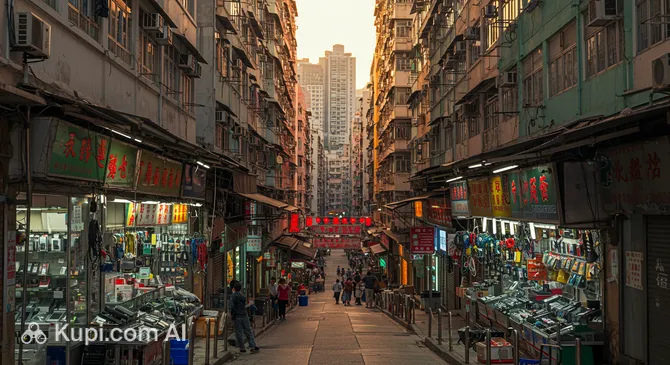
Sham Shui Po. Illustration.
Source: Kupi.com AI

For tourists, Sham Shui Po is primarily attractive for its authenticity: here you can see the famous "cage homes," visit specialized street markets for electronics and fabrics, or discover hidden gems of street art. This is a district for those who want to look behind the facade of tourist gloss and feel the living pulse of working Hong Kong. A visit to this district will be an unforgettable experience for every urban culture explorer.
Weather Overview

Sham Shui Po, like all of Hong Kong, is characterized by a humid subtropical monsoon climate. This means distinct seasonality with hot, rainy summers and fairly cool, dry winters. If you are planning a visit, it is useful to check the weather in Sham Shui Po in advance for different months of the year.

The summer period, lasting from May to October, is marked by high temperatures (up to +30...+33°C) and extreme humidity. During this time, heavy downpours are frequent and typhoons are possible. The rainiest months are June and August, with over 300 mm of precipitation. Conversely, winter in the district is mild and comfortable: in January, the average maximum is around 19°C, and rain is extremely rare.

It is worth considering that due to the dense buildings and heavy traffic in Sham Shui Po, a "heat island" effect can be felt, and the lack of large green zones contributes to stagnant air. In summer months, this makes the heat feel more oppressive, so tourists are advised to always carry a supply of water and plan long walks for the morning or evening hours.

Average monthly temperature

Average monthly precipitation

Interesting Facts

  • The district's name translates from Cantonese as "Deep Water Pier," a reminder of its past as an important anchorage for fishing vessels.

  • In 1955, during construction work, a Han Dynasty tomb was discovered here, dating back over 2,000 years, proving the antiquity of the settlement in this territory.

  • Sham Shui Po is a true open-air museum thanks to the HKWALLS festival: many walls of old buildings are decorated with large-scale murals by world-famous artists.

  • This is where Mei Ho House is located — the only surviving building from Hong Kong's first public housing complex, built after the devastating fire of 1953.

  • The district is considered a mecca for electronics lovers: local markets offer everything from rare vintage components to the latest gadgets at low prices.

How to Get There

Sham Shui Po boasts excellent transport connectivity with other parts of the metropolis, making it easily accessible for travelers. The main hub is the MTR station of the same name, served by the Tsuen Wan red line. A trip from Central will take no more than 20–30 minutes, though you should keep in mind that trains can be very crowded during peak hours.

If you are planning a trip, detailed information on how to get to Sham Shui Po will help you plan your route more effectively. From Hong Kong International Airport, it is most convenient to take the Airport Express to Kowloon Station and then transfer to the MTR or take a taxi. The entire journey takes about an hour.

AirportPassenger trafficDistance
Hong Kong International Airport58.4 mln23 km
Shenzhen Bao'an International Airport61.5 mln50 km
Macau International Airport7.6 mln62 km
Zhuhai Jinwan Airport11.5 mln88 km
Huizhou Airport2.6 mln92 km

In addition to the MTR, the area is served by an extensive bus network. Routes 2, 6, and 12 connect the district with key points on the Kowloon Peninsula. Be mindful of potential traffic jams during morning and evening rush hours, which can add an extra 15–20 minutes to your journey. A taxi from the city center will cost approximately 150–200 HKD depending on traffic.

StationPassenger trafficDistance
Songshanhu Railway Station75 km
Dongguan Nancheng Railway Station85 km
Qingyuan City Terminal190 km
Puning Railway Station4.5 mln233 km
Chaoyang Railway Station (Guangdong)817 600260 km

For those who prefer walking, Sham Shui Po is within walking distance of the neighboring districts of Mong Kok or Prince Edward. The walk takes about 20 minutes and allows you to fully enjoy the dynamic atmosphere of Hong Kong's streets.

Main Attractions

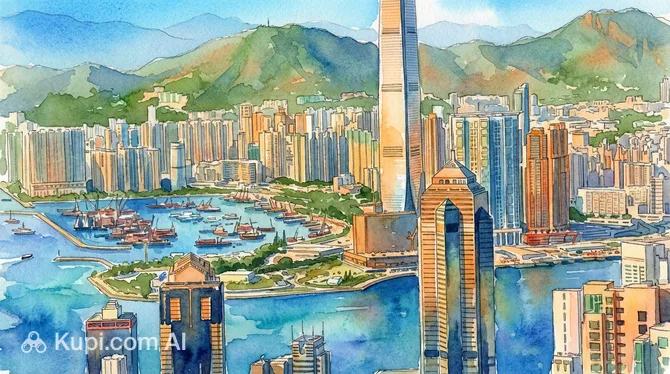
Despite its reputation as a working-class district, Sham Shui Po offers unique sites to visit. One of the most impressive spots is sky100 — Hong Kong's observation deck. Located on the 100th floor of the International Commerce Centre, it offers breathtaking panoramic views of the city and Victoria Harbour from a height of 393 meters.

Sky100 Hong Kong Observation Deck. Illustration.
Source: Kupi.com AI

Traveler photos:

Lovers of culture and quiet relaxation should visit the Jao Tsung-I Academy. This complex, located in a restored historical building, is an important cultural center hosting exhibitions and educational programs dedicated to traditional Chinese art and heritage.

The district's historical depth is revealed at the Lei Cheng Uk Han Tomb Museum — an ancient tomb from the Han Dynasty discovered by chance in 1955. Also worth visiting is Mei Ho House, which houses a museum detailing the development of public housing in Hong Kong. For those interested in temple architecture, the doors of Sam Tai Tsz Temple and Pak Tai Temple, built in the late 19th century, are open to visitors.

For connoisseurs of industrial aesthetics, the former underground reservoir on Bishop Hill (Sham Shui Po Reservoir) is of great interest. Its majestic columns create the atmosphere of an "underground cathedral," making it a favorite among urban explorers and photographers.

Local Cuisine

The culinary scene in Sham Shui Po is a paradise for lovers of honest and affordable street food. The district is famous for its dai pai dongs (open-air street stalls) that serve classic Cantonese dishes. Be sure to try wonton mee — thin noodles with juicy dumplings — as well as roast goose or sweet-glazed pork served with rice.

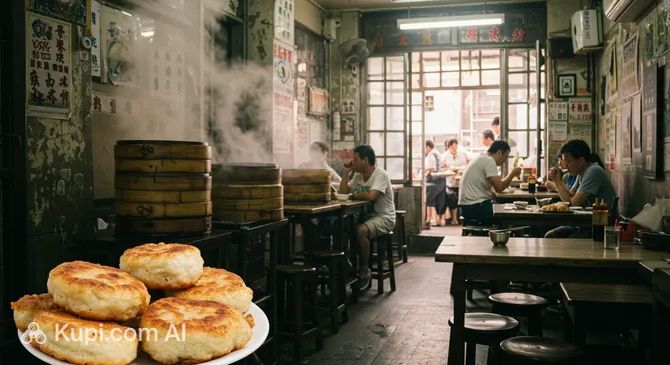
For those looking for specific recommendations, the district is home to legendary establishments. Make sure to visit Cheung Hing Kee Shanghai Pan-fried Buns to taste their famous shengjianbao with a crispy bottom. Another iconic spot is Mak Man Kee Noodle Shop, which serves some of the best shrimp noodles in the city.

Cheung Hing Kee Shanghai Pan Fried Buns. Illustration.
Source: Kupi.com AI

Traveler photos:

The gastronomic features of the district also include the influence of migrant communities, which brings touches of South Asian cuisine to the menu. Shopping centers like Dragon Centre house food courts with a huge selection of dishes for every taste. For drinks, locals prefer classic Hong Kong milk tea or freshly squeezed tropical fruit juices sold on every corner.

The dining culture here is simple and democratic: many establishments cater to local workers, so interiors may be modest, but the food quality always remains high. It is an ideal place for those who value taste over restaurant glitz and are ready to experiment with authentic Asian delicacies.

Travel Tips

A visit to Sham Shui Po is an immersion into the very heart of Hong Kong life. To ensure your trip is comfortable and brings only positive emotions, use our practical tips.

  1. Clothing and Footwear: Choose the most comfortable closed-toe shoes for walking through the market streets. Clothing should be light and breathable as humidity is high, and an umbrella or raincoat is a must during the summer period.
  2. Transport: Be sure to purchase an Octopus card immediately upon arrival — it is the universal key to all transport and small purchases. During peak hours, the MTR in Sham Shui Po is heavily congested; plan your movements in advance.
  3. Finances: At street markets (especially on Apliu Street), cards are rarely accepted, so always keep a cash reserve in Hong Kong dollars. Bargain politely — it's part of the local culture, but don't expect huge discounts on electronics.
  4. Safety: The district is generally safe, but due to the massive crowds at the markets, you should keep a close eye on your belongings and beware of pickpockets. It is not necessary to enter the dark, narrow alleys of old residential blocks at night without a reason.
  5. Communication: English is understood less here than in central districts. It will be helpful to download an offline translator or have the names of the places you need in Chinese.
  6. Etiquette: Be prepared for the fact that personal space in this area is a relative concept. Locals value directness and speed; in cafes, it is common to share tables if there are no free spots.
  7. What to Avoid: You should not photograph people or their homes without permission, especially in poorer neighborhoods. Also, avoid discussing sensitive political topics — it is better to focus on gastronomy and architecture.
  8. Extra Tip: The best time to visit the markets is in the afternoon, when trade is in full swing but the morning rush has subsided.

By following these simple rules, you will be able to fully enjoy the authenticity of this amazing place and feel at home in one of the most characteristic districts in the world.

Entertainment & Nightlife

The entertainment scene in Sham Shui Po differs significantly from the noisy club districts of the center. The main focus here is on daytime leisure and quiet evening gatherings. In the Dragon Centre shopping mall, you can find an indoor ice rink, and West Kowloon Centre features modern cinemas. Nightlife here winds down quite early, as the district lives to the rhythm of its trade markets.

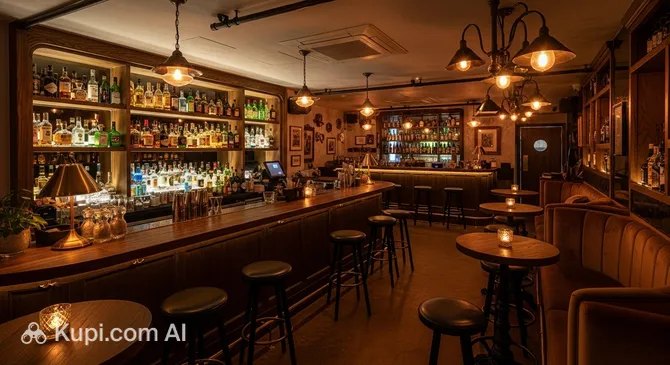
Nevertheless, you can find several interesting spots for evening relaxation in the area. For example, Hand Shaken Cocktail Bar offers an excellent selection of signature cocktails in a cozy atmosphere. If you are looking for a place to combine dinner with drinks, consider Savvy Bar Lounge Restaurant or stop by the India Restaurant and Bar.

Hand Shaken Cocktail Bar. Illustration.
Source: Kupi.com AI

Traveler photos:

For more active nightlife, large clubs, and discos, locals and tourists usually head to the neighboring districts of Mong Kok or Tsim Sha Tsui, which are only 10–15 minutes away by MTR. Evening Sham Shui Po is better suited for strolling through neon-lit markets and sampling street food than for loud parties until dawn.

Parks & Museums

Although Sham Shui Po is primarily known as a "concrete jungle," you can still find interesting cultural and green corners here. The pride of the district is its historical museums. The Lei Cheng Uk Han Tomb Museum offers a unique chance to see an ancient brick tomb dating back two thousand years. Equally interesting is Mei Ho House — a former dormitory converted into a museum that vividly shows how Hong Kong life has changed over the decades.

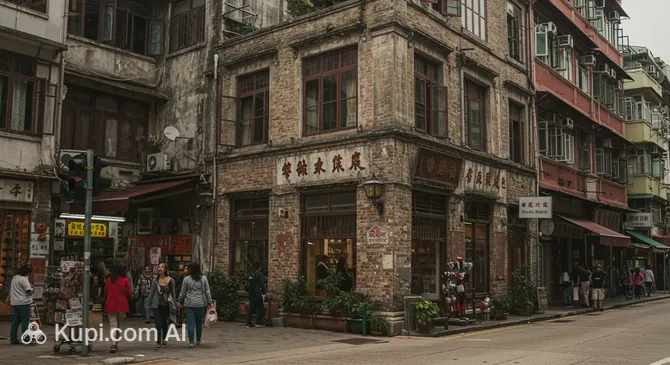
Art lovers should stop by the A & G Art and Craft Shop, where traditional products and decorative items reflecting the spirit of local craftsmanship are presented. The atmosphere of such places allows you to feel the continuity of generations in this fast-changing metropolis.

A & G Art and Craft Shop. Illustration.
Source: Kupi.com AI

Traveler photos:

There are not many park areas in the district due to the dense construction, but small oases do exist. Sham Shui Po Park is the main leisure spot for locals, where you can briefly escape the street noise. Also worth mentioning are temple grounds such as Tin Hau Temple and Sam Tai Tsz Temple, which, although not parks in the full sense of the word, provide a sense of peace and quiet amidst the urban chaos.

The low level of greenery in the district is compensated for by its urban energy. A walk through Sham Shui Po is like a tour of a living open-air history museum, where every alley and old building facade can tell its own little story.

Getting Around

Public transport in Sham Shui Po works like clockwork, offering tourists several convenient ways to get around. The backbone of the system is the MTR. The station of the same name on the Tsuen Wan line allows you to quickly reach any point in the city. It is important to remember that during morning and evening peak hours, carriages can be very crowded, so if possible, it is better to plan your trips for midday.

The district's bus network is equally well-developed. Routes such as the A21 connect the district directly to the airport, while numerous city buses and minibuses allow you to reach areas not served by the MTR. Unlike Hong Kong Island, there are no famous double-decker trams here, but the district is very convenient for walking — the main attractions and markets are within a 10–20 minute walk of each other.

An essential accessory for any tourist is the Octopus card. It can be used to pay for the MTR, buses, taxis, and even in many shops. You can buy and top up the card at any MTR station or at chain convenience stores. If you need to travel quickly and comfortably, taxis are available everywhere in the area, and a short trip within the neighborhood will cost a minimal amount.

For those who value mobility, walking remains the best way to explore the narrow streets of Sham Shui Po. However, be prepared for dense crowds and chaotic movement on market streets — this is part of the district's unique character. Alternative modes of transport, such as bicycle rentals, are not developed here due to high traffic density and narrow sidewalks.

Accommodation

Accommodation options in Sham Shui Po are primarily geared toward budget travelers and those who want to immerse themselves in local life without unnecessary pomp. There are virtually no luxury five-star hotels here, but budget hostels and apartments are widely available. A popular choice is YHA Mei Ho House — a youth hostel located in a historic building that offers both dormitories and private rooms.

The district is convenient for those who value proximity to transport hubs and authentic markets. Most guesthouses are concentrated within walking distance of the MTR station. If you are looking for something higher-end, consider options in neighboring districts or look for apartments in new residential complexes, such as those near the shopping centers.

When choosing accommodation in this area, it is recommended to book in advance, especially during holidays or major trade fairs in Hong Kong. The price range here is significantly lower than in the central districts of Hong Kong Island or Tsim Sha Tsui, making Sham Shui Po an excellent choice for a long stay on a limited budget.

Since the district is quite noisy and densely populated, tourists should be prepared for compact room sizes — a common feature of budget accommodation in the metropolis. Nevertheless, the cleanliness and functionality of most hostels are maintained at a decent level.

Nearby Cities

The Sham Shui Po district is an excellent starting point for exploring other iconic parts of the metropolis due to its central location on the peninsula. Just a few minutes away by MTR is the legendary Kowloon, home to major museums, waterfronts with skyscraper views, and endless entertainment options.

Right nearby is the historical Kowloon City district, known for its park on the site of the former "Walled City" and some of the best Thai restaurants. Additionally, within 10–15 minutes, you can reach the Kwai Chung district, which offers a look at the industrial and port-side face of the modern city.

CityPopulationDistance
Kowloon2 108 4192 km
Kowloon City418 7323 km
Kwai Chung38 6745 km
Choi Hung18 4355 km
Shek Tong Tsui17 1705 km

For a short half-day trip, locations such as Choi Hung, with its famous rainbow-colored residential buildings, or Shek Tong Tsui on the island are also great choices. Each of these destinations is easily accessible by public transport and allows you to see Hong Kong from many different perspectives.

We recommend not limiting yourself to one district and bravely exploring the surroundings — the convenient navigation system and frequent MTR services make such micro-trips comfortable and rich with impressions.

Shopping & Souvenirs

Shopping in Sham Shui Po is perhaps the main reason people flock here from all over the city. The district is famous for its specialized markets. At the Apliu Street Flea Market, you can find everything from rare vintage cameras and audio cassettes to modern smartphones and tools. It is a true paradise for those who love searching for treasures among stacks of tech and electronics.

For those looking for modern gadgets and computer parts, Golden Computer Arcade and Sham Shui Po Computer Centre are must-visits. They offer a colossal selection of components at very competitive prices. Fashion and craft lovers should head to Ki Lung Street and Nam Cheong Street, which are famous for their enormous selection of fabrics, buttons, and accessories.

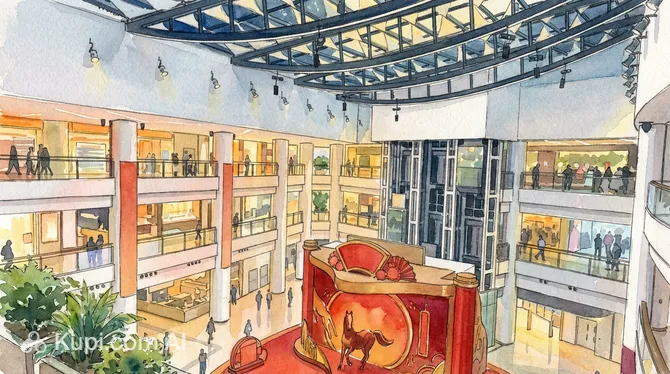
In addition to the markets, the area has large shopping complexes. At Olympian City 2, you will find a more familiar shopping format with chain brands, restaurants, and cinemas. Also popular is the Dragon Centre — a nine-story mall that caters to a younger audience and offers many budget clothing and accessory stores.

Olympian City 2. Illustration.
Source: Kupi.com AI

Traveler photos:

Commonly bought souvenirs from Sham Shui Po include unique flea market finds, high-quality fabrics, or prints featuring works by local street artists. Most shops are open from 10–11 AM until late in the evening. At the markets, cash is the preferred payment method, while shopping malls widely accept cards. And don't forget — at street markets, polite bargaining is perfectly appropriate!

Reached the end of the page?

That means the route is fully explored