Support

Taipa

Attractions

About

Taipa is a charming district that is an integral part of the Macau Special Administrative Region. Once a separate island, it is now connected to Coloane Island and the Macau Peninsula through land reclamation, forming a single whole. Taipa is famous for its unique blend of Portuguese colonial heritage and modern entertainment complexes, offering tourists a diverse range of experiences.
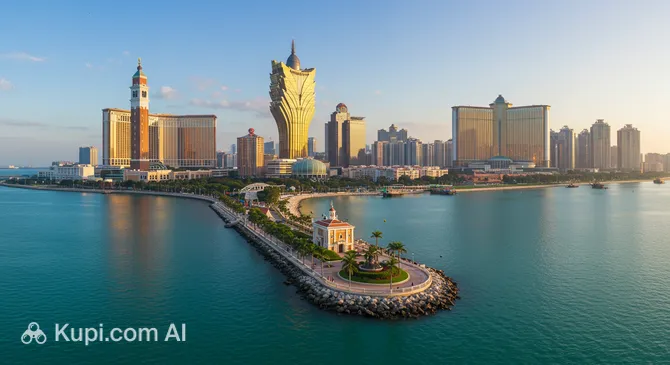
Taipa. Illustration.
Source: Kupi.com AI

Geographically, Taipa is located south of the Macau Peninsula. The climate here is subtropical, with hot, humid summers and mild winters, making it an attractive destination to visit almost year-round. The area is known for its calmer and more relaxed atmosphere compared to the bustling center of Macau, although life here is also in full swing, especially around the Cotai Strip.

Among Taipa's key attractions, Taipa Village stands out—a picturesque spot with narrow streets, traditional Chinese shops, Portuguese restaurants, and colonial architecture. You can spend hours wandering here, soaking up the authentic atmosphere. Equally interesting are the Taipa Houses–Museum, a complex of restored early 20th-century buildings showcasing the lifestyle of wealthy Portuguese families of that era. Furthermore, Taipa serves as the gateway to the famous Cotai Strip, home to luxury casino hotels, world-class shopping malls, and grand shows.

Taipa is a place where history meets modernity, offering every guest something unique. If you are looking for a combination of cultural immersion, gastronomic discoveries, and vibrant entertainment, be sure to include Taipa in your Macau itinerary.

You can find more interesting facts on the Taipa city history page.

Weather Overview

The weather in Taipa is characterized by a subtropical climate with clearly defined seasons. Summer, which lasts approximately from May to September, is hot and humid here. Average temperatures during this period range from 26°C to 28°C, and maximums can exceed 30°C. Summer months are also the rainiest, especially June, August, and September, when the number of rainy days can reach 20-23 per month.

Winter in Taipa, from December to February, is mild and relatively dry. Average temperatures stay around 18-19°C, with minimum values near 15-16°C. Precipitation in winter is minimal, especially in December, when there might be none at all. Spring (March-April) and autumn (October-November) are comfortable transitional seasons with pleasant temperatures and moderate rainfall. Overall, expect a warm, humid summer with occasional rain and a mild, mostly dry winter. For more detailed planning of your trip, you can explore in-depth information about the Taipa climate.

Average monthly temperature

Average monthly precipitation

Interesting Facts

Beyond its modern casinos and the colonial charm of its old streets, Taipa hides many surprising stories and facts that not everyone knows. Here are just a few of them:

  • There are several versions of the origin of the name "Taipa" (氹仔). One of the most common states that it means "small pond" or "puddle," reflecting the original island nature of the area and the abundance of water bodies. Other theories link the name to the sound of a rice mortar or even to the trade of clay pottery.

  • Before Taipa became famous for its luxury hotels and casinos, it was an important center for firework production. For a significant part of the 20th century, numerous factories were located here, whose products were exported to many countries around the world, and the industry itself provided jobs for most of the local population.

  • The picturesque Taipa Houses–Museum complex, demonstrating the lifestyle of wealthy Portuguese-Macanese families in the early 20th century, was originally located right on the seashore. However, large-scale land reclamation projects moved the shoreline significantly, and now these charming green houses are located some distance from the water.

  • The famous Cotai Strip, where the largest casinos and entertainment complexes of Macau are concentrated, is built entirely on reclaimed land. This territory was created artificially to connect two previously separate islands—Taipa and Coloane—forming a single space for mega-resorts.

How to Get There

Getting to Taipa, one of the key districts of Macau, is possible in various ways; however, air travel is the most popular and convenient due to the presence of its own international airport and proximity to major regional aviation hubs. Let's look at the main options.

The most convenient way to get to Taipa is a flight to Macau International Airport (MFM). This modern airport is located directly within Macau, just a few kilometers (about 3 km) from the center of Taipa. Thanks to its convenient location, a taxi or city bus ride to your hotel in Taipa will take no more than 10-15 minutes. The airport serves many international and regional flights, being an important transport hub.

Another popular option is Hong Kong International Airport (HKG). Located in Hong Kong, about 42 km from Taipa, it is one of the world's largest aviation hubs. From Hong Kong Airport, you can conveniently reach Macau (and Taipa accordingly) by high-speed ferries departing directly from the SkyPier terminal or by buses via the impressive Hong Kong–Zhuhai–Macau Bridge. Such a trip, including border control, usually takes 1.5 to 2 hours.

It is also worth considering Zhuhai Jinwan Airport (ZUH), located in the neighboring Chinese city of Zhuhai, about 26 km from Taipa. This airport serves primarily domestic flights within China but can be convenient if your route passes through mainland China. From Zhuhai Airport, you can reach Taipa by bus or taxi through a border crossing, which takes approximately 45-60 minutes.

For clarity, here is a summary of the main airports through which you can reach Taipa:

AirportPassenger trafficDistance
Macau International Airport7.6 mln3 km
Zhuhai Jinwan Airport11.5 mln26 km
Hong Kong International Airport58.4 mln42 km
Shenzhen Bao'an International Airport61.5 mln59 km
Foshan Airport1.3 mln114 km

Regarding rail travel, there are no railway stations serving long-distance passenger transport directly in Taipa or even in Macau. The nearest major railway hubs are located in mainland China, at a considerable distance from Taipa. Their use is advisable if you are traveling through China by train and Macau is one of the points on your route.

For example, Wuzhou Railway Station is located in the city of Wuzhou, approximately 280 km from Taipa, and Puning Railway Station is in the city of Puning, at a distance of about 297 km. A trip from these stations to Taipa will require additional transfers to buses or other local transport and will take several hours, including crossing the border.

For a general overview, here is information about some distant railway stations:

StationPassenger trafficDistance
Wuzhou Railway Station281 km
Puning Railway Station4.5 mln297 km

Thus, the most convenient and fastest ways to get to Taipa are flights to Macau International Airport or Hong Kong International Airport, followed by local transport or ferries/buses across the bridge.

Main Attractions

Taipa is not only a modern district with glitzy casinos but also a place rich in history and culture. Here, everyone will find something for themselves, from quiet historical corners to bustling entertainment centers. Here are several key attractions worth including in your Taipa itinerary:

Taipa Village is the charming heart of old Taipa, where time seems to have slowed down. Stroll through the narrow paved streets and admire the colorful houses built in traditional Chinese and colonial Portuguese styles. The village is famous for its authentic restaurants where you can try Macanese cuisine, cozy cafes, and shops selling local delicacies and souvenirs. It is the perfect place to experience the unique fusion of Eastern and Western cultures and take beautiful photos as mementos.

The Taipa Houses–Museum consists of a complex of five elegant mint-green villas built in the early 20th century. Previously, they served as residences for high-ranking Portuguese officials and their families. Today, these beautifully restored buildings have been turned into museums with exhibits that tell the story of lifestyle and culture in Macau during the colonial period. A walk through this picturesque complex, set among well-kept gardens, provides a sense of tranquility and a glimpse into the island's past.

If you are looking for glitz and modern entertainment, your path leads to the Cotai Strip. This grand district, built on reclaimed land between Taipa and Coloane, is the epicenter of the gambling and entertainment industry in Macau. It is home to world-famous casino hotels, luxury shopping malls with boutiques of leading world brands, fine dining restaurants, and concert venues hosting impressive shows. The Cotai Strip is a place where you can try your luck, enjoy shopping, or simply admire the impressive modern architecture and illuminations.

For a contrast to the modern hustle of the Cotai Strip and the colonial charm of Taipa Village, visit Pak Tai Temple. This is one of the oldest and most significant Taoist temples in Taipa, built in 1844. The temple is dedicated to Pak Tai, the God of the North, who is considered the patron of fishermen and sailors. Inside, you will see a richly decorated altar and ancient statues, and you can observe locals performing traditional rituals. Pak Tai Temple is an important cultural monument and offers visitors the chance to connect with the region's spiritual traditions.

Local Cuisine

The cuisine of Taipa is a delightful reflection of Macau's unique history, where East meets West. A gastronomic journey awaits you here, where Portuguese and Chinese culinary traditions harmonize to create the unique Macanese cuisine. It is a true paradise for foodies, offering both authentic local dishes and international culinary delights.

Be sure to try several iconic dishes to get a complete impression of Taipa's gastronomy. One of the most famous is "African Chicken" (Galinha à Africana)—chicken baked or grilled in a fragrant sauce of coconut milk, peanuts, chili, and other spices. No less popular is "Minchi"—a hearty dish of minced meat (usually pork or beef) stir-fried with potatoes, onions, and soy sauce, often served with rice and a fried egg. And, of course, you cannot leave Taipa without tasting the famous Portuguese egg tarts (Pastel de Nata)—crispy puff pastry cups with delicate custard, slightly browned on top.

As for drinks, in Taipa, you will find a wide choice of both alcoholic and non-alcoholic options. Wine lovers will appreciate Portuguese wines, especially the light and refreshing Vinho Verde or full-bodied reds from the Douro Valley. Local beer also deserves attention. Among non-alcoholic drinks, various types of Chinese tea, fragrant Macanese-style coffee (often strong, similar to "bica" espresso), and freshly squeezed juices are popular.

The dining culture in Taipa is diverse. For authentic Macanese and Portuguese dishes, head to the cozy restaurants hidden in the narrow streets of Taipa Village. Here, a unique atmosphere prevails, combining colonial charm and local flavor. On the Cotai Strip, world-class luxury restaurants await you, many of which are Michelin-starred and offer dishes from celebrity chefs. Street food should not be forgotten either: in Taipa, you can find many snack bars serving popular local delicacies, such as pork chop buns or almond cookies.

Taipa's gastronomic scene is a vibrant kaleidoscope of flavors and aromas, capable of satisfying the most discerning traveler. The unique combination of Portuguese heritage and Chinese traditions, multiplied by modern culinary trends, makes every dish here special. From traditional family recipes to innovative chef creations, Taipa offers an unforgettable gastronomic experience.

Travel Tips

Welcome to Taipa! To ensure your trip to this amazing corner of Macau goes smoothly and leaves only pleasant impressions, we have prepared some practical tips. They will help you better navigate and enjoy all the delights of Taipa.

  1. Clothing and Essentials: The climate in Taipa is subtropical, so in summer (from May to September), choose light, breathable clothing made from natural fabrics. Don't forget sunscreen, a hat, and perhaps a light raincoat or umbrella, as summers can be humid and rainy. Winter (from December to February) is mild; a light jacket or sweater will suffice. Comfortable shoes are your best friend, as Taipa is pleasant to explore on foot. For visiting temples, such as Pak Tai Temple, choose clothing that covers shoulders and knees. Don't forget a universal adapter for electrical appliances (Macau uses Type G sockets, the British standard).

  2. City Transport: Getting around Taipa and Macau in general is quite convenient. The main form of public transport is buses, which have a well-developed network. There is also the Light Rail Transit (Macau LRT), connecting Taipa with the Macau Peninsula and the Cotai district. Taxis are available; they can be hailed on the street or ordered via apps, though queues are possible during peak hours. Many large casino hotels on the Cotai Strip provide free shuttle buses to ferry terminals, border crossings, and other key points—this is a great way to save money. Car rental is generally not recommended for tourists due to local traffic specifics, limited parking, and the compact size of the territory.

  3. Finances: The official currency is the Macanese pataca (MOP). However, the Hong Kong dollar (HKD) is also widely accepted almost everywhere at a 1:1 rate. Currency can be exchanged at banks, licensed exchange offices, and hotels. International credit and debit cards (Visa, Mastercard, UnionPay) are accepted in most hotels, restaurants, and large shops. ATMs are easy to find throughout the city. An approximate daily budget can vary: from 500-700 MOP for a budget traveler to 1500 MOP and above for a more comfortable stay, not including gambling expenses. Tipping is not strictly mandatory but appreciated for good service in restaurants (usually 5-10% of the bill if a service charge is not included) and for porters in hotels. In taxis, you can round up the amount.

  4. Health and Safety: Taipa, like Macau in general, is considered a very safe place for tourists. The crime rate is low. Nevertheless, always follow basic precautions: watch your belongings in crowded places and do not leave values unattended. Pharmacies (marked with a green cross) are in all districts; some may work 24/7, especially near hospitals. If medical assistance is needed, you can contact public (e.g., Hospital Conde S. Januário) or private clinics. It is highly recommended to take out travel medical insurance before your trip.

  5. Communication: The official languages in Macau are Cantonese Chinese and Portuguese. However, English is widely spoken in tourist areas, hotels, casinos, and restaurants, so communication problems should not arise. Learning a few phrases in Cantonese, such as "Nei hou" (Hello) or "M'goi" (Thank you/Please/Excuse me), will be a nice gesture. A local SIM card with internet access can be purchased at the airport, in mobile phone shops, or convenience stores. Free Wi-Fi (often under the network "WiFi GO") is available in many public places, hotels, shopping centers, and cafes.

  6. Local Etiquette: Residents of Macau are generally friendly and hospitable. A greeting usually involves a slight nod; a handshake is more common when interacting with foreigners or in business settings. Show respect to elders. In public places, especially in temples, try not to make noise and behave with restraint. It is customary to give and take business cards, money, or gifts with both hands. Smoking in most indoor public spaces, including restaurants and casinos (except for specifically designated areas), is strictly prohibited.

  7. What to Avoid: One of the strictest rules concerns casinos: taking photos or videos inside gaming halls is categorically forbidden. Also, try to avoid discussing sensitive political topics, especially those concerning Macau's relations with mainland China. Be tactful and do not point fingers at people—it is considered impolite.

  8. Extra Tip – Explore Taipa Village: Be sure to set aside time for a leisurely stroll through Taipa Village. It is a charming district with narrow streets, colonial architecture, traditional shops, and many authentic restaurants where you can try real Macanese cuisine. Here you will find famous bakeries with egg tarts and shops selling almond cookies and other local delicacies—excellent souvenirs!

We hope these tips make your stay in Taipa even more comfortable and memorable. Enjoy every moment of your journey through this unique city, where history harmoniously blends with modernity!

Entertainment & Nightlife

When the sun sets over Macau, Taipa is transformed, offering a multitude of options for evening and nocturnal leisure. From the glitz and glamour of world-famous resorts to the cozy atmosphere of historical streets—everyone will find entertainment to their liking here. The main nightlife is concentrated in two contrasting areas: the ultra-modern Cotai Strip and the more traditional Taipa Village.

The Cotai Strip is the epicenter of world-class luxury and entertainment. In the evening, this area comes alive with thousands of lights, inviting guests to its numerous casinos, chic nightclubs, and stylish bars located within famous hotels. The atmosphere here is predominantly international and glamorous. Many clubs boast performances by famous DJs, impressive light shows, and first-class service. The dress code in such establishments is usually smart casual or dressier. Clubs start filling up closer to midnight and stay open until the early morning. Besides clubs, the Cotai Strip offers many lounge bars with panoramic views, perfect for spending an evening over a cocktail, and fine dining restaurants offering late-night dinners.

In contrast to the Cotai Strip, Taipa Village offers a more relaxed and authentic nightlife. Here, among the narrow paved streets, you will find many cozy bars, pubs, and traditional Portuguese restaurants that stay open late. The atmosphere here is more laid-back, encouraging soulful conversations. Many venues offer live music, ranging from jazz to local performers. The crowd here is mixed—both tourists and locals alike. Prices in Taipa Village are generally more affordable than on the Cotai Strip. It is a great place to enjoy a delicious dinner and then move on to one of the local bars.

As for specific venues, the choice is vast. For example, on the Cotai Strip, you can look for club spaces within major hotel complexes, which often become hotspots for dance music lovers. In Taipa Village, it is worth seeking out small bars with craft beer or Portuguese wines, where you can feel the local flavor. Unfortunately, without an up-to-date list of venues with specific links, we can only point to the types of places that are popular in these areas.

Practical tips: The best time to visit clubs on the Cotai Strip is after 23:00. You can head to Taipa Village for dinner and transition smoothly to the bars starting from 20:00-21:00. Getting between districts or to your hotel at night is most convenient by taxi or by using hotel shuttle buses if you are staying in one of them. The Light Rail Transit (LRT) also runs until a certain time. Taipa is generally considered a safe area, but it is always best to stick to well-lit streets and use official taxi services.

While the main focus of this section is on nightlife, it is worth mentioning that there is plenty to do in Taipa during the day as well. You can visit the Taipa Houses–Museum to learn about the colonial past, stroll through picturesque parks, or explore temples such as Pak Tai Temple. Some resorts on the Cotai Strip offer daytime entertainment programs, family attractions, and, of course, world-class shopping.

Parks & Museums

Taipa is not only about modern entertainment but also a place where you can enjoy nature in well-kept parks and touch history and culture in interesting museums. This area offers a pleasant combination of green zones for relaxation and cultural sites reflecting its unique heritage.

Among the green oases of Taipa, Taipa Central Park (Parque Central da Taipa) stands out. This modern and well-equipped space is perfect for family vacations, jogging, or just a quiet stroll. It features children's playgrounds, sports areas, and picturesque ponds. Another significant green space, though located on the border with Coloane but easily accessible from Taipa, is Seac Pai Van Park. This vast park offers not only walking trails and picnic areas but is also home to the famous Macau Giant Panda Pavilion, as well as a small zoo and the Museum of Nature and Agriculture. For a more secluded retreat, the Flower City Garden (Jardim da Cidade das Flores) is a small but very cozy and beautiful corner with fountains and flower beds.

Taipa's cultural heritage is vividly presented in its museums. The key site is the Taipa Houses–Museum—a complex of five restored mint-green colonial villas that perfectly demonstrate the lifestyle of Portuguese families who lived here in the first half of the 20th century. This place is not only beautiful in itself but also allows for a deep dive into the history of Macau. Also interesting is the Museum of Taipa and Coloane History (Museu da História da Taipa e Coloane), located in the building of the former municipal council. Its exhibits tell the story of archaeological finds, the development of the islands, and the traditional way of life of the local population.

Beyond parks and museums, Taipa is rich in historical and architectural landmarks. The heart of the old district is Taipa Village, with its narrow streets and traditional Chinese and colonial Portuguese architecture, where every house tells its own story. The important spiritual center, Pak Tai Temple, dedicated to the guardian god of sailors, is also located here. Many modern resorts on the Cotai Strip also periodically host art exhibitions, complementing the cultural palette of the area.

For an authentic experience, we recommend a leisurely stroll through the less-known alleys of Taipa Village, where you can discover small family shops and workshops that have preserved the spirit of old Macau. Also, look out for street altars and small temples, which are often found in residential blocks and are an integral part of the local culture.

Getting Around

Getting around Taipa is quite convenient due to a well-thought-out public transport system and the compact size of the district itself. The main ways for tourists to move around are buses, the Light Rail Transit (LRT), taxis, and very popular free shuttle buses from hotels and casinos.

Buses are the most extensive and accessible public transport network, covering almost all corners of Taipa and connecting it with the Macau Peninsula and Coloane. There are many routes, and buses run quite frequently. You can pay the fare in cash directly to the driver (try to have the exact amount, as change is usually not given) or using a Macau Pass transport card. This card is very convenient as it provides discounts on fares and can be used for payments in some shops. You can purchase a Macau Pass at supermarkets, some bus terminals, or special sales points. Buses usually operate from early morning until late evening.

A relatively new and modern mode of transport is the Macau Light Rail Transit (LRT). The LRT line passes through key points in Taipa, including the Taipa Ferry Terminal, Macau International Airport, the Cotai Strip with its famous casinos and hotels, and it connects with border points. The trains are modern, clean, and air-conditioned. Tickets can be purchased from machines at stations, with payment possible in cash or by Macau Pass. This is an excellent way to quickly get, for example, from the airport to your hotel on the Cotai Strip.

Taxis are available in Taipa; they can be hailed on the street, found at special stands near hotels, casinos, and shopping centers, or ordered through apps or hotel receptions. Trips are metered. This is a more expensive option compared to public transport but convenient for trips with luggage or at night. Most drivers speak Cantonese but often understand basic English, especially in tourist areas; it is useful to have your destination address written in Chinese or English.

One of the unique and very convenient features of the transport system in Taipa and all of Macau is the wide network of free shuttle buses. Major casino hotels (especially on the Cotai Strip) provide comfortable buses running on many routes: between different hotels, ferry terminals, the airport, border crossings, and even some attractions. Check the schedule and routes of your hotel's shuttles or those of nearby large complexes—this is a great way to save on travel.

For exploring some parts of Taipa, such as the picturesque Taipa Village with its narrow streets, a walk is best. This area is compact and invites leisurely exploration. Bicycle rental in Taipa is not as common as a primary mode of transport for tourists, but it may be available for rides in park areas.

Practical tips for tourists: * To plan routes on public transport, you can use online maps or the official websites of Macau's transport companies. * If you plan to use buses actively, purchase a Macau Pass—it will save time and money. * During peak hours (morning and evening), public transport and taxis may be more crowded. * Don't hesitate to use the free hotel shuttle buses—this is a common and convenient practice for tourists in Taipa.

Accommodation

In Taipa, travelers will find a wide range of accommodation options capable of satisfying diverse preferences and budgets. Luxury world-class resort complexes are represented here, as well as more affordable mid-range hotels, cozy guesthouses, and apartments for short-term rent. This diverse selection allows every guest to find the ideal place to stay according to their plans and financial capabilities.

When choosing a place to stay in Taipa, it is worth paying attention to a few key areas. The famous Cotai Strip is the hub of luxury casino hotels, offering not only comfortable rooms but also a full range of entertainment, from world-class shows to exquisite restaurants and massive shopping centers. This is the perfect choice for those seeking glitz, excitement, and first-class service. If you prefer a more authentic and quiet atmosphere, look towards Taipa Village. Here, you can find charming boutique hotels and guesthouses, often located in historical buildings, allowing for a deeper immersion into the colonial past of Macau. This area is also convenient for its proximity to traditional restaurants and local attractions.

When planning a trip, especially during peak tourist seasons or during major events, it is recommended to book accommodation in advance. This will allow you not only to guarantee availability at your preferred hotel but also potentially secure better rates. The most common booking methods are popular international online platforms, as well as direct booking through official hotel websites. The price range for accommodation in Taipa varies from relatively budget-friendly options to premium luxury offerings, making the district accessible to a wide range of tourists.

Nearby Cities

For those looking to explore the surroundings, Taipa serves as an excellent starting point for day trips to several interesting nearby locations:

CityPopulationDistance
Macau568 7005 km
Zhuhai2 439 58512 km
Zhongshan2 909 63343 km
Cheung Chau22 74048 km
Shekou300 00052 km

Heading from Taipa to Macau, you will find yourself in the heart of this unique region. Just a few kilometers away is the historical Macau Peninsula, a UNESCO World Heritage site. Here, you can spend hours wandering through ancient streets, admiring Portuguese colonial architecture, visiting the famous Ruins of St. Paul's, the lively Senado Square, and the ancient A-Ma Temple. This is a wonderful opportunity to immerse yourself in the city's rich history and culture. Additionally, it is easy to reach the island of Coloane from Taipa, which offers a more relaxed getaway with its green hills, picturesque beaches like Hac Sa, and peaceful hiking trails, making it a great choice for nature lovers.

These nearby destinations provide an insight into the diverse culture and landscapes of the region.

Shopping & Souvenirs

Taipa offers its guests pleasant and diverse shopping, combining the glitz of world brands with the charm of local finds. While the city doesn't specialize in any unique goods, you can find everything here: from designer clothing and jewelry in luxury shopping centers to authentic souvenirs and delicacies in more traditional areas. It's a place where everyone will find something to their taste and budget.

The main shopping areas in Taipa are the famous Cotai Strip and the historical Taipa Village. On the Cotai Strip, impressive shopping galleries are located inside large integrated resorts, offering primarily luxury goods and well-known international brands. Taipa Village, by contrast, attracts with its small boutiques, souvenir stalls, and shops selling local products and handmade items, creating a more intimate and authentic shopping atmosphere.

The largest shopping centers of Macau are concentrated on the Cotai Strip, offering an incredible selection of goods. For example, Shoppes at Venetian and Shoppes at Parisian amaze not only with their range of boutiques but also with their themed architecture, turning shopping into real entertainment. Also worth noting is The Promenade Shops at Galaxy Macau, known for its elegance and wide selection of fashion brands. These malls offer everything from high fashion and jewelry to electronics and cosmetics.

Although there are no large traditional markets in the classic sense in Taipa, it is worth paying attention to the Taipa Flea Market, which usually operates on weekends in Taipa Village. Here, you can find interesting souvenirs, local handicrafts, antique trinkets, and try street food. Taipa Village itself, with its numerous stalls and shops, largely resembles a lively market where you can find unique gifts and local delicacies.

As souvenirs from Taipa and Macau in general, tourists often bring back the famous almond cookies, peanut candies, and other local sweets sold in beautifully packaged boxes. Beef jerky (bak-kwa) of various types is also popular. You can find interesting Portuguese ceramic products, especially "azulejo" tiles, or souvenirs depicting Macau's landmarks. Small shops in Taipa Village offer many options for authentic gifts.

Most large shopping centers on the Cotai Strip are open daily, typically from 10:00 or 11:00 AM to 10:00 or 11:00 PM. Small shops and stalls in Taipa Village may have their own, more flexible working hours, often closing slightly earlier. Both Macanese patacas (MOP) and Hong Kong dollars (HKD) are accepted for payment, almost everywhere at a 1:1 exchange rate. Credit cards (Visa, Mastercard, UnionPay) are widely accepted in shopping centers and most stores. Mobile payment systems such as Alipay and WeChat Pay are also popular.

Macau, including Taipa, is a free port, meaning a free trade zone. This means that most goods are not subject to sales tax or VAT. Thus, prices for many imported goods, especially luxury items, cosmetics, and electronics, can be very attractive as they are already "tax-free." There is no separate tax refund procedure for tourists here as in some other countries.

Reached the end of the page?

That means the route is fully explored