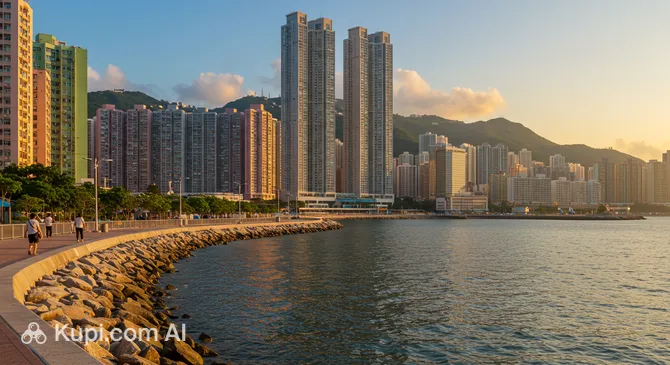
Tsuen Wan is a fascinating city in the northwest, stretching along the picturesque coast of the South China Sea. Located in the New Territories, it serves as a unique bridge between the rhythm of a modern metropolis and the measured way of life that has been preserved for centuries in ancient villages. This district of Hong Kong attracts travelers with its unique atmosphere, where Eastern flavor harmoniously blends with urban drive.
Tsuen Wan. Illustration.
Source: Kupi.com AI
With a population of about 307,000 people, Tsuen Wan is one of the most dynamically developing districts. Here, modern residential complexes and large shopping centers sit alongside cozy streets filled with the aromas of street food. The rich history of Tsuen Wan can be traced in the preserved cultural monuments and traditional settlements that fit wonderfully into the urban landscape.
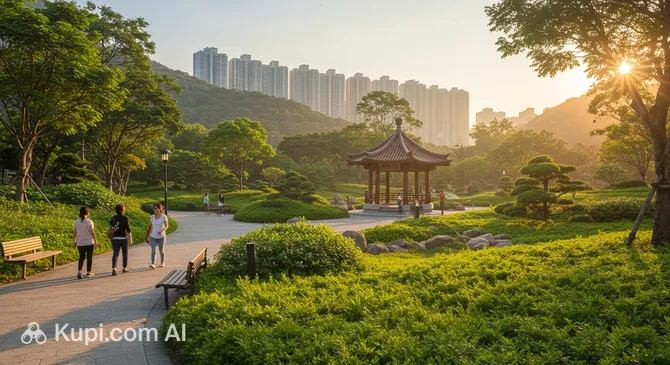
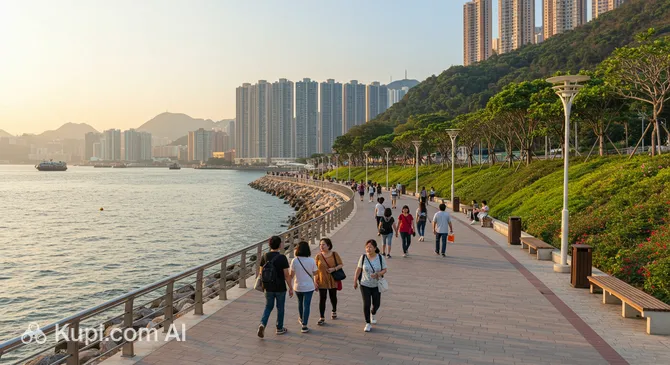
The city offers many leisure opportunities: from walking along landscaped embankments with bay views to visiting art installations in city squares. Its proximity to green hills and parks makes it an ideal place for those who want to take a break from the bustle of central districts without losing the comfort of a developed infrastructure. Tsuen Wan is definitely worth a visit to see a different, more authentic and welcoming side of the region.
Weather Overview
The climate of Tsuen Wan can be described as humid subtropical, which ensures a clear change of seasons. Winter here is mild and very comfortable for travelers: from December to February, the average temperature stays around 16–17°C, and nights are rarely colder than 13°C. This is the driest period of the year, when the number of rainy days is minimal (only 3–4 days in December and January), making it ideal for long walks around the city.
The summer months bring heat and high humidity. From June to August, the average temperature rises to 28°C, often reaching daily highs above 30°C. This period sees the highest rainfall: rain can occur almost daily, especially in June and August (up to 28 rainy days per month). Expect a hot, humid summer with frequent downpours and a mild, dry winter.
Spring and autumn are transitional periods. In spring (March–May), temperature and humidity gradually rise, reaching average values of around 26°C in May. In autumn, the heat subsides, and by October, pleasant weather sets in with temperatures around 25°C and decreasing rainfall. Detailed weather in Tsuen Wan will help you more accurately plan your wardrobe and activities depending on the month of your trip.
Average monthly temperature
Average monthly precipitation
Interesting Facts
Beyond its main attractions, Tsuen Wan holds many fascinating secrets and historical details. These facts will allow you to look at the district not just as a point on the map, but as a place with a deep soul and unique character.
Tsuen Wan was one of the first districts where large-scale urbanization began in the region in the 1960s. The city grew literally before people's eyes: where skyscrapers stand today, there were only modest fishing villages and endless rice fields just a short time ago.
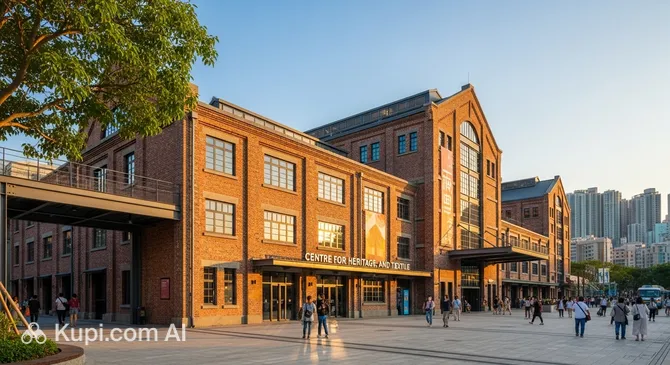
A striking example of rethinking an industrial past is the Centre for Heritage, Arts and Textile (The Mills). This former cotton mill has been transformed into a stylish art cluster that has received prestigious awards for preserving its historical appearance and integrating modern design.
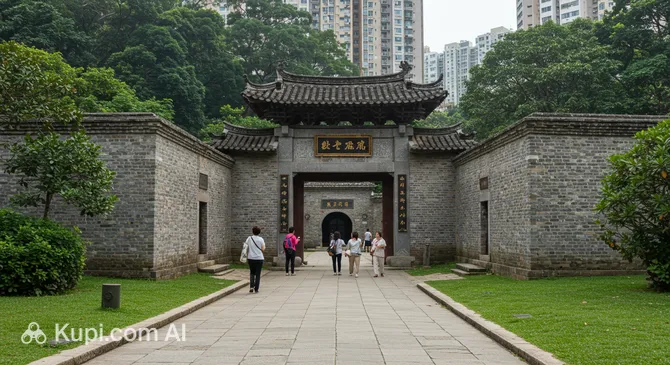
In the heart of the modern development, a corner of traditional culture has been preserved — the Sam Tung Uk Museum. It is located on the site of an actual Hakka walled village, where visitors can learn about the everyday life, crafts, and customs of the indigenous people who lived here long before the metropolis appeared.
The district is shrouded in many urban legends and myths. Local folklore preserves stories of ancient settlements and sea spirits who, according to legend, have protected this coast from storms and disasters for centuries.
Sam Tung Uk Museum. Illustration.
Source: Kupi.com AI
Traveler photos:
How to Get There
When planning your trip, it is important to think through the logistics in advance. You can find out all the ways to get to the city on a separate page, while below we will look at the main transport hubs located nearby.
The most convenient way to reach the region is by air. The closest and most significant transport hub is Hong Kong International Airport (HKG). It is located directly in Hong Kong, just 19.6 km from the Tsuen Wan district. It is one of the world's largest aviation hubs with a huge passenger flow. The journey by taxi or bus will take about 30–40 minutes, making it an ideal choice for tourists.
An alternative option could be Shenzhen Bao'an International Airport (SZX). Please note that it is not located in Tsuen Wan, but in the neighboring city of Shenzhen (China), at a distance of approximately 43.2 km. Traveling from there will require crossing the border, so the travel time will increase to about 1.5–2 hours by car or transfer.
For convenience, here is summary information on the main airports:
If you are considering a train journey from the mainland, keep in mind that the nearest major railway hubs are located at a considerable distance. For example, Puning Railway Station (OPQ) is located in Puning, approximately 235.7 km from Tsuen Wan. Direct connections may not be available, and the trip will require transfers to local transport or high-speed trains to Hong Kong itself.
Below is information about the nearest railway stations from the available list:
Tsuen Wan offers tourists an amazing variety of experiences: from peaceful mountain temple complexes to breathtaking panoramic views of modern engineering wonders. Here, nature coexists with urban architecture, creating unique walking routes.
One of the district's most majestic spiritual sanctuaries is the Western Monastery. Situated at the foot of the mountains, it captures the imagination with its traditional Chinese architecture featuring curved roofs and vibrant decor. Tourists come here to enjoy the silence, stroll through picturesque gardens, and see impressive Buddha statues. It is an ideal place for those seeking tranquility and wanting to experience the religious traditions of the region.
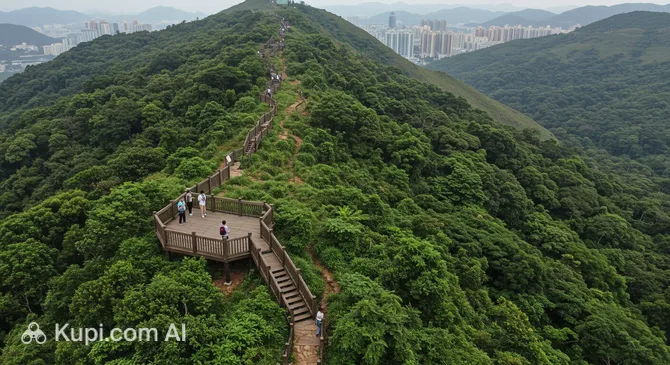
Wildlife enthusiasts should head to Kam Shan Country Park, often referred to as "Monkey Hill." This place is famous for its large population of macaques that roam freely throughout the territory. Besides observing these playful animals, the park attracts visitors with scenic hiking trails around reservoirs. It's a perfect spot to escape the city noise while enjoying fresh air and views of lush green forests.
Kam Shan Country Park. Illustration.
Source: Kupi.com AI
Traveler photos:
For a leisurely nature walk, the Pineapple Dam, located near the Shing Mun Reservoir, is an excellent choice. The name is a reminder that pineapples were once grown here. Today, it is a popular nature trail passing through the forest and offering beautiful views of the water. The route is considered easy and accessible, making it a great choice for family outings and nature photography.
To appreciate the scale of Hong Kong's modern infrastructure, visit the Lantau Link Viewing Platform. This vantage point offers a breathtaking panoramic view of the famous Tsing Ma Bridge — one of the longest suspension bridges in the world — as well as the Ting Kau Bridge. These structures look particularly spectacular in the evening or at sunset when the lights come on, creating an unforgettable urban landscape.
Local Cuisine
Tsuen Wan's gastronomic scene is a true paradise for foodies, where Cantonese traditions are harmoniously interwoven with modern trends. A journey here is unimaginable without tasting classic dim sum and the freshest seafood, often served in cozy restaurants with picturesque sea views. The hallmark of local establishments is rightfully considered to be fragrant Hong Kong-style roasted duck and appetizing noodles in a rich broth.
Street food lovers should visit the lively markets, where you can try unusual snacks: from fried squid to the famous BBQ pork buns. Those with a sweet tooth will enjoy traditional desserts such as rice cakes, sesame balls, and various steamed buns that perfectly round off a meal.
Tea culture holds a special place in the life of the district. In authentic tea houses, you will be offered a bowl of strong pu-erh, which helps to bring out the flavor of the dishes. Bubble tea — tea with tapioca pearls — is incredibly popular among youth and tourists and has become one of the symbols of the modern city. Additionally, you can always find stalls with exotic fruits and freshly squeezed juices on the streets.
Local residents love variety, so in addition to Chinese classics, it's easy to find Thai, Japanese, and Korean cuisine here. If you want a snack in a popular place with an excellent reputation, you can visit Kabo Burger. The farmers' markets are also worth attention: they sell homemade delicacies and spices that make an excellent souvenir or addition to a picnic in one of the city's parks.
Travel Tips
A trip to Tsuen Wan promises to be exciting, but for maximum comfort, you should consider a few important nuances of this district. We have gathered practical recommendations for you to help you easily navigate this part of the New Territories and feel confident in any situation.
Clothing and Essentials. The climate here is humid, so in summer, prioritize light natural fabrics. However, be sure to carry a light sweater or pashmina: air conditioners in shopping centers and public transport work at full capacity, creating a sharp contrast with the outdoor heat. Given the hilly terrain and abundance of parks, comfortable shoes are your best ally. Power sockets here are the British type (Type G), so bring an adapter.
Transport. Tsuen Wan is excellently connected to the center. The most reliable option is the metro (MTR); the Red Line starts right here, which guarantees a seat. For fare payments and shopping, be sure to buy an Octopus card. If taking a taxi, remember the color coding: red cars can travel throughout Hong Kong, while green ones serve only the New Territories and are often cheaper.
Finances. While cards are widely accepted in major malls and restaurants, Tsuen Wan is famous for its local markets and small cafes where only cash is used. You can withdraw money from numerous ATMs. Tipping is not mandatory, but you may see a 10% service charge on a restaurant bill; in taxis, it is customary to round up the fare.
Health and Safety. The district is very peaceful and safe for tourists even in the evening. Mannings and Watsons pharmacy chains are found at every turn, where you can buy many medicines without a prescription. Tap water is considered clean, but due to old pipes in buildings, drinking it without boiling is not recommended — it is better to buy bottled water.
Communication. The primary language is Cantonese, but the level of English is quite high, especially in services and transport. Navigation and signs are duplicated. For constant connectivity, buy a local SIM card at any convenience store (7-Eleven or Circle K) — this will greatly simplify using maps and translators.
Local Etiquette. Queueing is an unspoken law of the city. Always join the queue for a bus or elevator and never try to push ahead. On escalators, it is customary to stand on the right, leaving the left side for people to pass. A simple polite nod is sufficient when entering shops or taxis.
What to Avoid. It is strictly forbidden to eat and drink on the metro (including platforms) — you can receive a substantial fine even for a sip of water. Also, avoid loud conversations on public transport and never stick chopsticks vertically into rice while eating — this is associated with funeral rites and is considered bad form.
Pedestrian Navigation. Tsuen Wan is called the "city of bridges." One of the longest systems of elevated footbridges has been built here, connecting metro stations, residential complexes, and shopping centers. Use these "skywalks" to move around the city: this way you will be protected from the sun or rain and avoid waiting at traffic lights.
By following these simple tips, you can avoid minor troubles and focus on the main thing — exploring the authentic atmosphere and unique sights of Tsuen Wan. We wish you a pleasant and carefree journey!
Entertainment & Nightlife
The nightlife in Tsuen Wan is significantly different from the noisy parties of central Hong Kong or the Lan Kwai Fong area. A more relaxed, "homely" atmosphere prevails here, focused on socializing and gastronomic pleasures. Evening in this district is a time when locals take to the streets to enjoy the cool air, meet friends, and, of course, eat well. The epicenter of evening activity is often not the dance floors but the lively blocks with street food and cozy embankments bathed in the lights of skyscrapers.
One of the main points of attraction after dark is the Lo Tak Court area. It is a true mecca for fans of late-night supper (the "Siu Yeh" tradition). The streets here are filled with small cafes operating long past midnight, serving everything from skewers and noodles to famous Hong Kong desserts. The crowd here is very diverse, from office workers to students, and the dress code is completely democratic. If you are looking for a place for a quiet evening with a cup of excellent coffee or a light dinner in a stylish setting, look no further than HIKARI Coffee. This establishment is popular for its cozy interior and relaxing atmosphere.
For those who prefer a more substantial dinner in a fast-casual format, Kabo Burger is an excellent choice. This place is famous for its juicy burgers and attracts the area's youth. If your soul craves cultural leisure, it is worth checking the schedule offered by the Kwai Tsing Theatre. Although it is located on the border of districts, it is one of the key venues for evening performances and concerts, easily accessible by taxi or metro.
Tsuen Wan Park. Illustration.
Source: Kupi.com AI
Traveler photos:
Romantics and those who enjoy quiet walks should definitely visit Tsuen Wan Park after sunset. Located right by the water, it offers magnificent views of the illuminated Ting Kau Bridge and the Rambler Channel. It is a safe and picturesque place where you can catch your breath after a busy day. Night safety in Tsuen Wan is high: the streets are well-lit, and it is comfortable to walk here even late in the evening. Taxis are easy to catch at designated stands or through apps, and the metro runs until about 1:00 AM.
During the day, Tsuen Wan offers no fewer interesting activities. In addition to shopping in huge malls connected by convenient footbridges, the district is famous for its cultural sites. Tourists can visit former textile factories turned into art spaces or look into historical museums telling the story of the lives of ancient clans. This combination of a daytime cultural program and evening gastronomic relaxation makes the district attractive for the thoughtful traveler.
Parks & Museums
Despite its reputation as a bustling industrial and residential center, Tsuen Wan surprises with its abundance of green spaces and deep respect for cultural heritage. Here, modern art spaces are organically integrated into historical quarters, and well-kept gardens offer a quiet haven away from the city bustle. For tourists, this is a great opportunity to see how Hong Kong maintains a balance between urbanization and nature.
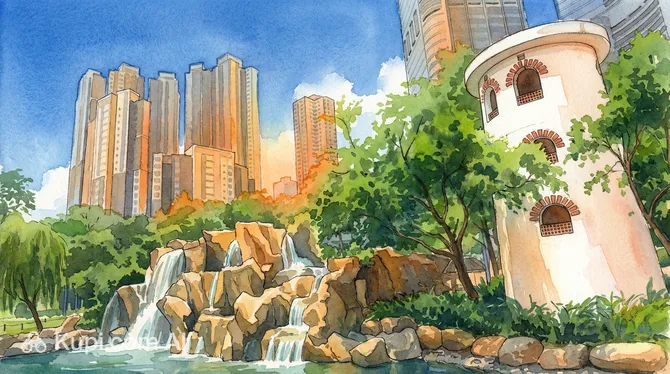
Among the natural areas, Tsing Yi Park deserves special attention. This picturesque corner, designed in a European style, is famous for its statues, well-maintained flower beds, and a large artificial lake with a waterfall. In autumn and winter, the park is transformed as the leaves turn golden and crimson, creating an atmosphere reminiscent of Canadian or European landscapes. It is a popular spot for picnics and quiet walks.
Fans of active recreation by the water will enjoy Tsuen Wan Riviera Park. It stretches along the coast and offers magnificent views of the Rambler Channel. It features convenient jogging tracks and sports grounds, making it a hub for local residents leadng a healthy lifestyle. If you want to combine relaxation with a beach atmosphere, head to Lido Beach. Although it is located near the Ting Kau Bridge and the highway, the views of the monumental engineering structures at sunset are simply mesmerizing.
Tsing Yi Park. Illustration.
Source: Kupi.com AI
Traveler photos:
The city's cultural life is vividly represented in its museums. The main historical gem is the Sam Tung Uk Museum. This is a carefully restored Hakka walled village built over two centuries ago. Passing through the series of halls and living rooms, you will see authentic furniture, agricultural tools, and everyday items that allow you to literally touch the lives of the ancestors of modern Hong Kongers. The museum is unique in that it has preserved the original layout of a traditional clan settlement in the middle of high-rise developments.
A completely different experience is offered by the Centre for Heritage, Arts and Textile (The Mills). Located in the buildings of former cotton spinning mills, this museum and innovation center tells the story of Hong Kong's textile industry, which was once the locomotive of the economy. It hosts contemporary art exhibitions, design workshops, and tours showing the journey from old looms to modern fabric recycling technologies.
Speaking of spiritual heritage, one cannot fail to mention the Lung Mo Temple, located by the water in the Sham Tseng area. This small but significant temple is dedicated to the Mother of Dragons — a deity who patronizes parents and children. Locals believe that touching the "dragon bed" inside the temple brings luck and prosperity. The atmosphere here is filled with the scent of incense and the sincere faith of the parishioners.
For those looking for hidden gems, we suggest a stroll along a place like the Tsing Yi Promenade. This location is less known among tourists, but it is perfect for an evening promenade. From here, you get a great view of the harbor, and the sea breeze is pleasantly refreshing after a busy day of sightseeing.
Getting Around
The public transport system in Tsuen Wan is excellently developed and integrated into the region's overall network, allowing tourists to move around easily without knowing the language. The main transport artery is the metro (MTR). The district is served by two key stations located on different lines: Tsuen Wan (the terminus of the Red Line) and Tsuen Wan West (on the Tuen Ma Line). The Red Line is ideal for trips to the center and the Kowloon Peninsula, providing a quick transfer. The trains are comfortable, air-conditioned, and navigation is intuitive and duplicated in English.
Surface transport is represented by a dense network of bus routes. Most buses are double-deckers, and a ride on the second floor by the front window can be a great impromptu city tour. Minibuses are also popular and come in two types: green and red. Green ones follow fixed routes and prices; they are more predictable and safer for tourists. Red minibuses operate more flexibly and can stop on demand anywhere, but drivers rarely speak English and payment is often cash-only, so beginners are better off choosing the green minibuses or large buses.
For fare payment, the Octopus card is the absolute standard. This is a universal contactless smart card that can be used to pay for the metro, buses, trams, and minibuses, as well as in 7-Eleven stores and fast-food restaurants. You can purchase it at any metro station at the customer service center. If you don't have an Octopus card, you can pay in cash on buses by dropping money into the box next to the driver, but remember an important rule: no change is given, you must have the exact amount in coins. Single-journey tickets are also available at vending machines in the metro.
Validating your fare is simple: in the metro, you must tap the card against the turnstile both at the entrance and the exit (the system will deduct an amount based on the distance). On buses and trams, the card is tapped against the validator only upon entry (except for some routes with staged fares where there are also terminals at the exit, but this is rare for city lines). Transport operates from early morning (around 06:00) until 1:00 AM. Special buses with the prefix "N" run at night, but they are less frequent.
As an alternative, taxis are always available. In Tsuen Wan, you will most often see red taxis (urban), which can go anywhere, and green ones (serving only the New Territories and costing slightly less). You can catch a car simply by raising your hand on the street or at special stands near shopping centers. Bicycle rental as a means of transport is poorly developed here due to heavy traffic and hilly terrain, but it is popular as a form of recreation on the embankments and in parks.
Accommodation
Где остановиться:
Tsuen Wan offers travelers an excellent balance of price and quality, often unavailable in the central districts of Hong Kong. The accommodation here consists mainly of modern high-rise hotels in the 4 and 5-star categories, as well as high-quality middle-class hotels. Unlike the noisy areas of Kowloon, it is difficult to find cramped budget hostels or tiny guesthouses here; the focus is on comfort, more spacious rooms, and a high level of service at reasonable prices.
When choosing a place to stay, you should focus on two main locations. The first is the historical center of the district, located near the terminus of the MTR Red Line. This is an ideal choice for those planning active trips: transport accessibility is maximized here, and many shopping centers and authentic restaurants are concentrated around. Life here hums until late in the evening, and everything you need is within walking distance.
Tsuen Wan Riviera Park. Illustration.
Source: Kupi.com AI
Traveler photos:
The second popular area is the waterfront and the Tsuen Wan West station area. This is where newer and more prestigious hotels are located, offering breathtaking panoramic views of the Rambler Channel and Ting Kau Bridge from their windows. By staying in this part of town, you will be close to scenic walking areas such as Tsuen Wan Riviera Park, which will add a relaxed, almost resort-like atmosphere to your holiday.
The price range varies from medium to high, but even luxury options here usually cost significantly less than similar hotels on Hong Kong Island. It is most convenient to book accommodation through major online platforms. We strongly recommend doing this in advance (at least 3–4 weeks), especially if your trip coincides with Chinese New Year, public holidays, or major trade fair periods when the best rooms sell out quickly.
Nearby Cities
For those who want to explore the surrounding area, Tsuen Wan serves as an excellent starting point for day trips to several interesting nearby locations. Thanks to the developed transport network, you can quickly reach districts that are completely different in spirit, each revealing a new facet of life in the region.
Just a few metro stops away is Sha Tin — an ideal destination for lovers of history and culture. Here you will find the famous Ten Thousand Buddhas Monastery, reached by a scenic path lined with golden statues, as well as the Heritage Museum, where you can learn all about the past of these lands. It is a quiet and green area that contrasts beautifully with the dense urban development.
If you are interested in authentic atmosphere and street food, head to Sham Shui Po. This is one of the oldest districts, known for its electronics, fabric, and vintage markets. The spirit of the old city reigns here: noisy street stalls, inexpensive cafes (some of which are Michelin-recommended), and a lack of glossy polish make this place incredibly colorful.
For those seeking large-scale shopping and classic views, a visit to Kowloon is a must. This district is the heart of urban activity: from the bustling night markets of Mong Kok to the Tsim Sha Tsui waterfront with its spectacular views of the Hong Kong Island skyscrapers. A trip here from Tsuen Wan takes very little time but allows you to dive into the very center of events.
These nearby destinations provide insight into the region's diverse culture and landscapes, making your trip even more fulfilling and memorable.
Shopping & Souvenirs
General Overview: Shopping in Tsuen Wan is an exciting adventure where ultra-modern shopping complexes sit alongside colorful street stalls. The district is often called the "city of bridges" due to its unique system of footbridges connecting dozens of malls into a single network. This allows tourists to move comfortably between shops in any weather. The city doesn't specialize in just one thing, offering a universal assortment: from the latest electronics and jewelry to designer clothing and home goods.
Shopping Malls and Creative Spaces: The main shopping routes are concentrated around the metro stations and the waterfront. Special attention should be paid to the Centre for Heritage, Arts and Textile (The Mills). This is a former textile factory turned into a trendy space where you can find independent designer shops, craft workshops, and unique concept stores. For classic shopping, large complexes like Citywalk or Tsuen Wan Plaza are suitable, featuring popular global mass-market and cosmetics brands.
Centre for Heritage, Arts and Textile. Illustration.
Source: Kupi.com AI
Traveler photos:
Markets: To immerse yourself in an authentic atmosphere, head to the Yeung Uk Road area. Here you will find the famous Wet Market, which is considered one of the best in the region. Although tourists rarely buy fresh produce here, it is an ideal place for a photo walk and to get acquainted with the gastronomic culture of local residents. Numerous stalls selling cheap clothes, accessories, and household knick-knacks are scattered around the market.
Souvenirs: From Tsuen Wan, it is worth bringing back handmade items bought in the art quarters: artisan ceramics, textiles, or unusual accessories that are hard to find in central Hong Kong. The district is also famous for its high concentration of jewelry stores from well-known chains (Chow Tai Fook, Chow Sang Sang), where you can profitably purchase gold and jade jewelry. Traditional Chinese delicacies also make good gifts: dried seafood, mushrooms, or kits for making tonic soups.
Opening Hours and Payment: Most shopping centers and boutiques open at 10:00–11:00 and work until 22:00. Street markets start the day earlier, around 07:00–08:00, and wind down by evening. Major stores accept international credit cards (Visa, MasterCard, UnionPay) and mobile payments without any problems. However, for purchases at markets and in small private stalls, it is better to have cash or an Octopus card with you.
Tax Free: Hong Kong is a free port and a duty-free trade zone, so there is no sales tax (VAT) here. This means that the prices on display are final, and tourists do not need to process a tax refund at the airport. The only exceptions are alcohol and tobacco products, which are subject to excise duties.