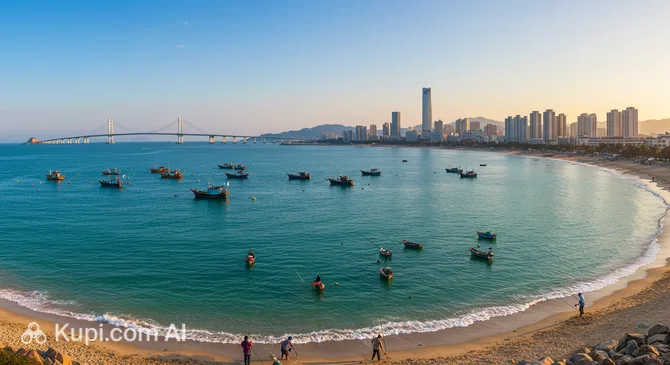
Yangjiang is a picturesque prefecture-level city in Guangdong Province, located on the coast of the South China Sea. The city harmoniously combines the charm of an ancient settlement with a rich historical heritage dating back over 1,400 years and the rhythm of a modern, developing center. It is home to about 2.5 million people, and the atmosphere itself is permeated with the sea breeze and the southern hospitality of China.
The city's geographical location makes it an ideal destination for those seeking a balance between natural beauty and urban infrastructure. The region has a subtropical climate, which ensures an abundance of greenery and comfortable conditions for relaxation almost year-round.
Yangjiang. Illustration.
Source: Kupi.com AI
Yangjiang is widely known by two unofficial titles: the "Kite Capital" and the "Oyster Capital of China." The culture of kite-making here has been elevated to an art form, while the local gastronomy is based on the freshest seafood. The city attracts travelers with its endless beaches, such as Hailing Island, and unique museums.
Visiting Yangjiang is an excellent choice for those who want to see authentic southern China, enjoy a peaceful beach holiday, and immerse themselves in the unique traditions of local fishermen. We invite you to discover this amazing land of contrasts and maritime legends.
Weather Overview
Yangjiang features a humid subtropical climate, characterized by hot summers and very mild, comfortable winters. The average annual temperature stays within 22–25°C, making the city attractive to visit at any time of year. Expect sunny and humid summers with occasional tropical downpours, as well as dry and clear winters when temperatures rarely drop below 12°C.
The wettest period is from May to September, when the bulk of precipitation falls, and the thermometer in August often rises to 31°C or higher. Winter in Yangjiang, especially January and December, is considered the "golden season" for walking: an average temperature of about 16°C and minimal rain create ideal conditions for excursions. Detailed weather in Yangjiang by month will help you choose the best time for your trip.
For a beach holiday on Hailing Island, the periods from mid-spring to early summer and autumn are best, when the heat has not yet reached its peak and the sea water is already warm enough. The wind in coastal areas is usually moderate, which is favorable for the famous local trade — kite flying.
Average monthly temperature
Average monthly precipitation
Interesting Facts
Yangjiang officially received the status of a prefecture-level city only in 1988, although its settlements have existed since the Sui Dynasty (6th century).
The city is a recognized global center for the production of knives and scissors — the local steelmaking tradition boasts centuries of experience.
A massive annual kite festival is held here, attracting masters from all over the world to demonstrate incredible designs in the shape of dragons and birds.
In Yangxi County, local fishermen have preserved the unique Gaoyang dialect, which is difficult for even residents of neighboring provinces to understand.
It was in the waters of Yangjiang that one of the world's most significant underwater archaeological sites was found — the sunken ship "Nanhai I" containing 12th-century treasures.
How to Get There
Yangjiang is conveniently integrated into the transportation system of Guangdong Province, making it accessible for travelers arriving from other regions of China or from abroad. Although the city itself does not have a major international airport, tourists often use the air harbors of neighboring megacities such as Guangzhou or Shenzhen. You can find out how to plan your route optimally in the "How to get there" section.
Railway communication is one of the most comfortable ways to travel. The modern station in the Jiangcheng district serves high-speed trains that connect Yangjiang with Guangzhou and other key centers of the province. Travel time by high-speed train from Guangzhou is less than two hours, making the trip fast and pleasant.
Station
Passenger traffic
Distance
Zhuhai railway station
7
166 km
Zhuhai railway station
7
166 km
Zhanjiang Railway Station
5
181 km
Guangzhou South railway station
14
182 km
Guangzhou railway station
15
194 km
For those who prefer road transport, modern expressways lead from Guangzhou to Yangjiang; a trip by bus or rented car will take about 3–4 hours. Intercity buses run regularly, departing from the main bus stations of major Guangdong cities. It is recommended to purchase train and bus tickets in advance, especially if your trip coincides with national holidays.
Main Attractions
One of the brightest gems of Yangjiang is Hailing Island, which regularly appears on lists of the country's most beautiful islands. Here you will find the famous Dajiao Bay and Zhapo, where you can not only enjoy the azure waters but also try various water sports. For lovers of long walks by the water's edge, Ten Miles Silver Beach — a massive stretch of pristine sand along the coast — is perfect.
A cultural itinerary of the city would be incomplete without a visit to the unique Maritime Silk Road Museum of Guangdong. This futuristic building on the seashore was built specifically to exhibit the "Nanhai I" — an ancient Song Dynasty merchant ship raised from the ocean floor. The museum literally allows you to touch the history of global maritime trade and see thousands of artifacts made of ceramics, gold, and silver.
If you are looking for tranquility and traditional architecture, it is worth stopping by Shijue Temple or strolling through the recreated Song Dynasty Town at Silver Beach. These places allow you to step back several centuries and feel the greatness of ancient Chinese culture. For fans of active recreation and panoramic views, Mt. Jinshan is an excellent choice, offering convenient hiking trails through dense forest tracts.
Local Cuisine
A gastronomic journey to Yangjiang is, first and foremost, an introduction to the gifts of the sea. The city rightfully bears the title of "oyster capital," so oysters are a mandatory part of the program. They are prepared in many ways: grilled with garlic and chili, added to rich soups, or cooked into the famous oyster omelet. Local seafood markets allow you to choose a fresh catch — crabs, shrimp, or fish — and have them prepared immediately at a nearby restaurant.
The culinary traditions of Yangjiang are based on classic Cantonese (Guangdong) cuisine but with local flair. Try the seafood rice noodles and dishes seasoned with local fermented black soybeans, which are famous for their deep aroma. The flavors here are fresh, often with a slight spiciness that emphasizes the natural taste of the ingredients.
For an authentic atmosphere, head to the coast or the old quarters of the Jiangcheng district, where locals gather in open-air eateries. It is customary to wash down a hearty meal with local varieties of green tea or freshly squeezed tropical fruit juices. Street food at night markets is a great way to try everything at once: from grilled squid skewers to exotic sweets.
Travel Tips
Planning a trip to Yangjiang will bring you a lot of pleasure if you take into account a few practical nuances. These tips will help you make your journey as comfortable and safe as possible.
Clothing and Essentials: Summers in Yangjiang are hot and humid, so choose clothing made from natural fabrics. Be sure to bring sunscreen, a hat, and comfortable shoes for walking on beaches and in parks. No special dress code is required for visiting temples like Shijue, but moderation in attire is a sign of respect.
Transport: It is most convenient to move around the city by bus or via the Didi app. Keep in mind that during peak hours and on holidays, there may be traffic jams on the roads to Hailing Island.
Finances: The official currency is the Chinese Yuan (CNY). International payment system cards are rarely accepted, so it is best to link your card to WeChat or Alipay. ATMs are available in the center of Jiangcheng, but having some cash on hand won't hurt.
Health and Safety: The city is generally very safe. Pharmacies are common, but it's better to bring specific medications with you. Drink only bottled water.
Communication: The main language is Chinese (Mandarin and the Gaoyang dialect). English is not widely spoken, so download an offline translator in advance and save hotel addresses in Chinese characters.
Local Etiquette: Chinese people value politeness. Greet people with a slight nod, and try not to speak loudly in temples.
What to Avoid: Do not engage in arguments in public places and avoid discussing political topics. Also, try not to photograph people without their consent, especially in rural areas.
Additional Tip: Visit popular beaches and the Maritime Silk Road Museum on weekday mornings — this way you will avoid the large crowds of tourists from neighboring megacities.
May your introduction to the "Oyster Capital" be filled with bright discoveries and a warm sea breeze!
Entertainment & Nightlife
Entertainment in Yangjiang is inextricably linked to its coastal status. During the day, life hums on the beaches of Hailing and Mawai Islands, where tourists are offered catamaran rides, jet skiing, and sea excursions. A special place in the leisure of local residents is occupied by kite flying — this is not just a hobby, but a genuine cultural tradition that can be observed in city parks and on open embankments.
Evening life in the city is calm and relaxed. The main activity is concentrated at Silver Beach, where cozy cafes with sunset views open up. Here you can stroll along the surf or have dinner in one of the seafood restaurants. If you prefer a more modern entertainment format, head to the Tianrun Plaza area, which features cinemas, gaming zones, and shopping areas that often host entertainment shows and evening programs.
While Yangjiang is not a mecca for lovers of noisy night clubs, the city offers a safe and comfortable atmosphere for evening walks. For transportation late at night, it is best to use official taxi apps, which work quickly and reliably. Safety in tourist zones is maintained at a high level, allowing you to enjoy the warm southern evening without extra worries.
Parks & Museums
Yangjiang offers wonderful opportunities for outdoor walks. One of the favorite leisure spots for city dwellers is Mandarin Duck Lake Park (Yuanyang Lake Park). This is a picturesque green area with a large lake in the center where you can go boating, have a picnic under the shade of trees, or watch locals practicing Tai Chi. For those who prefer more active recreation and panoramic views, Mt. Jinshan Forest Park is the perfect choice, with its forest area riddled with hiking trails leading to peaks overlooking the entire city.
The main cultural site of the region is undoubtedly the Maritime Silk Road Museum of Guangdong. It is interesting not only for its unique exhibition of an ancient ship raised from the bottom of the sea but also for the building's architecture itself, which mimics ocean waves. This is a world-class site that is a must-visit for everyone interested in the history of China and the great geographical discoveries of the past.
Parks in the coastal zone, such as the areas adjacent to Dajiao Beach, harmoniously combine natural beauty with tourist infrastructure. Here you can find barbecue areas, sports fields, and quiet alleys for evening strolls. The integration of cultural sites and natural parks makes Yangjiang a city where education is easily combined with high-quality relaxation in nature.
Getting Around
The public transport system in Yangjiang is primarily oriented toward bus service. An extensive network of routes connects the central Jiangcheng district with remote parts of the city and popular tourist areas on Hailing Island. Buses run frequently, and the fare is extremely low, making them an affordable way to get around. There is currently no metro in the city, so buses remain the main form of mass transport.
For faster and more comfortable trips, tourists often choose taxis. Both traditional services and the popular Didi app (analogous to Uber) operate in Yangjiang, allowing you to call a car to your location and see the trip cost in advance. Taxis are a great option for trips to remote beaches or museums where buses might run less frequently.
On Hailing Island and in coastal areas, renting scooters or bicycles is a popular means of transportation. This allows you to independently explore the coastline and find secluded spots. It is also worth considering that ferries may be used to reach some parts of the coast and islands. Payment on buses is often possible through mobile apps or in cash (it is better to have small bills), while WeChat Pay and Alipay are accepted everywhere in taxis.
Accommodation
The choice of accommodation in Yangjiang can satisfy the needs of both budget travelers and connoisseurs of luxury vacations. The main concentration of hotels is observed in two zones: in the Jiangcheng business district, which is convenient for those who want to be closer to urban infrastructure and transport, and on the coast of Hailing Island.
For a beach holiday, tourists most often choose resorts and apartments in the Ten Miles Silver Beach area. Both large chain hotels with pools and spa centers and cozy guesthouses offering a homey atmosphere and proximity to the sea are represented here. Families with children often find it more convenient to rent apartments with a kitchen, which are in abundance in the coastal zone.
The price range in Yangjiang is quite democratic compared to megacities like Guangzhou. However, seasonality should be taken into account: in the summer months and during Chinese holidays (for example, Golden Week in October), accommodation prices can increase several times, and vacant rooms disappear long before the check-in date. It is best to use popular international or local services like Trip.com for booking and to do so at least several weeks before the trip.
Nearby Cities
Thanks to its location in the south of the province, Yangjiang serves as an excellent starting point for exploring the surroundings and neighboring cities, each of which has its own unique character. Traveling through the region will allow you to see the diversity of Guangdong's landscapes — from karst mountains to modern megacities.
One of the closest and most interesting destinations is Yangchun, located just 40 kilometers away. This city is famous for its picturesque caves and bizarre rock formations, often referred to as "Little Guilin." You can get there by bus or train in less than an hour. Also worth noting is Taishan — a city with unique "Diaolou" style architecture that combines Western and Eastern elements.
If you have more time, you can head to Tiantoujiao or explore cozy settlements like Jinji. The region around Yangjiang offers endless opportunities for day trips, allowing you to change sea landscapes for mountain trails or the historic streets of old trading towns in a short time.
Shopping & Souvenirs
Shopping in Yangjiang is an exciting mix of modern shopping centers and colorful local markets. The main destination for lovers of brand-name clothing, cosmetics, and electronics is Tianrun Plaza. This modern mall in the city center offers comfortable shopping conditions, as well as food courts and entertainment areas. It is also worth checking out South ex-department Store, where you can find a wide range of everyday goods and textiles.
If you are looking for something truly unique, head to the markets near the coast of Hailing Island. Yangjiang is famous for its kites, which make a wonderful and symbolic gift. Local masters create true masterpieces from silk and bamboo. Another important local souvenir is fermented black soybean products and locally produced oyster sauces, which are highly valued by gourmets throughout China.
Shops usually operate from 10:00 to 21:00 or 22:00, while markets open early in the morning. Payment in large centers is accepted via cards and popular mobile apps (Alipay, WeChat Pay), but at small markets or souvenir shops by the sea, it is useful to have some cash in yuan. Don't forget to look at shell and pearl items offered by vendors on the embankments — these are classic maritime souvenirs from Yangjiang.