Support

Quanzhou Jinjiang International Airport

About the Airport

Welcome to Quanzhou Jinjiang International Airport, the aerial gateway to one of the most significant historical centres in China! This airport is your starting point for immersing yourself in the rich culture of Quanzhou, which was once one of the world's largest ports and the beginning of the famous Maritime Silk Road. The airport serves a dual purpose, handling both civil and military flights, which highlights its strategic importance. Today, it is a modern and bustling transport hub connecting Fujian Province with dozens of cities worldwide.
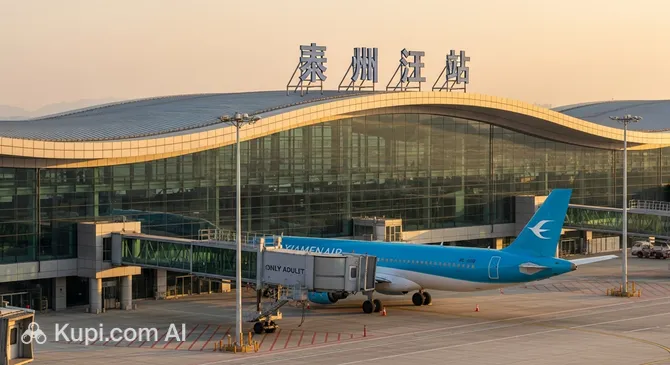
Quanzhou Jinjiang International Airport. Source: Kupi.com Binoculars

Below is the essential information about the airport presented in a convenient format:

IATA Code JJN
ICAO Code ZSQZ
City Quanzhou
Distance to centre About 12 km
Status International
Passengers per year Over 6.7 million (based on 2023 data)
Popular Airlines Xiamen Airlines, Shenzhen Airlines, China Eastern Airlines
Schedule online flight board "Quanzhou Jinjiang International Airport"

Quanzhou Jinjiang Airport is valued by travellers for its compactness and efficiency. Despite the busy traffic, navigation through the terminal is intuitive, and check-in and security procedures are quite fast. Passengers have access to business lounges for comfortable waiting, various shops, cafes, and restaurants offering both local and international cuisine. Transport links to the city centre and neighbouring districts are well-developed, making it easy to reach your hotel by taxi or bus.

Contact Information

If you need to contact representatives of Quanzhou Jinjiang Airport, you can use the following contact details. We recommend checking the official website for the most up-to-date information before your trip.

  • Official website: www.qzair.com. The site provides current information on flights, services, and passenger regulations.
  • Inquiry service phone: +86-595-85628988. You can call this number to clarify schedules, baggage allowance rules, and other general questions.
  • Address: Heping Middle Rd, Jinjiang, Quanzhou, Fujian, China, 362200.
  • Email: A direct email address for general enquiries is not always published. It is recommended to use contact forms on the official website or the telephone for communication.
  • Lost luggage information: For questions related to lost or damaged baggage, please contact the Lost and Found service at: +86-595-85628927.
  • Social media: The airport may maintain official pages on popular Chinese social networks such as WeChat or Weibo. Links can usually be found on the official website.

How to Get to the Airport

Getting to Quanzhou Jinjiang International Airport (JJN) from the city centre of Quanzhou is quite simple, as it is located just 12 kilometres south of the city limits. Depending on your budget, time, and preferences, you can choose from several convenient methods. The journey typically takes between 20 to 45 minutes, but it is always worth allowing extra time in case of traffic, especially during peak hours.

Public transport is the most economical option. Special shuttle buses, as well as several city routes, connect the airport with key points in the city, including railway stations and major hotels. This is a great way to save money, though it may not be very convenient if you have a lot of luggage. The bus journey will take about 40-50 minutes. Check the schedule in advance, as it is subject to change.

Taxis or ride-hailing services (such as DiDi) are the most comfortable and fastest way to get to the airport. A trip from the city centre will take approximately 20-30 minutes excluding traffic jams. The cost will be moderate, though significantly higher than the bus. We recommend having the airport name in Chinese (泉州晋江国际机场) or a screenshot of it to avoid misunderstandings with the driver. This is especially convenient for those travelling with children or heavy suitcases.

Car rental offers maximum freedom of movement, especially if you plan to explore not only Quanzhou but also its surroundings. However, keep in mind that foreign tourists usually require a local driving licence to drive in China. If you are arriving at the airport in your own or a rented car, parking is at your disposal. There are both short-term and long-term parking zones with reasonable rates.

When planning your route to Quanzhou Airport, it is also useful to know about alternative options. If you cannot find a direct flight, consider flying into one of the neighbouring airports. The nearest major hubs are Xiamen Gaoqi International Airport (about 55 km) and Fuzhou Changle International Airport (about 166 km), from where you can easily reach Quanzhou by high-speed train or bus. Kinmen Airport is also located nearby.

Terminals and Map

Quanzhou Jinjiang International Airport (JJN) is a modern and relatively compact aviation hub, making it convenient for passengers. All passenger infrastructure is concentrated in one main terminal, which handles both domestic and international flights. Thanks to this, you do not have to worry about long transfers between different buildings — all processes, from check-in to boarding, take place under one roof.

The terminal structure is intuitive and follows a standard two-level layout. Generally, the departure area is located on the upper floor. Here you will find airline check-in counters, security checkpoints, passport control (for international flights), and boarding gates. The arrival area is on the lower floor, where baggage claim belts, customs control, and exits to public transport and taxis are located. Navigation through the terminal is facilitated by clear signs in Chinese and English.

Although there is only one terminal, the flows of domestic and international passengers are separated. After checking in, you proceed to the relevant sector for security screening. The international zone includes duty-free shops, while the general departure area has several cafes and shops where you can buy souvenirs and travel goods. Given the size of the airport, the range of services may not be as extensive as in major capital hubs, but everything necessary for a comfortable wait is available.

Completing all pre-flight formalities at Jinjiang Airport usually takes less time than at giant airports. Nevertheless, it is recommended to arrive in advance: at least 2 hours before a domestic flight and 2.5–3 hours before an international one. During national holidays or the tourist season, passenger traffic increases significantly, so it is worth allowing extra time for potential queues.

For easy navigation through the terminal, we advise you to check the information on electronic boards immediately upon arrival at the airport — they display the check-in counter numbers and boarding gates for your flight. Since everything is in one building, getting to the right gate after passing security is straightforward. Airport staff are ready to help, but a mobile translator may be useful for resolving specific questions.

Airport History

The history of Quanzhou Jinjiang International Airport (JJN) is quite unique, as its journey did not begin with civil aviation. Initially, the facility was built and used as a military airfield. A turning point in its biography was 1996, when it was officially opened for commercial passenger transport, giving a powerful impetus to the development of transport accessibility in the entire region.

A real breakthrough in the airport's development occurred in the early 2010s. In 2012, it received international status, and in 2014, the grand opening of the new international terminal took place. This event transformed it from a regional hub into a fully-fledged international airport, significantly strengthening economic and cultural ties with other countries, especially with Southeast Asia, home to a large diaspora of people originating from Quanzhou.

Rapid growth in passenger traffic required significant investment in infrastructure. Over recent years, the airport has repeatedly undergone reconstruction and modernisation. Work has been carried out to extend the runway, update navigation equipment, and increase the capacity of passenger terminals. These efforts have allowed Jinjiang Airport to serve millions of passengers annually and take an important place in China's transport system.

One of the most interesting facts about the airport's history is that it still retains its dual status. Jinjiang remains a joint-use airport today, serving both civil aircraft and the air force. This feature highlights its strategic significance and serves as a reminder of its long history of transformation from a military facility into a modern and bustling transport hub.

Services and Amenities

Quanzhou Jinjiang International Airport (JJN) offers passengers all necessary services for a comfortable wait before their flight. The terminal infrastructure is designed to meet the needs of various categories of travellers, from tourists to business people.

You can have a snack or a full meal before departure at one of the numerous cafes and restaurants serving both local Chinese cuisine and familiar international food. In the airport shops, you will find souvenirs with local flair, travel goods, as well as products in the Duty Free zone, where you can purchase perfumes, cosmetics, confectionery, and much more.

For comfortable relaxation, the airport provides convenient waiting areas. Passengers preferring enhanced comfort can use the VIP lounges, offering a quieter atmosphere, snacks, and beverages. Free Wi-Fi is available throughout the terminal, and numerous stations for charging gadgets will allow you to stay connected at all times.

Financial services are represented by bank branches, ATMs, and currency exchange points where you can exchange money upon arrival or before departure. In case of feeling unwell, passengers can seek assistance at the medical post operating at the airport.

Travellers with small children will appreciate the presence of specially equipped mother and child rooms, where you can feed and change a baby in a quiet environment. A barrier-free environment has been created for passengers with reduced mobility: there are ramps, elevators, and specially equipped restrooms, and airport staff are ready to provide necessary assistance.

Although hotels are not located directly within the terminal building, there are several hotels of varying comfort levels in the immediate vicinity of the airport, offering convenient accommodation for transit passengers. For business travellers, basic business services such as work zones and access to office equipment may be available in the VIP lounges.

Where to Eat

At Quanzhou Jinjiang International Airport (JJN), travellers will find several options for a snack or a full lunch to help pass the time while waiting for a flight. The majority of catering establishments are concentrated in the main terminal, both in the public area and after passing security control.

For those wishing to have a substantial meal, there are restaurants offering Chinese cuisine. This is an excellent opportunity to try local culinary specialities of Fujian Province. Look out for fresh seafood dishes, various types of noodle soups, or traditional steamed dumplings. If you are in a hurry, you can quickly order popular dishes at the food court in an express service format. For a more relaxed meal, choose à la carte restaurants, which are usually located in the departure zone.

If time is limited, numerous cafes and snack bars are at your service. Here you can drink a cup of coffee or famous Chinese tea, eat a sandwich, pastry, or dessert. Such establishments are ideal for a light breakfast or a quick snack before boarding the plane. Most of them are located both before and after passport control.

Regarding special dietary needs, finding vegetarian dishes in Chinese restaurants is usually not difficult — these can be dishes made from tofu, mushrooms, or vegetables. However, with more specific requests, such as vegan, gluten-free, or Halal dishes, difficulties may arise. It is recommended to clarify the ingredients of dishes directly with the staff at the establishment.

The price range at the airport varies: from relatively budget-friendly options at food courts to more expensive ones in full-service restaurants. Most establishments operate in accordance with the flight schedule, opening early in the morning and closing after the departure of the last plane. However, at night, the selection may be significantly limited.

Travel Tips

Planning a trip through Quanzhou Jinjiang International Airport will be easier if you consider a few useful tips. Proper preparation will help save time and stress, making your journey through China as comfortable as possible.

Arrival time and check-in: For international flights, it is recommended to arrive at the airport 2.5-3 hours before departure, and for domestic flights — 1.5-2 hours. This will give you enough time to complete all formalities without rushing. If possible, check in online to save time in queues at airline counters.

Security checks: Be prepared for security screening at Chinese airports to be quite thorough. Prepare liquids in advance (in containers up to 100 ml, packed in a transparent bag), and remove laptops and other large electronics from your hand luggage. Pay special attention to portable chargers (power banks): they can be carried only in hand luggage, and the device must have a clearly visible marking indicating its capacity. Devices without marking or exceeding the limit may be confiscated.

Transfer passengers: If you have a connecting flight in Quanzhou, carefully follow the "Transfer/Transit" signs. When transferring from an international to a domestic flight, you typically need to pass passport control, collect your luggage, pass customs, and check it in again for the next flight. Allow sufficient time for these procedures.

Customs regulations: Familiarise yourself with China's customs regulations before your trip to avoid misunderstandings. Fill out the customs declaration honestly. If you have no goods to declare, feel free to go through the "Green Channel".

How to save money: To save money, use public transport or book an airport transfer in advance. The currency exchange rate at the airport is usually less favourable than in city banks, so change only a small amount for initial expenses. Bring an empty water bottle with you — after passing security, you can fill it at special drinking fountains.

In case of flight delay: If your flight is delayed, first contact your airline representative for information and instructions. Depending on the length of the delay, you may be provided with beverages, meals, or even hotel accommodation. Keep all receipts for unforeseen expenses to request compensation later.

Reached the end of the page?

That means the route is fully explored