Support

Archaeological Museum of the Paphos District

About

Have you ever wondered where the treasures discovered at the sites of ancient civilizations are kept? Paphos invites guests to its Archaeological Museum—a specialized repository of history housing the region's most valuable artifacts.
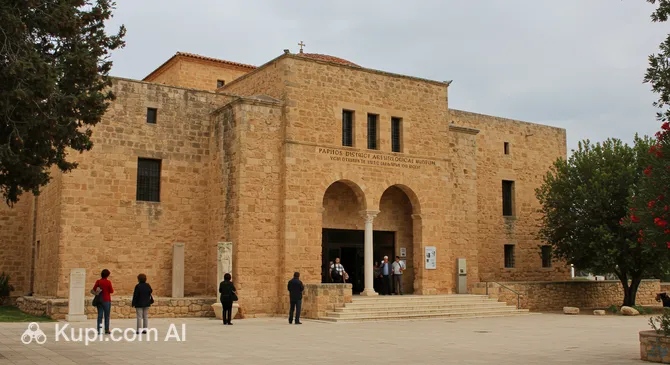
Paphos District Archaeological Museum
Paphos District Archaeological Museum. Иллюстрация. Источник: Kupi.com AI

This cultural venue features a rich collection of exhibits spanning the period from the Bronze Age to the late Middle Ages. Cyprus is famous for its heritage, and it is here that you can see original sculptures, rare coins, and jewelry found during excavations of Nea Paphos and its surroundings.

The museum is an important addition to the famous archaeological park, as its halls provide the ideal conditions for storing fragile everyday objects and works of art listed as UNESCO World Heritage. The exhibition is organized in strict chronological order, allowing visitors to literally take a journey through the centuries, observing the development of the craftsmanship of ancient potters and builders.

Contacts

To check current information before your visit or to organize group tours, you can use the official contact details of the institution.

How to contactContact
AddressΒ6 43, Paphos 8047, Cyprus
Phone+357 26 955801
Websitewww.mcw.gov.cy

What to Do

In the museum's halls, visitors can study the evolution of the region's culture in detail by examining unique collections of ceramics, sculptures, and coins from the Ptolemaic era. The calm atmosphere and informative signs in several languages encourage a thoughtful immersion into antiquity without the hustle and bustle typical of open-air tourist sites.

Particular attention should be paid to the rarest finds: for example, an amphora with gold coins discovered in the legendary House of Dionysus, as well as items brought from the sanctuaries of Aphrodite and Asclepius. Lovers of aesthetics will find many objects for inspiring photographs here, from elegant utensils to fragments of ancient statues.

For those who want to take a piece of history home, there is a museum shop selling souvenirs and books on Cypriot archaeology. This is the perfect place for those who want to continue their acquaintance with Paphos's past in comfortable cool after a walk through the sun-drenched ruins of the archaeological park.

Getting There

The museum is conveniently located in the lower part of the city at Β6 43, within walking distance of the harbor and Kato Paphos port. If you are staying in the tourist center, the walk to the building will take no more than 5–10 minutes.

For those who prefer public transport, bus routes No. 618 and No. 630 stop in the immediate vicinity of the archaeological zone. If you are coming from Paphos Airport, you can take a taxi (the trip takes about 30 minutes) or bus No. 612.

Parking is available near the museum for travelers with rental cars. Those arriving from Larnaca or Limassol by intercity bus can transfer to local transport at the city's main bus station to quickly reach the exhibition.

Ближайший город: Paphos

History & Facts

The history of the museum's collection is inextricably linked with the development of ancient Nea Paphos, founded at the end of the 4th century BC by King Nicocles. While the old city, Palaepaphos, remained an important religious center for the cult of Aphrodite, Nea Paphos grew into a powerful trading hub and strategic port during the Ptolemaic period.

The region reached its greatest prosperity during the Roman period (1st–3rd centuries AD), when the city became the island's capital. Magnificent villas with mosaic floors, such as the House of Dionysus and the House of Orpheus, date back to this time. Despite the devastating earthquakes of the 4th century, many artifacts remained preserved under layers of earth, waiting for their time.

Systematic excavations began only in 1962, after a local farmer accidentally discovered fragments of an ancient mosaic. The modern museum has become a home for finds that cannot be left in the open air: it houses unique coins, exquisite utensils, and household items that reflect the region's two-thousand-year history as a cultural crossroads of the Mediterranean.

Time Needed

For a standard tour of the main halls and key exhibits, most visitors require 1 to 2 hours. This is enough time to walk leisurely through the chronological sections and examine the most interesting finds.

If you are a passionate history lover who prefers to study every information plaque in detail and take photos, you should plan for about 2.5 hours. It is recommended to combine a visit to the museum with a walk through the neighboring archaeological park, dedicating a full excursion day to both sites.

Working Hours

When planning your visit, please note that the museum is closed on Mondays. On other days of the week, the doors are open according to the established schedule.

Standard opening hours from Tuesday to Sunday are 9:00 AM to 4:30 PM. During the peak tourist season, the schedule may change slightly, so it is recommended to check the information immediately before your trip.

DayWorking hours
ПонедельникЗакрыто
Вторник9:00 – 16:30
Среда9:00 – 16:30
Четверг9:00 – 16:30
Пятница9:00 – 16:30
Суббота9:00 – 16:30
Воскресенье9:00 – 16:30

Nearby

A visit to the museum is just one part of immersing yourself in the region's rich heritage. It is surrounded by many iconic sites that allow you to see the city's history in its architectural grandeur.

Exploring the surroundings will help you form a complete picture of life in ancient society, from the lifestyle of the nobility in luxurious villas to sacred rituals in ancient catacombs and temples.

NameDistance
Beeroom Craft Pub1.1 km
Piedra All Day Cafe Lounge Bar1.2 km
Kings Avenue Mall1.6 km
Jumbo1.6 km
Agia Solomoni Catacombs1.9 km
Agia Solomoni Catacomb2 km
Flintstones Bar2 km

Reached the end of the page?

That means the route is fully explored