Support

Ambato

About

Ambato is the picturesque heart of the Ecuadorian Andes, nestled comfortably in the valley of the river that shares its name. Often referred to as the "City of Flowers and Fruit," it charms travelers with its lush gardens, mild climate, and a unique atmosphere of vitality. As the capital of Tungurahua Province, it offers guests an ideal balance between urban comfort and the natural beauty of the highlands.

Geographically, the city sits at an altitude of about 2,600 meters above sea level, providing it with pleasant weather and the status of a place with "eternal spring." With a population of around 165,000 people, it is one of the most important administrative and economic centers, playing a significant role in the life of a country like Ecuador. Here, modern buildings exist harmoniously alongside majestic mountain landscapes and volcanic peaks on the horizon.
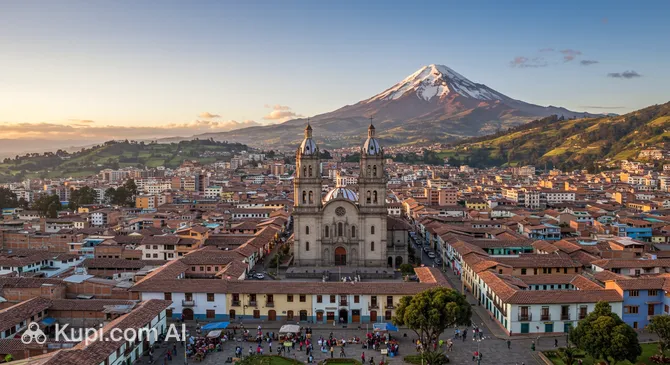
Ambato. Illustration.
Source: Kupi.com AI

The city's architectural appearance was largely shaped by the forces of nature and the residents' drive for renewal. The tragic yet inspiring history of Ambato is inextricably linked to the massive reconstruction following the 1949 earthquake, which gave the city its modern face. Today, tourists come here to stroll through well-kept botanical gardens, visit colorful markets, and, of course, witness the famous Festival of Flowers and Fruit, which is the region's hallmark.

Ambato is a wonderful destination for those seeking an authentic experience without the overwhelming bustle of the capital. The genuine friendliness of the locals, the cleanliness of the streets, rich cultural traditions, and proximity to natural wonders make this city a must-visit point on any traveler's itinerary exploring the Andes.
Weather Overview

The climate of Ambato can be characterized as temperate and cool, typical of the Andean highlands. Due to its location in the mountains, there are virtually no sharp seasonal fluctuations, and the weather resembles "eternal spring," but with a rather fresh character. The temperature regime remains remarkably stable throughout the year: average figures stay at the level of 9–10.6°C.

During the day, the air usually warms up to a comfortable 13–15°C, which is ideal for active leisure, however, nights are always cool, with temperatures dropping to 4–6°C. Expect cool weather year-round with frequent cloud cover and regular precipitation. Rain is a common occurrence here: the number of days with precipitation varies from 16 to 28 per month, although their total volume is often small, resembling a drizzle or light rain.

The "driest" period can be called the months from July to September, when the number of rainy days decreases to 16–21 per month. If you are planning a trip, be sure to check the detailed weather in Ambato to choose the right wardrobe. At any time of year, tourists are recommended to have warm, layered clothing and a reliable raincoat, as mountain weather can be changeable.

Average monthly temperature

Average monthly precipitation

Interesting Facts

Beyond its main attractions, Ambato holds many fascinating secrets and legends that reveal its character from unexpected angles. Here are a few lesser-known facts about this colorful Andean city:
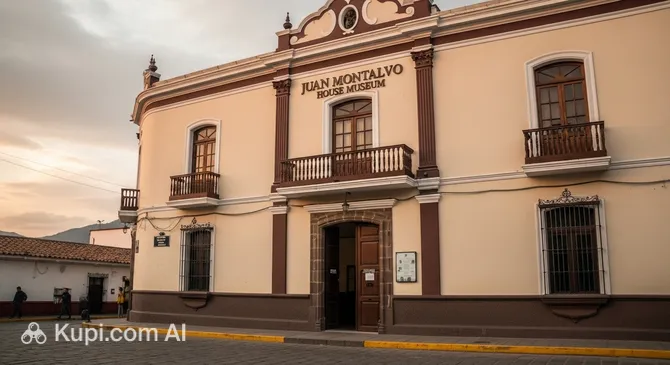
  • City of the Three Juans. Ambato proudly bears the unofficial title of "Land of the Three Juans," paying tribute to three great intellectuals born here: the writer Juan Montalvo, the politician Juan Benigno Vela, and the anthem's author Juan León Mera. To touch the legacy of one of them, you can visit the Juan Montalvo House Museum, where the atmosphere of that era is carefully preserved.

  • An Anthem Born in a Garden. The lyrics of the Ecuadorian national anthem were written right here. The poet Juan León Mera created this solemn text while staying at his estate in Ambato. Today, the Juan León Mera Estate is open to guests, and you can walk through the same gardens that inspired the author to create one of the country's main symbols.

  • A Festival as a Symbol of Rebirth. The famous Festival of Flowers and Fruit did not arise merely as a carnival, but as a response to tragedy. It was first organized after the devastating earthquake of 1949 to boost the residents' spirits and show that the city was alive and ready to flourish again. Unlike many other carnivals, the focus here is not on water fights, but on colorful parades and floral arrangements.

  • The Legend of Simón Bolívar. There is a tradition that the great Liberator Simón Bolívar once stayed in Ambato during his military campaigns. Locals believe that here, amidst the tranquility of the mountain valley, he found inspiration and strength for one of his future victories.

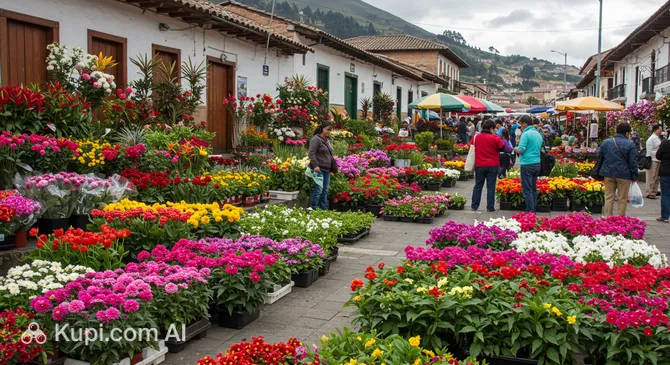
  • Eternal Spring in Action. Thanks to its unique microclimate, eternal spring truly reigns in Ambato. Even in the winter months, gardens bloom profusely and fruit ripens. A vivid confirmation of this is Parque de las Flores, which delights visitors year-round with an incredible variety of fragrant plants.

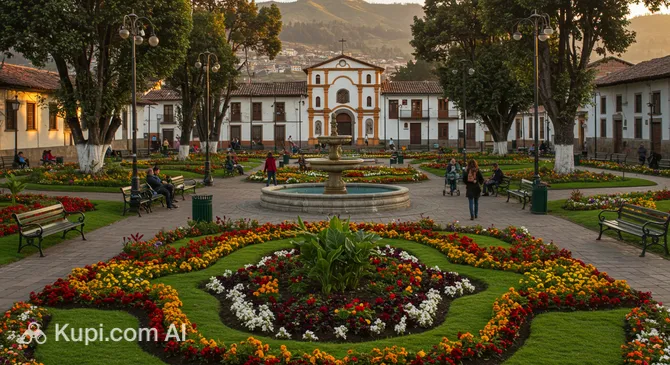
Parque de Las Flores. Illustration.
Source: Kupi.com AI

Traveler photos:

How to Get There

When planning a trip to this vibrant city in the Andes, it is important to think about logistics in advance, as direct air access is limited. You can find more details on how to get to Ambato to choose the most convenient route based on your location and budget.

The city itself does not have its own airport for regular commercial flights. Most often, tourists arrive in Ecuador through the capital region. The main gateway is Mariscal Sucre International Airport (IATA: UIO), located in Quito, about 129 km from Ambato. It is a modern and large transport hub. A trip from the airport to the city by rental car or taxi will take about 3–3.5 hours, while by bus, travel time may increase slightly.

The second popular option is flying into José Joaquín de Olmedo International Airport (IATA: GYE) in Guayaquil. This is also a major international hub, located about 172 km from your destination. The journey from here will take about 4–5 hours by road. The choice between Quito and Guayaquil often depends on airfare prices and your plans for exploring the country.

For convenience in planning, here is information on the nearest airports and their distances to the city:

AirportPassenger trafficDistance
Mariscal Sucre International Airport5.4 mln129 km
Jose Joaquin de Olmedo Airport4.2 mln172 km
Mariscal Lamar International Airport499 852185 km
Coca Airport80 000202 km
Manta Airport342 984231 km

The most common and budget-friendly way to reach the city remains the bus. Ambato is ideally located on the famous Pan-American Highway, making it easy to reach from anywhere in the country. The city's bus station (Terminal Terrestre) receives dozens of flights daily from Quito, Guayaquil, Cuenca, and other regions. Buses here are generally comfortable and run frequently, making them an excellent alternative for those who want to enjoy the Andean views along the way.

As for rail connections, they are currently not a primary way to travel. There is no active station for regular passenger trains in the city, as the railway functions mainly as a tourist attraction on specific sections. The main burden of passenger transport falls on road transport.

Main Attractions

Ambato is not called the "City of Flowers and Fruit" for nothing—its attractions harmoniously blend the natural beauty of the Andes, a rich historical heritage, and modern architecture. A walk through the city allows you to touch the culture of Ecuador and see places that have become symbols of the rebirth and resilience of the local people.

The absolute dominant feature of the city center is the majestic Ambato Cathedral. This snow-white building in a modern style was erected on the site of an old church destroyed during the 1949 earthquake. The cathedral impresses with its unusual geometry and stained-glass windows, creating an atmosphere of light and tranquility. It serves not only as the main religious center but also as a monument to the unyielding spirit of the citizens who rebuilt their city anew.

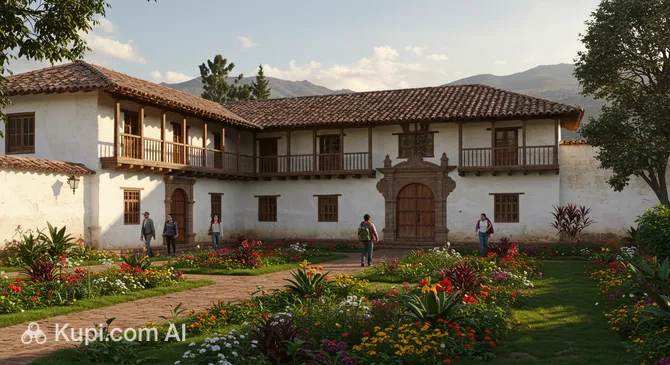
To immerse yourself in the history and romance of the past, a visit to the Juan León Mera Estate is a must. This historic estate, located on the banks of the river, once belonged to the famous writer and author of the Ecuadorian national anthem. Today, it houses a museum where 19th-century interiors are preserved, and the botanical gardens surrounding the house, featuring endemic plants, are considered some of the most picturesque in the region. It is the perfect place to enjoy the silence and learn more about the country's cultural roots.

Juan Montalvo House Museum. Illustration.
Source: Kupi.com AI

Traveler photos:

Another important cultural landmark in the city is the Juan Montalvo House Museum. It is dedicated to the life and work of the outstanding Ecuadorian educator and writer, who is often called the "Cervantes of America." The museum's exhibition carefully preserves personal belongings, manuscripts, and furniture from that era, allowing visitors to dive into the atmosphere of Ambato's intellectual life in centuries past.

Nature lovers and fans of bright colors should not miss Parque de las Flores. This cozy corner fully justifies the city's nickname: manicured flowerbeds, a variety of flowers, and historic architecture create a unique atmosphere here. The park is located on the grounds of a historic estate and is a wonderful place for leisurely strolls and photo sessions amidst blooming gardens.

Local Cuisine

The culinary traditions of Ambato are a true celebration of flavor that will not leave any gourmet indifferent. The gastronomic hallmark of the city is rightfully the famous bread "Pan de Ambato." It is baked according to ancient recipes passed down from generation to generation, often adding local fruits and spices to the dough for a special aroma. It is best to try this pastry in small family bakeries or at city markets, where the bread is always fresh and hot.

Among the main dishes that are a must-try, "llapingachos" hold a special place. These are hearty potato patties with a cheese filling, traditionally served with fried chorizo sausage, a fried egg, and a fresh avocado salad. Meat lovers should look out for "hornado"—tender pork slow-roasted in a wood-fired oven. The dish is usually served with corn, potatoes, and spicy sauces, creating a unique ensemble of flavors.

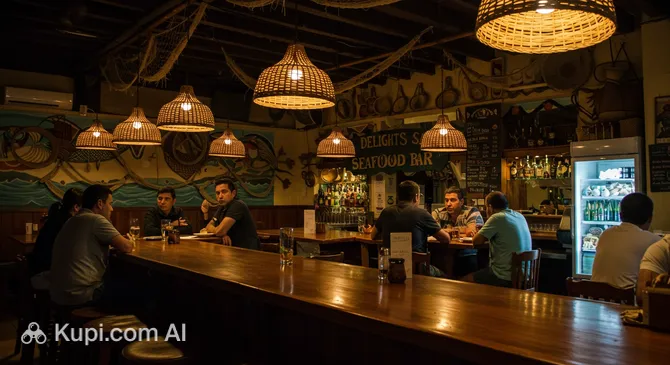
Delights of the Sea Seafood Bar. Illustration.
Source: Kupi.com AI

Traveler photos:

To refresh themselves on a warm day, locals and tourists choose natural drinks made from the generous gifts of Ecuadorian nature. On the streets of Ambato, you can find freshly squeezed juices and thick tropical fruit smoothies everywhere: guava, passion fruit, naranjilla, and cherimoya. These vitamin cocktails not only quench thirst perfectly but also allow you to get acquainted with the exotic variety of the local flora.

The food culture in the city is diverse: from authentic stalls at markets to cozy modern establishments. For the atmosphere of a real Andean lunch, you can head to the restaurant Ali, where guests are offered a wide selection of dishes. If you want to diversify your meat menu with seafood, it's worth stopping by Marisquería Delicias del Mar. And for a pleasant conclusion to your meal with a cup of excellent coffee and dessert, LUA Bakery & Coffee is perfect.

The gastronomic life of the city is particularly vibrant during the Festival of Flowers and Fruit. During these days, large-scale fairs and tastings are held in the squares, where local chefs demonstrate their skills. This is the best time to immerse yourself in the hospitable atmosphere of Ambato and try the most unusual product combinations for which this region is famous.

Travel Tips

Preparing for a trip to the "City of Flowers and Fruit" requires attention to detail, given its high-altitude location and cultural characteristics. These practical recommendations will help you feel confident and comfortable, enjoying every moment of your stay in the heart of the Andes.

  1. Clothing and Sun Protection. Since the city is at an altitude of 2600 meters, the weather here is changeable. Use the layering principle: it can be warm during the day, but as soon as the sun disappears, the temperature drops sharply. Be sure to bring a jacket, comfortable shoes for walking on hilly streets, and most importantly, sunscreen with high SPF. UV rays in the mountains are very active even in cloudy weather.

  2. Transport Nuances. For getting around the city, it is most convenient to use official yellow taxis—they are safe and affordable (a trip around the center costs $1.50–2). Be sure to ask the driver to turn on the meter ("taxímetro") or agree on the price in advance. City buses are very cheap but can be overcrowded during peak hours.

  3. Financial Matters. The official currency is the US dollar. It is important to always have small cash bills (1, 5, 10, and a maximum of 20 dollars) and coins. In small shops, taxis, and markets, they won't find change for 50 or 100 dollars. Credit cards are accepted in supermarkets and hotels, but cash is the main method of payment here.

  4. Health and Water. It is strongly recommended not to drink tap water; buy only bottled water ("agua sin gas"—still). Also, remember the altitude: in the first few days, you might experience slight shortness of breath, so don't plan intense physical activities immediately upon arrival. Pharmacies (Farmacias) are frequent, and large chains stay open late.

  5. Language Barrier and Connectivity. The main language of communication is Spanish. English is not understood everywhere, so download an offline translator or learn basic phrases. For connectivity, it's better to buy a local SIM card (operators Claro or Movistar) at official stores or small shops—this will provide you with mobile internet for navigation.

  6. Local Etiquette. Ecuadorians are polite people. When entering a shop or taxi, it is customary to say hello ("Buenos días" or "Buenas tardes"). If you are eating in a public place and make eye contact with someone else who is eating, it is polite to say "Buen provecho" (enjoy your meal).

  7. What to Avoid. Do not display expensive smartphones and jewelry in crowded places, especially at markets and bus stations, to avoid attracting pickpockets. Also, avoid walking alone in remote areas of the city after dark (after 20:00).

  8. Useful Hack. If your visit falls on a Monday, be sure to visit the city's main market. This is the busiest trading day in Ambato, where you can see a true variety of fruits, flowers, and goods from across the province, as well as feel the authentic rhythm of life in Ecuador.

Ambato is a hospitable city where a sincere smile and respect for local traditions open any door. Following these simple tips, you can avoid minor troubles and take home only warm memories of your journey through this picturesque region.

Entertainment & Nightlife

The nightlife in Ambato may not be as grand as in the capital, but it possesses its own unique charm and coziness. The city wakes up as the weekend approaches: Friday and Saturday evenings are the best times to dive into the local festive atmosphere. Most activity is concentrated not in the historical center, but in more modern areas where both locals and tourists love to unwind.

The epicenter of entertainment is rightfully considered the Ficoa district, especially the famous Avenida Los Guaytambos. This is where most of the popular bars, discos, karaoke clubs, and restaurants are located. The atmosphere here is casual and friendly: the dress code in most establishments is casual, though smart casual is better for visiting nightclubs. The musical repertoire varies from modern Latin American music (reggaeton, salsa, bachata) to global pop hits and rock.

For a more relaxed start to the evening, a stroll through the city center is perfect. Locals enjoy gathering at Cevallos Park. In the evening, it is beautifully illuminated and remains a safe place for meetings. Here, you can observe city life, buy street snacks, and simply enjoy the cool Andean night before heading out for dinner or a party.

Cevallos Park. Illustration.
Source: Kupi.com AI

Traveler photos:

If you are looking for a place to combine a pleasant dinner with drinks, consider Marisquería Delicias del Mar. Although famous for its cuisine, in the evening it boasts a lively atmosphere suitable for meeting friends. For those who prefer alcohol-free relaxation or want to spend an evening in soulful conversation in a stylish setting, LUA Bakery & Coffee is an excellent choice, serving great desserts and hot drinks late into the night.

Practical Tips and Safety:

  • Transport: It is highly recommended to travel by taxi at night. The most reliable way is to call a car via an app or ask establishment staff to order a "taxi ejecutivo" (radio taxi). Hailing a car on the street late at night is less safe. The cost of a trip around the city at night is usually 2–3 dollars.
  • Prices: The average check in Ambato's bars is quite affordable. Cocktails cost from 5 to 8 dollars, and beer is about 3–4 dollars. Nightclubs may have a cover charge, especially if guest DJs are performing.
  • Safety: The Ficoa district and central streets (such as Bolivar Street) are considered relatively safe, but avoid walking alone in dark alleys or on the outskirts.

In addition to nocturnal entertainment, Ambato offers cultural leisure. During the day or early evening, it is worth visiting local theaters, such as the Lalama Theater, which often hosts concerts and plays, or checking out cultural centers at universities that regularly organize exhibitions and film screenings.

Parks & Museums

Ambato, known as the "City of Flowers and Fruit," offers guests a wonderful combination of picturesque green zones and a rich cultural heritage. A stroll through its parks and museums is the best way to feel the soul of this Andean city, where history is closely intertwined with the beauty of nature.

Among the city's green oases, Parque de las Flores is particularly popular. Located on the grounds of a former estate, it is a magnificent garden where you can admire the diversity of Ecuadorian flora. It is the perfect place for quiet relaxation, filled with the scent of flowers and birdsong. No less interesting for tourists is Luis A. Martínez Park. This ecological park, stretching along the Ambato River, is great for active leisure: there are jogging tracks, picnic areas, and spots for nature observation.

The heart of the city's social life is Montalvo Park. This central square, named after the famous writer, is surrounded by important administrative buildings and serves as a popular meeting place for locals. A monument to Juan Montalvo stands in the center of the park, and well-kept alleys invite you to rest in the shade of trees after exploring the city's sights.

A cultural program in Ambato is incomplete without visiting historic estates turned into museums. One of the main gems is the Juan León Mera Estate. This house-museum, built in colonial style, allows you to dive into the atmosphere of the 19th century. The author of the Ecuadorian national anthem lived and worked here. Visitors are attracted not only by the preserved interiors and personal belongings of the writer but also by the botanical garden surrounding the estate, with its centuries-old trees and endemic plants.

Juan León Mera Estate. Illustration.
Source: Kupi.com AI

Traveler photos:

Another important cultural site is the Juan Montalvo House Museum. Located on the corner of the main square, it is dedicated to the life and legacy of the great educator. The museum includes a mausoleum and an exhibition telling the story of Montalvo's political and literary activities, making it a must-visit for those interested in Latin American history.

Speaking of architecture, one cannot fail to mention the majestic Ambato Cathedral. Its modern snow-white silhouette contrasts sharply with the traditional colonial churches of Ecuador, symbolizing the city's rebirth. Inside the cathedral, you can see beautiful stained-glass windows creating a special play of light.

For those seeking non-touristy impressions, we suggest looking into the "La Liria" botanical garden, which connects the grounds of two historic estates. It is a quiet and romantic place where you can arrange a small photo session against the backdrop of old bridges and lush greenery, away from the city bustle.

Getting Around

The public transport system in the city of Ambato is organized quite simply and functionally, making it understandable even for first-time visitors. Unlike large metropolises, there are no metro or tram lines here. The main means of transportation for locals and tourists are buses and taxis, which provide good coverage of all city areas and suburbs.

City buses are the most budget-friendly way to get around. They are painted in bright colors (most often blue or green), and a sign listing the main streets and route landmarks is usually placed on the windshield. The bus network operates stably, with short intervals. To stop a bus, it is often enough just to raise your hand, even if you are not at a designated stop, although rules are followed more strictly in the city center.

Bus fares are paid exclusively in cash. There are no validators or card readers here. Money is handed to the driver or conductor upon entry. The fare is fixed and very affordable—usually around 30–35 cents. Tourists are strongly advised to always have coins with them, as the driver may simply not have change for 10 or 20 dollar bills.

Taxis in Ambato are a convenient and safe alternative to public transport. Official cars are painted yellow and have orange license plates. By law, drivers are required to use a taximeter (taxímetro), especially during the day. However, in the evening or when traveling to remote areas, it is better to clarify the approximate cost or ask to turn on the meter upon boarding. Trips within the central part of the city are inexpensive.

The historic city center is compact enough that many attractions can and should be explored on foot. This allows you to better feel the atmosphere of the streets. If you plan trips out of town, you can use a car rental, but keep in mind that traffic in the center can be heavy during peak hours, and finding parking may take time. Bicycle rental as a systematic form of transport is not yet widely developed in the city due to the mountainous terrain.

It is important to remember the transport schedule: buses usually run from early morning (around 6:00) until 21:00–22:00. Later than that, the only reliable way to get around is by taxi. For safety, it is recommended to order a car through your hotel reception or use official taxi stands, avoiding "private" drivers in unmarked cars.

Accommodation

Where to stay:

Ambato offers travelers a decent choice of accommodation that will satisfy both budget tourists and those accustomed to comfort. As the city is an important commercial center, business-class hotels and cozy mid-range inns predominate. There are virtually no luxury five-star resorts of global chains here, but you can find charming boutique hotels in colonial buildings and old estates (haciendas) located in the surroundings.

When choosing an area to stay, consider the purpose of your visit. The Historic Center (around Montalvo Park and Bolivar Street) is ideal for those who want to be in the heart of the action, close to museums, architectural monuments, and shops. Here you can walk to most attractions.

If you are looking for a more peaceful and respectable atmosphere, check out the Ficoa district. This is a prestigious residential zone with green streets, where the city's best restaurants and cafes are concentrated. Hotels here often offer more spacious rooms and quiet, while the center can be reached in 5–10 minutes by taxi.

Booking Tips:

  • Peak Season: It is critically important to book accommodation in advance (at least 1–2 months) if your trip coincides with the famous Festival of Flowers and Fruit (usually held in February or March). During these days, the city is packed with tourists, prices skyrocket, and available rooms disappear instantly.
  • Prices and Payment: During normal times, the price range in Ambato is quite democratic. A budget room in a hostel or guesthouse can cost from 15–20 dollars, while a comfortable room in a good hotel costs 40–70 dollars per night.
  • Booking Methods: Most hotels are represented on popular international booking platforms. However, in small family-run inns, it is sometimes more profitable or reliable to contact them directly via messaging apps or social networks.

Nearby Cities

For those who want to explore the surroundings, Ambato serves as an excellent starting point for day trips to several interesting nearby locations. The city's convenient location on the Pan-American Highway allows for quick travel to neighboring regions, each with its own unique flavor.

Just 12 km from the city is Pelileo. This town is known as the "Blue City" of Ecuador due to its large-scale production of denim clothing. People come here for high-quality and inexpensive textiles. Additionally, the Salasaka community lives nearby, where you can purchase unique handmade tapestries and learn about the culture of indigenous peoples.

History and volcano enthusiasts should head to the city of Latacunga, located about 35 km to the north. It is the capital of Cotopaxi Province, attracting tourists with its beautiful historical center and proximity to the national park of the same name with its majestic volcano. The city is also famous for its colorful "Mama Negra" festival.

Another wonderful option for a trip is Riobamba (about 46 km away). This city, called the "Sultana of the Andes," is surrounded by impressive mountain peaks, including the highest point in the country—the Chimborazo volcano. Riobamba is interesting for its colonial architecture, parks, and as an important railway hub in the country's history.

CityPopulationDistance
Pelileo66 83612 km
Patate13 49714 km
Salcedo12 48824 km
Baños12 99527 km
Latacunga63 84235 km

These nearby destinations offer insight into the region's diverse culture and landscapes, from handicraft centers to the foothills of majestic volcanoes.

Shopping & Souvenirs

Shopping in Ambato is a fascinating immersion into Ecuador's commercial life, where modern malls stand alongside colorful traditional markets. The city has historically been an important commercial hub for the country, so trade here is brisk. Ambato is particularly famous for its leather goods, textiles, and, of course, the fresh fruit that earned it its nickname.

The heart of city trade can be called the central streets, in particular, Calle Cevallos. Strolling here, you will find many clothing, shoe, and electronics stores. This is a lively artery where you can feel the rhythm of the city and purchase goods at very democratic prices. Products from local artisans, especially the footwear for which Tungurahua Province is famous, are often sold here.

If you prefer comfortable shopping in a modern format, you should visit Mall de los Andes. This is the city's largest shopping and entertainment complex, featuring both international brands and well-known Ecuadorian labels. Here, you can not only update your wardrobe but also relax in the food court or go to the movies. Another popular location is El Paseo Shopping Ambato, offering a wide range of goods for the whole family and convenient parking.

Andes Shopping Mall. Illustration.
Source: Kupi.com AI

Traveler photos:

One cannot talk about shopping in Ambato without mentioning its famous markets. Mercado Modelo is a real attraction. It's worth coming here not just for shopping, but for the atmosphere. It is especially lively on Mondays, when traders from all over the area flock to the city for the traditional fair. At the market, you can find everything from exotic fruits and flowers to clothing and handicrafts.

As souvenirs from Ambato, tourists most often bring leather goods. Near the city is the village of Quisapincha, a center of leather production, so in Ambato itself, you can profitably buy high-quality jackets, bags, wallets, and shoes. Also, the famous sweet bread "Pan de Ambato" or a basket of local fruit like peaches or pears makes a great gift if your journey is not too far.

Shops in the city are usually open from 9:00–10:00 to 19:00–20:00. Large shopping centers stay open longer, often until 21:00, and are open on weekends. The main currency is the US dollar. Credit cards are accepted without problems in shopping centers and large stores, but in markets and small shops, it is preferable to pay in cash. Small bills and coins will come in very handy.

As for the Tax Free system, Ecuador has a mechanism for VAT (IVA) refunds for foreign tourists when purchasing locally produced goods totaling over 50 dollars at authorized stores. However, the application procedure can take time, and refund points are located mainly in the international airports of Quito and Guayaquil, so keep your receipts if you plan to use this option upon departure.

Reached the end of the page?

That means the route is fully explored