Support

Tena

About

Tena is a cozy and picturesque city located in the eastern part of the country, in the Napo Province. Often called the true "gateway to the Amazon," Tena attracts travelers with its unique atmosphere, where the foothills of the Andes meet the boundless tropical rainforests. Situated in Ecuador, this city serves as the perfect starting point for those who dream of exploring the mysterious jungle while maintaining access to a comfortable urban environment.
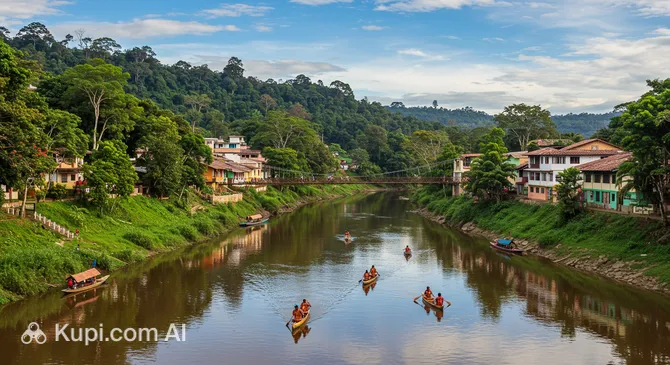
Tena. Illustration.
Source: Kupi.com AI

The city's geographical position provides it with a warm tropical climate year-round, which contributes to the lush blooming of exotic vegetation right on the streets. Despite its relatively small size and population of about 23,300 people, Tena is an important tourist center with a developed infrastructure. It is characterized by tranquility and a steady rhythm of life that harmoniously combines with a spirit of adventure.

The city and its surroundings offer many opportunities for active recreation and cultural enrichment. Tourists can not only enjoy views of picturesque waterfalls and full-flowing rivers perfect for rafting but also get acquainted with the distinctive history of Tena and the traditions of indigenous Amazonian peoples. Meetings with local tribes and immersion in their culture leave a lasting impression on guests of the region.

If you are looking for a place to combine ecotourism, wildlife exploration, and relaxing recreation away from the metropolises, Tena will be an excellent choice. This hospitable city invites you to discover the magic of the Amazon and enjoy the beauty of one of the greenest corners of the planet.

Weather Overview

Tena's climate is determined by its location on the border of the Andes and the Amazon jungle, creating conditions for moderately warm and humid weather year-round. The temperature regime here is remarkably stable: average values fluctuate in a comfortable range from 17.3°C to 18.9°C. During the day, the air usually warms up to 20–23°C, while nights bring freshness as the thermometer drops to 13–15°C.

A characteristic feature of the region is the high frequency of precipitation. Rain falls almost daily: the number of rainy days varies from 21 in September to 31 in March. Expect consistently warm weather throughout the year with a high probability of precipitation in any season. Even in nominally "dry" months, such as August and September, the sky is often covered with clouds, and rain remains a frequent guest.

When planning a trip to this green corner of Ecuador, it is worth considering that it is the abundant moisture that feeds the region's lush vegetation. To choose the right gear for jungle walks, we recommend checking the forecast for the weather in Tena for your travel dates. July is considered the coolest period, and November the warmest, though the differences between seasons are minimal.

Average monthly temperature

Average monthly precipitation

Interesting Facts

Among the main attractions and its status as the "gateway to the Amazon," Tena holds many fascinating secrets and cultural features. This city is capable of surprising even experienced travelers with its deep connection to nature and ancient traditions.
  • A rescue center, not just a zoo. One of the important but often overlooked features of the region is its proximity to the Amazoonico Animal Rescue Centre. This is not an entertainment facility but a real wildlife hospital where volunteers nurse injured animals and rare plant species back to health. Visiting this center allows tourists to see the flip side of jungle life and learn about real efforts to preserve the Amazon ecosystem.

  • A city of living legends and shamanism. Ancient beliefs are still strong in Tena. The local culture is permeated with stories of forest spirits and natural magic. Many residents carefully preserve ancestral knowledge about the healing properties of plants, and shamanic traditions here are not just a tourist attraction, but a part of everyday life and the worldview of the indigenous population, creating a special mystical atmosphere in the city.

  • Eco-friendly crafts. While strolling through the markets of Tena, pay attention to the products of local masters. Artisans create unique jewelry and household items using exclusively natural materials: seeds of exotic plants, fibers, and wood. This art reflects the philosophy of the region's inhabitants—to take only what is necessary from nature without harming it, and to turn the forest's gifts into beautiful and functional things.

How to Get There

A journey to the "gateway to the Amazon" usually begins with a flight to one of Ecuador's major cities, as there are no direct flights to this cozy corner of the jungle. To plan the perfect itinerary, you can find out all the ways to get to the city, but the main option for most tourists remains a combination of flight and ground transport.

Most travelers choose Mariscal Sucre International Airport (IATA: UIO). There is no airport in the city of Tena itself, so you need to fly into Quito, which is about 114 km away. This is the country's main air hub with a huge passenger flow, receiving flights from all over the world. The journey from here to Tena by taxi or private transfer will take approximately 3 hours and 15 minutes. The route passes through the picturesque Andes, so the trip will be incredibly beautiful.

An alternative option is Coca Airport (IATA: OCC), located in the city of Coca (Puerto Francisco de Orellana). Although it is a regional hub with a small passenger flow, it is the closest to the destination—only 109 km away. The journey by car from here to Tena will take about 3 hours. You can also consider flying into José Joaquín de Olmedo International Airport (IATA: GYE) in Guayaquil if you are traveling from the coast, but be prepared for a long journey: the distance is over 260 km, and travel time will exceed 7 hours.

For clarity, here is a summary of the main airports through which you can build your route:

AirportPassenger trafficDistance
Coca Airport80 000109 km
Mariscal Sucre International Airport5.4 mln114 km
Lago Agrio Airport47 780160 km
San Luis Airport80 000206 km
Puerto Asis Airport66 351221 km

Since rail communication is not developed in this region and is not used for passenger transportation to Tena, the main way to cover the final leg of the journey remains road transport. Regular buses and comfortable taxis connect the listed airports with the city, allowing you to reach your destination comfortably.

Main Attractions

Parque Amazónico La Isla is a true oasis of wildlife located right within the city limits, at the confluence of the Pano and Tena Rivers. You can reach this unique reserve via a picturesque hanging bridge. Inside the park, there are convenient trails passing through a dense botanical garden, where travelers can learn about the jungle flora and see local inhabitants, such as tapirs and monkeys, in their natural habitat.

The center of attraction for tourists and locals alike is the Tena River Walk (Malecón de Tena). This well-maintained promenade along the river is perfect for a relaxing break and getting to know the city's atmosphere. Here, you can stroll along pedestrian paths, enjoy views of the Andes and the rushing river waters, and visit numerous cafes and craft stalls. A special charm is added to the place by the famous pedestrian bridge, which is spectacularly illuminated in the evening.

For adventure lovers, a visit to the Jumandy Caves (Cavernas de Jumandy), located near the city, is a must. This labyrinth of underground passages and halls, named after a legendary indigenous leader, strikes the imagination with whimsical stalactites and underground waterfalls. A tour of the caves often includes walking through an underground riverbed, which guarantees vivid impressions and an adrenaline rush.

It is also worth heading to Puerto Misahuallí—a colorful port village nearby, often called the "gateway to the jungle." This place is famous for its river beach and a population of wild capuchin monkeys that roam freely around the central square, completely unafraid of people. From here, it is also convenient to embark on boat tours along the Napo River for a deeper immersion into the world of the Amazon.

Local Cuisine

Tena's gastronomy is a bright and distinctive reflection of the Amazon's richness. Local cuisine is based on the freshest products gifted by the generous tropical forests and full-flowing rivers of the region. Semi-finished products are practically never used: most dishes are based on freshly caught fish, bananas (plantains), cassava (manioc), and a huge variety of exotic fruits and aromatic spices that create a unique taste.

Among the main dishes that are definitely worth trying, "chicho" stands out. This is a thick and hearty cassava soup with meat or fish added, which perfectly restores strength after long walks in the jungle. Another hallmark of the region is fish grilled or baked in leaves (often called maito). The fish is usually served with a side of yucca or fried plantains, seasoned with local herbs, which gives the food a special forest aroma.

Street food in Tena offers tourists quick and tasty snacks. On the stalls, you can often find crispy plantain chips and sweet pastries with various tropical fruit or meat fillings. For fans of the exotic, local farmers' markets will be a true discovery. This is a real paradise for gourmets, where you can taste fruits whose names are rarely encountered outside Ecuador, such as naranjhilla, guanabana, or pitahaya.

As for drinks, the consumption culture here is closely linked to natural energy boosters and vitamins. Refreshing juices from freshly squeezed tropical fruits are popular. Also, in the Napo region, people traditionally drink guayusa—an infusion made from the leaves of a local plant that energizes better than coffee and is considered an important part of social interaction. Locals often eat at markets or in small family cafes where a soulful atmosphere prevails, and during gastronomic festivals, food tastings are accompanied by traditional music and fun.

Travel Tips

Traveling to the "gateway to the Amazon" requires special preparation, as proximity to the jungle dictates its own rules. We have gathered the most important recommendations to help make your trip to Tena comfortable, safe, and filled only with pleasant impressions.

  1. Clothing and Gear. The climate here is humid and warm, so choose light, quick-drying clothing, preferably with long sleeves to protect against insects and the sun. Be sure to bring a high-quality raincoat or poncho—showers can start suddenly. For jungle excursions, rubber boots are the ideal footwear (often provided on tours, but it's better to have your own tall socks), while comfortable sandals are fine for walking around the city.

  2. Transport. Tena is a compact city, and it is pleasant to move around the center on foot. To travel to attractions or neighboring villages, it is most convenient to use a taxi—it is an inexpensive and safe mode of transport (a city trip usually costs 1–2 dollars). Pickup taxis are also popular and convenient if you have bulky luggage. Apps like Uber practically don't exist here; cars are hailed on the street or ordered through the hotel.

  3. Finance. The official currency in Ecuador is the US dollar. Although credit cards are accepted in large hotels and supermarkets, in Tena, cash remains "king." Small shops, cafes, and taxis are unlikely to accept cards. We strongly recommend having small bills (1, 5, 10, 20 dollars) with you, as finding change for 50 or 100 dollars can be extremely difficult. ATMs exist in the city center, but they may not work or may run out of money.

  4. Health and Safety. Tena is a calm city, but standard vigilance doesn't hurt. The main health concern here is protection against mosquitoes and gnats. Use repellents with high DEET content and reapply them every few hours. Drink only bottled water and avoid ice in drinks at street cafes. Pharmacies operate as usual, but there are few 24-hour ones, so it's better to pack a personal first-aid kit in advance.

  5. Communication and Language. The main language of communication is Spanish. Guides and staff at expensive lodges know English, but ordinary citizens and taxi drivers speak only their native language. Download an offline translator and learn a few basic phrases. For mobile communication, it's better to buy a local SIM card from operators like Claro or Movistar—they provide the best coverage in the Napo region. Wi-Fi is available in most hotels and cafes.

  6. Local Etiquette. Ecuadorians are very polite and appreciate friendliness. It is customary to say hello ("Buenos días" or "Buenas tardes") when entering a shop, taxi, or restaurant. If you visit indigenous communities, always ask for permission before photographing people, especially children, and respect their traditions. Don't refuse immediately if you're offered the traditional drink chicha—it's a gesture of hospitality (you can take a polite sip).

  7. What to Avoid. Never go into the jungle alone without an experienced guide—trails can be confusing and weather changeable. It is also strictly not recommended to touch unfamiliar plants, bright frogs, or insects: many representatives of the Amazonian flora and fauna can be poisonous or cause severe allergic reactions.

  8. Culinary Hack. While in Tena, be sure to try local chocolate or cocoa beans. Napo Province is famous for one of the best varieties of cocoa in the world—Fino de Aroma. You can buy a bar of locally produced organic chocolate much cheaper than at the airport or abroad, and it will be perhaps the tastiest souvenir of your trip.

By following these simple tips, you will be able to avoid minor troubles and fully immerse yourself in the atmosphere of adventure. May Tena greet you with its warm hospitality and reveal the amazing secrets of Amazonian nature!

Entertainment & Nightlife

Nightlife in Tena is not about glitzy clubs and strict face control; it's about the relaxed tropical atmosphere, the sound of the river, and infectious Latin American rhythms. After sunset, the city, weary from the daytime heat, comes alive, offering tourists cozy places to unwind. The epicenter of evening entertainment invariably remains the Malecón (Malecón de Tena)—the riverfront, where the concentration of bars, restaurants, and discos is at its highest.

Life bustles precisely on the promenade and its adjacent streets. The city's most popular venues are located here, many of which have open terraces overlooking the river and the famous pedestrian bridge. The leisure style here is laid-back: most bars operate in a lounge style where you can drink a cold beer or an exotic cocktail while sitting in a hammock or at a wooden table. Closer to midnight, some bars transform into dance floors playing a mix of reggaeton, salsa, bachata, and international pop music.

The crowd in Tena's establishments is very diverse. You can meet local residents relaxing after work as well as large groups of backpackers from all over the world returning from jungle tours. There is practically no dress code: shorts, T-shirts, and sandals are perfectly normal party attire. The main fun begins around 10:00 PM, although bars open at sunset offering "happy hours."

Prices in Tena will pleasantly surprise travelers. The average cost of a cocktail ranges from 4 to 7 dollars, and local beer will cost between 2 and 3 dollars. If you are looking for specific spots, just walk along the river: you will definitely hear the music and see the lights of the liveliest spots. Establishments offering signature cocktails based on local fruits and guayusa—a traditional Amazonian plant—are particularly popular.

In terms of safety, the city center and the promenade area are considered safe zones where you can walk until late at night. However, heading into remote, poorly lit neighborhoods on foot is not recommended. To return to your hotel, it is better to use an official yellow taxi. You can hail a car right on the street or ask a bartender to call one for you; a trip within the city usually costs no more than 1.50–2 dollars.

While Tena is primarily famous for its nature, you can also find cultural entertainment during the day. There are no large theaters in the city, but it is worth paying attention to small ethnographic museums and cultural centers, often located at hotels or tourist offices. They tell the story of the life of the indigenous Kichwa people. The central park also remains a popular spot for daytime leisure, where craft fairs and small city festivals often take place.

Parks & Museums

Tena harmoniously combines urban infrastructure with pristine nature, offering tourists unique green zones and cultural venues. The city does not abound with huge museum complexes like world capitals, but its parks and ethnographic centers allow for a deep immersion into the Amazonian atmosphere and learning the history of indigenous peoples without boring lectures or dusty display cases.

The main natural gem within the city remains Parque Amazónico La Isla. It is not just a place for walks but a real open-air educational center occupying about 24 hectares on a peninsula between the rivers. Ecological trails have been laid out here, introducing visitors to valuable tree species and medicinal plants of the jungle. The park is interesting because it allows you to see the region's biodiversity without traveling far into the wilderness: you can encounter tapirs, monkeys, and many exotic birds here.

Another important green zone is the Linear Park (Parque Lineal). It stretches along the banks of the Tena and Pano rivers, creating ideal conditions for morning jogs or evening promenades. This is a well-kept space with relaxation areas, benches, and observation platforms offering picturesque views of the rushing river currents and surrounding hills. Tourists appreciate this place for its tranquility and the opportunity to enjoy the coolness by the water on a hot day.

The city's cultural life and the region's history are best reflected by the Sinchi Sacha Museum (Museo Sinchi Sacha). This space is managed by a local association and is dedicated to preserving Kichwa traditions. The exhibition features unique ceramics, traditional hunting and fishing tools, and household items. A visit to this museum provides an understanding of how indigenous people have coexisted in harmony with the jungle for centuries, using its gifts for life and creativity.

The ethnographic project Kamak Maki, often called a "living museum," deserves special attention. Although it is located a bit away from the center, it is a key point for cultural exploration. Here you can not only see artifacts but also participate in the process of creating them and learn about shamanic rituals and traditional medicine. There is also a mini-zoo on the territory with representatives of local fauna, making the visit interesting for the whole family.

Among the architectural landmarks, the Cathedral of San José (Catedral de San José), located by the central square, stands out. This modern building with simple yet elegant lines is the spiritual heart of the city. In front of the cathedral stands a monument to the hero of indigenous resistance—Chief Jumandy—which serves as a reminder of the rich and sometimes dramatic history of the local peoples' struggle for their freedom.

Insider Tip: If you want to see something truly ancient, head to the outskirts of the city (Cotundo area) in search of petroglyphs. These mysterious stone carvings, left by ancient civilizations thousands of years ago, are scattered along the rivers and still cause scholarly debates about their meaning.

Getting Around

Due to Tena's compact size, there is no complex subway system or tram lines. Public transport consists mainly of buses and taxis, which fully cover the needs of local residents and travelers. The city is laid out so that most central locations, hotels, and restaurants can be easily reached on foot; however, for trips to remote areas or natural attractions, you will definitely need transportation.

The main budget way to get around is by city and suburban buses. They run along the main streets and connect the center with the outskirts, as well as with popular tourist spots such as Puerto Misahuallí or Archidona. The fare within the city is very affordable and usually costs around 30–40 cents. Tickets as such do not exist: payment is made exclusively in cash to the conductor or driver upon entry. It is important to have small coins with you, as change for large bills may not be available.

The most convenient form of transport for tourists is the taxi. In Tena, you will encounter both classic yellow passenger cars and double-cab pickup trucks (camionetas) characteristic of this region. Pickups are particularly practical if you are traveling with bulky backpacks or wet gear after rafting. A trip within the city limits usually has a fixed cost of around 1.50–2 dollars. Meters are rarely used here, so it is better to clarify and agree on the price before getting in.

There are no electronic transit cards, validators, or mobile payment apps in the city. The system works traditionally: cash only. Global ride-hailing aggregators also practically do not function here. It is easiest to hail a car on the street with a wave of the hand or find one at special taxi stands, of which there are many in the center, near the market, and by the bus terminal. At night, for safety reasons, it is recommended to ask hotel or restaurant staff to call an official taxi for you by phone.

The central transport hub is the bus station (Terminal Terrestre). From here, buses depart to waterfalls, caves, and neighboring provinces. Buses run frequently, and schedules are usually posted at the ticket counters of the carrier companies. For short distances, walking remains the best alternative to any transport: distances in Tena are small, and a stroll along the river allows you to better feel the city's atmosphere.

Accommodation

Accommodation options in Tena are as diverse as the nature around it: from simple backpacker hostels in the city center to exclusive eco-lodges hidden deep in the jungle. Since the city is the starting point for expeditions into the Amazon, the tourist infrastructure is well-developed here and caters to travelers with any budget. The main choice is between the convenience of city life and total immersion in the wild.

If proximity to transport hubs, restaurants, and nightlife is important to you, it is better to choose accommodation in the central part of the city or in the Tena River promenade area. Most budget hotels and hostels are concentrated here. Staying in the center allows for easy access to the bus station and independent planning of city walks. However, keep in mind that it can be quite noisy in this area on weekends due to music from the bars.

For those traveling to Ecuador for peace and the sounds of the tropical forest, eco-lodges located on the outskirts of Tena (usually 15–30 minutes away by car) are the ideal option. These are not just hotels, but full bungalow complexes, often built from natural materials in a traditional style. Staying here often includes meals and organized excursions, allowing you to enjoy comfort in the middle of the wild without extra worries.

Booking Tip: Tena is a popular destination for both international tourists and locals. If your trip falls during national holidays (especially Carnival in February-March) or the dry season, it is highly recommended to book accommodation in advance, at least several weeks before. At other times, you can find a free room upon arrival, but the best options with a river view are taken quickly.

The price range in Tena is very affordable. Budget hostels and guesthouses offer lodging for 10–20 dollars per person. Mid-range hotels with air conditioning and breakfast will cost 30–60 dollars per room. The cost of staying in high-quality lodges starts from 80–100 dollars and can reach significant amounts depending on the service package included. City hotels can be booked through popular online platforms, but for many remote lodges, it is better to use their own websites or communicate directly via messaging apps.

Nearby Cities

For those who want to explore the surroundings, Tena serves as an excellent starting point for day trips to several interesting nearby locations:

Quito is not just the capital, but a true treasure trove of colonial architecture located high in the Andes. The city's historical center, a UNESCO World Heritage site, impresses with its majestic churches and squares. A trip here will allow you to trade the humid tropical climate for mountain coolness and touch the rich history of the country.

Ambato, often called the "City of Flowers and Fruit," is famous for its picturesque parks and botanical gardens. It is a cozy and quiet city where you can take a break from the hustle and bustle, stroll along well-kept alleys, and try local sweets. Ambato is also known for its colorful festivals that reflect the cheerful spirit of its residents.

Riobamba, known as the "Sultan of the Andes," offers travelers breathtaking views of volcanoes, including the famous Chimborazo—the point on the planet farthest from the center of the Earth. The city has preserved an old-world spirit and is an important cultural center where you can get acquainted with the traditions of highland Ecuador and visit colorful local markets.

CityPopulationDistance
Pastaza60 00058 km
Puyo33 55759 km
Baños12 99581 km
Patate13 49785 km
Salcedo12 48887 km

These nearby destinations provide an insight into the diverse culture and landscapes of the region, creating a vivid contrast to the tropical nature of Tena.

Shopping & Souvenirs

General Overview: Shopping in Tena is, first and foremost, an immersion into the authentic Amazonian atmosphere rather than a pursuit of global brands. In Ecuador, this city is known as a place where you can purchase unique items created by the hands of local artisans, as well as high-quality organic products. You won't find high-fashion boutiques here, but you can buy everything needed for jungle expeditions and find souvenirs imbued with the spirit of local culture.

Main Shopping Areas and Streets: The city's main commercial artery is Avenida 15 de Noviembre. Along this busy street, you will find pharmacies, clothing stores, hardware shops, and electronics outlets. It is also worth strolling through the streets around the central park and the promenade, where small tourist shops and stalls with handmade items are concentrated.

Shopping Centers: Tena lacks large shopping and entertainment malls of the traditional Western format. The role of main shopping points is filled by supermarket chains such as Tía, where you can buy groceries, hygiene products, and basic items. Small shopping galleries (galerías) are also found in the center, housing several stores with locally produced clothing and footwear under one roof.

Markets: The heart of local trade is the Central Market (Mercado Central). This colorful place is a must-visit even if you don't intend to buy anything. Here, the stalls overflow with exotic fruits: pitaya, naranjilla, tree tomatoes, and guanabana. At the market, you can also find sections with traditional food selling ready-made dishes, and stalls with medicinal herbs used by local healers.

Souvenirs: From Tena, it is worth bringing back goods that reflect the richness of nature and the Kichwa culture.
Chocolate and Cocoa: Napo Province is famous for its "Fino de Aroma" cocoa. A bar of local organic chocolate makes for the best gift.
Seed Jewelry: Local artisans make beautiful bracelets and necklaces from tagua seeds ("vegetable ivory") and red huayruro seeds.
Ceramics: Traditional thin-walled Kichwa ceramics painted with natural dyes.
Balsa Wood Crafts: Lightweight figures of Amazonian birds and animals carved from balsa wood.

Working Hours and Payment: Most stores are open from 9:00 AM to 6:00 PM or 7:00 PM. Small shops may close for a lunch break (siesta) from 1:00 PM to 3:00 PM. The official currency is the US Dollar. Cash is absolutely necessary here: cards are only accepted in large supermarkets and some hotels. Always carry small bills (1, 5, 10, 20 dollars), as finding change for a 100-dollar bill is almost impossible.

Tax Free: The Tax-Free refund system is practically non-existent in Tena. It is relevant only for large purchases in brand stores in big cities or at the airport, but in local craft stalls and markets in Tena, you won't be able to get a VAT refund.

Reached the end of the page?

That means the route is fully explored