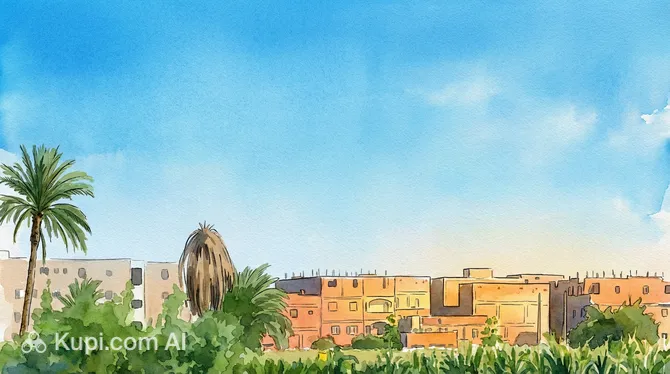
Located in the heart of the Nile Valley, the town of Biba is an authentic corner of provincial Egypt. It is a place where time seems to slow down, and life is governed by the rhythms of the great river and agricultural cycles. The city is an important administrative center in the Beni Suef Governorate and attracts travelers looking to see the real, off-the-beaten-path Egypt with its genuine hospitality and traditional way of life.
Geographically, Biba is nestled on the west bank of the Nile. The climate here is typical for the central regions of the country: hot, dry summers and mild, pleasant winters. According to statistical data, the city's population is around 385,528 people, making it a fairly bustling and significant regional hub. Despite the absence of world-famous monuments, the town charms visitors with its lively street trade atmosphere and the dense layout of its colorful residential quarters.
Biba. Illustration.
Source: Kupi.com AI
The rich history of Biba is inextricably linked to the fertile lands of the valley, which have sustained the region for millennia. The city's main features are its bustling markets and proximity to the river, offering opportunities for peaceful strolls along the banks. A visit to Biba is a wonderful opportunity to immerse yourself in the ethnographic details of Egyptian provincial life, get acquainted with local crafts, and feel the true spirit of the region far from the overcrowded resorts.
Weather Overview
The climate in Biba is typical for the Nile Valley and is characterized as a hot desert climate. If you are planning a trip, you should account for significant seasonal temperature fluctuations. Summers here can be extremely hot: in July and August, the thermometer often rises to +38°C and above during the day, and the sun shines almost continuously. Precipitation during this period is an extremely rare occurrence.
The winter months, conversely, bring long-awaited coolness. In January, the average daytime temperature is around +20°C, which is ideal for walking. However, nights can be quite cold (down to +8°C), so packing some warm clothes won't hurt. You can study the detailed city's climate through monthly reports to choose the best time for your visit.
One feature of the region is the dust storms known as Khamsin, which occur in the spring (usually in March and April). During this time, the sky can turn orange, and visibility decreases significantly. For the rest of the year, the air remains dry, and the proximity of the Nile creates a pleasant microclimate on the embankments, softening the daytime heat.
Average monthly temperature
Average monthly precipitation
Interesting Facts
Biba is one of the largest and most dynamically developing cities in the Beni Suef Governorate, showing significant population growth over recent decades.
The city historically developed as an important trade hub due to its location on the west (left) bank of the Nile, in one of the country's most fertile zones.
The official language of communication in the city is Arabic, and the local dialect has its own unique features characteristic of the inhabitants of central Egypt.
The foundation of Biba's economy is agriculture and food processing, which largely determines the appearance and rhythm of life in the city center.
How to Get There
When planning a trip to Biba, keep in mind that this city is off the main international tourist routes but is well-integrated into the regional transport network of the Nile Valley. The primary route for most travelers starts in Cairo, from where Biba can be reached in approximately 2.5–3 hours. The distance is about 130 kilometers, and the road runs along the scenic banks of the river.
The nearest major transport hub is the city of Beni Suef, located just 17 kilometers away. Service taxis and microbuses run regularly between these locations, making the journey fast and inexpensive. Detailed information on routes can be found in the section on how to get there.
In Biba itself, the railway station is currently not functioning for long-distance passenger travel, so the main focus should be on road transport. Direct bus services from major cities are rare, so the most convenient way is a combination of a train to Beni Suef and a subsequent trip by taxi or local "mashru" (microbus).
The town of Biba is not among the popular tourist destinations, and that is precisely its special charm for fans of ethnographic discoveries. You won't find grandiose temples or world-class museums here, but you will see the authentic life of Egyptians. One of the main points of attraction is the Central Bazaar (souq)—the noisy and colorful heart of the city, where everything from the freshest produce to bright fabrics is sold in a labyrinth of narrow streets.
An evening walk along the Nile embankment is a must. Despite the lack of developed tourist infrastructure, the riverbanks in the Biba area offer picturesque views of passing feluccas and traditional farmland. It is the perfect place to watch the sunset and feel the peace that the great river provides.
For architecture enthusiasts, the local mosques scattered throughout the old quarters may be of interest. They are not only religious sites but also centers of social life, always buzzing with activity. A visit to Biba should be seen as a chance to see Egypt "unfiltered," where every detail of daily life tells its own unique story about life in the Nile Valley.
Local Cuisine
The cuisine in Biba is a real treat for lovers of simple, hearty, and aromatic dishes. The classics of the Egyptian table reign supreme here. Be sure to try koshary—an amazing mix of rice, pasta, lentils, and chickpeas, topped with a spicy tomato sauce and fried onions. This dish is considered a national favorite and is sold on almost every corner.
For breakfast, locals prefer ful medames (stewed fava beans) with hot aish flatbread, baked in traditional ovens. Also popular is taameya—the Egyptian version of falafel, made from crushed beans with plenty of herbs. The quality of products here is always top-notch, as most vegetables and grains come to the city directly from the neighboring fields of the Nile Valley.
As for drinks, strong black tea with mint is very popular in Biba, as is freshly squeezed sugar cane juice, which perfectly quenches thirst on a hot day. Local cafes have a casual atmosphere: food is a way of socializing, so portions are usually generous, and establishment owners are always happy to welcome guests who appreciate their culinary skills.
Travel Tips
A trip to Biba will provide you with a unique experience of getting to know the real Egypt, but it requires some preparation and knowledge of local specifics.
Clothing and Dress Code: Choose modest clothing that covers the shoulders and knees, as the town is conservative. Comfortable closed-toe sneakers are the best choice for footwear for walking on dusty streets.
Transport: It is most convenient to get around the city by taxi, but always discuss the price of the trip in advance. Use microbuses to travel to neighboring towns.
Finances: Be sure to have an adequate supply of Egyptian pounds in cash in small denominations. There are ATMs in the city, but international cards can be unreliable.
Health: Drink only bottled water and avoid ice in drinks. During the summer, be sure to use sunscreen, even if the sky seems cloudy.
Communication: English is not widely spoken. It is recommended to learn a few basic phrases in Arabic or have an offline translator handy.
Local Etiquette: Always remove your shoes when entering homes or mosques. Remember that business hours may change significantly during Ramadan.
What to Avoid: You should not take photos of government buildings, bridges, or military sites. Also, avoid walking alone in poorly lit outskirts at night.
Additional Tip: The best time to visit is from November to March, when the weather is most favorable for walking.
Following these simple rules will help you feel confident and fully enjoy Biba's hospitality. Have a great trip!
Entertainment & Nightlife
Nightlife in Biba is fundamentally different from what you might find in Cairo or the Red Sea resorts. You won't find noisy nightclubs or bars with loud music here. The main entertainment for locals in the evening is the traditional coffee house (ahwa), where men gather over a cup of strong tea or a fragrant shisha to discuss the latest news and play backgammon.
After sunset, when the heat subsides, the central streets of the city come alive: families head out for walks, and shops stay open late. The atmosphere becomes more relaxed and friendly. For those looking for more active evening entertainment, such as cinemas or modern entertainment centers, the best option would be a trip to neighboring Beni Suef or the capital.
During the day, entertainment in the city focuses on walks along the Nile and visiting local markets. During holidays, you can often see folk festivities with traditional music on the streets of Biba, giving tourists a rare opportunity to experience the living folklore of the Egyptian provinces.
Parks & Museums
In terms of traditional parks and museums, Biba might seem modest, as the city is more focused on its residential and economic functions. The city's main "green oasis" is the Nile embankment. There are no park attractions in the conventional sense, but there is an opportunity to walk along the river in the shade of trees, observing agricultural work on the opposite bank.
There are no specialized historical museums within the city limits. However, for those seeking cultural enlightenment, Biba itself is a living open-air museum where you can study the traditional architecture of provincial houses and observe preserved craft techniques. For classic museum exhibits, tourists should head to the Beni Suef Regional Museum.
The lack of formal recreational zones is compensated for by the abundance of open spaces in the suburbs, where the fertile lands of the Nile Valley create picturesque landscapes. These are excellent spots for those who appreciate agrotourism and want to see how agriculture is organized in one of the world's oldest oases.
Getting Around
The transport system in Biba is as simple and functional as possible, catering to the needs of local residents. The main means of getting around the city and between neighboring villages are microbuses, which Egyptians call "mashru." They do not have a fixed schedule and depart as they fill up, requiring some patience from tourists and a willingness for close contact with the local environment.
Taxis are another popular way to move around. Cars are usually not equipped with meters, so it is vital to agree on the fare before you get into the vehicle. For short trips through narrow streets, residents often use motorcycles and tuk-tuks, which are known for their maneuverability in heavy urban traffic.
Getting around on foot in the central part of the city is quite possible, although you should take into account the lack of sidewalks in many places and the chaotic traffic. Bicycles are also popular, but tourists should use them with caution due to the local driving style. Fares for public transport are paid in cash to the driver, and prices remain very low even compared to other regions of the country.
Accommodation
The hotel sector in Biba is quite modestly developed, as the city is primarily oriented towards the local population and domestic business trips. You won't find five-star hotels or famous international chains here. Accommodation options are limited to small private hotels and guesthouses offering basic amenities at very affordable prices.
For those who prefer a more familiar level of comfort and service, it is recommended to consider hotels in neighboring Beni Suef. The choice of accommodation there is significantly wider, ranging from solid three-star hotels to apartments with modern renovations. Given the short distance between the cities, daily trips to Biba are easy to manage.
If you decide to stay directly in the city, it's worth looking for options through local rental services or upon arrival by heading towards the central streets. Booking in advance is only recommended if your trip coincides with major local holidays, when demand for housing from visiting relatives and traders increases sharply.
Nearby Cities
Biba is a convenient starting point for exploring lesser-known but fascinating locations in Middle Egypt. Neighboring towns offer a unique opportunity to see historical monuments from different eras and enjoy the authentic atmosphere of the Nile Valley.
Just 17 kilometers away is Beni Suef, a large administrative center with a lively embankment and access to important archaeological zones. History buffs should look towards El Hiba and Dishasha, where remains of ancient Egyptian settlements and necropolises are preserved. Also nearby is Sidmant el-Gabal, known for its historical ties to the Old Kingdom era.
Traveling around Biba's surroundings allows you to change the setting from a bustling commercial town to the silence of archaeological excavations or rural landscapes in a single day. Each of these destinations reveals new facets of Egyptian culture, making your stay in the region rich and educational.
Shopping & Souvenirs
Shopping in Biba is primarily an experience of immersion into the atmosphere of a traditional Middle Eastern market. The main place for shopping is the city bazaar, where life buzzes from early morning until late evening. There are no fixed prices here, so the ability to haggle will be your best tool for getting a good deal.
In the local shops, you should pay attention to textiles and cotton products—the region is famous for its high-quality raw materials. You can also find unique spices, traditional Egyptian ceramics, and household items at the market, which make for excellent and inexpensive souvenirs. Shops in Biba usually operate on a flexible schedule, closing during the midday heat and staying open until late evening.
Modern shopping malls with global brands are absent here; you should look for them in larger cities. However, it is precisely in Biba that you can purchase authentic locally produced goods that you won't always find in tourist areas. Cash (Egyptian pounds) is preferred for payments, and cards are rarely accepted.