Support

Kawm Umbu

About

Kom Ombo is a fascinating city that seems to have grown out of the very history of Egypt, nestled comfortably on the east bank of the majestic Nile. It is located about 40 kilometers north of Aswan, in the Aswan Governorate. The city is relatively small, with a population of about 71,500 people, but its significance on the cultural and historical map of the country can hardly be overestimated. Kom Ombo is not just a point on the map, but a true open-air museum where ancient ruins are harmoniously interwoven with picturesque Nilotic landscapes.
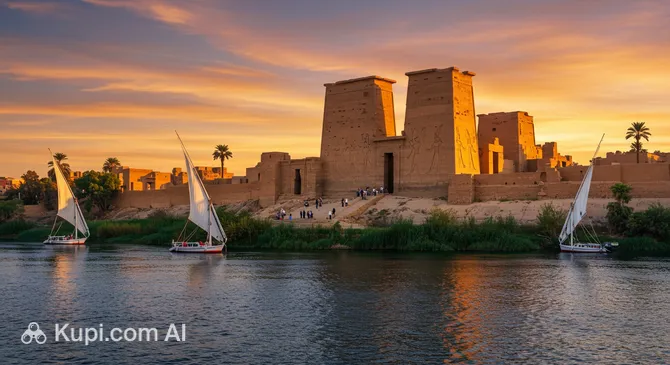
Kom Ombo. Illustration.
Source: Kupi.com AI

A special atmosphere reigns here: the daily life of locals is filled with traditions passed down through generations, and the air is permeated with tranquility and hospitality. This makes Kom Ombo an ideal place for a leisurely exploration of the rich heritage of the pharaohs. One of the main gems of the city, attracting travelers from all over the world, is the unique double temple. This sanctuary is dedicated to two powerful deities at once: the crocodile-headed god Sobek and the falcon-headed god Haroeris (Horus the Elder). The majestic columns, ancient reliefs, and the unique symmetry of the temple's architecture are truly breathtaking.

Kom Ombo is often a mandatory stop for cruise ships traveling the Nile between Luxor and Aswan, offering tourists one of the most photogenic spots in the region. If you dream of touching real history, admiring unforgettable sunsets over the Nile, and feeling the magic of antiquity without losing comfort, then Kom Ombo certainly deserves your attention.

You can find more interesting facts on the history of the city of Kom Ombo page.

Weather Overview

The weather in Kom Ombo is characterized by a hot desert climate. Summers here are very scorching, with average temperatures in June-August around 34-35°C, while maximum values can exceed 41°C. Winters are mild, with average temperatures in December-February in the 16-18°C range, and minimums dropping to 9-11°C. Precipitation in Kom Ombo is virtually non-existent throughout the year, making it one of the driest places. Expect a very hot and dry summer and a warm, dry winter.

To learn more about the weather conditions in different months and plan your trip in the best possible way, check out the detailed information about the climate of Kom Ombo.

Average monthly temperature

Average monthly precipitation

Interesting Facts

Beyond its famous temples, the city of Kom Ombo holds many fascinating secrets and little-known details that make it a truly remarkable place on the map of Egypt. Here are just a few of them:

  • The unique double temple of Kom Ombo, built during the Ptolemaic and Roman periods, is the only one of its kind in Egypt. Its symmetrical structure is dedicated to two deities: one half to the crocodile-headed Sobek, and the other to the falcon-headed god Haroeris (sometimes called Horus the Elder).

  • In antiquity, the surroundings of Kom Ombo were a true kingdom of crocodiles. These reptiles were revered as sacred animals, and there was even a special sacred lake for them at the temple. Today, in the local Crocodile Museum, you can see not only mummies of these creatures but also their clay coffins and other amazing artifacts.

  • The temple in Kom Ombo was not only a religious center but also a kind of scientific hub. Ancient medical reliefs depicting surgical instruments and healing scenes have been preserved on its walls. Some researchers believe that one of the first "clinics" or medical schools of the ancient world could have been located here.

  • According to local legends, it was in Kom Ombo that a special ritual of worshipping the Nile as the source of life originated. It is believed that colorful ceremonies were held here annually in honor of the great river's flood to ensure land fertility and a rich harvest.

How to Get There

Reaching the city of Kom Ombo, located on the banks of the Nile, is possible in several ways; however, the most common for international tourists is flying into one of the nearest airports followed by a land transfer. Kom Ombo itself does not have its own airport.

The main and closest option is Aswan Airport (ASW). It is located in the city of Aswan, about 57 km south of Kom Ombo. This airport accepts both domestic flights from Cairo and some international ones. A trip from Aswan Airport to Kom Ombo by taxi or pre-booked transfer usually takes about 1 hour and 45 minutes.

Another major transport hub to consider is Luxor International Airport (LXR). It is located in the city of Luxor, approximately 135 km north of Kom Ombo. As a popular tourist destination, Luxor has a major international airport serving many flights. The journey from Luxor International Airport to Kom Ombo takes about 3 hours and 40 minutes by car.

For convenience, here is summary information on the airports from which you can reach Kom Ombo:

AirportPassenger trafficDistance
Aswan Airport758 66857 km
Luxor International Airport1.2 mln135 km
Marsa Alam International Airport1.5 mln206 km
Mubarak International Airport706 423240 km
Berenice International300 000262 km

In addition to flying and transferring, Kom Ombo can be reached by other means. The city has its own railway station on the main line connecting Cairo and Aswan. This makes train travel a convenient option, especially if you are already in Egypt and prefer land transport. Furthermore, Kom Ombo is a popular stop for Nile cruise ships sailing between Luxor and Aswan, offering a scenic and relaxing way to see the region's sights.

Main Attractions

Kom Ombo, nestled on the banks of the majestic Nile, attracts travelers primarily with its unusual and well-preserved temple complex. This city offers a unique immersion into the history of Ancient Egypt, where mythology and daily life intertwine.

The main gem of the city is the Temple of Kom Ombo. Its uniqueness lies in the fact that it is dedicated to two powerful deities at once: the crocodile god Sobek, lord of the waters, and the falcon-headed god Haroeris (Horus the Elder). This duality is reflected in the temple's architecture: it has two symmetrical entrances, two halls, and two sanctuaries, each intended for the worship of its respective god. Visitors can spend hours exploring its colonnades and interior chambers, marveling at the craftsmanship of ancient builders.

Of particular interest in the Temple of Kom Ombo are its famous reliefs. Among them, you can find some of the oldest depictions of surgical instruments, testifying to the high level of medical development in Ancient Egypt. Also preserved on the temple walls are images of calendars and ritual scenes, providing insight into the beliefs and daily life of that time. An integral part of the temple complex is the ancient Nilometer – a special structure for measuring the water level in the Nile, which was critical for predicting floods and ensuring harvests.

Near the temple is another important attraction – the Crocodile Museum. Opened relatively recently, it perfectly complements the experience of visiting Sobek's sanctuary. The museum displays numerous crocodile mummies of various sizes found during excavations around Kom Ombo. These exhibits clearly demonstrate the immense importance attributed to the cult of the crocodile god in this region of Ancient Egypt.

Local Cuisine

The gastronomic scene in Kom Ombo is a vibrant immersion into authentic Egyptian cuisine, where traditions harmoniously blend with the gifts of the fertile Nile Valley. Travelers can expect a true culinary adventure here, full of flavors and aromas.

It is definitely worth starting your acquaintance with the local cuisine with traditional dishes. Ful medames – stewed fava beans with olive oil, garlic, and lemon juice – is an integral part of breakfast in almost every home. Another popular dish is ta'ameya, the Egyptian version of falafel made from fava beans, which features a crispy crust and a tender interior. Do not miss the opportunity to try dishes made from fresh Nile fish, such as fried tilapia or baked catfish, seasoned with aromatic spices.

Street food in Kom Ombo also deserves attention. On the busy streets and markets, you can find appetizing lamb kebabs, juicy shawarma, and various aish flatbreads baked in traditional ovens. For those with a sweet tooth, try basbousa – a delicate semolina cake soaked in syrup, or sesame brittle. Among beverages, karkade – a refreshing infusion of hibiscus petals – is particularly popular and perfectly quenches thirst in hot weather.

The dining culture in Kom Ombo is centered in small family restaurants as well as bustling markets, where locals and tourists alike can enjoy freshly prepared meals. Gastronomic fairs are often held here, especially during holidays, where you can taste seasonal fruits, local honey, and fresh vegetables grown on the fertile banks of the Nile. The gastronomy of Kom Ombo is not just food, but an important part of the cultural experience, allowing for a deeper understanding of life in this ancient city.

Travel Tips

Planning a trip to Kom Ombo? Wonderful! To ensure your journey through this ancient Egyptian city goes smoothly and leaves only pleasant impressions, we have prepared some practical tips.

  1. Clothing and Essentials: Given the hot climate of Egypt, choose light, breathable clothing made from natural fabrics (cotton, linen). For visiting the Temple of Kom Ombo and other religious sites, women are recommended to cover their shoulders and knees, and men should avoid overly revealing tank tops. Don't forget sunglasses, a hat, high-SPF sunscreen, and comfortable closed-toe shoes for walking around historical sites. Electrical outlets here are types C and F (220V), so a universal adapter may come in handy.

  2. Transport: Kom Ombo is a relatively small city, and its main attraction, the temple, is visited by many tourists as part of a Nile cruise or an excursion from Aswan. If you are traveling independently, you can use local taxis to get around. Be sure to agree on the fare in advance, before getting into the car. Public transport, mainly represented by microbuses, might not be the most convenient option for tourists.

  3. Finances: The official currency is the Egyptian Pound (EGP). It's best to exchange currency at banks or official exchange offices in larger cities (e.g., Aswan or Luxor). In Kom Ombo itself, exchange options may be limited. Credit cards are accepted in some hotels and large souvenir shops, but for small expenses, markets, and taxis, it's always better to have cash. ATMs are not very common. The culture of "baksheesh" (tipping) is very widespread – be prepared to give small amounts for various minor services.

  4. Health and Safety: Bring a first-aid kit with necessary medications, including remedies for stomach upsets and fever reducers. There are pharmacies in Kom Ombo, but the selection may differ from what you're used to. Drink only bottled water! This is critically important for your health in Egypt. Kom Ombo is considered quite safe for tourists, especially around the temple area. However, as elsewhere, follow basic precautions: keep an eye on your belongings, do not leave valuables unattended, and avoid walking in unlit areas at night. Be sure to get travel insurance before your trip.

  5. Communication: The official language is Arabic. In tourist areas, including Kom Ombo, many service workers (especially in hotels, restaurants, and souvenir shops) can communicate in English. Learn a few simple Arabic phrases like "salam alaikum" (hello), "shukran" (thank you), and "la, shukran" (no, thank you) – it's always appreciated by the locals. Buying a SIM card with mobile internet is easiest upon arrival at the airport or in large cities. Wi-Fi is usually available in hotels, but the speed may not be high.

  6. Local Etiquette: Egyptians are generally hospitable and friendly. When interacting with locals, be polite and respect their culture. When visiting the temple, behave with restraint and respect. Photographing locals, especially women, without their explicit permission is not customary. Men may greet each other with a handshake; when interacting with women, it's best to wait for their initiative. Bargaining at markets is part of the culture, but do it with a smile and without aggression.

  7. What to Avoid: Categorically do not drink tap water and avoid ice in drinks unless you are sure of its origin. Avoid photographing military facilities, police, and people in uniform. Do not publicly criticize local customs, religion, or the political situation. Try not to wear overly revealing or provocative clothing outside of beaches or hotel grounds, especially in small towns and when visiting religious sites.

  8. Special Tip for Kom Ombo: Try to visit the Temple of Kom Ombo at sunrise or sunset. At these times, it's not as hot, there are generally fewer tour groups, and the soft golden light creates a truly magical atmosphere perfect for photos. Don't miss the chance to visit the unique Crocodile Museum located next to the temple. There you'll see mummies of the sacred animals worshipped in antiquity – it's a very interesting addition to the temple visit.

We hope these tips help you better prepare for your trip to Kom Ombo and enjoy every moment of your journey through the land of the pharaohs. We wish you unforgettable experiences!

Entertainment & Nightlife

Kom Ombo, known for its unique double temple, offers visitors a special evening leisure experience that differs from the noisy nightlife of major metropolises. Here, evenings are spent in a more tranquil and authentic atmosphere, allowing for a deeper immersion into the local culture.

The main evening performance in Kom Ombo is undoubtedly the "Sound and Light" show at the Temple of Kom Ombo. This captivating spectacle brings the ancient walls to life with tales of gods and pharaohs, creating a mystical atmosphere under the starry sky. It is an excellent way to spend an evening and see the famous landmark in a completely different light.

As for other evening entertainment, you are unlikely to find districts with numerous nightclubs or fashionable bars in Kom Ombo. Instead, evening life centers around local cafes (ahwa), where you can drink traditional tea or coffee, smoke shisha, and watch the leisurely flow of life. Restaurants offering Egyptian cuisine are also popular, some of which may have pleasant terraces or views of the Nile. The atmosphere in such establishments is usually relaxed and welcoming. Some hotels may offer bars with drinks for their guests where a quiet evening can be spent.

The best time for evening walks and dinners is after sunset when the daytime heat subsides. Prices in local cafes and restaurants are generally moderate. To get around the city in the evening, you can use taxis. It is recommended to agree on the fare in advance or ensure the driver uses a meter. Late at night, it is better to call a taxi through your hotel or a trusted service.

In terms of safety, Kom Ombo is considered a relatively quiet city. Nevertheless, as elsewhere, it is worth sticking to well-lit streets in the evening, especially if walking alone, and keeping an eye on your personal belongings. Calling a taxi through your hotel reception is the safest way to travel at night.

During the day, Kom Ombo primarily offers tourists the chance to explore the majestic Temple of Kom Ombo, dedicated to the gods Sobek and Haroeris. You can also stroll through local streets and visit small markets to experience the daily life of an Egyptian town and perhaps purchase souvenirs.

Parks & Museums

Kom Ombo invites travelers to dive not only into the depths of Ancient Egyptian history but also to enjoy the tranquility of its natural surroundings and unique cultural treasures. Although the city is primarily known for its majestic temple, there are other interesting places for the inquisitive tourist.

Regarding green spaces, Kom Ombo may not boast extensive urban parks in the traditional sense. However, its location on the fertile banks of the Nile itself provides natural beauty and wonderful opportunities for peaceful walks. The agricultural lands surrounding the city, lush thanks to the waters of the great river, offer a glimpse into the traditional Egyptian way of life and picturesque landscapes, especially at sunrise or sunset.

The main cultural and historical landmark of Kom Ombo is, of course, the famous Temple of Kom Ombo. This unique double temple, dedicated to two deities — the crocodile god Sobek and the falcon-headed god Haroeris (Horus the Great) — is an architectural masterpiece of the Ptolemaic period. Tourists are drawn by its symmetrical layout, well-preserved reliefs depicting mythological scenes and ancient medical instruments, and the breathtaking view of the Nile from the temple grounds. This place literally breathes history and allows you to touch the mysteries of ancient Egyptian civilization.

Directly adjacent to the temple complex is another iconic site — the Crocodile Museum. This small but very interesting museum is dedicated to the cult of the god Sobek and the crocodiles that inhabited the Nile in large numbers in ancient times and were revered by the local population. The main exhibits are crocodile mummies of various sizes found nearby, as well as artifacts related to their cult. A visit to the museum perfectly complements the temple tour and helps to better understand its history and symbolism.

For those seeking more authentic experiences, a leisurely stroll along the Nile embankment is recommended, where you can observe the daily life of locals and the movement of traditional felucca boats. You can also visit the small local market (souq) to feel the flavor of provincial Egypt, although it is geared more toward the needs of residents than a wide tourist selection of souvenirs.

Getting Around

When planning your travel around Kom Ombo, keep in mind that the public transport system reflects the size and pace of a small Egyptian city. The main ways to get around are shared taxis (microbuses known as "services") and regular taxis. There are no larger systems like metros or trams in the city.

Shared taxis (services) are the most common and budget-friendly form of transport in Kom Ombo. They run along specific, though not always clearly marked for tourists, routes, connecting different parts of the city and its surroundings. Payment is made in cash directly to the driver, and the fare is very low. To use a service, simply wave your hand on the street. Confirm with the driver or passengers if it is heading in your desired direction, as route numbers or detailed maps may be absent.

Taxis are a more comfortable but more expensive way to travel, particularly convenient for trips to main attractions like the Temple of Kom Ombo or for transfers with luggage. In Kom Ombo, as in many tourist cities in Egypt, it is customary to agree on the fare with the driver in advance, before the trip begins. Official meters may exist but are not always used. Taxi services can be found near hotels, at markets, or simply on the city streets.

As an alternative for short distances, especially in the central part of the city and around tourist sites, walking is quite feasible. Additionally, in tourist areas, you can sometimes find horse-drawn carriages (caleches) offering sightseeing rides, which are more for entertainment than regular transport. For traveling on the Nile, such as scenic rides or reaching specific points along the river, you can use the services of local boatmen offering trips on feluccas (traditional sailboats) or motorboats.

Practical tips for tourists: Always carry small cash for paying fares in microbuses. If you use a taxi, clearly settle on the price before getting in. Public transport mostly operates during daylight hours and early evening; its availability may be limited at night. If you are unsure of the route, do not hesitate to ask for help from locals or your hotel staff.

Accommodation

When planning a trip to Kom Ombo, you will find several accommodation options, though the choice may not be as wide as in Egypt's major tourist centers. Primarily, tourists are offered small hotels and guesthouses catering to travelers wishing to visit the famous Temple of Kom Ombo. Many tourists also visit Kom Ombo as part of a Nile cruise, staying overnight on board the ship, or take day trips from larger cities like Aswan or Luxor, where the choice of accommodation is significantly broader.

When choosing a place to stay in Kom Ombo itself, most options will be located relatively close to the main attraction – the Temple of Kom Ombo – or along the Nile waterfront. This provides easy access to the temple complex and beautiful views of the river. Given the city's compactness, transport accessibility is usually not a major issue.

It is recommended to book accommodation in advance, especially if your trip falls during the peak tourist season (usually from October to April). This will help you secure the best choices and prices. Bookings can be made through popular online platforms or, in some cases, by contacting the hotel directly. Sometimes local travel agencies can also help with finding options.

The price range for accommodation in Kom Ombo varies from budget options to mid-range hotels. There are generally few luxury resorts directly in the city, but comfortable and authentic stays are possible. Check for available amenities and services when booking to choose the option that best suits you.

Nearby Cities

For those looking to explore the surroundings, Kom Ombo serves as an excellent starting point for day trips to several interesting nearby locations:

Aswan, located just 42 km away, beckons travelers with its unique Nubian culture, the majestic Philae Temple on Agilkia Island, and the chance for a relaxing felucca ride on the Nile. It is a wonderful place to immerse yourself in the atmosphere of southern Egypt and see the famous Aswan High Dam.

A little further, at 57 km, is Edfu, where the main attraction is the superbly preserved Temple of Horus – one of the most impressive Ptolemaic temples in Egypt. A trip here allows you to touch the ancient history and monumental architecture of the pharaohs.

Luxor, although 138 km away, is a must-visit for many tourists coming to Kom Ombo. Ancient Thebes offers an incredible number of monuments: the Karnak and Luxor Temples on the east bank of the Nile, as well as the Valley of the Kings and the Valley of the Queens on the west bank, making it ideal for a rich day excursion into the heart of ancient Egyptian civilization.

CityPopulationDistance
Daraw38 4007 km
Aswan267 91342 km
Idfu133 77257 km
Esna68 65699 km
Armant76 457134 km

These nearby destinations provide an insight into the diverse culture and landscapes of the Egypt region.

Shopping & Souvenirs

Shopping in Kom Ombo offers tourists the opportunity to purchase traditional Egyptian souvenirs and products from local artisans, even though the city is not a major commercial center. The main shopping opportunities are concentrated around tourist zones, especially near the famous Temple of Kom Ombo. Here you will find stalls offering goods that serve as a reminder of the rich history of Egypt.

The primary area to look for souvenirs and local goods is the territory adjacent to the Temple of Kom Ombo, as well as small shops along the city's main streets. There are no specialized shopping streets or large commercial districts here; shopping is more local and tourist-oriented in nature.

You will not find large modern shopping malls in Kom Ombo. It is better to focus your search on local markets and small private shops. The atmosphere here is more authentic, allowing you to get closer to the local trading culture.

In Kom Ombo, as in many Egyptian cities, there is a local market (souq) where you can find fresh produce, spices, and various household goods. Often, it is at such markets that you can discover interesting handmade items or inexpensive souvenirs. The market usually comes to life early in the morning and offers a colorful immersion into the daily lives of the citizens.

Items worth bringing back from Kom Ombo include traditional Egyptian souvenirs. Popular choices are alabaster products, papyrus with images of ancient Egyptian scenes, figurines of gods and pharaohs (especially the god Sobek, to whom the local temple is dedicated), cartouches with your name, scarabs, as well as aromatic oils, spices, karkade tea, and traditional clothing like galabeyas. Don't forget to bargain; it's part of the local culture.

Shops in Kom Ombo, especially those oriented toward tourists, are usually open from the morning (around 9:00-10:00) until late evening, often with a break for a few hours during the hottest part of the day. Markets start trading earlier. The main method of payment is cash (Egyptian pounds). Some larger souvenir stalls may accept credit cards, but it is always better to have enough local currency with you. There are ATMs in the city, but their number is limited.

The possibility of a tax refund (Tax Free) for tourists in Egypt exists, but in small cities like Kom Ombo, finding shops participating in this system can be difficult. Usually, the Tax Free process occurs at large retail outlets and at international airports when departing the country. If you plan on making major purchases, check for the possibility of a Tax Free form directly with the seller.

Reached the end of the page?

That means the route is fully explored