Support

Idfu

About

Edfu is a true treasure for lovers of history and the mysteries of ancient Egypt. The city is snugly nestled on the west bank of the Nile, roughly halfway between legendary Luxor and Aswan. This strategic location has made Edfu an important stop for river cruises, and the city itself seems to breathe the atmosphere of millennia past.
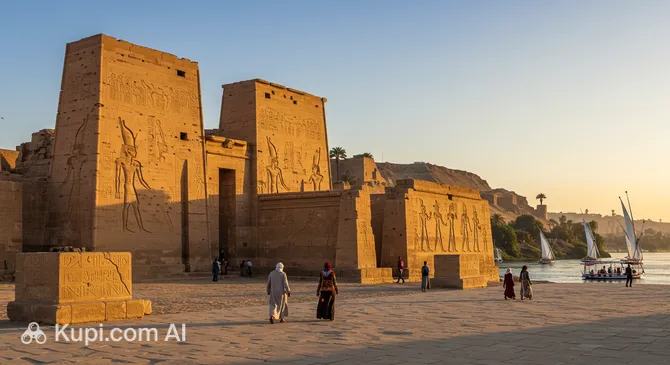
Idfu. Illustration.
Source: Kupi.com AI

Today, it is home to about 134,000 people, and Edfu is rightfully considered one of the key centers of Upper Egypt. Despite its modest size, the city impresses with its atmosphere of leisure and harmony: narrow streets, traditional markets, friendly residents, and, of course, mesmerizing views of the mighty Nile. Here, the past and present intertwine in an amazing dance—every stone and every turn of the road seems to tell its own ancient story.

The main gem of Edfu and its primary draw for tourists is the majestic Temple of Horus. This beautifully preserved monument of ancient Egyptian architecture is one of the most impressive on the banks of the Nile. Beyond the temple, the city attracts visitors with its authentic atmosphere and the opportunity to touch the everyday life of a modern Egyptian city closely tied to its great past.

Edfu is an ideal destination for those who dream of immersing themselves in antiquity, admiring unique architecture, and feeling like an explorer at the crossroads of eras. The city is especially good for leisurely walks, getting to know local traditions, and, of course, for genuine photo expeditions where every shot can become a postcard from the past.

You can find more interesting facts on the history of Edfu page.

Weather Overview

The weather in Edfu is characterized by a hot desert climate. Summers here are extremely hot and dry, with average temperatures often exceeding 34°C in June, July, and August, while maximums can reach over 40°C. Winters are mild, with average temperatures around 15-18°C in December and January. Rainfall in Edfu is an extremely rare occurrence, with the amount tending toward zero throughout the year.

Overall, expect a very hot and dry summer, while winters here are mild and also virtually without precipitation. For a more detailed forecast and monthly information, you can visit the Edfu Climate page.

Average monthly temperature

Average monthly precipitation

Interesting Facts

In addition to its main attractions, Edfu holds many surprising stories and details that make it even more alluring for curious travelers. Here are a few interesting facts about this ancient city:

  • The famous Temple of Horus in Edfu, one of the best-preserved temples of Ancient Egypt, was built during the Hellenistic period between 237 and 57 BC. Its walls are covered with mysterious inscriptions telling of the myths, religion, and daily life of that era. In size, it is second only to the Karnak Temple.

  • It’s hard to believe, but in the 19th century, the majestic Temple of Horus was almost completely buried under sand, and local houses were actually built on its roof. Only through large-scale excavations was the ancient structure freed from its sandy prison; now, modern buildings seem to look down upon it from above, guarding the peace of the millennia-old sanctuary.

  • According to ancient legends, the legendary battle between the gods Horus and Set took place on the land of Edfu, symbolizing the eternal struggle between good and evil. Every year, grand celebrations were held in the city to honor this victory, and the temple became the epicenter of religious processions and theatrical mysteries.

  • Modern-day Edfu offers its guests a unique sound and light show that brings the ancient walls of the Temple of Horus to life. This captivating performance immerses viewers in a world of myths and legends, allowing for a new perspective on the majestic heritage of the past.

How to Get There

Reaching Edfu, one of the significant historical centers of Egypt, is possible in several ways; however, the most common for international tourists is flying into one of the nearest major airports followed by a ground transfer. There is no airport in Edfu itself.

The primary and most convenient option for traveling to Edfu is Luxor International Airport (IATA: LXR). It is located in the city of Luxor, approximately 78.5 km north of Edfu. This is a major international airport receiving many flights from various countries. The trip from the airport to Edfu by taxi or pre-arranged transfer usually takes about 2 hours 15 minutes to 2 hours 30 minutes.

Another popular option is Aswan International Airport (IATA: ASW), located in Aswan, roughly 112.5 km south of Edfu. This airport also serves international and domestic routes and is an important transport hub for southern Egypt. The drive from Aswan airport to Edfu by car takes approximately 3 hours to 3 hours 15 minutes.

Less convenient but possible alternatives—especially if you are combining your trip with a Red Sea holiday—include Hurghada International Airport (IATA: HRG), located in Hurghada (about 260 km from Edfu), or Marsa Alam International Airport (IATA: RMF) in Marsa Alam (about 185 km). However, keep in mind that the transfer from these airports to Edfu will be significantly longer.

For clarity, here is summary information for the main airports used to reach Edfu:

AirportPassenger trafficDistance
Luxor International Airport1.2 mln79 km
Aswan Airport758 668113 km
Marsa Alam International Airport1.5 mln185 km
Mubarak International Airport706 423189 km
Hurghada International Airport8.7 mln261 km

In addition to flights, Edfu can be reached by other means. The city has good road connections with Luxor and Aswan. Nile river cruises are also very popular and often include a stop in Edfu to visit the famous Temple of Horus. This allows for combining a comfortable journey with sightseeing along the river. It is recommended to check local bus schedules, taxi availability, or river travel options in advance or upon arrival in the region.

Main Attractions

Edfu, comfortably situated on the west bank of the Nile between Luxor and Aswan, is a mandatory stop for many travelers exploring the treasures of Ancient Egypt. The main magnet drawing guests from all over the world is one of the country's most impressive and well-preserved ancient structures.

This is, of course, the Temple of Horus. Dedicated to the falcon-headed god Horus, this majestic temple is the second largest in Egypt after Karnak and one of the best preserved. Its construction began in 237 BC during the reign of Ptolemy III and continued for about 180 years. The temple's unique state of preservation is due to the fact that it was hidden under layers of sand and silt for many centuries, protecting it from destruction.

Visiting the temple turns into a real journey through time. Guests are greeted by a monumental entrance pylon standing 36 meters high, decorated with reliefs depicting the Pharaoh striking his enemies. Beyond the pylon lies a spacious open courtyard surrounded by a colonnade, leading to the first and second hypostyle halls with their forest of massive columns and expertly crafted capitals. The culmination is the sanctuary, which once housed the sacred barque and the statue of the god Horus.

The walls of the Temple of Horus are covered with thousands of square meters of stunning reliefs and hieroglyphic texts. These images and inscriptions are more than just decoration—they recount the mythology of Horus, his triumph over Set, as well as the rituals and festivals held in the temple. Of particular value are the so-called "Edfu Building Texts," which contain vital information about the design and construction of the temple, as well as its religious significance. For tourists, this is a unique opportunity to learn about the beliefs and daily lives of the ancient Egyptians.

Beyond the temple itself, those interested in deeper history should look toward Tell Edfu—the remains of an ancient settlement located to the west of the famous temple complex. While this site is primarily of interest to archaeologists, it bears witness to thousands of years of city history preceding the construction of the Ptolemaic temple and can be an interesting addition to the main tour for the most curious travelers.

Local Cuisine

The gastronomy of Edfu is a true immersion into the authentic flavors of Upper Egypt. The local cuisine will delight you with traditional dishes prepared with heart and following recipes passed down through generations. Here, you can enjoy simple yet incredibly fragrant and hearty meals that are an integral part of Egyptian culture.

Be sure to try the famous ful medames—tender stewed fava beans generously seasoned with olive oil, lemon juice, and spices. Another iconic dish is ta'ameya, the Egyptian version of falafel, which consists of crispy balls made from crushed beans and herbs. Don't miss the chance to taste juicy lamb kebab cooked over charcoal, the aroma of which wafts through the streets. And, of course, no meal is complete without fresh local eish bread, often baked right before your eyes in traditional ovens. It is served with almost everything—with honey, tahini, or spicy sauces.

Among drinks, refreshing freshly squeezed juices are popular in Edfu, especially sugar cane or pomegranate—the perfect relief from the heat. Aromatic tea is also drunk everywhere, including traditional red hibiscus tea (karkade), as well as strong coffee. Alcoholic beverages are less common in the daily life of locals but can be found in some restaurants and hotels catering to tourists.

The food culture in Edfu is very colorful. Locals often prefer eating at small family cafes or buying food from busy street stalls, where you can find treats like samosas with spicy fillings, sweet basbousa, or juicy dates. Be sure to visit the local markets—not only for the opportunity to buy the freshest vegetables, fruits, aromatic spices, and dried herbs the region is famous for but also to feel the real atmosphere of the city. Occasionally, gastronomic fairs and small festivals are held in Edfu, where you can sample home-cooked dishes made from ancient recipes and experience the famous Egyptian hospitality.

Travel Tips

Welcome to Edfu, an ancient city on the banks of the Nile! To ensure your journey to the famous Temple of Horus and your introduction to the local culture are as comfortable as possible and leave only pleasant impressions, we have prepared a few practical tips.

  1. Clothing and Essentials: Edfu is located in the hot desert climate of Egypt, so choose lightweight, breathable clothing made from natural fabrics (cotton, linen). Long sleeves and trousers/skirts will not only protect you from the scorching sun but will also be appropriate when visiting the Edfu temple, where covering shoulders and knees is required. Don't forget a hat, sunglasses, comfortable shoes for walking on ancient stones and sand, sunscreen, and a power adapter (types C and F, 220V).

  2. Getting Around Town: Edfu is a relatively small city. The most popular way to get from the Nile pier to the temple is by calèches (horse-drawn carriages), which is a piece of local color in itself. Taxis are also available; it is best to agree on the price with the driver in advance. Public transport consists mostly of local microbuses, but these may not be the most convenient option for tourists.

  3. Financial Matters: The local currency is the Egyptian pound (EGP). You can exchange money at banks or official exchange offices. Credit cards are accepted mainly in large hotels and some tourist shops, but for markets, small cafes, and paying for taxis, it is better to have sufficient cash. There are ATMs in Edfu, but their number is limited. The culture of "bakshish" (tipping) is very common; be prepared to give small amounts for various services.

  4. Health and Safety: Always drink only bottled water. There are pharmacies in the city, but it's better to bring a basic set of medicines with you. Travel insurance is mandatory. Edfu, especially the tourist zone around the temple, is considered quite safe. Nevertheless, follow standard precautions: watch your belongings, do not flaunt valuables, and avoid walking in dark, deserted places alone late at night.

  5. Communication and Connection: The official language is Arabic. In tourist areas such as the temple, hotels, and souvenir shops, staff often speak English. Learn a few simple phrases in Arabic, for example, "salam alaikum" (hello) and "shukran" (thank you)—this is always appreciated by the locals. It is easiest to buy a SIM card with mobile internet upon arrival in Egypt at the airport or in major cities. Wi-Fi is available in most hotels, but the speed may be low.

  6. Local Etiquette: Show respect for local traditions and culture. Dress modestly when visiting the temple and other public places. Always ask permission before photographing people. Egyptians are hospitable, but remember that bargaining in markets is part of the buying process; approach it with a smile and patience.

  7. What to Avoid: Try not to publicly criticize local customs, religion, or the political situation. Also, refrain from photographing military sites and police. Alcohol consumption is permitted only in designated areas (hotel bars, licensed restaurants).

  8. Additional Tip: To avoid the intense heat and large tour groups, plan your visit to the majestic Temple of Horus in Edfu for early morning or closer to sunset. Also, don't miss the chance to peek into the local market (souq) to feel the authentic atmosphere and perhaps find interesting souvenirs.

We hope these tips help you better prepare for your trip and enjoy every moment of your stay in amazing Edfu. We wish you unforgettable experiences!

Entertainment & Nightlife

Edfu, known primarily for its majestic Temple of Horus, offers tourists an immersion into the history of Ancient Egypt. When the sun sets, the city doesn't turn into a noisy party hub like some of the larger resorts in Egypt, but you can find more relaxed and authentic options for evening leisure here. Nightlife in Edfu is more about unwinding and socializing than wild clubbing adventures.

The main venues for evening gatherings in Edfu are often hotel restaurants and bars. Here, you can enjoy dinner, refreshing drinks, and sometimes even listen to traditional music in a peaceful setting. The crowd here is mostly tourists. Local coffee houses (ahwa) are also popular, where you can drink fragrant tea or coffee, smoke a shisha, and observe the slow-paced life of the townspeople. These establishments are usually open late and offer a genuine local flavor.

In Edfu, you are unlikely to find loud nightclubs or dedicated bar districts like those in major tourist centers. The nightlife here is more intimate. Most evening entertainment is concentrated in hotel restaurants and certain establishments along the Nile or near tourist sites, where you can dine in a pleasant atmosphere. If our list of Edfu attractions included "bars" or "nightclubs" with up-to-date information, we would definitely mention them here. For now, we recommend checking evening leisure options directly at your hotel or looking for well-reviewed restaurants that offer late-night dining.

The best time for evening strolls and dinners is after the daytime heat has subsided. The dress code in most places is quite casual, but outside of hotels, it is recommended to stick to a modest style of dress out of respect for local traditions. Prices are generally moderate, especially in establishments catering to locals. Getting around the city at night is most convenient by taxi; always agree on the fare in advance to avoid misunderstandings.

Edfu is generally considered a safe city for tourists, particularly in the areas around the main attractions and hotels. However, at night, it is recommended to take standard precautions: avoid poorly lit or deserted streets. To call a taxi, it is most reliable to contact your hotel reception or use drivers recommended by the hotel.

During the day, Edfu offers completely different experiences. The main draw is undoubtedly the Temple of Horus—one of the best-preserved temples in Egypt. Its monumental pylons and detailed reliefs leave a lasting impression. It's also worth visiting the local markets (souq), where you can immerse yourself in the atmosphere of Middle Eastern trade and buy souvenirs, spices, or fresh fruit. There are no major specialized museums beyond the temple complex itself, or large amusement parks in Edfu, as the city is primarily a center for historical tourism.

Parks & Museums

Edfu, located on the west bank of the Nile, invites travelers on a fascinating journey through time, primarily thanks to its magnificently preserved ancient temple. While you might not find extensive modern city parks or a multitude of traditional museums here, the city offers a deep immersion into history and a unique connection to Egypt's eternal river.

The main gem of Edfu and its primary historical and cultural hub is, without a doubt, the Temple of Horus. This is one of the best-preserved ancient sanctuaries in all of Egypt, dedicated to the falcon god Horus. Its monumental pylons, detailed wall reliefs, and impressive statues provide visitors with an incomparable opportunity to see the religious practices and art of the Ptolemaic era. For anyone interested in ancient Egyptian history and architecture, this temple is a massive open-air museum in its own right, telling stories of gods, pharaohs, and ancient rituals.

Edfu's "green lungs" are inextricably linked with the majestic Nile. While formal public parks are not a characteristic feature of the city, the fertile agricultural lands bordering the river and the Nile banks themselves create a peaceful natural backdrop. A stroll along the waterfront or simply watching the feluccas sail by can be a relaxing experience, allowing you to feel the connection to Egypt's lifeblood.

To get a glimpse into the daily life of modern Edfu, you can walk through the local streets or check out the city market (souq), if it is accessible and welcoming to tourists. Here, you can observe local trade and crafts, which adds modern cultural impressions to the ancient wonders. It is also an excellent opportunity to feel the authentic atmosphere of a small Egyptian town.

Traveler's Tip: Consider taking a calèche (horse-drawn carriage) ride from the Nile pier to the temple. This is a traditional tourist way to get around in Edfu, adding a certain old-world charm to your arrival at this majestic structure.

Getting Around

Navigating Edfu for tourists is quite simple, although the public transport system here differs from what you might find in major metropolises. The transport network is based on microbuses (shuttle taxis) and regular taxis. Microbuses run along the city's main streets, connecting different districts and often taking passengers to popular points like the famous Temple of Horus.

Payment for microbus rides is usually made in cash directly to the driver or conductor upon boarding or exiting. The cost of the trip is usually low, but it is recommended to carry small bills. There are typically no ticketing systems or transit cards for this type of transport. In the case of taxis, you should agree on the fare with the driver in advance, before the trip starts, as taximeters may not always be used. Clarify whether the price is for the whole car or per person if you are traveling in a group.

Microbuses start running early in the morning and stop in the evening, but there is usually no fixed schedule—they depart as they fill up. Stops are often "on-demand." For tourists planning to visit the Temple of Horus, a taxi or microbus will be the most convenient way to reach the site. Also, in tourist zones, especially around the temple, you can find horse-drawn carriages (calèches)—these are more of a tourist attraction than a regular mode of transport, but they can be a colorful way to make a short trip.

An alternative to public transport is the taxi, which can be hailed on the street or ordered through your hotel. In Edfu, as in many small Egyptian towns, official ride-hailing apps or car-sharing and bike-rental systems may not exist or are not widely used. Therefore, rely mostly on cash payments and traditional methods of getting around. Walking can also be a pleasant way to explore the central part of the city, especially if you are staying near the main attractions.

Accommodation

In Edfu, tourists will find a variety of accommodation options to suit different preferences and budgets. The city offers everything from inexpensive guesthouses and small hotels to more comfortable mid-range lodging. For those seeking more privacy or planning a long stay, apartments or houses for rent may be available, though this segment may be less developed compared to Egypt's major tourist hubs.

When choosing a place to stay in Edfu, it is worth paying attention to areas located near the city's main attraction—the Temple of Horus in Edfu. Staying here will provide easy access to this majestic monument. Hotels located near the Nile waterfront can also be convenient, especially if you plan on taking river boat trips or are arriving in the city by water. Some hotels may offer views of the river or the temple, which would be a pleasant addition to your stay. Unfortunately, specific examples of hotels are currently unavailable for mention.

When planning a trip to Edfu, especially during the peak tourist season (usually from October to April), it is recommended to book accommodation in advance. This will help you secure the best choice and more favorable prices. During the off-season, the selection may be wider and prices lower, but pre-booking remains a good practice for peace of mind and ensuring a suitable option is available.

The price range for accommodation in Edfu varies from budget-friendly options to mid-range and higher-end offers. Most hotels and guesthouses can be booked through popular online platforms. Some smaller establishments may take bookings directly by phone or email. Comparing offers on different resources will help you find the optimal variant that matches your expectations and budget.

Nearby Cities

For those who wish to explore the surrounding area, Edfu serves as an excellent starting point for day trips to several interesting nearby locations:

Among the closest cities worth visiting, Luxor stands out as a true treasure trove of ancient Egyptian monuments, including the Karnak and Luxor temples, as does Aswan, which charms with its unique Nubian culture, picturesque islands on the Nile, and the famous Aswan High Dam. These cities offer a deep dive into the rich history and culture of the region.

CityPopulationDistance
Esna68 65648 km
Kom Ombo71 59657 km
Daraw38 40063 km
Armant76 45778 km
Luxor202 23282 km

These nearby destinations provide a more complete picture of Egypt's diverse culture and historical landscapes, perfectly complementing the experience of visiting Edfu itself.

Shopping & Souvenirs

Shopping in Edfu is not about chasing brands in glitzy malls, but rather a fascinating immersion into the atmosphere of traditional Egyptian trade. The city is not famous for large shopping centers, but it offers colorful local markets and souvenir shops where you can find authentic goods and experience the local flavor.

The main shopping spots in Edfu are concentrated in the area adjacent to the famous Temple of Horus, as well as at the central city market (souq). Here, you will find many small shops and street vendors offering a variety of goods, from souvenirs to household items.

There are no large modern shopping malls in Edfu. Shopping here is more traditional, centered around markets and small private shops. This allows for a deeper dive into the local culture and the chance to find unique items.

The heart of trade in Edfu is undoubtedly the local market (souq). This is a vibrant and noisy place where everything is sold: from fresh fruits, vegetables, and aromatic spices to clothing, textiles, products of local craftsmen, and, of course, souvenir products. A walk through the market is an adventure in itself and an opportunity to observe the daily life of the townspeople.

From Edfu, as from other tourist spots in Egypt, tourists most often bring back traditional souvenirs. Look for alabaster products (vases, figurines), papyrus with ancient Egyptian motifs, cartouches with an engraved name, small figurines of gods and pharaohs, aromatic oils and incense, and bright spices, especially karkade. Cotton products, scarves, and traditional galabeya clothing are also popular.

Shops and stalls in Edfu usually open in the morning, around 9:00-10:00 AM, and stay open until late evening, often with a break during the hottest midday hours (siesta). In markets and most small shops, cash payment in Egyptian pounds (EGP) is preferred. Some souvenir shops catering to tourists may accept bank cards, but it's always better to have some cash with you. Don't hesitate to bargain, especially in the markets—it's an integral part of the buying process and the local culture.

A Tax Free system for tourists in Egypt exists, but it usually applies to large purchases made in shops with the appropriate authorization. Such shops are more common in larger cities and tourist centers. In the small shops and markets of Edfu, the possibility of arranging Tax Free is unlikely, but you can always ask the seller when making an expensive purchase.

Reached the end of the page?

That means the route is fully explored