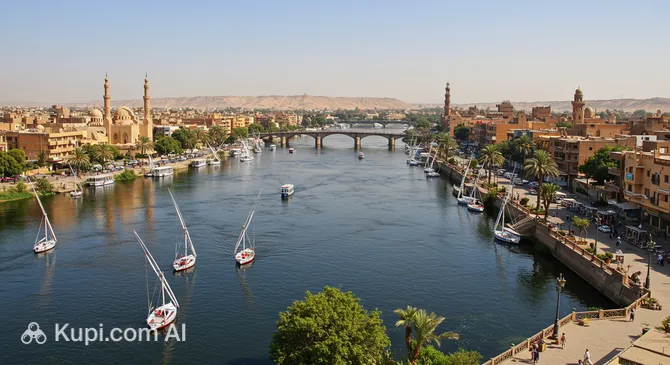
Minya is a charming city in Upper Egypt, often affectionately called the "Bride of Upper Egypt." Situated on the western bank of the majestic Nile River, approximately 245 kilometers south of Cairo, this city serves as an important administrative, agricultural, and cultural center of the Minya Governorate.
As a major city with a population of about 2.7 million people, Minya is a bustling hub where ancient history seamlessly intertwines with modern life. The city serves as a convenient starting point for exploring many unique archaeological sites located in its surroundings, offering travelers a glimpse into less-explored corners of Egyptian history.
Minya. Illustration.
Source: Kupi.com AI
Among the main treasures attracting antiquities seekers and curious tourists are the rock-cut tombs of Beni Hasan, featuring beautifully preserved colored paintings depicting scenes of daily life in Ancient Egypt. Equally significant are the ruins of Tell el-Amarna, which was the short-lived capital of the reforming pharaoh Akhenaten. Also worth mentioning is the Zawyet el-Mayyitin necropolis, one of the largest in the world. Minya itself boasts a beautiful Nile promenade, perfect for evening strolls, and interesting examples of colonial-period architecture.
A visit to Minya is a unique opportunity to touch the rich heritage of Ancient Egypt while stepping away from the busier tourist routes. This city and its surroundings will undoubtedly provide an unforgettable experience for those seeking a deep immersion into the history and culture of this amazing country.
You can find more interesting facts on the history of Minya page.
Weather Overview
The weather in Minya is characterized by a hot desert climate. Summer here is long, very hot, and dry: average maximum temperatures from June to August hover around 37-38°C. Winters are mild and also very dry, with average daytime temperatures around 19-22°C from December to February, and night temperatures around 8-10°C. Precipitation in Minya is extremely rare year-round. You can find more detailed information on the Minya Climate page.
Average monthly temperature
Average monthly precipitation
Interesting Facts
In addition to its famous ancient monuments, Minya hides many curious details and stories that make it even more attractive to explorers. Here are some interesting facts about this city:
The origin of the name Minya is shrouded in various theories. According to one version, it dates back to the Ancient Egyptian "Menyat Khufu," which translates as "The Wet Nurse of Khufu"—the pharaoh famous for building the Great Pyramid of Giza. Another hypothesis links the name to a Coptic word meaning "settlement" or "abode."
In the 19th and early 20th centuries, Minya experienced a significant economic boom thanks to the thriving cotton trade. This period left a noticeable mark on the city's architecture: elegant mansions and buildings from that time, often with European architectural influences, can still be found on its streets, giving some quarters a special charm.
Minya is an important educational center for Upper Egypt. It is home to Minya University, one of the largest higher education institutions in the region, attracting thousands of students from across the country and abroad. This gives the city a youthful and dynamic atmosphere.
Not far from Minya, away from the main tourist routes, are the so-called Fraser Tombs. These burials, dating back to the Old Kingdom (5th Dynasty), were discovered by the British engineer George Willoughby Fraser in the mid-19th century and contain interesting reliefs depicting the life of the nobility of that era.
How to Get There
There are several ways to reach the city of Minya, but the most common option for international travelers is to fly into one of Egypt's major airports followed by a land transfer. Minya itself does not have its own airport, but there are several options nearby.
The main international hub through which most tourists arrive in the region is Cairo International Airport (CAI). It is located in Egypt's capital, Cairo, about 234 km north of Minya. This is a very large, modern airport serving many international and domestic flights. A trip from Cairo Airport to Minya by car (taxi or rental) or bus usually takes about 3-4 hours, depending on traffic conditions.
The closest airport to Minya is Asyut Airport (ATZ), located in the city of Asyut, about 118 km south of Minya. This is a regional airport that might be convenient if you plan to visit other cities in Upper Egypt or find a suitable domestic flight. From Asyut Airport, Minya can be reached by taxi or local transport in about 1.5-2 hours.
Another option is Sphinx International Airport (SPX), located in Giza, near the famous pyramids, at a distance of about 225 km from Minya. This airport also serves international and domestic flights and can serve as an alternative arrival point for a trip to Minya. The journey by car will take approximately 3-3.5 hours.
For clarity, here is summary information on the main airports used to reach Minya:
In addition to flying, Minya can be reached by land transport. An important railway line passes through the city, connecting Cairo with southern Egyptian cities like Luxor and Aswan, making the train a convenient option for traveling through the country. Bus services between Minya and other major settlements are also well-developed. If you plan to travel by car, keep the significant distances in mind and check the current road conditions.
Main Attractions
Minya and its surroundings are a true treasure trove for fans of ancient Egyptian history. The city serves as an excellent starting point for exploring unique archaeological sites that tell the story of the grandeur and daily life of the pharaonic civilization. Here are some of the key places you shouldn't miss:
One of the most significant sites is Beni Hasan, a necropolis from the Middle Kingdom era. Here, on the east bank of the Nile, tombs of nomarchs (provincial governors) are carved into the cliffs, famous for their vivid and detailed paintings. These frescoes depict scenes of hunting, agriculture, crafts, and military actions, providing invaluable insights into Egyptian life over four thousand years ago. A visit to Beni Hasan is an opportunity to connect with the art and daily life of a long-gone era.
An equally fascinating journey is a trip to Tell el-Amarna, the ruins of the ancient city of Akhetaten. This city was built by the reforming pharaoh Akhenaten in the 14th century BC as a new capital and center for the worship of the single god Aten. Although Akhetaten did not last long, it left behind a unique legacy, including the famous "Amarna style" in art, characterized by realism and a departure from traditional canons. Here, you can see the remains of palaces, temples, and residential quarters, as well as visit the tombs of Akhenaten's nobles.
Another gem of the region is Tuna el-Gebel. This vast necropolis of the ancient city of Hermopolis Magna served as a burial site for many centuries, from the Late Period to Roman times. Of particular interest are the catacombs containing mummies of ibises and baboons, sacred animals of the god Thoth, as well as the impressive tomb of Petosiris, the high priest of Thoth, built in a Greco-Egyptian style. Tuna el-Gebel also features one of Akhenaten's boundary stelae, which marked the limits of Akhetaten.
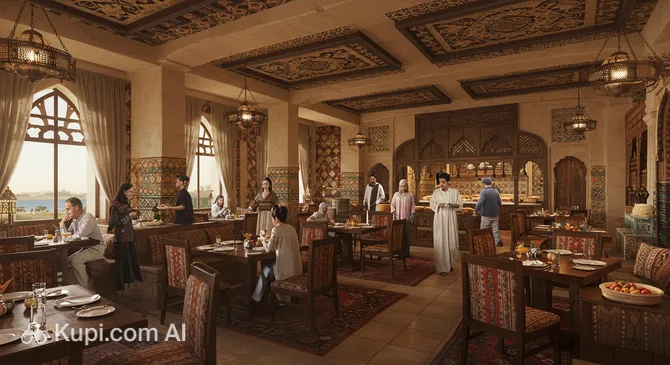
After a full day of exploring ancient wonders, guests of Minya can relax and share their impressions in one of the local establishments. For example, the Orchid restaurant offers a pleasant atmosphere for dinner. This spot can be a great way to end a day full of discoveries.
Orchid. Illustration.
Source: Kupi.com AI
Traveler photos:
Local Cuisine
The culinary scene in Minya is a wonderful opportunity to immerse yourself in the authentic world of Egyptian cuisine, with its rich flavors and aromas characteristic of Upper Egypt. Here you will find both national culinary hits and perhaps local specialties reflecting the agricultural wealth of the Nile region. Minya's cuisine will delight lovers of hearty and aromatic food, offering classic Egyptian dishes.
You should definitely start your local food journey with staples of Egyptian cuisine like ful medames (hearty stewed fava beans) and taameya (the Egyptian version of falafel made from fava beans), which are often served for breakfast or as a filling snack. Another iconic dish is koshary, a surprising and satisfying combination of rice, macaroni, lentils, and chickpeas, generously topped with a spicy tomato sauce and crispy fried onions. Don't miss out on feteer meshaltet—a flaky, layered pastry that can be served savory (with cheese or minced meat) or sweet (with honey, powdered sugar, or custard).
As for drinks, strong black tea (shai) is universally popular, which Egyptians drink at any time of day, often very sweet. Refreshing karkade (hibiscus tea) is served both hot and cold and is an excellent thirst quencher. On a hot day, there is nothing better than a glass of freshly squeezed juice; asir asab (sugar cane juice) sold at many street stalls is particularly popular. Alcoholic beverages are less common in daily life and are usually available in hotels or specialized restaurants with the appropriate license.
You can try local dishes in Minya in various places: from bustling street stalls preparing the freshest taameya and shawarma to small family-run cafes (cafeterias) offering homemade meals and more respectable restaurants. Local markets are also great places to not only buy fresh fruit and vegetables but also to observe city life and perhaps find simple snack bars. In restaurants like Orchid, you can enjoy classic Egyptian dishes in a more comfortable and formal setting.
Travel Tips
Planning a trip to amazing Minya, the "Bride of Upper Egypt"? To make your journey as comfortable and filled with pleasant experiences as possible, we have prepared some practical tips. They will help you better navigate this historical city and enjoy its unique atmosphere.
Clothing and Essentials: What to bring to the "Bride of Upper Egypt"
Given Minya's hot desert climate, choose light and breathable clothing made of natural fabrics (cotton, linen), especially if your trip is in the summer. Don't forget a hat, sunglasses, and high-SPF sunscreen. For visiting the numerous archaeological sites like Beni Hasan, comfortable closed-toe shoes are essential. When visiting mosques or Coptic monasteries, women are advised to cover their heads and shoulders, and men should wear trousers (not shorts). Electrical outlets in Egypt are usually Type C and F, so you may need an adapter.
Getting Around Minya: Exploring the city and surroundings
In Minya itself, the main type of public transport is service taxis (microbuses), but for tourists, they may not be the most convenient option due to the lack of clear routes and the language barrier. A more predictable way is regular taxis; always agree on the price of the trip in advance or ensure the driver turns on the meter (if there is one). For trips to remote attractions like Tell el-Amarna, consider renting a car with a driver for the whole day—it is often more comfortable and efficient. Renting a car without a driver is possible, but be prepared for the specific driving style in Egypt.
Money in Minya: Currency, exchange, and tipping
The local currency is the Egyptian Pound (EGP). You can exchange currency at banks or official exchange offices; avoid street money changers. Credit cards (Visa, Mastercard) are accepted in large hotels and some restaurants, but for markets, small shops, and taxis, cash is necessary. ATMs are available in Minya, but it's better to have some cash in reserve. An approximate daily budget (excluding accommodation and major tours) might be 30-50 USD. The culture of tipping (bakshish) is very common in Egypt—be prepared to give small amounts for various services (10-15% for waiters, porters, service staff).
Health and Safety: Taking care of yourself
Pharmacies are available in Minya, but the range of medications may differ from what you're used to, so it's better to bring basic medicines with you. Be sure to drink only bottled water. Be cautious with street food; choose places where there are many locals. If you need medical assistance, contact large clinics or hospitals; having travel insurance is highly recommended. Minya is generally a safe city, but follow standard precautions: watch your belongings in crowded places and avoid walking in poorly lit areas after dark.
Communication and Connection: Staying in touch in Minya
The official language is Arabic. In tourist areas, hotels, and with guides, you will be able to communicate in English, but knowing a few simple Arabic phrases (e.g., "shukran"—thank you, "salam alaikum"—hello) will be very helpful and will please the locals. You can purchase a local SIM card for mobile internet at operator offices (Vodafone, Orange, Etisalat) upon presentation of your passport. Wi-Fi is available in most hotels, but the speed can be unstable.
Local Etiquette: Respecting traditions
Egyptians are a hospitable people. Show respect for local customs. When greeting, you can use "salam alaikum." Men usually shake hands. If you are a woman, wait for the man to extend his hand first. Dress modestly, especially women, when visiting religious sites and outside of tourist areas (shoulders and knees should be covered). Always ask permission before photographing people. During Ramadan, refrain from eating, drinking, and smoking in public places during the day out of respect for those fasting.
What Best Not to Do: Important nuances
To ensure your trip goes smoothly, try to avoid consuming tap water—always buy bottled. Do not photograph military installations, police, or strategically important structures. Also, be careful in your statements on political and religious topics, especially with strangers. Excessive public displays of affection between a man and a woman are not accepted and may cause disapproval.
We hope these tips make your stay in Minya even more pleasant and safe. This city, though less traveled by tourists compared to the southern giants of Egypt, holds many discoveries and the authentic charm of the Nile Valley. Enjoy every moment of your journey!
Entertainment & Nightlife
Evening and nightlife in Minya offer travelers an immersion into the authentic atmosphere of an Egyptian city rather than the loud, all-night parties typical of major tourist resorts. Here, you will find opportunities for a pleasant pastime that allow you to get to know the local culture better and enjoy the hospitality of Upper Egypt.
As darkness falls and the daytime heat subsides, Minya comes alive in its own way. One of the main centers of evening life is the Nile Promenade (Corniche). Local residents and families with children gather here to enjoy the fresh breeze, socialize, and take in the river views. Along the promenade and in the central areas of the city, there are many local coffeehouses (cafésha or ahwa). In these spots, you can drink traditional tea, aromatic coffee, refreshing karkade, or smoke a hookah (shisha) while watching the slow pace of city life. The atmosphere in such establishments is usually relaxed and friendly; they are popular meeting places for friends and typically stay open until late evening, especially during the warmer months.
Dining at one of the local restaurants is an essential part of the evening program. Among specific venues with available link data, we can recommend the Orchid restaurant, known for its cuisine and pleasant atmosphere for an evening meal. Other popular spots for evening relaxation include numerous local coffee shops and small eateries, especially on the promenade, though they usually do not have dedicated pages for links. Generally, in Minya, you can find places offering both traditional Egyptian dishes and more familiar European cuisine.
Orchid. Illustration.
Source: Kupi.com AI
Traveler photos:
Regarding bars and nightclubs in the Western sense, the choice in Minya is extremely limited. This city largely maintains a traditional lifestyle. If you are looking for a place to have an alcoholic drink, some restaurants within large hotels may have the appropriate license and offer a bar menu primarily aimed at tourists and hotel guests. However, do not expect a developed club industry or specific nightlife districts here.
The evening atmosphere in Minya is conducive to quiet relaxation. The crowd in cafes and on the streets is predominantly local. There is no specific dress code for evening outings, but as elsewhere in Egypt outside of resort areas, it is recommended to stick to a modest style of dress out of respect for local traditions. Average prices in local cafes are quite affordable, and a dinner in a mid-range restaurant will not be excessively expensive.
For getting around the city in the evening and at night, taxis are the most convenient option. It is recommended to agree on the fare in advance or use trusted taxi services if available (for example, through your hotel). In terms of safety, Minya is considered a relatively peaceful city. Nevertheless, you should follow standard precautions: avoid walking in poorly lit and deserted areas alone and keep an eye on your belongings.
During the day, Minya offers a rich program for curious tourists, primarily related to its incredible historical heritage. Exploring the ancient tombs of Beni Hasan, the ruins of Tell el-Amarna, and other archaeological sites will take more than one day. The city also has parks for walking, and the presence of a university gives a certain dynamism to some neighborhoods.
Overall, evening entertainment in Minya is an opportunity to relax after a busy day of sightseeing, enjoy delicious food, slow conversation, and observe the daily life of Egyptians away from the bustle of large tourist centers. It is an experience that will add authenticity and warm memories to your trip.
Parks & Museums
Minya, affectionately called the "Bride of Upper Egypt," offers its guests not only a rich historical heritage in its surroundings but also opportunities for relaxation in green zones and cultural exploration directly within the city. While the main "museums" of the region are the world-famous archaeological complexes, Minya itself can provide interesting cultural experiences, especially with the development of new museum projects.
For walks and outdoor relaxation, the main attraction in Minya is undoubtedly the Nile Promenade (Corniche). It is not just a transport artery, but a popular and beautifully landscaped public space where locals and visitors alike enjoy spending their evenings, taking in views of the great river, socializing, and enjoying the breeze. Here, you can find shaded areas and benches and feel the rhythm of city life. While Minya may not have extensive formal European-style parks, promenades like this and small public gardens often serve as their replacement. It is also worth noting that the grounds of Minya University, a major educational hub, often feature well-maintained green areas that may be accessible for quiet walks and a break from the city bustle.
In the field of museums, Minya is preparing to present a true masterpiece to the world—the Akhenaten (or Aten) Museum. This ambitious project, dedicated to the unique reign of Pharaoh Akhenaten and his religious reform, as well as Amarna art, is set to become one of Egypt's largest and most significant museums. Located on the banks of the Nile, the museum is designed to maximize the spirit of the Amarna era. Upon its full opening, it will display thousands of artifacts, many previously unexhibited, offering a deep dive into the history and culture of this revolutionary period. Even in its construction or partial opening phase (check current information before visiting), it is already a landmark site. In addition to this grand project, the city may house a small local archaeological or regional museum where finds from the region are kept, telling the story of Minya from ancient times to the present day. Such museums, though smaller in scale, often offer a unique local context.
History and architecture enthusiasts will find it interesting to note the colonial architecture in central Minya. Elegant mansions and public buildings from the 19th and early 20th centuries, built during the city's economic boom thanks to the cotton trade, are in themselves a kind of "open-air museum" testifying to the city's wealthy past.
For more authentic experiences and to get to know the local culture, visit the city markets. These are not museums in the traditional sense, but they provide a vibrant picture of daily life, crafts, and the region's products. A walk through the non-touristy streets of Minya will also allow you to better feel the city's atmosphere and see interesting details of local architecture and daily life that don't always make it into guidebooks.
Getting Around
Getting around Minya can be done in several ways, and although the public transport system may seem unfamiliar to a foreign tourist, it is quite functional. It is important to know the main options to choose the most suitable one for yourself.
The backbone of public transport in Minya, as in many other Egyptian cities, consists of microbuses, often called "service-taxis" or simply "services." These are small vans that run along certain, though not always clearly marked for the tourist, routes. They do not have fixed stops; passengers "hail" them right on the street by raising a hand and get off on demand. The driver or his assistant usually shouts out key points on the route. Payment is made in cash directly to the driver upon entering or exiting, and the fare is generally very low and fixed for certain sections. Be prepared for the microbuses to be crowded, especially during peak hours.
In addition to microbuses, larger city buses may operate in the city, but their routes and schedules can be difficult to understand without knowledge of Arabic, making them less convenient for tourists. The bulk of passenger traffic usually falls on the microbuses.
A more comfortable, though significantly more expensive, way to get around Minya is by taxi. They can be easily found throughout the city. It is extremely important to agree on the fare with the driver in advance before getting into the car, as meters, if they exist, are not always used or may be broken. For short trips within residential areas or along narrow streets, you can sometimes find tuk-tuks (bajaj)—three-wheeled motorized rickshaws—but these are more of a local transport for short distances.
The fare payment system in Minya's public transport is almost entirely based on cash transactions. Standard transit passes, reloadable transport cards, or mobile payment apps generally do not exist here. The cost of a microbus ride is minimal, while the price of a taxi depends on the distance and your bargaining skills. It is recommended to always carry small bills for payment.
Here are some practical tips for tourists using transport in Minya: public transport usually starts running early in the morning and continues until late evening. If you are unsure of a microbus route, do not hesitate to ask locals—many will be happy to help. Having the name of your destination written in Arabic can significantly ease communication. Be prepared for the fact that most drivers speak only Arabic.
As an alternative to public transport, especially for trips to remote attractions outside the city, you can consider renting a car with a driver for a day or half-day. This provides greater comfort and flexibility. Services such as car-sharing or a developed bike rental system for tourists are unlikely in Minya for now.
Overall, Minya's transport system does not include any unique or historical types of transport, such as an old metro or cable cars. It is a typical system for the region which, despite the apparent chaos, effectively serves the needs of the local population and can be mastered by tourists with proper preparation and patience.
Accommodation
In Minya, travelers will find various accommodation options to suit different budgets and preferences. The typical range includes affordable guesthouses and small local hotels, as well as more comfortable mid-range options. While there may not be as many luxury resorts from global chains as in Egypt's major tourist centers, it is quite possible to find decent options with a good level of service. Apartment rentals are also possible, especially for those planning a longer stay.
When choosing a place to stay in Minya, it is worth looking at areas near the Nile Promenade (Corniche) or in the central part of the city. This will provide easy access to main transport arteries, cafes, restaurants, and shops. Staying in these areas also makes it easier to organize trips to major archaeological sites like Beni Hasan or Tell el-Amarna, as it is simpler to find transport or arrange an excursion from here. Some hotels may offer beautiful views of the Nile, which will be a pleasant bonus to your stay.
Overall, the price range for accommodation in Minya can be described as budget and mid-range. Luxury options are less common. It is recommended to book accommodation in advance, especially if your trip coincides with the peak tourist season or local holidays. The most common booking methods are popular international online platforms (e.g., Booking.com, Agoda, Expedia) or direct booking through hotel websites, if available. For small local hotels, booking by phone or email might sometimes be necessary. It is always helpful to read reviews from other travelers before making a final decision.
Nearby Cities
For those who want to explore the surrounding area, Minya serves as an excellent base for day trips to several interesting nearby locations:
City
Population
Distance
Sawadah
10 571
3 km
Abu Qurqas
63 264
19 km
Bani Hasan ash Shuruq
18 218
23 km
Samalut
91 475
26 km
Dayr Abu Hinnis
19 638
36 km
For example, a trip to Mallawi, located just 40 km from Minya, will allow you to immerse yourself in the atmosphere of a typical Upper Egyptian town, perhaps visit local markets and see the region's daily life. Very close by is Samalut (26 km), another accessible option for a short outing, which may be of interest to those wanting to explore small settlements along the Nile and get to know the less touristy corners of the Minya Governorate. These towns can also serve as starting points for visiting local historical sites if any are nearby.
These nearby destinations provide insight into the diverse culture and landscapes of the region. Each of these trips can be an interesting addition to your journey to Minya, revealing new facets of Egypt's history and modern life.
Shopping & Souvenirs
Shopping in Minya is more of an opportunity to immerse yourself in local flavor and acquire authentic goods than a hunt for global brands. The city is not famous for massive shopping malls or exclusive boutiques, but here you can find interesting souvenirs and products from local artisans and experience the atmosphere of a traditional Egyptian market. The main focus of shopping in Minya should be on finding unique local products and souvenirs that reflect the culture of Upper Egypt.
Main shopping spots in Minya are concentrated in the central part of the city, along the main streets and in the Nile Promenade (Corniche) area. Here you will find many small shops, stalls, and workshops offering a variety of goods—from clothing and footwear to household items and food. Walking these streets can be an engaging activity in itself, allowing you to observe the daily life of the city's residents.
Large modern shopping centers in the Western sense are likely few or non-existent in Minya. If shopping complexes are found, they are typically aimed at locals and offer everyday goods rather than international brands. The atmosphere in them will differ from that of large malls in Cairo or tourist resorts.
The most authentic shopping experience in Minya is provided by the local markets (souks). These are lively and colorful places where you can find almost everything: fresh fruits, vegetables, aromatic spices, tea, textiles, leather goods, ceramics, and inexpensive souvenirs. Haggling is expected here and is part of the local etiquette. Visiting the market is not just a chance to shop, but a chance to dive into the true atmosphere of an Egyptian city.
As souvenirs from Minya and Egypt in general, you should consider traditional products. These can be small figurines in an ancient Egyptian style (often made of alabaster or basalt), papyri with depictions of pharaohs and gods, high-quality Egyptian cotton items (towels, bed linen, clothing), aromatic oils and perfumes, as well as various spices, karkade tea, and dates. Sometimes you can find interesting items from local artisans, such as ceramics or woven goods.
Shops in Minya usually open around 10:00-11:00 AM and work until late evening, often with a lunch break during the hottest hours of the day (roughly from 2:00 PM to 5:00 PM), especially in small private shops. Markets start earlier, from early morning. On Friday, which is a weekend day in Egypt, many shops may be closed or work on a shortened schedule. The primary method of payment, especially in markets and small shops, is cash in Egyptian Pounds (EGP). Credit cards may be accepted in some larger stores or hotels, but it is always best to have enough cash on hand.
The possibility of Tax Free (VAT refund) for tourists in Egypt exists, but it generally applies to goods bought in stores participating in the system and when leaving the country through major international airports. In Minya, finding such stores might be harder than in Cairo or resort cities. If you plan large purchases and want to use this service, check for information directly in the store and keep all receipts.