The public transport system in Gambela is quite different from what you might find in larger metropolitan areas. There is no metro, tram, or extensive municipal bus network here. Instead, the city relies on a more informal, yet highly effective, network of small vehicles that navigate the streets with ease. For tourists, getting around is generally straightforward once you understand that the system is decentralized and operates on a hail-and-ride basis rather than a fixed schedule with designated stops.
The undisputed king of the road in this city is the Bajaj, a three-wheeled auto-rickshaw that serves as the primary mode of transport for locals and visitors alike. These vehicles are ubiquitous, affordable, and perfectly suited for the warm tropical climate, as their open sides allow for a cooling breeze. You can find them buzzing around every corner of the city center. They function somewhat like taxis but are much cheaper. You can hire one for a "contract" trip (a private ride to your specific destination) or catch a shared one that picks up and drops off passengers along a general route.
For longer distances, such as traveling to the outskirts or neighboring towns, minibuses are the standard option. These white vans typically congregate at specific informal stations or market areas and only depart once every seat is filled. While they are the most economical way to travel, they can be crowded and hot. They generally operate on fixed routes, and a conductor will shout out the destination to passersby. Stops are often made on demand rather than at marked shelters.
The payment system is entirely cash-based. There are no travel cards, passes, or mobile apps for public transport here. You simply pay the driver or the conductor directly. For a shared Bajaj or minibus ride, the fares are fixed and very low. However, if you are hiring a Bajaj for a private "contract" ride, there is no meter. It is essential to carry small denominations of the local currency, as drivers often struggle to make change for large bills.
Practical advice for tourists mostly centers on negotiation and timing. If you opt for a private Bajaj ride, always agree on the price before you get in to avoid misunderstandings upon arrival. Transport is most readily available during daylight hours, starting from early morning. After dark, the number of available vehicles drops significantly, and prices for private hires tend to increase. It is advisable to plan your movements so that you are not looking for a ride late at night in remote areas.
Alternatives to these three-wheelers are limited. Conventional car taxis are rare and usually found only near the airport or major hotels; they are significantly more expensive than a Bajaj. Car-sharing apps and bike rental services do not exist in the city. However, given the relatively compact nature of the city center, walking is a viable and pleasant option, especially in the early morning or late afternoon when the heat subsides.
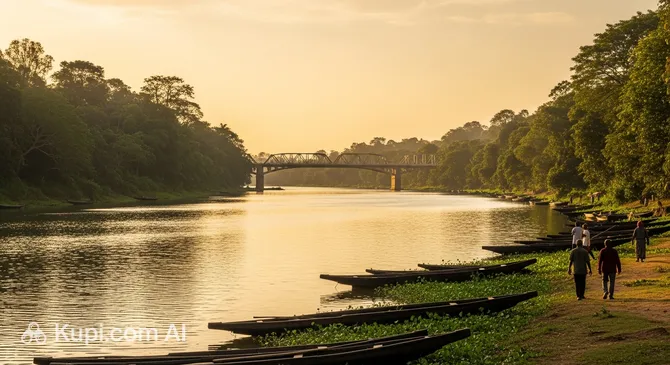
A unique feature of transport in Gambela is the use of the Baro River. While not a formal public transit system in the modern sense, wooden boats and canoes are frequently used by locals to transport goods and people across the water or to downstream villages. For a visitor, hiring a boatman for a trip along the river offers a functional yet scenic way to see the city from a different perspective, combining travel with sightseeing.