Support

Taveuni

About

Welcome to Taveuni, often celebrated as the "Garden Island" of Fiji. This lush paradise is renowned for its abundant flora, volcanic peaks, and pristine rainforests, offering a serene escape for nature lovers and adventurers alike. The island's vibrant atmosphere is defined by its overwhelming greenery and the friendly hospitality of its locals.

Geographically, Taveuni is the third-largest island in the archipelago and holds a unique distinction: the 180th meridian crosses directly through it. This allows visitors to stand with one foot in the Western Hemisphere and the other in the Eastern Hemisphere. With a population of approximately 9,000 residents, the island maintains a peaceful, uncrowded feel, perfect for those seeking tranquility away from bustling city life.
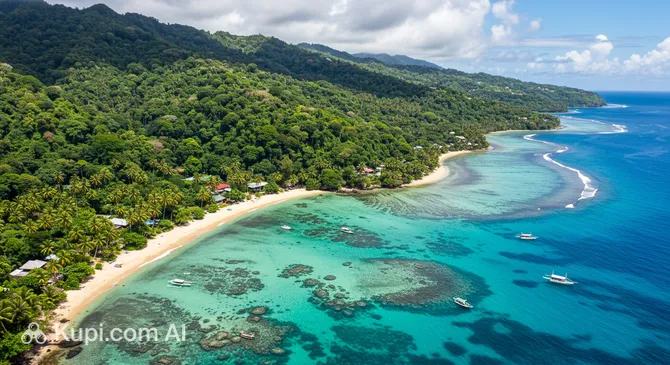
Taveuni. Source: Kupi.Binoculars

While the island is famous for its breathtaking natural beauty, the history of Taveuni is equally fascinating, deeply rooted in Polynesian culture and local traditions. Exploring the island offers a glimpse into a heritage that has harmoniously coexisted with the land for centuries.

Travelers are consistently drawn to the spectacular Bouma National Heritage Park, which protects a large portion of the island's rainforest and is home to the stunning Tavoro Waterfalls. Taveuni is also the only place on Earth where you can find the rare crimson and white Tagimoucia flower blooming near a high-altitude volcanic crater lake. For underwater enthusiasts, the world-famous Rainbow Reef in the Somosomo Strait offers some of the best soft coral diving experiences on the planet.

Whether you are hiking through verdant jungles, chasing waterfalls, or exploring vibrant underwater worlds, Taveuni promises an unforgettable journey into the heart of the South Pacific. It is a destination that truly embodies the spirit of a tropical paradise.

Weather Overview

Taveuni experiences a tropical climate characterized by consistent warmth and regular rainfall, which supports its reputation as the "Garden Island." The average temperatures fluctuate only slightly throughout the year, peaking at 26.6°C in February and dipping to a mild 24.1°C in August. Expect warm, humid days year-round with frequent showers that keep the local flora verdant and thriving.

Precipitation is a regular occurrence, though the frequency varies by season. The early months of the year are typically the wettest; for instance, March sees approximately 28 wet days. In contrast, the period from June to September is relatively drier, with precipitation dropping to around 3mm to 4mm and fewer rainy days recorded. To help you pack appropriately for these conditions, you can consult the detailed guide to the weather in Taveuni before your departure.

Interesting Facts

Beyond its lush landscapes and famous diving spots, Taveuni holds many fascinating secrets and local stories that add depth to its beauty. Here are a few unique aspects of the island that are often overlooked by the casual observer.

  • Unlike many other islands in Fiji, Taveuni has remained entirely mongoose-free. This unique ecological status has allowed the island's native bird population to flourish, making it a sanctuary for rare ground-dwelling species and the vibrant Orange Dove, which have been decimated on the main islands where the predator was introduced.

  • Nature provides its own amusement park at the Waitavala Water Slide, a naturally formed rock chute located near Waiyevo. Locals and adventurous visitors slide down the smooth, algae-covered rock face into a refreshing pool below, creating a thrilling and authentic island experience that requires no electricity or ticket.

  • The famous Tagimoucia flower is not just a botanical rarity but the subject of a heartbreaking local legend. Folklore tells that the crimson and white petals were formed from the tears of a desperate princess who fled into the mountains after being forbidden from marrying her true love, forever immortalizing her sorrow in the blooms.

  • The island's untouched beauty caught the eye of Hollywood, serving as a primary filming location for the 1991 movie Return to the Blue Lagoon. The production utilized the stunning, rugged backdrops of the rainforests and coastlines to depict an isolated tropical paradise.

How to Get There

Reaching the "Garden Island" is an adventure in itself, usually involving a combination of international and domestic travel. Since Taveuni is an outer island, most visitors arrive by air, enjoying spectacular aerial views of the reefs and rainforests along the way. For a detailed breakdown of all transport options, including ferries, you can read more about how to get to Taveuni.

The primary point of entry on the island is Matei Airport (IATA: TVU). Located at the northern tip of Taveuni, this charming, small-scale airfield welcomes daily domestic flights. It is situated approximately 20 km from the main accommodation areas, and a taxi or resort shuttle ride typically takes about 30 to 40 minutes. The approach to Matei is often cited as one of the most scenic landings in the South Pacific.

International travelers will generally first land at Nadi International Airport (IATA: NAN) in the city of Nadi. As the country's main international hub, it handles high passenger volumes and connects Fiji to the world. Although Nadi is about 292 km away from Taveuni, it serves as the major transfer point for connecting flights. Alternatively, you might transit through Nausori Airport (IATA: SUV) in Suva, which is closer to Taveuni (about 204 km away) and offers regular connections to the outer islands.

For clarity, here is a summary of the main airports:

Airport Name City Passenger Traffic Km from City
Nadi International Airport Nadi High 291.9
Nausori Airport Suva Medium 204.3
Matei Airport Taveuni Small 20.1
Labasa Airport Labasa Small 83.6
Savusavu Airport Savusavu Small 72.4

Main Attractions

Taveuni is a destination defined by its raw, untouched beauty, offering visitors a chance to immerse themselves in nature without the crowds found in more commercialized regions. The island's attractions are predominantly outdoors, ranging from lush rainforest treks to world-class underwater experiences.

Bouma National Heritage Park is undoubtedly the crown jewel of the island, protecting over 80% of Taveuni's total land area. The park is best known for the spectacular Tavoro Waterfalls, a series of three cascading falls hidden within the rainforest. The first waterfall is easily accessible and features a large natural pool perfect for a refreshing swim, while the second and third falls require a more adventurous hike that rewards trekkers with breathtaking panoramic views of the coastline and the dense jungle canopy.

For those who enjoy combining coastal scenery with jungle exploration, the Lavena Coastal Walk is an unmissable experience. This scenic trail stretches along the island's remote eastern edge, weaving through local villages and past pristine white and black sand beaches. The path eventually leads to a stunning twin waterfall, where visitors can swim into a hidden gorge. It is a unique way to experience the wild, rugged beauty of the "Garden Island" where the rainforest meets the sea.

Just offshore lies the world-renowned Rainbow Reef, located in the Somosomo Strait between Taveuni and Vanua Levu. Often cited as the "Soft Coral Capital of the World," this site is a bucket-list destination for divers and snorkelers. The reef is famous for the Great White Wall, a vertical drop covered in luminescent white corals that glow in the current. The underwater visibility and the kaleidoscope of colorful fish make it one of the most vibrant marine ecosystems on the planet.

Hikers seeking altitude and solitude should head to Des Voeux Peak, the second-highest summit on the island. Reaching the top involves a steep trek or a 4WD journey, but the effort is justified by the sweeping views of the archipelago and the crater lake below. This mist-covered mountain is also the natural habitat of the rare Tagimoucia flower, Fiji's national flower, which blooms only in this specific high-altitude environment.

Local Cuisine

As the "Garden Island" of Fiji, Taveuni offers a culinary experience defined by the incredible freshness of its ingredients. The fertile volcanic soil produces an abundance of tropical fruits and root vegetables, while the surrounding ocean provides a daily catch of high-quality seafood. Dining here is less about elaborate fine dining and more about farm-to-table authenticity, with flavors that reflect the island's lush landscape.

A must-try dish is Kokoda, often considered Fiji's national dish. It consists of raw fish, usually Spanish mackerel or Walu, "cooked" in fresh lemon or lime juice and enriched with coconut cream, onions, chilies, and tomatoes. Another culinary highlight is the traditional Lovo feast, where meats, fish, and vegetables like taro (dalo) and cassava are wrapped in banana leaves and slow-cooked over hot stones in an earth oven. This smoky, tender style of cooking is often the centerpiece of cultural nights at local resorts.

When it comes to beverages, fresh coconut water (known locally as 'bu') is the ultimate thirst quencher, readily available from roadside stalls or straight from the tree. For a deeper dive into local culture, visitors should try Kava (or Yaqona). Made from the powdered root of a pepper plant, this non-alcoholic drink has a mild sedative effect and plays a central role in Fijian social and ceremonial life. It is often shared as a gesture of welcome and friendship.

The dining scene in Taveuni is relaxed and intimate. Unlike the main island of Viti Levu, you won't find large fast-food chains or bustling food courts. Instead, most visitors enjoy meals at resort restaurants, which often welcome non-guests and feature menus heavily reliant on local produce. For a more rustic experience, you can visit the small town of Naqara to find local eateries serving curries and simple Fijian dishes, or explore the markets to buy sweet papayas, pineapples, and bananas directly from the farmers.

Travel Tips

Preparing for a trip to Taveuni requires a slightly different approach than visiting the main island of Viti Levu, as the infrastructure here is more rustic and the lifestyle more traditional. To help you navigate the "Garden Island" with ease and respect for local customs, here are some essential practical tips.

  1. Clothing and Gear: Given the tropical humidity and frequent showers, lightweight, breathable fabrics are best. A good quality raincoat or poncho is essential, as Taveuni is one of the wettest places in Fiji. For hiking, bring sturdy, waterproof shoes, and pack reef shoes for swimming to protect against coral. If you plan to visit villages, you must have modest clothing; a sulu (sarong) is versatile and widely used by both men and women to cover legs.

  2. Transportation: Public transport is limited to local buses that run infrequently along the coastal road, mostly catering to school schedules. Taxis are the most reliable way to get around, though they can be pricey for long distances. Most travelers rely on resort transfers or hire a taxi for half-day tours. Renting a car is possible but expensive, and a 4WD is recommended due to the rugged nature of the roads.

  3. Finances: While major resorts accept credit cards, cash is king elsewhere. Small shops, markets, and taxis operate exclusively with the Fijian Dollar (FJD). ATMs are scarce on the island, primarily located in the commercial hubs of Naqara and Waiyevo. It is highly advisable to withdraw sufficient cash upon arrival at Nadi International Airport or before leaving the main towns on Taveuni to explore remote areas.

  4. Health and Safety: Taveuni is generally very safe, but medical facilities are basic. The main hospital is in Waiyevo, and pharmacies may not have specific prescription medications, so bring your own supply. Insect repellent is crucial to protect against mosquitoes, which can carry dengue fever. Always drink bottled or filtered water unless your resort confirms their tap water is safe.

  5. Communication: English is widely spoken and is the official language, making communication easy. However, internet connectivity can be spotty outside of resort areas. Buying a local SIM card (Vodafone or Digicel) in Nadi or Naqara is recommended for mobile data. Don't expect high-speed Wi-Fi in remote accommodations; embrace the chance to disconnect.

  6. Local Etiquette: Fijian culture is deeply respectful. When visiting a village, it is customary to present a gift of yaqona (kava root) to the village chief, a ritual known as sevusevu. Always remove your hat and sunglasses when entering a village as a sign of respect, and never wear shoes inside someone's home.

  7. What to Avoid: Do not walk around villages or towns in swimwear or skimpy clothing; this is considered offensive. Cover your shoulders and knees. Also, avoid touching anyone's head, including children, as the head is considered sacred in Fijian culture.

  8. Sunday Observance: Sundays are strictly observed as a day of rest and church-going in Taveuni. Most shops, businesses, and even some tour operators close down. It is the perfect day to relax at your resort or plan self-guided activities like snorkeling or hiking that don't require external services.

By keeping these tips in mind, you will be well-equipped to enjoy the serene beauty and warm community spirit of Taveuni. A little preparation allows you to focus on the incredible waterfalls, reefs, and smiles that make this island a truly unforgettable destination.

Entertainment & Nightlife

Nightlife in Taveuni is a world away from the neon lights and thumping bass of big city clubs. Instead, the island offers a laid-back, intimate evening atmosphere that perfectly complements its reputation as a nature lover's paradise. The entertainment scene here is defined by "Fiji Time," where the focus is on relaxing with a cold drink, watching spectacular sunsets, and engaging in good conversation under a blanket of stars. You won't find bustling nightlife districts or 24-hour discos; rather, the evening action is concentrated within the hotels, resorts, and a few standalone restaurants scattered along the coastal road.

The main hub for evening socializing is the Matei area in the north and, to a lesser extent, Waiyevo further south. In these areas, the vibe is casually sophisticated yet unpretentious. The crowd is a mix of divers recounting their underwater adventures, couples enjoying romantic getaways, and friendly locals sharing stories. Dress codes are almost universally "island casual"—shorts and tropical shirts are the norm, though flip-flops are often swapped for sandals at dinner.

For a memorable evening, Tramonto in Matei is a standout venue. Perched on a cliff edge, it offers one of the best vantage points for sunset drinks and serves excellent pizzas and cocktails. It is a favorite among both tourists and expats for its breathtaking ocean views and relaxed ambiance. Another popular spot is The Salty Fox, located near Waiyevo. This bar and grill is known for its friendly, pub-like atmosphere, making it a great place to mingle with locals, enjoy a cold beer, and catch a rugby match on TV if one is playing.

A unique aspect of Taveuni's "nightlife" is the traditional Fijian cultural experience. Many resorts host weekly Kava nights (Yaqona ceremonies) and Meke performances, featuring traditional song and dance. Participating in a kava circle is the most authentic way to spend an evening here; it is a mild, relaxing social ritual that sits at the heart of Fijian community life. These events usually wrap up relatively early, around 9:00 PM or 10:00 PM, aligning with the island's early-to-rise lifestyle.

Practicality is key when planning a night out. Taxis are available but do not roam the streets looking for fares late at night. If you plan to dine outside your accommodation, you must arrange a return ride with your driver beforehand or ask the restaurant to call one for you. Prices for drinks and food are comparable to Western standards in the resorts but are significantly cheaper at local spots like The Salty Fox. In terms of safety, Taveuni is very secure, but the roads are unlit and dark. Walking between venues at night is not recommended due to the lack of visibility and sidewalks; always opt for a vehicle.

While the nights are quiet, daytime entertainment in Taveuni is all about immersing yourself in the island's natural splendors, as there are no movie theaters, shopping malls, or amusement parks. Visitors spend their days visiting pearl farms, exploring the local markets in Naqara, or taking cooking classes to learn how to use local ingredients. The transition from an active day of hiking or diving to a serene, social evening is seamless, making the lack of commercial nightlife a refreshing change of pace for most travelers.

Parks & Museums

Taveuni is often likened to a living museum of nature within Fiji, where the "parks" are defined by untamed rainforests rather than manicured lawns. While you will not find large indoor museum complexes here, the island offers open-air sanctuaries and historical landmarks that provide a profound connection to the land and its heritage.

One of the island's most distinct natural recreation areas is the Waitavala Natural Rock Waterslide. Located near Waiyevo, this site functions as a community park where the landscape itself serves as the playground. Surrounded by dense tropical bush, it offers a refreshing natural setting for locals and visitors to gather, providing a raw and authentic alternative to man-made water parks.

A significant geographical landmark is the 180th Meridian Monument, situated in a quiet, park-like clearing. This spot marks where the International Date Line originally cut through the island, allowing visitors to stand with one foot in "yesterday" and the other in "today." It remains a popular photo opportunity and a unique reminder of Taveuni's position on the globe before time zones were adjusted.

In terms of architectural and cultural history, the Wairiki Catholic Mission (Holy Cross Church) is the island's most impressive treasure. Built in 1907 in a Romanesque style, this imposing stone church sits on a hillside overlooking the Somosomo Strait. It stands not only as a place of worship but also as a monument to a pivotal 19th-century battle where local warriors defended the island, symbolizing the deep-rooted faith and resilience of the people.

Since Taveuni lacks traditional museums with glass display cases, the Civa Pearl Farm offers a vital alternative for cultural education. This working farm provides in-depth tours that explain the intricate process of cultivating rare golden pearls. It gives visitors a fascinating look into the delicate balance between local industry and the pristine marine ecosystem, serving as an educational window into modern coastal culture.

For a truly immersive experience, visiting the Wairiki Mission during a Sunday service is highly recommended. The sound of the choir singing harmonious hymns resonates through the historic stone walls, offering a moving display of the community's living spirit that transcends static exhibits.

Getting Around

Navigating Taveuni requires a shift in expectations from the fast-paced transit systems of major metropolitan areas to a more relaxed, "island time" rhythm. As a rural island destination in Fiji, there are no subways, trams, trains, or complex metro networks. Instead, the public transport system is simple, relying entirely on a single coastal road that connects the northern airfield of Matei to the southern villages. For most visitors, getting around involves a mix of local buses, taxis, and resort transfers.

The primary form of public transportation is the local bus service. These buses are a quintessential part of the island experience—often colorful, rustic, and featuring open windows (no glass) that allow the tropical breeze to flow through. They run along the main coastal road, typically timing their schedules around school hours and the arrival of inter-island ferries. While they are an incredibly affordable way to travel between the main hubs like Naqara, Waiyevo, and Matei, they are infrequent. Buses may only run a few times a day, so they are better suited for travelers with a flexible schedule rather than those in a rush.

When it comes to payment, cash is the only accepted method. There are no travel cards, mobile apps, or electronic ticket machines on Taveuni. You simply pay the driver directly upon boarding or when you reach your destination. Fares are very low, usually costing just a few Fijian dollars depending on the distance. It is highly recommended to carry small denominations and coins, as drivers may not always have change for large bills.

For a more reliable and comfortable alternative, taxis are the preferred choice for most tourists. You can find taxis waiting at Matei Airport, the ferry wharf, and outside major supermarkets in Naqara. Unlike in big cities, taxis here rarely use meters. Instead, there are standard fixed rates for common routes (e.g., airport to resort), but for other trips, you should negotiate and agree on the fare with the driver before getting into the car. Many taxi drivers are also happy to be hired for half-day or full-day island tours, acting as informal guides.

If you prefer the freedom to explore at your own pace, car rentals are available, though options are limited compared to the main island. Given the condition of the roads—which can be unpaved, potholed, and muddy after rain—renting a 4WD vehicle is strongly advised. There are no international car rental chains; instead, you will find local operators. Be sure to book in advance, especially during peak season, as the fleet of available vehicles is small.

Cycling is another eco-friendly option, with some resorts offering bike rentals to guests. This is a great way to see the immediate area, but be aware that the tropical heat and humidity can make long-distance cycling challenging. Whether you choose the rustic charm of the open-air bus or the convenience of a private taxi, getting around Taveuni is generally safe and offers plenty of scenic coastal views along the way.

Accommodation

Where to Stay:

Accommodation in Taveuni is distinct from the large commercial chains found on Fiji's main island. Here, the lodging landscape is defined by intimate boutique resorts, eco-friendly lodges, and dedicated dive retreats that blend seamlessly into the jungle or perch along the volcanic coastline. The options cater to a variety of travelers, ranging from budget-conscious backpackers seeking simple guesthouses to luxury seekers looking for exclusive private villas.

The majority of accommodation is concentrated in the northern part of the island, particularly around the Matei area. This region is convenient due to its proximity to the airport and offers stunning views of the ocean and nearby islets. Staying here provides easy access to coastal walks and a selection of small restaurants. Another key area is Waiyevo and the central west coast, which serves as a strategic base for divers heading out to the Rainbow Reef and travelers wanting to be closer to the ferry wharf and essential services.

For those seeking total seclusion, there are remote resorts located on the southern tip of the island or hidden within the rainforests. These properties are often only accessible by boat or 4WD transfer and are designed to offer a "castaway" experience. Because Taveuni is a destination focused on nature and diving, many resorts are all-inclusive or offer comprehensive meal plans, as standalone dining options can be scarce outside of the main settlements.

Booking Tip: Taveuni's resorts are typically small, with some offering fewer than ten bures (bungalows). Consequently, availability can disappear quickly, especially during the peak dry season from June to September. It is highly recommended to book your stay several months in advance to secure your preferred location.

The price range varies significantly. Budget travelers can find affordable hostels and homestays for under FJD 100 per night, while mid-range dive resorts typically range from FJD 300 to FJD 600. The island is also home to some of Fiji's most luxurious retreats, where nightly rates can exceed FJD 2,000. Most accommodations can be booked via major online platforms, but for smaller, family-run eco-lodges, booking directly through their website often ensures the best communication regarding transfers and dietary requirements.

Nearby Cities

For those looking to explore the surroundings, Taveuni serves as an excellent base for day trips or short excursions to several interesting nearby locations. While Taveuni itself is a haven of tranquility, the neighboring islands and cities offer a different pace of life, ranging from bustling agricultural hubs to the vibrant capital.

Located on the neighboring island of Vanua Levu, Labasa is the closest major urban center to Taveuni. Known as a friendly, industrious town, it is the heart of Fiji's sugar cane industry. A visit here offers a distinct cultural shift, with a lively main street lined with colorful shops and a strong Indo-Fijian influence. It provides a fascinating glimpse into the everyday lives of locals away from the main tourist trail, making it a worthwhile stop for those interested in the country's agricultural backbone.

For travelers willing to take a short domestic flight, the capital city of Suva on Viti Levu presents a rich tapestry of history and colonial architecture. It is home to the renowned Fiji Museum, which holds an extensive collection of archaeological artifacts and cultural treasures. The city's municipal market is another highlight, buzzing with vendors selling fresh produce and handicrafts. Suva offers a more cosmopolitan experience, perfect for those wanting to explore the nation's administrative and cultural center.

City Population Distance (km)
Suva 185913 222
Nadi 71048 294
Nausori 57882 205
Lautoka 52220 285
Labasa 27949 83

These nearby destinations offer a glimpse into the diverse culture and landscapes of the region, allowing visitors to experience the broader context of the Fijian archipelago beyond the shores of the "Garden Island."

Shopping & Souvenirs

Shopping in Taveuni is a modest and authentic experience, reflecting the island's laid-back, rural lifestyle. Unlike the bustling commercial hubs of Viti Levu, you will not find high-end fashion boutiques, duty-free complexes, or sprawling retail centers here. Instead, the shopping scene is focused on essential goods, fresh local produce, and unique handmade crafts, offering a glimpse into the daily lives of the local community.

The primary commercial center of the island is Naqara, located on the west coast near Somosomo. This is where the majority of the island's business takes place. Visitors will find a row of general stores, supermarkets, and hardware shops that stock everything from groceries and toiletries to fishing gear and fabrics. Another smaller hub is found in Waiyevo, and there are a few convenience stores scattered around the Matei area to serve the resorts and airport traffic.

Travelers should be aware that there are no shopping malls on Taveuni. The retail environment is comprised entirely of standalone shops and family-run businesses. If you are looking for branded clothing, electronics, or luxury items, it is best to do your shopping in Nadi or Suva before arriving on the "Garden Island."

The highlight of shopping in Taveuni is undoubtedly the local markets, with the Naqara Market being the largest and most vibrant. It is the best place to buy fresh tropical fruits like papaya, pineapples, and bananas, as well as root crops directly from the farmers. The market is also a social hub where you can find bundles of kava (yaqona) roots, which are essential if you plan to visit a village and present a traditional gift.

When it comes to souvenirs, the best items to bring back are those that support local craftsmanship. Look for bottles of pure, locally produced coconut oil, often infused with floral scents. Sulus (sarongs) with bright tropical prints are practical and popular gifts. While Taveuni is not as famous for handicrafts as some other islands, you can often find woven mats, baskets, and simple jewelry made from shells or coconut shells at the market or small roadside stalls.

Store opening hours are generally from 8:00 AM to 5:00 PM, Monday through Saturday. Some smaller shops may close for a lunch break between 1:00 PM and 2:00 PM. It is important to note that Sundays are strictly observed as a day of rest, and almost all shops, including supermarkets and markets, will be closed. In terms of payment, cash is essential. While a few larger supermarkets in Naqara might accept credit cards, the vast majority of small shops, market vendors, and stalls trade exclusively in Fijian Dollars.

Regarding tax-free shopping, Fiji does operate a Tourist VAT Refund Scheme for purchases over a certain amount at registered outlets. However, finding registered retailers on Taveuni is rare compared to the main island. It is advisable not to rely on claiming tax refunds for purchases made specifically on Taveuni, as the infrastructure for this is largely centered around the major international airports and larger cities.

Reached the end of the page?

That means the route is fully explored