Support

Cathédrale Saint-Maurice d'Angers

About

In the heart of the historic quarter that graces the city of Angers, rises the majestic Saint Maurice Cathedral. This Catholic church, recognized as a national monument, is a vivid embodiment of the craftsmanship of medieval builders. France is rightfully proud of this site, as it represents a unique blend of Romanesque and Gothic styles, reflecting the transition of architectural eras.
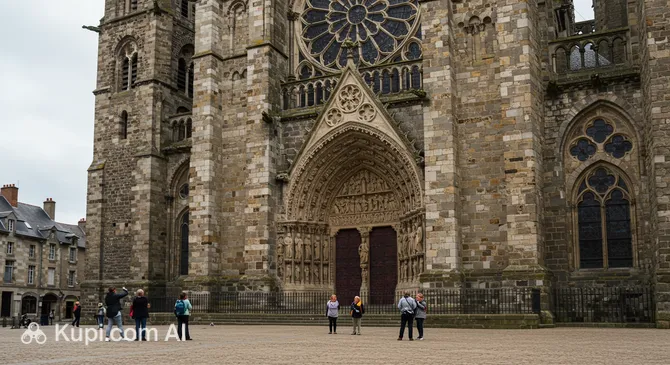
Angers Cathedral
Angers Cathedral. Иллюстрация. Источник: Kupi.com AI

The cathedral is famous for its artistic treasures, among which 13th-century stained glass holds a special place. These masterpieces of glass craftsmanship fill the interior of the church with amazing light and color. No less impressive is the main altar, crowned by a magnificent Baroque baldachin of gilded wood, inspired by the famous St. Peter's Basilica in Rome.

Beyond its architectural value, the cathedral serves as the spiritual center of the diocese and attracts travelers with its peaceful atmosphere. Here, you can see an exquisite mid-19th-century pulpit and other works of religious art that make a visit to the cathedral an unforgettable cultural experience.

Contacts

To plan your visit or inquire about services, you can use the cathedral's official contact information.

Below is detailed contact and location information for the site:

How to contactContact
Address4 Rue Saint-Christophe, 49100 Angers, France
Phone+33 2 41 87 58 45

What to Do

The cathedral's interior offers guests a true journey through the centuries. First and foremost, pay attention to the unique 13th-century stained glass windows, considered some of the finest examples of French medieval art. Also, be sure to look up to appreciate the grandeur of the Angevin-style Gothic vaults, characteristic of this region.

History buffs will be interested in examining the galleries adorned with figures of Saint Maurille's companions and 14th-century knights. Of great value are the medieval frescoes, which remained hidden for a long time and were only restored at the end of the last century. They depict scenes from the life and miracles of Saint Maurille, executed with remarkable detail for that era.

Don't forget to approach the high altar to see the magnificent Baroque baldachin and examine the pulpit decorated with illustrations of biblical scenes. The cathedral is the perfect place not only to study the history of Christian architecture but also to enjoy the silence and monumentality of ancient walls.

Getting There

The majestic cathedral is located at 4 Rue Saint-Christophe, in the very heart of the city's historic center. Thanks to this convenient location, it is easily accessible from any part of the city—simply look for its high spires, which are visible from afar.

If you arrive by train, the city of Angers is well-connected by rail to other regions of the country. From the main train station, you can walk to the cathedral in about 15–20 minutes or take a taxi. Public transport (buses and trams) also runs through the city, with stops located in the immediate vicinity of the cathedral.

For those who prefer to travel by car, municipal parking lots are available around the historic quarter. However, keep in mind that the central streets are quite narrow, so many tourists prefer to park a bit further away and enjoy a short walk to the church entrance.

Ближайший город: Angers

History & Facts

The history of this majestic structure began in the 11th century when Bishop Hubert de Vendôme ordered the construction of a Romanesque cathedral. Unfortunately, the original building was almost completely destroyed by fire in 1032. The cathedral's modern appearance took shape over several centuries—from 1032 to 1523—becoming a prime example of the evolution from Romanesque architecture to Gothic.

In the Middle Ages, Angers Cathedral was involved in an unspoken rivalry with Amiens Cathedral. Both churches claimed the right to possess one of the most significant Christian relics—the head of John the Baptist. This fact underscores the cathedral's high status and importance in the spiritual life of medieval Europe.

One of the most amazing discoveries was the medieval 13th-century frescoes depicting the life of Saint Maurille. For centuries, they were hidden under layers of white paint applied in the 15th century to protect the images from iconoclasts. It wasn't until 1980 that experts discovered these masterpieces, and after an extensive restoration that concluded in the 1990s, visitors can once again admire them.

The church also preserved unique wall structures of the nave from the very first 11th-century building, making it a valuable site for architectural researchers. Every element of the facade and interior is a living testament to the changing eras and artistic tastes of French masters.

Time Needed

To leisurely explore the interiors, admire the play of light in the ancient stained glass, and feel the grandeur of the Gothic vaults, a typical visitor will need between 1 and 2 hours. This is sufficient time to see the cathedral's main artistic treasures.

If you are an art lover and plan to study the 13th-century frescoes in detail, examine the carvings on the pulpit, and the gilded baldachin of the high altar, we recommend setting aside about 2–3 hours for your visit. The church's peaceful atmosphere invites long contemplation and thoughtful study of historical details.

Working Hours

Saint Maurice Cathedral is open to visitors daily, making it easy to include in any sightseeing itinerary. The church welcomes guests according to the following schedule:

Monday — Sunday: 08:00 – 20:00.

Such extended opening hours allow you to see the cathedral both in the bright rays of the morning sun and in the mysterious evening atmosphere when the interior lighting is turned on.

8:00 – 20:00

Nearby

Exploring the cathedral's surroundings will allow you to dive deeper into the atmosphere of the medieval city and see how closely history, religion, and the region's defensive architecture are intertwined. Nearby are key monuments and charming parks worth adding to your itinerary.

Below is a list of interesting places located within walking distance of the Cathedral:

NameDistance
Collegiate Church of Saint Martin0.2 km
Le Pas Sage0.2 km
Museum of Fine Arts of Angers0.2 km
David d'Angers Gallery0.2 km
La Cour0.3 km
Cahupa0.3 km
Château d'Angers0.4 km

Reached the end of the page?

That means the route is fully explored