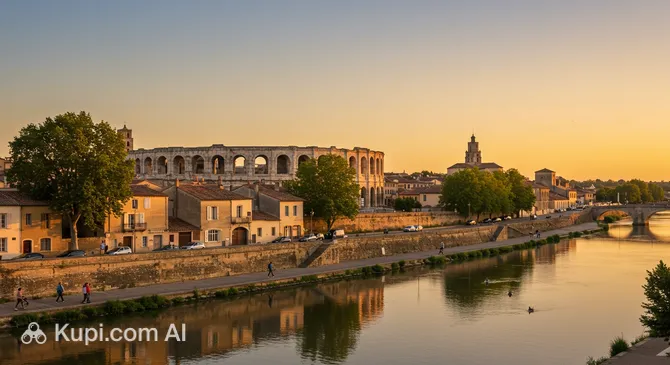
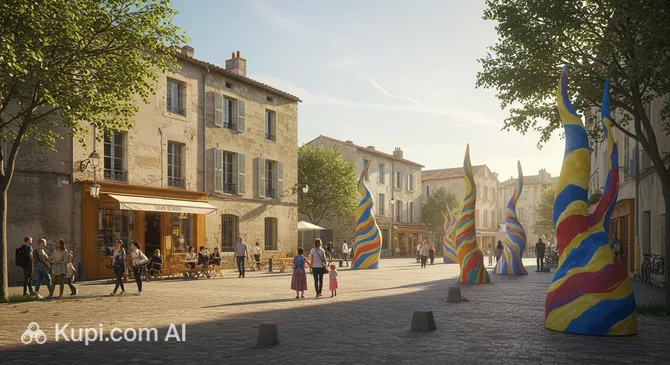
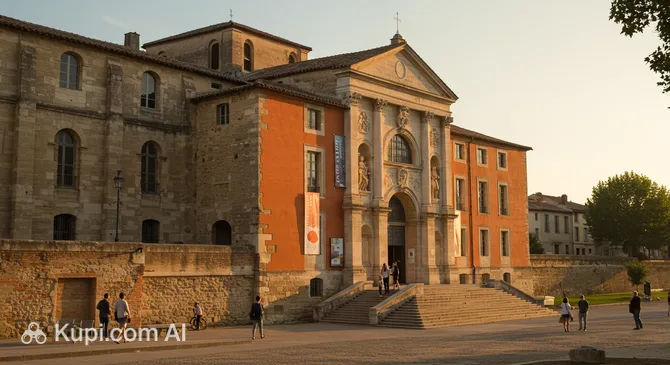
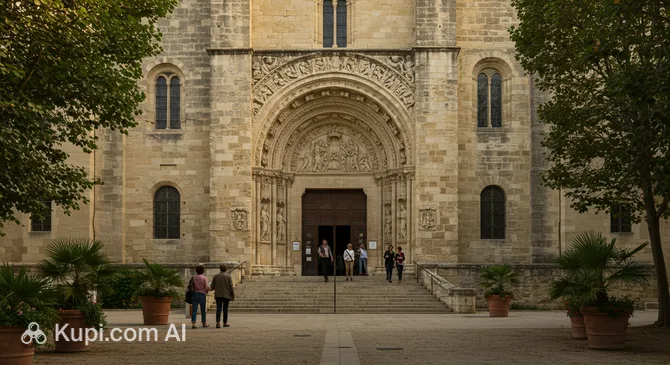
Arles is a true jewel of Provence, a city with a rich history comfortably nestled on the banks of the majestic Rhone, about 40 kilometers from where it flows into the Mediterranean Sea. Located in the heart of the Bouches-du-Rhône department, in the Provence-Alpes-Côte d'Azur region, Arles has become a crossroads of cultures and civilizations, preserving traces of ancient Roman grandeur and medieval charm. This is a place where the gentle sun of southern France meets a leisurely pace of life.
Arles. Illustration.
Source: Kupi.com AI
With a population of about 51,031 people, Arles is not a noisy metropolis, but a city with a soul and its own special charm. Its Old Town, a UNESCO World Heritage site, testifies to its significance as a historical and cultural center. Here, the coziness of provincial streets, the majesty of ancient ruins, and modern cultural life are wonderfully combined.
The atmosphere of Arles is a blend of inspiration, peace, and creative exploration. The city attracts tourists with its rich heritage: the famous Arles Amphitheatre, where gladiatorial battles once took place, and the Roman Theatre are just part of its ancient splendor. No less remarkable are the medieval buildings, such as the Cathedral of Saint Trophime, known for its Romanesque-style portal.
Arles is undoubtedly worth a visit to immerse yourself in its unique atmosphere, explore historical treasures, and enjoy the picturesque landscapes of Provence. This city gives a sense of traveling through time, filling every moment with special southern light and warm hospitality.
You can find more interesting facts on the history of Arles page
Weather Overview
The weather in Arles is characterized by a warm Mediterranean climate. Summer here is hot and sunny, with average temperatures in July and August staying around 26°C, and maximum values can exceed 30°C. Rainfall in summer is minimal, especially in July. Winters in Arles are mild, with average temperatures in January around 8°C and rare frosts. Precipitation in winter and the off-season is more likely, but overall the amount is small. Spring and autumn are pleasant times to visit, with comfortable temperatures and a moderate number of rainy days.
Overall, expect a hot and mostly dry summer, while winters are mild here, with average temperatures around 8-9°C and low precipitation. To find out more about weather conditions in different months, you can see detailed information about the climate of Arles.
Average monthly temperature
Average monthly precipitation
Interesting Facts
Besides its famous Roman ruins and connection to Van Gogh, Arles hides many amazing stories and features that make it truly unique. Here are just a few interesting facts about this charming Provençal city:
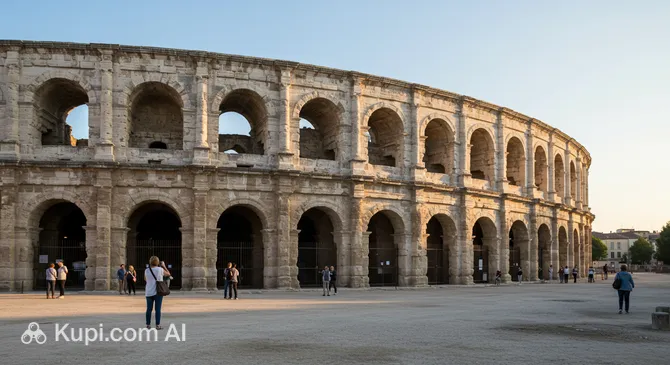
Arles Amphitheatre. Illustration.
Source: Kupi.com AI
Traveler photos:
Arles was once such a significant center of the Roman Empire in Gaul that it was called the "Little Rome of the Gauls." Grand structures from that era, such as the impressive Arles Amphitheatre, where gladiatorial battles were once held, and the ancient Roman Theatre, still amaze with their scale and preservation.
It was in Arles that Vincent van Gogh experienced one of the most productive periods of his creative life, producing over 300 works in just 15 months. Masterpieces such as "Café Terrace at Night" and the only painting sold during the artist's lifetime, "The Red Vineyard," were born here. Today, you can visit the Espace Van Gogh, the former hospital where the artist was treated.
Every summer, Arles turns into the world capital of photography thanks to the "Rencontres d'Arles" festival. It is one of the most prestigious events in the world of photography, attracting thousands of professionals and connoisseurs from around the globe, with exhibitions held in the most unexpected historical locations, including ancient churches and industrial buildings.
Arles carefully preserves unique Provençal traditions. Here you can still see colorful festivals and processions in national costumes, hear the ancient Provençal dialect in local markets, and even witness traditional bull games (course camarguaise), where, unlike bullfighting, the bulls are not killed.
How to Get There
There are several ways to reach Arles; however, the most popular among tourists are flights followed by a transfer or traveling by train. Arles does not have its own airport, but several regional and international airports are within a reasonable distance.
The largest and most convenient for international travelers is Marseille Provence Airport (MRS), located in Marseille. This is a major international hub receiving flights from many countries. The distance from this airport to Arles is approximately 54 km. A trip by car or taxi will take about 1 hour and 40 minutes. You can also reach Arles from the airport by public transport, usually with a transfer in Marseille.
The closest airport to Arles is Garons Airport (FNI) in the city of Nîmes, just 19 km away. This is a small regional airport that can be a convenient option if your route involves arriving specifically here. The journey to Arles from here takes about 50 minutes by car. Another option is Avignon-Caumont Airport (AVN), located in Avignon, about 34 km from Arles. This airport also mainly serves regional destinations, and you can reach Arles from there in about 1 hour and 10 minutes.
For convenience, here is a summary of the main airports serving the Arles area:
The railway connection is also a convenient way to get to Arles, especially if you are traveling within France or from neighboring European countries. Although Arles itself has a train station, major high-speed trains often stop at larger hubs in nearby cities.
One of the nearest and strategically important stations is Nîmes Pont-du-Gard station. This station is located in Nîmes, only 18.4 km from Arles, and serves high-speed TGV trains. A trip from here to Arles by taxi or local transport will take approximately 45-50 minutes. Another major railway hub is Avignon Train Station, located in the city of Avignon, about 30 km from Arles. From this station, which receives both regional and long-distance trains, Arles can be reached in about 1 hour and 5 minutes.
Below is information about some of the railway stations through which you can reach Arles:
Additionally, Arles can be reached by car, as the city has good connections to the main highways of the Provence-Alpes-Côte d'Azur region. When planning a trip by public transport from airports or train stations, it is recommended to check the bus or train schedules to Arles in advance.
Main Attractions
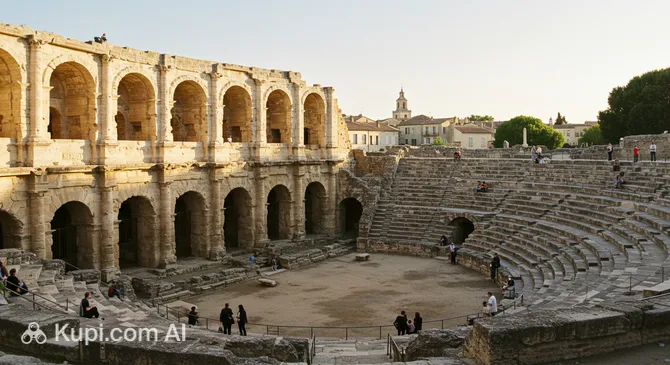
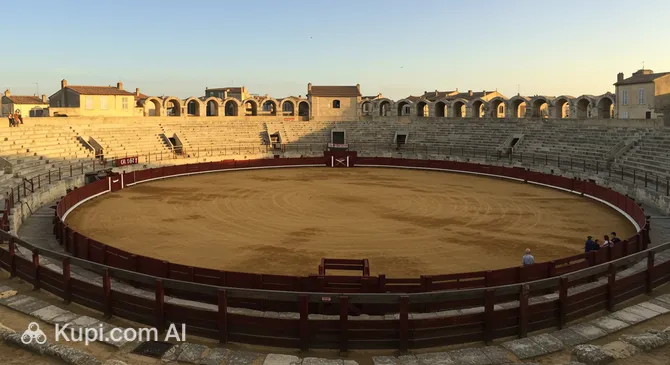
One of the most iconic sights in Arles is the majestic Arles Amphitheatre. This beautifully preserved Roman amphitheatre, built in the 1st century AD, once held up to 20,000 spectators who came to watch gladiatorial games and chariot races. Today, it is a UNESCO World Heritage site and continues to be used for bullfights, concerts, and theatrical performances, allowing visitors to touch ancient history in a vibrant atmosphere.
Arles Amphitheatre. Illustration.
Source: Kupi.com AI
Traveler photos:
Located near the amphitheatre is the Roman Theatre in Arles, dating back to the late 1st century BC. This is one of the first stone theatres of the Roman Empire, which once served as a stage for tragedies and comedies. Although only ruins remain, including two impressive columns, the theatre is still used for summer festivals and events, recalling the city's rich ancient past.
Roman Theatre of Arles. Illustration.
Source: Kupi.com AI
Traveler photos:
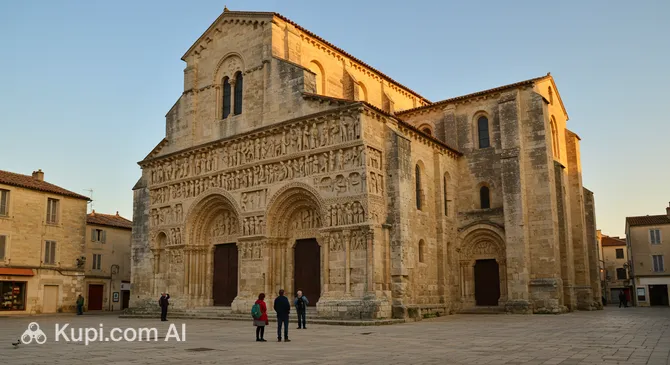
A significant monument of Romanesque architecture is the Church of Saint Trophime. This former cathedral basilica is famous for its magnificent portal, decorated with sculptures depicting scenes of the Last Judgment. Inside, you can see an elegant cloister with carved capitals. The church and its cloister are also part of the UNESCO World Heritage and attract pilgrims and admirers of medieval art.
Church of St. Trophime. Illustration.
Source: Kupi.com AI
Traveler photos:
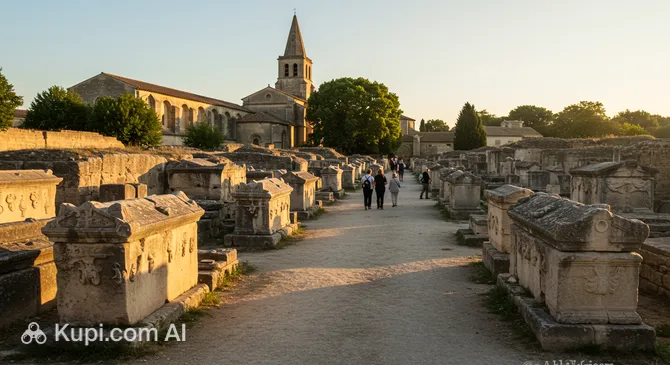
For those interested in ancient history and art, Alyscamps is a must-visit. This ancient Roman necropolis, located outside the old city walls, was one of the most famous Christian cemeteries of antiquity. Its picturesque alleys lined with sarcophagi inspired many artists, including Vincent van Gogh and Paul Gauguin. A walk through Alyscamps allows you to feel the atmosphere of bygone eras.
Alyscamps. Illustration.
Source: Kupi.com AI
Traveler photos:
Arles is inextricably linked with the name of Vincent van Gogh, and the Espace Van Gogh is one of the key places recalling his stay in the city. This is the courtyard of a former hospital where the artist was treated and which he immortalized in one of his famous paintings. Today, the garden has been recreated as Van Gogh saw it, and it now houses a cultural center dedicated to his work.
Van Gogh Space. Illustration.
Source: Kupi.com AI
Traveler photos:
Local Cuisine
Arles' gastronomy is a true immersion into the heart of Provence, where fresh products, rich aromas, and centuries-old culinary traditions are valued. The city's cuisine reflects its rich history and proximity to the fertile lands of the Camargue, offering tourists authentic taste experiences.
Be sure to try taouillado (gardianne de taureau) — a famous bull stew with herbs and red wine, which is a signature dish of the local cuisine. Another iconic dish is tapenade, a savory paste made from olives, capers, anchovies, and olive oil, perfect as an appetizer with fresh bread. It is also worth paying attention to Camargue rice dishes, fresh fish, and seafood, and in season — artichokes and asparagus.
Regarding drinks in Arles, as in all of Provence, rosé wine is particularly popular — light and refreshing, it perfectly complements local dishes. Local white and red wines are also common. Among non-alcoholic drinks, you should try freshly squeezed juices, lemonades made from local fruits, and herbal infusions.
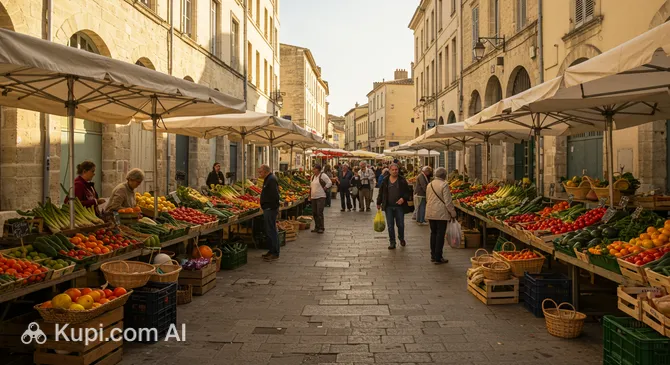
The food culture in Arles is diverse. Locals and tourists love to dine in cozy restaurants offering traditional Provençal dishes. Many of them, for example, Le Criquet or Cafe Factory Republique, pride themselves on using local products. A special place in the gastronomic life of the city is held by the Arles Market, where you can not only buy the freshest farm products — cheeses, sausages, olives, honey, fruits, and vegetables — but also try street food such as socca (a chickpea flour pancake) or fougasse (Provençal bread). This is a true kaleidoscope of tastes and aromas, reflecting the generosity of the local land.
Arles Market. Illustration.
Source: Kupi.com AI
Traveler photos:
Gastronomic festivals dedicated, for example, to bull meat or local wines, are also an important part of Arles' cultural life, attracting gourmets and introducing them to the best products of the region in an atmosphere of celebration and hospitality.
Travel Tips
Planning a trip to charming Arles? To ensure your journey through this sunny city in Provence goes smoothly and leaves only pleasant impressions, we have prepared some practical tips.
Clothing and Essentials: The climate in Arles is Mediterranean — summers are hot and winters are mild. In summer, choose light, breathable clothing made of natural fabrics, definitely bring a hat, sunglasses, and SPF cream. In the off-season and winter, layered clothing and a light jacket or raincoat will be useful. Comfortable shoes are your main ally for exploring cobbled streets and ancient monuments. Don't forget an adapter for French sockets (type E). When visiting religious sites, such as the Cathedral of Saint Trophime, show respect by choosing modest clothing that covers your shoulders and knees.
Transport: The historical center of Arles is quite compact, and it is most enjoyable to explore on foot. For longer trips, you can use the local Envibus network buses. Taxis are available but can be pricey. Renting a car makes sense if you plan to travel extensively throughout the Provence region, but for getting around Arles itself, it is not always convenient due to narrow streets and limited parking.
Finances: The official currency in France is the Euro (EUR). You can exchange money at banks or exchange offices, but the rate may be less favorable than withdrawing cash from an ATM. ATMs (DAB or distributeur automatique de billets) are widespread. Credit and debit cards (especially Visa and Mastercard) are accepted almost everywhere. It is recommended to check with your bank about the terms of using your card abroad. Tipping in France is usually included in the bill (service compris), but if you particularly liked the service, you can leave 5-10% of the amount or just round up the bill. A rough daily budget (excluding accommodation) can range from 70-150 euros, depending on your preferences.
Health and Safety: Pharmacies (pharmacie) are easily recognizable by a green cross; some of them operate on a duty schedule (pharmacie de garde) at night and on weekends. For emergency medical assistance, call 112. Arles is generally a safe city, but as everywhere, you should follow basic precautions: keep an eye on your belongings in crowded places, especially during festivals, and avoid poorly lit, deserted streets late at night.
Communication: The official language is French. In tourist areas, many speak English, but knowing a few basic phrases in French (for example, "Bonjour" – hello, "Merci" – thank you, "S'il vous plaît" – please) will be highly appreciated by the locals. A local SIM card can be purchased at mobile phone shops or some supermarkets. Free Wi-Fi is available in many hotels, cafes, and some public areas. For a more comfortable trip, we recommend installing useful apps on your smartphone: offline maps for navigation (e.g., Google Maps), a translator, as well as apps for finding nearby attractions, cafes, or current information about city events. Apps popular in France for booking restaurants or buying tickets may also be useful.
Local Etiquette: The French value politeness. It is customary to say hello ("Bonjour" during the day, "Bonsoir" in the evening) when entering shops, cafes, or even an elevator, and to say goodbye ("Au revoir"). Addressing strangers as "vous" (you - formal) is the norm. You should not speak too loudly in public places.
What to Avoid: Try not to start a conversation immediately in English; it's better to say hello in French first. Also, avoid comparing France with other countries in a negative way or pushing discussions on sensitive political topics if you are not sure of the interlocutor's reaction.
Extra Tip:Arles is famous for its festivals, especially the summer photography festival "Rencontres d'Arles" and traditional Provençal holidays (Féria). If your trip coincides with one of these, it will add vibrant impressions, but be prepared for a large number of tourists. Also remember that many small shops may close for a lunch break (usually from 12:00/1:00 PM to 2:00/3:00 PM).
We hope these tips help you better prepare for your trip and make your stay in Arles as comfortable and rich as possible. Enjoy the unique atmosphere of this ancient city, its art, and the hospitality of Provence!
Entertainment & Nightlife
Evening Arles is enveloped in an atmosphere of coziness and Provençal hospitality. While the city is not famous for loud mega-clubs, you can have a great time here enjoying the relaxed setting and local flavor. Arles' nightlife is centered around its historical heart, offering guests charming bars, restaurants, and cafes.
The main evening attraction points are Place du Forum, famous thanks to Van Gogh's painting, and the surrounding streets of the old town. This is where you will find many establishments where you can have a glass of local wine or enjoy dinner under the open sky. The atmosphere in Arles in the evening is very friendly and relaxed; the crowd is mixed – from locals to tourists enjoying the warm southern evening. Most bars and restaurants are open until midnight or 1:00 AM, and the dress code is generally casual and comfortable.
Among the places where you can spend a pleasant evening, the restaurant Le Criquet is worth noting, offering traditional cuisine in a cozy atmosphere, an ideal place for a leisurely dinner. Another interesting spot is Cafe Factory Republique, which can offer a more modern atmosphere for meeting friends over drinks or light snacks. Although Arles is not a club culture hub, during the summer season, various festivals and events with live music may take place here, including at historical venues. Night markets are not a regular occurrence, but keep an eye on the schedule – sometimes themed evening fairs are held.
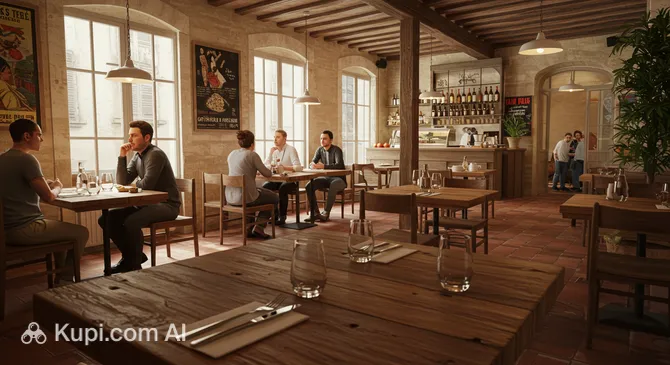
Le Criquet. Illustration.
Source: Kupi.com AI
Traveler photos:
When planning an evening out, it's best to aim for after 9:00 PM, when the venues fill up with people. Prices in the bars and restaurants of Arles can be called moderate, especially compared to the large tourist centers of the French Riviera. Getting around the city center at night is easy on foot. If you need a taxi, it's better to book it in advance or ask the restaurant/bar to call one, as catching a car on the street late at night can be difficult.
Café Factory République. Illustration.
Source: Kupi.com AI
Traveler photos:
In terms of safety, Arles is a fairly calm city. However, as elsewhere, you should follow basic precautions: keep an eye on your belongings and avoid poorly lit, deserted streets late at night. Walks through central, lively areas are usually safe and pleasant.
During the day, Arles offers a rich cultural program. You can visit the famous Arles Amphitheatre, explore the exhibits of the Museum of Antiquities of Arles and Provence or the Fondation Vincent van Gogh Arles. Don't forget to stop by the lively Arles Market (especially on Saturdays) or relax in the shady Jardin d’Été.
Parks & Museums
Arles, a city with a rich history and cultural heritage, offers its guests not only famous Roman and Romanesque monuments but also charming green corners for relaxation and a variety of museums housing treasures of the past and present. Everyone will find something for themselves here, whether it's the silence of a park or a fascinating immersion into the world of art.
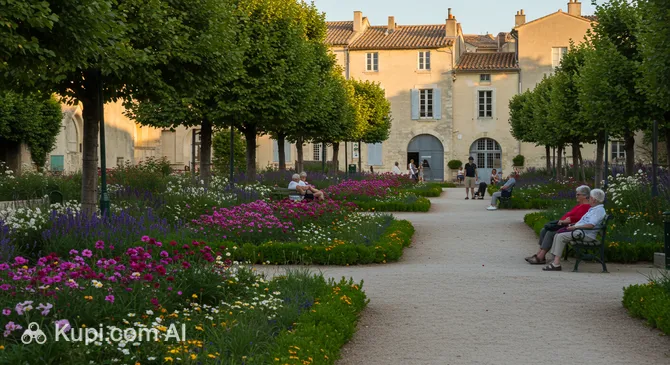
Among the green zones of Arles, a special place is occupied by the Summer Garden (Jardin d'Été). This public park, located along the Boulevard des Lices, is a wonderful place for leisurely strolls and a break from the city's hustle and bustle, offering shady alleys and picturesque views.
Jardin d'Été. Illustration.
Source: Kupi.com AI
Traveler photos:
Another iconic place with a special atmosphere is Alyscamps, an ancient Roman necropolis that has turned into a romantic alley lined with sarcophagi. This place, steeped in history, inspired many artists, including Van Gogh and Gauguin, and today attracts visitors with its peaceful beauty.
One cannot overlook the garden at the Espace Van Gogh. This is the courtyard of a former hospital where the artist was treated and which he captured in one of his paintings. Today, the garden is carefully restored and represents an oasis of calm in the city center, inviting visitors to enjoy its bright colors and harmony.
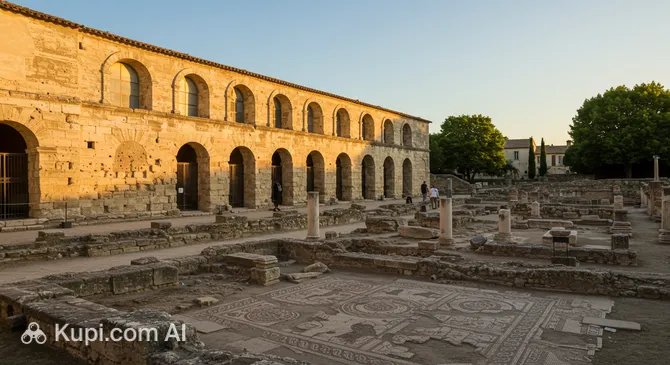
The cultural program in Arles is unthinkable without visiting its museums. One of the key ones is the Museum of Antiquities of Arles and Provence (Musée départemental Arles antique). Its exposition covers a vast period of the region's history, from prehistoric times to late antiquity. Here you can see impressive Roman mosaics, sculptures, sarcophagi, and even a well-preserved 31-meter Roman ship.
Arles and Provence Museum of Antiquity. Illustration.
Source: Kupi.com AI
Traveler photos:
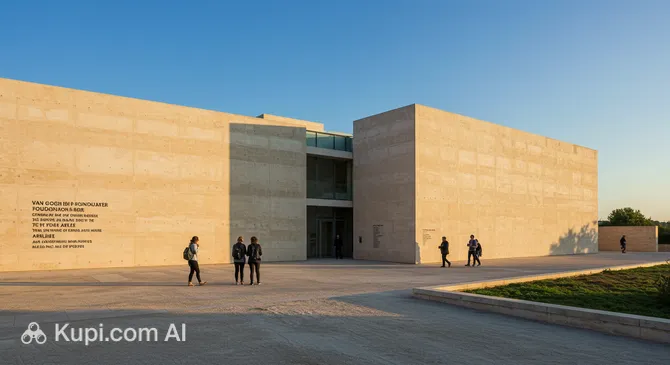
For art lovers, the Fondation Vincent van Gogh Arles is a must. This cultural center is dedicated to the work of the great artist and his stay in Arles, and it also presents the works of contemporary artists inspired by Van Gogh.
Vincent van Gogh Foundation Arles. Illustration.
Source: Kupi.com AI
Traveler photos:
Another important art museum is the Musée Réattu, located in the building of a former priory of the Order of Malta. Its collection includes paintings, sculptures, drawings, and a significant collection of photographs, including works by Picasso and other masters.
Réattu Museum. Illustration.
Source: Kupi.com AI
Traveler photos:
To get to know the culture and traditions of Provence more deeply, it's worth visiting the Museon Arlaten. Founded by the Nobel laureate in literature Frédéric Mistral, this ethnographic museum displays household items, traditional costumes, and furniture, and tells the story of the daily life of the region's residents over the centuries.
Arlaten Museum. Illustration.
Source: Kupi.com AI
Traveler photos:
In addition to these significant places, the historical center of Arles itself is a kind of open-air museum. Walking through its streets, you will encounter the majestic Arles Amphitheatre, the ancient Roman Theatre in Arles, and the magnificent Church of Saint Trophime with its famous portal. To complete the experience, stop by the lively Arles Market, which takes place on Wednesdays and Saturdays, to feel the local color and try Provençal delicacies.
Getting Around
Getting around Arles is quite simple, as the historical center of the city is rather compact and many attractions are within walking distance of each other. Nevertheless, for longer trips or to get from the station to your hotel, you can use public transport.
The main form of public transport in Arles is the Envia bus network. Buses connect the city center with the outskirts, the railway station, and some nearby settlements. Routes and schedules can be found at stops or on the transport company's official website. Although Arles has no metro or trams, the bus network covers the basic needs of residents and tourists quite well.
The payment system in Arles is quite convenient. A single ticket for the Envia network bus can be bought directly from the driver; it costs about 1 euro (although buying in advance can be cheaper). For more frequent trips, consider a carnet — a set of 10 tickets, which costs around 8 euros, or a day pass (pass journée) costing about 3 euros if you plan to move around a lot during the day. Tickets and passes can be purchased at special kiosks, some tobacco shops (tabac), at the main Envia office, and, very conveniently, through the Envia mobile app or online on their official website. Don't forget to validate your ticket or pass every time you board the bus in a special device.
Buses in Arles usually start running early in the morning and end in the evening. On weekends and holidays, intervals may increase, and some routes may operate on a reduced schedule. It is recommended to check the schedule in advance, especially if you plan trips late in the evening.
In addition to buses, there are other ways to get around Arles. Taxis can be found at special ranks or called by phone. For fans of active recreation and independent exploration, bicycle rental is an excellent option — it's a great way to explore not only the city itself but also its picturesque surroundings, including the famous Camargue natural park. In the historical center of Arles, many prefer to get around on foot, as it allows you to enjoy the atmosphere of the ancient streets. Also, for tourists, the small tourist train (petit train) that runs past the main sights may be interesting.
Accommodation
When planning a trip to Arles, you will find a variety of accommodation options to suit any budget and preference. The city offers a wide range of housing: from cozy guest houses (chambres d'hôtes) and budget hostels to comfortable mid-range hotels and more luxurious options. Apartment rentals are also popular, which is especially convenient for families or long stays, allowing you to feel like a local.
The historical center of Arles (Vieux Arles) is particularly popular, as it concentrates the main attractions such as the famous Arles Amphitheatre and the Roman Theatre in Arles. Staying here will allow you to be within walking distance of most iconic sites, museums, and charming streets. The La Roquette district is also attractive for its authentic atmosphere. For those looking for a quieter place or modern hotels, options slightly outside the old town but with good transport links can be considered.
Arles Amphitheatre. Illustration.
Source: Kupi.com AI
Traveler photos:
Regarding the price range, in Arles you can find both budget options and mid-to-high-end accommodation. Costs can vary significantly depending on the season, location, and level of comfort. It is recommended to book your accommodation in advance, especially if your trip falls during the peak tourist season (summer) or during major events like the famous Rencontres d'Arles photography festival.
Accommodation in Arles can be booked in various ways. The most popular are international online booking platforms, which offer a large selection of hotels, apartments, and guest houses. Many hotels also offer direct booking through their own websites, which can sometimes be more profitable or provide additional bonuses. Don't forget to compare prices and read reviews from other travelers to choose the best option for you.
Nearby Cities
For those who want to explore the surroundings, Arles serves as an excellent starting point for day trips to several interesting nearby places:
City
Population
Distance
Tarascon
15 811
15 km
Saint-Martin-de-Crau
13 558
15 km
Beaucaire
15 906
15 km
Saint Gilles
13 931
16 km
Saint-Rémy-de-Provence
9 829
21 km
Nîmes, often referred to as the "French Rome," will charm you with its superbly preserved Roman monuments, including the famous Arena of Nîmes and the ancient temple of Maison Carrée. It is a wonderful place to immerse yourself in the rich history of the region.
Avignon, known for its grandiose Palais des Papes (Papal Palace) and the legendary Pont d'Avignon (St. Benezet Bridge), is a must-visit. The city is also famous for its annual theater festival, which attracts creative people from all over the world.
A trip to Salon-de-Provence will allow you to get to know the city where the famous seer Nostradamus spent his final years. You can visit his house-museum and the impressive Château de l'Empéri, as well as take a stroll through the charming old town.
Istres, comfortably situated on the banks of the picturesque Étang de Berre lagoon, offers excellent opportunities for nature lovers and water sports enthusiasts. Its old center with the Chapel of Saint-Sulpice is also worth attention.
Miramas will be of interest both to shopping enthusiasts, thanks to the large McArthurGlen Provence outlet center, and to history lovers, who will be attracted by the ancient village of Miramas-le-Vieux with the ruins of a medieval castle.
These nearby destinations provide an insight into the diverse culture and landscapes of the Provence-Alpes-Côte d'Azur region.
Shopping & Souvenirs
Shopping in Arles is a fascinating immersion into the atmosphere of Provence, where you can find something authentic and memorable at every step. The city offers a pleasant mix of small boutiques, artisan shops, and colorful markets where you can purchase both traditional Provençal goods and modern items. Arles is famous for its fabrics, ceramics, locally produced products, and, of course, souvenirs related to Vincent van Gogh, who spent a productive period of his creative life here.
The main shopping arteries of the city are the streets of the historical center. Take a walk along Rue de la République, which stretches from Place de la République to the boulevards — here you will find many clothing, footwear, and accessory stores. Also, pay attention to the shops around the lively Place du Forum, where you can find unique souvenirs and creations by local artisans.
If you prefer more modern shopping spaces, the Shopping Promenade Arles is located outside the historical center. This complex offers a good selection of various brand stores, from clothing and electronics to household goods.
Shopping Promenade Arles. Illustration.
Source: Kupi.com AI
Traveler photos:
Arles' markets deserve special attention. The most famous of them is undoubtedly the Saturday Arles Market, which spreads along the Boulevards des Lices and Georges Clemenceau. It is one of the largest and most colorful markets in Provence, where you can buy the freshest local products: cheeses, olives, sausages, fruits, vegetables, as well as spices, herbs, soap, fabrics, and much more. On Wednesdays, there is also a market on Boulevard Emile Combes, but it is smaller in size.
Arles Market. Illustration.
Source: Kupi.com AI
Traveler photos:
From Arles, you should bring back traditional Provençal souvenirs: fragrant lavender soap and sachets, extra virgin olive oil, bags of Herbes de Provence, colorful fabrics with typical patterns (indiennes), and ceramics. Items related to bullfighting and Camargue culture (for example, Camargue rice) are also popular. Of course, don't forget about reproductions of Van Gogh's paintings or souvenirs with his images, as it was in Arles that he created many of his masterpieces.
Shops in Arles are usually open from 10:00 AM to 7:00 PM; many small shops may close for a lunch break from approximately 12:30 PM to 2:30 PM. Large stores and supermarkets may work without a break. On Sundays, most shops, except for some souvenir and grocery shops in tourist zones, are closed. Bank cards (Visa, Mastercard) are accepted everywhere, but small shops or the market may require cash.
For tourists from non-European Union countries, a Tax Free system operates in France. If you make purchases of a certain amount (usually from 100 euros in one shop in one day), you can ask the seller to issue a special check (bordereau de détaxe). By presenting it along with the goods at customs when leaving the EU, you can get a portion of the VAT refunded.