Support

Aigues Mortes

About

Aigues-Mortes is a true medieval gem tucked away in the picturesque landscapes of the Camargue in southern France. Its name, which translates to "dead waters," hints at the unique atmosphere of bygone eras and the charming, slow-paced life that defines it. The town is nestled at the southern edge of the Gard department, in the heart of the famous Rhône delta, where salty lagoons meet the azure waters of the Mediterranean. It enjoys a typical Mediterranean climate with hot, sunny summers, and the air is filled with the scent of salt and wild herbs. With a population of just over 8,500, Aigues-Mortes manages to feel both intimate and cozy.
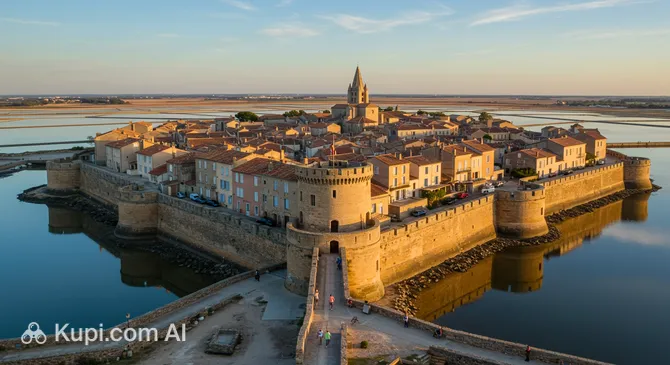
Aigues Mortes. Illustration.
Source: Kupi.com AI

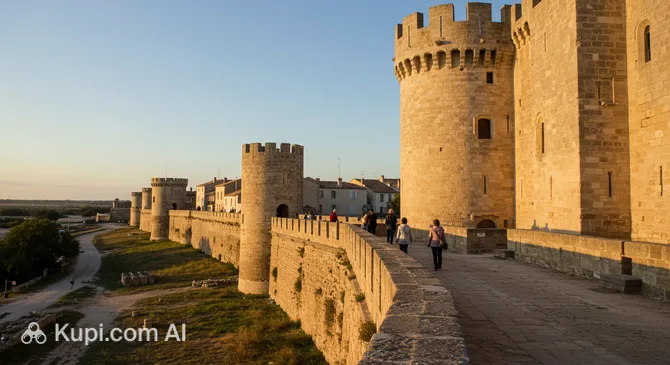
The crown jewel of Aigues-Mortes is undoubtedly its magnificently preserved 13th-century ramparts. This impressive fortification, stretching over 1.6 kilometers with twenty towers and mighty gates, transports visitors back to the time of the Crusades and knightly tournaments. Be sure to climb the Constance Tower (Tour de Constance), which offers breathtaking panoramic views of the Camargue and the famous pink salt pans. Inside the walls, a labyrinth of narrow streets, cozy squares, and ancient churches and chapels await. The heart of the old town is Place Saint-Louis, a delightful spot to relax in one of the many cafes while enjoying local cuisine and the unique southern atmosphere.

Aigues-Mortes is more than just a historical monument; it is a living city where the past harmoniously intertwines with the present. Strolling through the ancient streets, discovering the unique nature of the Camargue—where you can spot pink flamingos—and tasting local delicacies will leave you with unforgettable memories. A visit to Aigues-Mortes is a chance to touch history and enjoy the unmistakable charm of one of Occitania's most fascinating corners.

You can find more interesting facts on the history of Aigues-Mortes page.

Weather Overview

The weather in Aigues-Mortes is characterized by a typical Mediterranean climate. Summers here are hot and predominantly dry, especially in July, when the average temperature reaches 25.8°C (with highs up to 31.4°C) and precipitation is minimal (0 mm). June and August are also warm, with average temperatures of 22.8°C and 25.4°C respectively, and low rainfall.

Winters in Aigues-Mortes are mild. The coolest months are January and December, with average temperatures around 7.8°C and 8.4°C. Precipitation in winter is moderate, but the number of rainy days can be higher, for example, in November (12 days). Spring and autumn are comfortable transitional seasons with gradual temperature changes and moderate rainfall.

In general, in Aigues-Mortes, expect hot and mostly dry summers, and mild winters with little precipitation. You can find more detailed information about weather conditions and monthly averages on the Climate of Aigues-Mortes page.

Average monthly temperature

Average monthly precipitation

Interesting Facts

Beyond its famous ramparts, Aigues-Mortes holds many surprising secrets and little-known details that make its history even more fascinating. This fortified town in the heart of the Camargue is not just a medieval monument, but a place with a unique atmosphere and curious features.

Aigues-Mortes Salt Marshes. Illustration.
Source: Kupi.com AI

Traveler photos:

  • Royal Foundation and Crusades: The town was founded in the 13th century by order of King Louis IX (Saint Louis). Aigues-Mortes became the first Mediterranean port of the French Kingdom, and it was from here that the monarch set sail for two Crusades—the Seventh (1248) and the Eighth (1270).

  • A Telling Name and Pink Flamingos: The name "Aigues-Mortes" literally translates from Old French as "dead waters." This refers to the salt marshes and stagnant lagoon waters surrounding the town. These unique natural landscapes are today a favorite habitat for the famous pink flamingos.

  • Camargue's Pink Gold: Aigues-Mortes is renowned for its salt pans, where the famous Camargue "fleur de sel" is harvested. At certain times of the year, usually in late summer, the water in the salt pans takes on incredible pink and purple hues due to microscopic algae, creating surreal landscapes.

  • Steadfast Sentinel: The majestic Constance Tower, reaching about 30 meters in height, has served throughout its history as a royal residence, an arsenal, a lighthouse, and even a grim prison for Huguenots, particularly women. Today, its summit offers a stunning panoramic view of the town, the salt marshes, and the vast Camargue.

How to Get There

Reaching the charming town of Aigues-Mortes, located in the Occitanie region of southern France, is possible through several means, primarily via nearby airports and train stations followed by ground transfer.

The main and most convenient option for air travelers is Montpellier-Méditerranée Airport (IATA: MPL). This international airport is located in Montpellier, only about 19 km from Aigues-Mortes. A taxi ride or a trip in a rental car from the airport to Aigues-Mortes takes about 45-50 minutes. The airport serves many European destinations and is a significant transport hub.

Another option is Nîmes Alès Camargue Cévennes Airport (IATA: FNI), located in Nîmes, roughly 28 km from Aigues-Mortes. This is a smaller regional airport from which you can reach Aigues-Mortes by taxi or car in about 60-65 minutes. It is also worth considering Marseille Provence Airport (IATA: MRS). It is further away in Marseille, at a distance of about 84 km, which means roughly a 2.5-hour drive to Aigues-Mortes, but it is a major international airport with a wide selection of flights.

For your convenience, here is a summary of the main airports:

AirportPassenger trafficDistance
Montpellier Mediterranee Airport1.8 mln19 km
Garons Airport260 00028 km
Avignon-Caumont Airport200 00068 km
Beziers Vias Airport273 29773 km
Marseille Provence Airport10.8 mln84 km

Traveling by train is also a popular way to get around France. While Aigues-Mortes itself does not have a large station for long-distance lines, you can travel to nearby cities. The closest major station is Montpellier Railway Station (IATA: XPJ), located about 25.5 km from Aigues-Mortes. From there, you can reach the town by taxi or local transport in approximately 55-60 minutes. This station is a very large transport hub.

Another significant station is Nîmes Railway Station (IATA: ZYN), located about 32.6 km away. The trip from Nîmes to Aigues-Mortes takes about 65-70 minutes. This station is also large and well-connected to other cities in France.

For your convenience, here is a summary of the main railway stations:

StationPassenger trafficDistance
Montpellier Railway Station8.1 mln26 km
Nîmes Railway Station4.4 mln33 km
Nîmes Pont du Gard Station1.1 mln38 km
Avignon Railway Station4.5 mln62 km
Agde Station757 49165 km

Upon arriving at one of these hubs, you can reach Aigues-Mortes via regional buses, taxis, or rental cars. It is recommended to check local transport schedules in advance, especially if you are planning your trip during the off-season.

Main Attractions

Aigues-Mortes, a medieval fortified town in the Camargue region, offers its guests a unique immersion into history and a discovery of breathtaking nature. Every stone here breathes antiquity, and the surroundings are striking with their unusual landscapes.

The town's main highlight is certainly the Towers and Ramparts of Aigues-Mortes. These imposing 13th-century medieval fortifications completely encircle the old town, forming an almost perfect rectangle. Walking along the ramparts, which stretch about 1,650 meters, allows you not only to appreciate the scale of military architecture from that period but also to enjoy panoramic views of the town, the salt marshes, and the surrounding area. It is a true portal to the past, where you can imagine yourself as a knight or a defender of the fortress.

Towers and Ramparts of Aigues-Mortes. Illustration.
Source: Kupi.com AI

Traveler photos:

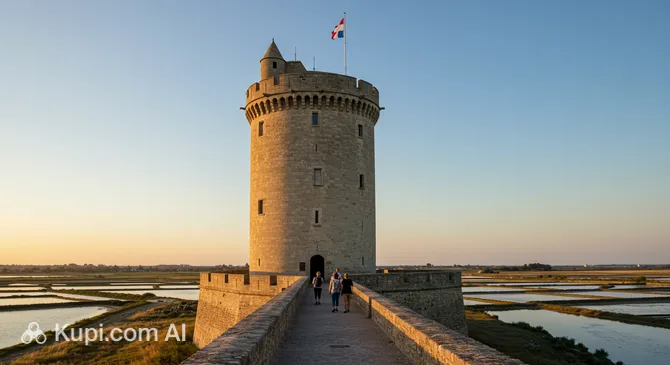
One of the most significant and well-preserved parts of the fortifications is the Constance Tower. This massive cylindrical tower, built by order of Louis IX (Saint Louis), served as a keep, a lighthouse, and a prison. Climbing to the top rewards you with spectacular views, while inside you can learn about its rich and sometimes tragic history, including the imprisonment of Huguenot women.

Tower of Constance. Illustration.
Source: Kupi.com AI

Traveler photos:

Stretching out near the city walls are the famous Salins d'Aigues-Mortes (Salt Marshes). These vast salt pans, which tint the landscape in amazing shades of pink and purple, are not only an important economic site but also a unique natural attraction. Here, you can learn about the salt harvesting process that has been practiced for centuries and observe various bird species, including the pink flamingos that call these places home.

Aigues-Mortes Salt Marshes. Illustration.
Source: Kupi.com AI

Traveler photos:

Returning to the town, it is worth noting the Marine Gate (Porte de la Marine). Once the main entrance from the sea, it now stands several kilometers inland as the water has receded over time. This gate is impressive in its architecture and serves as a reminder of the days when Aigues-Mortes was a vital port from which the Crusades departed.

To gain a deeper understanding of the importance of salt to this region, visit the Salt Museum (Salin d'Aigues-Mortes). The museum's exhibition tells the story of salt production history, technologies, and the impact of this industry on the life of the town and its surroundings. It is an excellent supplement to a walk through the salt fields, helping to tie your experiences together.

Local Cuisine

The gastronomy of Aigues-Mortes is a true immersion into the flavors of the Camargue region, where the freshest seafood and generous products of local fields play the leading roles. A point of pride is the famous Camargue salt, which gives dishes a unique touch, and the fragrant red rice, which often serves as a side dish for main courses. The cuisine here is simple but incredibly delicious, based on the quality and freshness of ingredients.

Among the dishes you must try in Aigues-Mortes, the gardianne de taureau (bull meat stew) stands out—a hearty and aromatic ragout simmered in red wine with onions and spices, reflecting the cattle-ranching traditions of the Camargue. Of course, one cannot overlook the fresh seafood: oysters, mussels, and a variety of fish prepared in many different ways. Local tapenades (pastes made from olives, capers, and anchovies) and excellent olive oil are also popular.

For dessert or with your morning coffee, be sure to order fougasse d’Aigues-Mortes—a traditional sweet brioche-like flatbread flavored with orange blossom and sprinkled with sugar. Regarding drinks, the region is famous for its wines, which pair exceptionally well with local meat and fish dishes. Non-alcoholic options include freshly squeezed juices and traditional lemonades.

The dining culture in Aigues-Mortes encourages leisurely meals. Locals and tourists alike love to dine in the numerous restaurants nestled in the labyrinth of medieval streets. For instance, you could visit establishments like Boem or Le Saint Amour. Additionally, farmers' markets often set up in the central square and other streets, where you can buy fresh vegetables, local cheeses, sausages, and, of course, that famous fougasse.

Aigues-Mortes Salt Marshes. Illustration.
Source: Kupi.com AI

Traveler photos:

The gastronomic scene in Aigues-Mortes especially comes alive in the summer when various food festivals take place, filling the air with the aromas of spices, grilled meat, and fresh pastries. It is a wonderful opportunity to participate in tastings, workshops, and fairs. To better understand the origins of the local flavor, it is worth visiting the Salins d'Aigues-Mortes, where you can learn everything about the production of the famous Camargue salt, which is an integral part of the city's culinary heritage.

Travel Tips

Welcome to Aigues-Mortes! To ensure your journey to this amazing medieval town in France goes smoothly and leaves only pleasant impressions, we have prepared some practical tips.

  1. Clothing and essentials: Aigues-Mortes is located in southern France, so summers are sunny and hot—bring light clothing, a hat, sunglasses, and sunscreen. Comfortable shoes are a must for walking on the cobblestone streets inside the fortress. In spring and autumn, a light jacket or sweater will come in handy, and in winter, warmer clothing is needed as it can be windy. If you plan to visit the Church of Notre-Dame-des-Sablons, choose modest clothing that covers shoulders and knees. Don't forget a universal adapter for electrical appliances (Type E is used in France).
  2. Transport in the town and surroundings: Aigues-Mortes itself is a small town, and its historical center within the ramparts is best explored on foot. Public transport is represented by regional buses (liO) and trains (TER), which connect Aigues-Mortes with other cities. If you plan to explore the unique Camargue region surrounding the town, renting a car is a good option; however, keep in mind that parking near the city walls is usually paid and spaces may be limited.
  3. Financial matters: The official currency is the Euro (€). Credit and debit cards (Visa, Mastercard) are accepted in most hotels, restaurants, and shops. Nevertheless, it is always useful to have some cash on hand for small purchases at markets or in small shops. ATMs (distributeurs automatiques de billets) are available in the town. As for tipping, a service charge (service compris) is often already included in the bill at restaurants, but if you particularly enjoyed the service, you can leave 5-10% of the bill amount.
  4. Health and safety: Aigues-Mortes is considered a very safe town for tourists. Observe standard precautions: keep an eye on your belongings in crowded places, especially during peak season. Pharmacies (pharmacie) are easy to find by the green cross; information about the duty pharmacy after hours can be found on any pharmacy door or online. For emergency medical assistance, call 112. In summer and early autumn, there may be mosquitoes in the Camargue area, so bring repellent with you.
  5. Language and communication: The official language is French. In tourist areas, hotels, and restaurants, staff often speak English. However, locals will greatly appreciate it if you learn a few basic phrases in French, such as "Bonjour" (Hello), "Merci" (Thank you), and "S'il vous plaît" (Please). Wi-Fi is generally available in hotels and many cafes and restaurants.
  6. Local etiquette: The French value politeness. It is customary to say hello ("Bonjour") when entering a shop or cafe and goodbye ("Au revoir") when leaving. Quiet conversation in public places and respectful behavior toward others are always welcomed. Meals, especially dinner, are a leisurely process in France—take your time and enjoy.
  7. What to avoid: Try not to start a conversation immediately in English without attempting to say hello in French—it is considered more polite. At local markets, it is not customary to touch fruits and vegetables with your hands before buying without the vendor's permission.
  8. Must-do: Don't miss the unique opportunity to take a walk along the majestic medieval ramparts surrounding Aigues-Mortes. They offer breathtaking panoramic views of the old town, the pink salt lakes, and the vast Camargue—memories that will stay with you for a long time!

We hope these tips help you better prepare for your trip and fully enjoy the beauty and atmosphere of Aigues-Mortes. Have a pleasant journey!

Entertainment & Nightlife

Aigues-Mortes, being a medieval fortified town, offers its guests a special atmosphere for evening and nighttime leisure. You won't find noisy club districts like in major metropolises here, but you can enjoy cozy evenings in historical settings. Nightlife is primarily concentrated within the ramparts, especially along the central streets and squares, where numerous bars and restaurants open their doors at dusk, offering outdoor seating.

The atmosphere here is more relaxed and conducive to conversation rather than wild dancing until dawn. The crowd is mixed—ranging from tourists enjoying dinner under the stars to locals stopping by for a glass of wine. Most establishments stay open until midnight or slightly later, especially during the summer season. There is usually no strict dress code; smart casual is welcomed. In the evening, it is pleasant to stroll through the illuminated streets, enjoying the cool air after a hot day.

Hotel des Remparts Bar. Illustration.
Source: Kupi.com AI

Traveler photos:

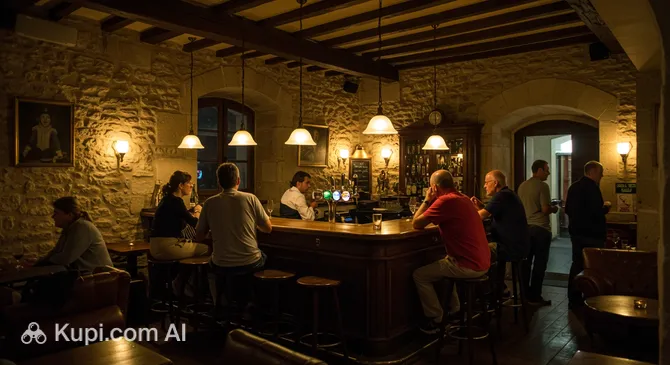
Among specific spots to spend a pleasant evening, the Bar of the Hotel des Remparts is worth mentioning, offering a sophisticated setting and a fine selection of drinks. Another popular spot is The Tac Tac, known for its friendly atmosphere. Prices in bars and restaurants are consistent with the average for tourist towns in France. Most places in the center are easily accessible on foot. If you are staying outside the ramparts, you might need a taxi at night.

In terms of safety, Aigues-Mortes is considered a peaceful town. Evening walks within the walls are generally safe, but common-sense precautions should always be taken. To call a taxi, it is best to ask the staff at your hotel or restaurant.

During the day, Aigues-Mortes offers a rich cultural program. You can explore the majestic Towers and Ramparts of Aigues-Mortes, visit the Constance Tower, or learn more about the local industry at the Salt Museum. Also interesting to visit are the Salins d'Aigues-Mortes, where you can see the unique pink salt pans.

Parks & Museums

Aigues-Mortes, a medieval fortified town, offers its guests not so much traditional urban parks as unique natural landscapes and a rich historical heritage that is a living museum in itself. Here, you can immerse yourself in the atmosphere of the past and enjoy the beauty of the surrounding nature.

The main natural attraction of the area is the famous Salins d'Aigues-Mortes (Salt Marshes). These vast salt pans, which turn shades of pink, are a stunning sight and an important place for salt production. Here, you can see flocks of pink flamingos and other birds. For the convenience of visitors, the Little Salt Marsh Train of Aigues-Mortes runs through the territory, allowing you to see the most interesting areas. Near the town begins the vast Camargue Regional Nature Park, famous for its wild horses, bulls, and diverse birdlife—an ideal place for nature lovers.

Aigues-Mortes Salt Marshes. Illustration.
Source: Kupi.com AI

Traveler photos:

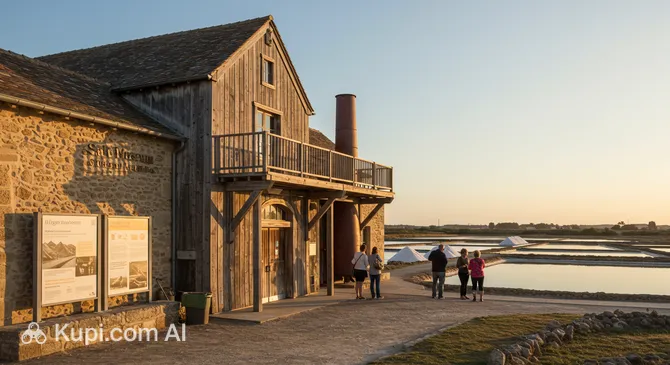
To gain a deeper understanding of the importance of salt to the region, visit the Salt Museum. The museum's exhibition details the history of salt harvesting, production techniques, and the role of salt in the economy and culture of Aigues-Mortes. It is an educational place for the whole family where you can learn a lot about this "white gold."

Salt Museum. Illustration.
Source: Kupi.com AI

Traveler photos:

The town of Aigues-Mortes itself is a true historical jewel. Its mighty Towers and Ramparts of Aigues-Mortes, perfectly preserved from the Middle Ages, surround the old town. Be sure to walk the walls to enjoy the panoramic views and explore iconic structures like the majestic Constance Tower, which once served as a prison, as well as historical gates like the Gardette Gate and the Marine Gate. A walk along these ancient fortifications is comparable to visiting an open-air museum.

Towers and Ramparts of Aigues-Mortes. Illustration.
Source: Kupi.com AI

Traveler photos:

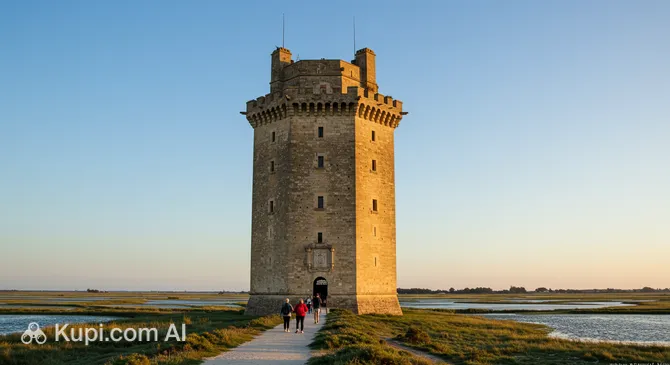
For an authentic experience, don't limit yourself to the main streets. Peek into the small alleys within the ramparts, where you can find cozy cafes and local artisan workshops. To see the city and the salt pans from an unusual perspective, consider visiting the nearby Carbonnière Tower, which once guarded the only land access to Aigues-Mortes.

Carbonnière Tower. Illustration.
Source: Kupi.com AI

Traveler photos:

Getting Around

Aigues-Mortes is a charming medieval town that is best explored on foot, especially its historical center, safely sheltered behind massive ramparts. Due to its compact size, most key attractions and interesting corners are within a pleasant walking distance.

The primary mode of public transport for travel beyond the city walls and to neighboring settlements is the regional bus. The liO transport network operates in the Occitanie region, with buses connecting Aigues-Mortes to other towns and villages. Schedules and routes can be found at bus stops, the tourist information center, or on the official liO network website. For short trips within the town itself, buses are used less frequently as it is easy to navigate on foot.

Aigues-Mortes also has its own railway station (Gare d'Aigues-Mortes), served by TER (Transport Express Régional) trains. This is a convenient way to reach larger cities such as Nîmes or Montpellier, as well as some coastal resorts. However, for getting around directly within Aigues-Mortes, trains are less relevant.

The fare system is fairly straightforward. Bus tickets can most often be purchased directly from the driver upon boarding. For TER train travel, tickets are bought at station counters, special ticket machines (if available), or online via the SNCF Connect website. It is best to check on-site for information regarding specific fares, passes, or discounts, as they may change. Don't forget to validate your train tickets on the platform before boarding if required by the rules.

Among alternative ways to get around, taxis are popular and can be ordered by phone or found at specialized stands. Given the picturesque surroundings of Aigues-Mortes, including the salt marshes and the Camargue Nature Park, many tourists prefer to rent bicycles. This is an excellent way to leisurely explore the area and enjoy nature. Within the town, especially inside the ramparts, a bicycle can also be convenient, but walking remains the priority.

Tourists should keep in mind that public transport in small towns like Aigues-Mortes may have less frequent schedules compared to large metropolises, especially in the evening and on weekends or holidays. Therefore, it is always recommended to check the current schedule in advance. The local tourist office will be able to provide the latest information and help plan your movements.

Accommodation

In Aigues-Mortes, travelers will find a variety of accommodation options to suit different preferences and budgets. The town offers charming hotels set in historical buildings, as well as modern apartments and guesthouses. Choices range from budget-friendly options to mid-range and high-end offerings, allowing every tourist to find comfortable lodging.

The most popular area to stay is undoubtedly within the medieval fortress itself, intra-muros (within the walls). Staying here allows you to immerse yourself in the town's unique atmosphere and be within walking distance of major sights, such as the Towers and Ramparts of Aigues-Mortes or the Constance Tower. You can also consider options outside the walls, which are often quieter and may offer parking, making them convenient for those traveling by car.

While there are no specific hotels in the provided list of attractions, Aigues-Mortes has many options ranging from small family-run inns to larger hotels. It is recommended to explore offers on popular online booking platforms or contact the local tourism office for up-to-date information. Price ranges can vary from budget to mid-range and luxury, depending on the season, location, and level of comfort.

Booking Tip: Aigues-Mortes is a popular tourist destination, especially during the summer months and festivals. Therefore, it is highly recommended to book your accommodation in advance to ensure the best choice and prices. Reservations can easily be made through well-known international and French online platforms, as well as directly on hotel or guesthouse websites.

Nearby Cities

For those looking to explore the surrounding area, Aigues-Mortes serves as an excellent starting point for day trips to several interesting nearby locations:

CityPopulationDistance
La Grande-Motte8 7559 km
Lunel26 38513 km
Mauguio16 73516 km
Vauvert11 63316 km
Pérols9 01619 km

These nearby destinations offer a glimpse into the diverse culture and landscapes of the region. A trip to any of these cities will enrich your journey with new impressions. For example, Montpellier charms with its medieval architecture and lively squares, Nîmes offers a dive into Roman history with its well-preserved amphitheater and Maison Carrée temple, and Arles will inspire you with sites linked to the life and work of Vincent van Gogh.

Shopping & Souvenirs

Shopping in Aigues-Mortes is, above all, an immersion into the atmosphere of a medieval town and a discovery of local crafts and products from the Camargue region. You won't find massive shopping malls here, but you can purchase unique souvenirs and delicacies. The town is famous for its salt, "Vins des Sables" (sand wines), Camargue rice, and products from local artisans.

The main shopping streets are concentrated inside the ramparts, especially around the central square, Place Saint-Louis, and on the streets leading to it, such as Grande Rue Jean Jaurès. Here, you will find many small boutiques, souvenir shops, stores with regional products, and art galleries. A stroll through these streets is a pleasure in itself, allowing you to combine shopping with sightseeing of historical buildings.

There are no large modern shopping centers in the traditional sense in Aigues-Mortes. The charm of shopping here lies precisely in the intimate atmosphere of small shops where you can find exclusive goods and chat with the sellers, who are often the producers themselves.

Aigues-Mortes Salt Marshes. Illustration.
Source: Kupi.com AI

Traveler photos:

A traditional Provençal market is held regularly in Aigues-Mortes. It is usually located on one of the central squares or streets. Here, you can buy fresh local products—fruits, vegetables, cheeses, olives, honey—as well as spices, herbs de Provence, handmade soap, textiles, and other souvenirs. The market is a great place to feel the local flavor and acquire authentic goods. It is best to check the exact market days and hours locally, as they may change depending on the season.

From Aigues-Mortes, it is worth bringing home the famous "Fleur de Sel" (salt flower), harvested at the local Salins d'Aigues-Mortes. Other popular items include Camargue rice, "Vin Gris des Sables" (rosé wines), leather goods, ceramics, Provençal fabrics with traditional patterns, and, of course, souvenirs with Camargue symbols—images of bulls, horses, and flamingos. You can also find interesting souvenirs at the Salt Museum.

Shops in Aigues-Mortes are typically open from the morning (around 9:00-10:00) until the evening (18:00-19:00), with a traditional French lunch break (roughly from 12:30 to 14:30 or 15:00). During the tourist season, many shops may stay open without a break and for longer hours, especially on weekends. Cash (Euros) and bank cards (Visa, Mastercard) are accepted. Smaller shops may prefer cash for minor purchases.

For tourists from non-EU countries, a VAT refund system (Tax Free or "détaxe") operates in France. If you make purchases exceeding a certain minimum (usually around 100 Euros) in a single participating store, you can arrange the documents for a tax refund when leaving the EU. Check for this possibility in shops before making large purchases.

Reached the end of the page?

That means the route is fully explored