Support

Muséum d'Histoire naturelle de La Rochelle

About

Imagine a place where time seems to stand still amidst the skeletons of prehistoric giants and exotic masks from distant oceanic islands. The Natural History Museum of La Rochelle is not just a repository of antiquities, but one of the oldest and most significant scientific museums that France is proud of.

Housed in a majestic building of a former Jesuit college in the heart of the city of La Rochelle, this museum impresses with its neoclassical architecture. Inside, visitors can expect a fascinating journey through halls of zoology, botany, geology, and paleontology.
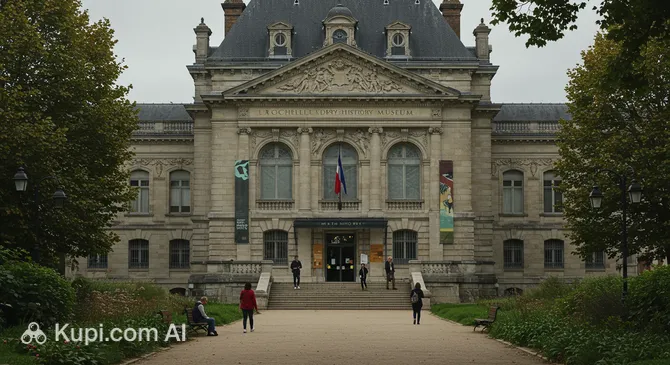
La Rochelle Natural History Museum
La Rochelle Natural History Museum. Иллюстрация. Источник: Kupi.com AI
Each collection here is the result of years of research and expeditions by famous travelers.

Of particular value are the ethnographic artifacts, which tell the story of the city's close ties with overseas territories. The museum is ideal for those who want to combine the aesthetic pleasure of architecture with an educational holiday, studying rare minerals or admiring herbariums from past centuries.

Contacts

For information about special exhibitions or to book group tours, you can use the museum's official contact details.

How to contactContact
Address28 Rue Albert 1er, 17000 La Rochelle, France
Phone+33 5 46 41 18 25
Websitemuseum.larochelle.fr

What to Do

In the museum's halls, you will encounter an incredible diversity of wildlife. Be sure to take the time to explore the permanent exhibitions, which feature collections from all corners of the world: from Africa and Oceania to Asia and the Americas. You will see rare taxidermy specimens, impressive skeletons, and unique plant samples.

Particular attention should be paid to the ethnographic department. It houses everyday objects, traditional weapons, and mysterious masks from various peoples of the world, allowing you to literally touch the history of human cultures. This is a place where science meets art, creating a unique visual experience.

For curious visitors, interactive activities and themed tours are often organized at the museum. If you are interested in ecological issues, look out for the temporary exhibitions, which are often dedicated to modern problems of biodiversity conservation and environmental protection.

Getting There

The Natural History Museum of La Rochelle is located at 28 Rue Albert 1er, right in the heart of the city. Thanks to this convenient location, it is very easy to reach on foot from almost any point in the historic center.

If you arrive at the La Rochelle train station, the walk to the museum will take about 15–20 minutes. This is a great opportunity to see the city's ancient streets along the way. For those who prefer public transport, city buses stop near the museum, and for motorists, there are paid parking zones nearby.

Travelers arriving at the local airport can take a taxi or a regular bus to the center, from where it is only a few hundred meters to the museum entrance.

Ближайший город: La Rochelle

History & Facts

The history of this scientific institution began back in 1775. The foundation for the future museum was the extensive private collection of local naturalist Jean-Baptiste Audebert. Since then, the collection has been continuously growing, reflecting the era of great geographical discoveries and a passion for studying the world around us.

An important milestone in the museum's life was 1832, when the collections moved to their current home — the building of the former Jesuit College. This neoclassical style building not only provided the necessary space for the exhibits but also became an architectural gem of the city in its own right.

Among those who made a significant contribution to the development of the collections was the famous writer and naval officer Pierre Loti. He donated unique ethnographic artifacts collected during his long voyages. Thanks to such contributions, by the end of the 19th century, the museum had become one of the largest centers of natural history in all of France.

Time Needed

To explore all levels of the museum without rushing and to carefully study the ethnographic collections, most visitors need between 2 and 3 hours. The exhibition is very rich, and many exhibits deserve detailed observation.

If you plan to visit a temporary exhibition or take part in one of the educational workshops held here regularly, we recommend setting aside about 4 hours for your visit. This will allow you to enjoy the atmosphere of this historic scientific center at a comfortable pace.

Working Hours

When planning your visit, please note that the museum is closed on Mondays. On other days, the schedule allows you to easily fit a visit into your sightseeing route through the city.

From Tuesday to Friday, as well as on Sunday, the museum is open from 10:00 AM to 12:30 PM and, after a break, from 1:30 PM to 5:30 PM. On Saturday, the exhibition is open for visitors only in the afternoon — from 1:30 PM to 5:30 PM.

DayWorking hours
ПонедельникЗакрыто
Вторник10:00 – 12:30, 1:30 – 17:30
Среда10:00 – 12:30, 1:30 – 17:30
Четверг10:00 – 12:30, 1:30 – 17:30
Пятница10:00 – 12:30, 1:30 – 17:30
Суббота1:30 – 17:30
Воскресенье10:00 – 12:30, 1:30 – 17:30

Nearby

A walk around the museum's surroundings will allow you to immerse yourself deeper into the atmosphere of this port city and see its iconic historical monuments.

NameDistance
Museum of the New World0.4 km
Saint Louis Cathedral0.4 km
La Rochelle Bunker Museum0.5 km
Saint-Saviour Church of La Rochelle0.7 km
Grosse Horloge0.8 km
La Storia0.9 km
Chain Tower1 km

Reached the end of the page?

That means the route is fully explored