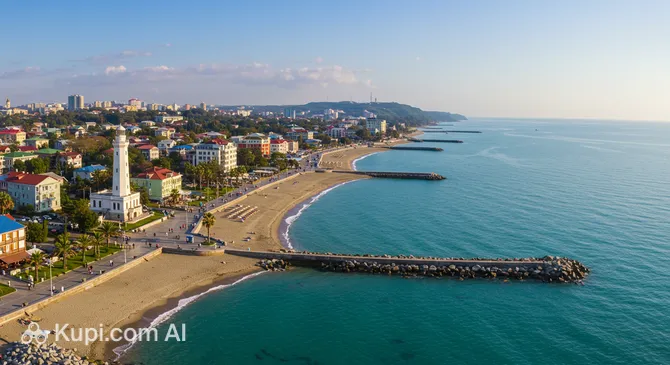
Sokhumi is a charming city situated on the eastern coast of the Black Sea, known for its pleasant subtropical climate and abundant greenery. It serves as a significant cultural and economic center in the region, offering a unique blend of coastal relaxation and urban vibrancy. The city's atmosphere is defined by its scenic waterfront, historical architecture, and the majestic backdrop of mountain peaks, making it a distinct destination for travelers seeking both leisure and exploration.
With a population of approximately 64,000 residents, the city maintains a lively yet unhurried pace of life. The mild weather allows lush vegetation to thrive, filling the streets with palms, cypress trees, and exotic flowers throughout the year. Visitors interested in the history of Sokhumi will discover a timeline that stretches back to ancient times, with layers of diverse cultural influences evident in its landmarks and urban layout.
Sokhumi. Illustration.
Source: Kupi.com AI
Among the top attractions, the Sokhumi Botanical Garden stands out as one of the oldest in the Caucasus, established in the 19th century and home to thousands of plant species. Another favorite spot for locals and tourists alike is the Makhajirs Quay, a picturesque promenade lined with cafes and historic buildings, perfect for an evening stroll by the sea. For panoramic views and a touch of antiquity, the ruins of Bagrat Castle offer a fascinating glimpse into the medieval past.
Whether you are drawn by the warm sea, the rich nature, or the intriguing historical sites, Sokhumi welcomes guests with hospitality and unique coastal beauty, promising a memorable travel experience.
Weather Overview
The climate in Sokhumi is characterized by distinct seasons, offering a variety of atmospheric conditions for travelers. Visitors can generally expect warm summers and cold winters, with a consistent presence of moisture throughout the year. For a more detailed forecast and historical data, you can check the weather in Sokhumi before planning your trip.
During the summer months, particularly in July and August, the weather is pleasant and moderately warm. Average temperatures range from 20.4°C to 21.2°C, with daily maximums reaching around 25°C. While these temperatures are comfortable for exploring the coast, it is worth noting that the summer season sees a significant number of wet days, ranging from 15 to 19 days per month, so keeping an umbrella handy is recommended.
Winter brings a noticeable drop in temperature. January is typically the coldest month, with an average temperature of 1.5°C and lows dipping to -2.1°C. The cooler season continues into March, which can be quite damp with up to 20 wet days recorded. Despite the chill, the precipitation volume remains relatively low, often manifesting as light rain or mist rather than heavy downpours.
Average monthly temperature
Average monthly precipitation
Interesting Facts
Beyond the main attractions, Sokhumi holds many fascinating secrets that reveal its rich and layered past. The city is not just a seaside resort but a place where ancient legends and scientific history converge in unexpected ways.
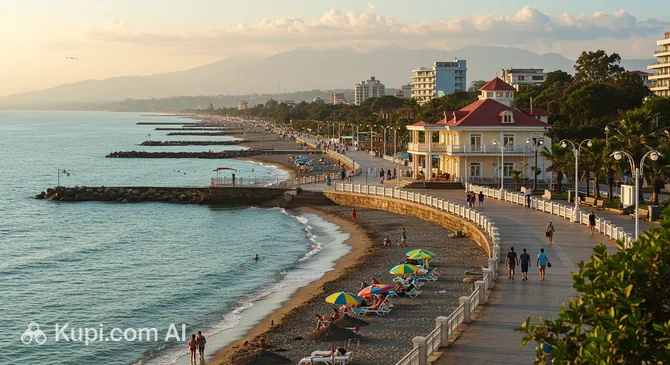
Sukhumi Seaside Promenade. Illustration.
Source: Kupi.com AI
Traveler photos:
The ancient Greek city of Dioscurias is believed to lie submerged beneath the waters of the Sokhumi Bay. Often referred to as the "Atlantis of the Black Sea," this sunken settlement has yielded pottery and coins dating back over two millennia, attracting archaeologists and divers alike.
The massive eucalyptus trees that shade the streets serve a practical purpose beyond their beauty. They were extensively planted in the early 20th century to drain the marshy terrain and eliminate malaria, playing a crucial role in establishing the city's healthy subtropical environment.
Social life in the city revolves around a unique coffee ritual found on the Sukhumi Seaside Promenade. At the iconic "Brekhalovka" cafe, traditional coffee is brewed on hot sand, serving as the primary meeting point for locals to exchange news and play board games.
Sokhumi hosts a renowned primate research center that has contributed significantly to science. Established in the late 1920s, this institute was the world's first primate research center and later played a vital part in preparing monkeys for orbital space flights.
How to Get There
Reaching this coastal destination requires a bit of planning, as the city does not have an active international airport for commercial flights. However, several transport hubs in the wider region serve as convenient gateways. For a detailed overview of routes and tips, you can read more about how to get to Sokhumi.
The closest major air hub is Adler (IATA: AER), located in the city of Sochi, approximately 100 km from Sokhumi. This is a large international airport with high passenger traffic. After landing, travelers typically continue their journey by taxi or bus; the road trip usually takes around 3 hours, depending on border formalities and traffic. Another accessible option is Kutaisi International Airport (IATA: KUT) in Kutaisi. Situated about 150 km away, it serves as a common entry point for budget travelers, with the subsequent drive taking approximately 4 hours.
For clarity, here is a summary of the main airports:
For those preferring rail travel, the city is directly served by the Sukhumi Railway Station, which is conveniently located just 2.3 km from the center. It receives regular trains, connecting the city to the railway network of the neighboring region. Alternatively, some travelers choose to arrive at the Zugdidi station in the city of Zugdidi, located about 88.5 km away. From there, local transport such as buses or taxis can be used to complete the journey, which generally takes around 2.5 hours.
Below is a list of nearby railway stations:
Station
Passenger traffic
Distance
Sukhumi Bus and Railway Stations
250 000
2 km
Sukhumi Railway Station
200 000
2 km
Gudauta Station
50 000
34 km
New Athos Railway Station
40 000
17 km
Zugdidi
—
89 km
Rosa Khutor Railway Station
632 000
96 km
Imeretinsky Kurort Railway Station
1.2 mln
97 km
Esto-Sadok Station
—
99 km
Adler Station
7.6 mln
104 km
Main Attractions
The city offers a diverse array of sights, ranging from lush green parks to historical monuments and vibrant dining spots. Visitors can explore the rich natural heritage, enjoy the coastal atmosphere, or indulge in local culinary traditions, all within a short distance of the sea.
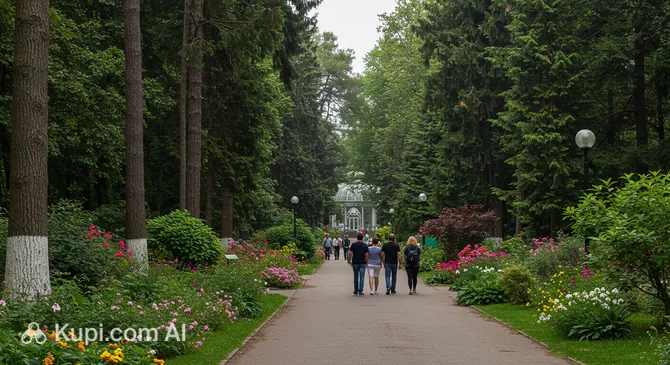
One of the most celebrated locations is the Sukhumi Botanical Garden. Established in the 19th century, it is a haven of biodiversity, showcasing thousands of plant species from subtropical climates around the world. A walk through its shaded alleys reveals towering bamboo, exotic palms, and a famous ancient linden tree, making it a perfect spot for nature lovers.
Sukhumi Botanical Garden. Illustration.
Source: Kupi.com AI
Traveler photos:
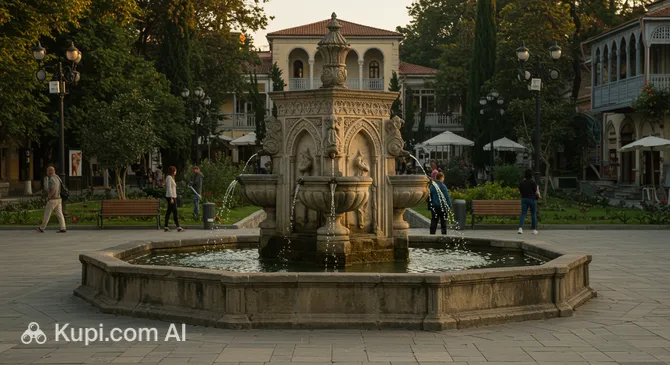
Near the waterfront, travelers will find The Fountain adorned with mythical griffins. This recognizable landmark adds charm to the dramatic theater square and serves as a popular photo opportunity. It is situated close to the promenade, where the sea breeze and historic architecture create a relaxing environment for evening strolls.
The Fountain. Illustration.
Source: Kupi.com AI
Traveler photos:
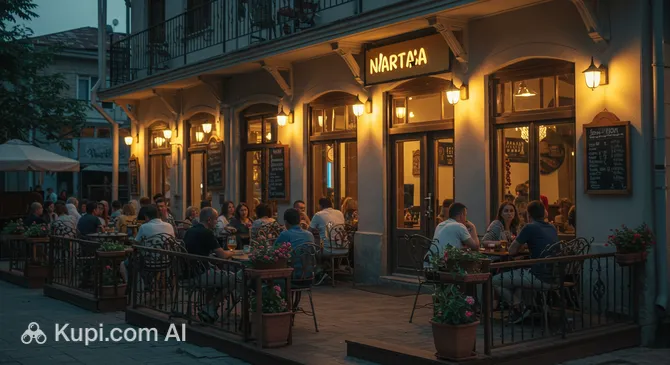
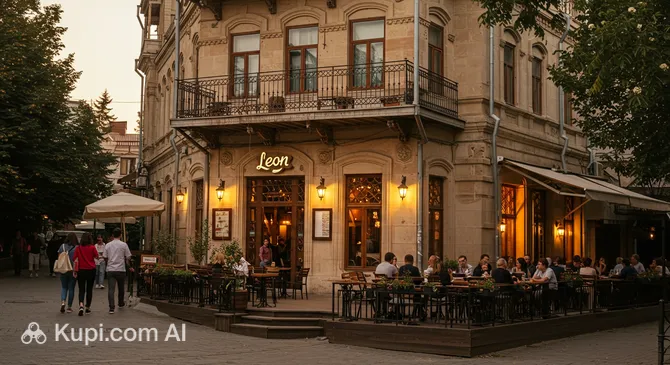
For those interested in local flavors, the city boasts legendary dining establishments. Nartaa is an iconic restaurant located on the quay, renowned for its traditional boat-shaped cheesy bread and relaxed, open-air atmosphere. Nearby, Leon offers another excellent venue to taste regional dishes in a welcoming setting.
Nartaa. Illustration.
Source: Kupi.com AI
Traveler photos:
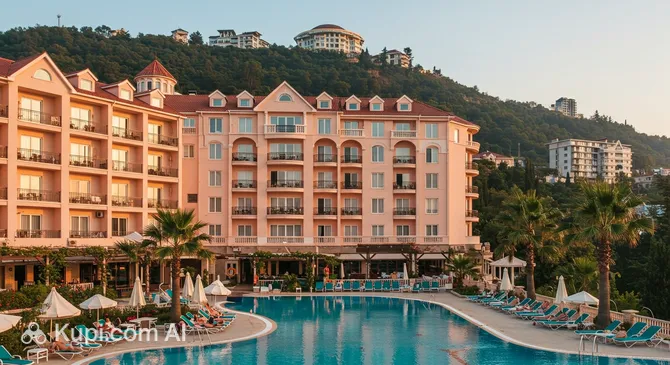
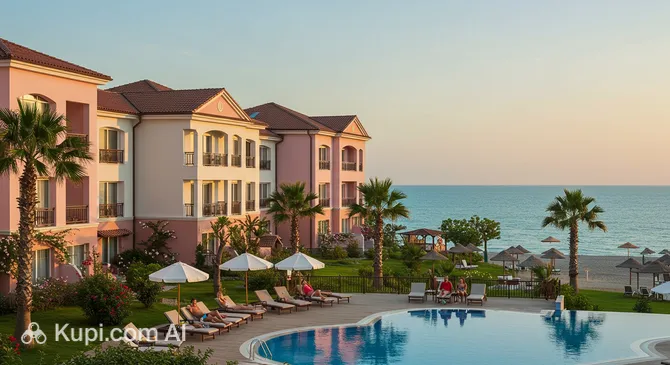
Visitors seeking a resort experience often visit MVO Sukhumi and the MVO Beach Resort. These large complexes are known for their spacious territories, subtropical gardens, and direct access to the coast, providing a glimpse into the area's history as a premier vacation destination.
Local Cuisine
The gastronomy of Sokhumi is a vibrant reflection of the region's rich traditions, characterized by bold flavors, abundant use of spices, and fresh, locally sourced ingredients. The local cuisine revolves heavily around cornmeal, dairy products, and meat, with the famous spicy pepper paste known as adjika serving as the cornerstone of many dishes. This aromatic seasoning adds a distinct kick to the food and is a source of pride for the locals.
A staple of the daily table is a thick cornmeal porridge, often referred to as mamaliga or locally as abista. It is typically served hot, with slices of salty sulguni cheese tucked inside to melt, creating a comforting and filling base. This is often accompanied by akud, a savory stew made from beans and herbs. Another culinary highlight is the boat-shaped open pie filled with melted cheese, butter, and an egg. For the most authentic experience of this beloved pastry, travelers often head to Nartaa, a legendary establishment situated right on the seaside promenade, famous for its wood-fired ovens and relaxed atmosphere.
Meat lovers will appreciate the variety of smoked and grilled dishes available throughout the city. Skewers of pork or beef, seasoned with aromatic herbs and cooked over open coals, are a common sight at local feasts. For a diverse menu that combines these traditional tastes with European influences, Leon is a popular choice among visitors. The restaurant offers a welcoming setting to enjoy a hearty meal after a day of exploration.
Leon. Illustration.
Source: Kupi.com AI
Traveler photos:
No meal in Sokhumi is complete without sampling the local beverages. The area is well-known for its winemaking, producing distinct red and white varieties that pair perfectly with the spicy food. Stronger spirits like chacha (grape vodka) are also widely available. On the non-alcoholic side, the coffee culture is exceptionally strong. Locals flock to the waterfront to enjoy "coffee on sand," a strong, aromatic brew prepared in hot sand, which serves as a social ritual for residents and tourists alike.
To dive deeper into the food culture, a visit to the central market is highly recommended. Here, visitors can sample homemade cheeses, buy strings of churchkhela (nuts dipped in thickened grape juice), and purchase jars of fragrant spices and sauces. The market is a sensory experience, filled with the colors and scents of seasonal fruits, vegetables, and the famous local tangerines.
Travel Tips
Welcome to Sokhumi, a city where subtropical nature meets a relaxed coastal rhythm. To help you navigate the local customs and logistics smoothly, here are some practical tips that will ensure your visit is comfortable and hassle-free.
Clothing and Gear: The climate is humid and subtropical, so breathable, light fabrics are best for summer, while a waterproof jacket is recommended for the cooler, rainier months. Comfortable walking shoes are essential for exploring the botanical gardens and hilly streets. If you plan to visit religious sites, dress modestly by covering your shoulders and knees.
Transportation: The most common way to get around the city is by marshrutka (minibus), which is an affordable and efficient option for most routes. Taxis are also readily available; it is advisable to agree on the fare before the trip or use a local dispatch service. For the city center and promenade, walking is often the most pleasant choice.
Finances: The Russian Ruble is the currency used for all daily transactions. While cash is king, especially in markets, small shops, and transport, some larger restaurants and hotels may accept cards. However, international banking cards often do not work due to regional banking specifics, so bringing a sufficient supply of cash is highly recommended.
Health and Safety: Sokhumi is generally safe for tourists, but standard precautions like watching your belongings in crowded areas are advised. Pharmacies are widely available, with several open 24/7 in the center. It is best to drink bottled water instead of tap water to avoid any potential stomach discomfort.
Communication: Russian is the primary language used for communication in tourism and daily life, while Abkhaz is the local native language. English is not widely spoken outside of a few major hotels, so having a translation app or learning a few basic phrases in Russian can be very helpful. Local SIM cards are easy to purchase for mobile internet access.
Local Etiquette: The local culture places a high value on hospitality and respect. A handshake is the standard greeting. It is important to show respect to elders, for example, by giving up your seat on public transport, which is a strictly observed social norm here.
What to Avoid: Do not walk around the city center, shops, or restaurants in swimwear or shirtless; this is considered disrespectful and is appropriate only on the beach. additionally, avoid discussing sensitive political topics, as the region's history is complex and deeply personal for the residents.
Coffee Culture: Experience the local "coffee on sand" tradition at the famous waterfront spot known as "Brekhalovka." It is more than just a drink; it is a social ritual where locals gather to chat and play board games, offering a perfect glimpse into the city's authentic lifestyle.
By keeping these practical points in mind, you will be well-equipped to enjoy everything Sokhumi has to offer. Embrace the warm hospitality, savor the local flavors, and have a memorable journey along this beautiful Black Sea coast.
Entertainment & Nightlife
Entertainment in Sokhumi is primarily defined by a relaxed, coastal vibe rather than a high-energy clubbing scene. The city comes alive in the evenings, with the social center being the Sukhumi Seaside Promenade (Makhajirs Quay). As the sun sets, this waterfront district fills with locals and tourists enjoying leisurely walks, live music spilling out from open-air cafes, and the refreshing sea breeze. It is the perfect place to experience the local "promenade culture," where people watching and socializing are the main activities.
For those seeking a vibrant atmosphere for dinner and drinks, the city offers several popular spots. Nartaa is a legendary establishment on the quay that remains bustling well into the night. It is an ideal venue to enjoy local wine and traditional dishes in a lively, casual setting. Another favorite is Leon, which provides a more European ambiance with a menu that pairs excellent grilled meats with regional wines, making it a great spot for a late evening meal with friends.
MVO Sukhumi. Illustration.
Source: Kupi.com AI
Traveler photos:
While dedicated nightclubs are less common, large resort complexes often host their own evening entertainment. Places like MVO Sukhumi frequently organize dance nights, concerts, or variety shows for their guests during the high season. These venues offer a safe and contained environment for those looking to dance or enjoy a performance. In the city center, you can also find smaller bars and karaoke lounges where the atmosphere is friendly and informal.
Daytime entertainment in Sokhumi offers a mix of culture and leisure. Visitors can explore the rich heritage of the region at the Abkhazian State Museum or enjoy a performance at the Samson Chanba Drama Theatre, which is known for its stunning architecture and dramatic productions. For families, the parks along the waterfront offer simple amusement rides and plenty of space for children to play.
Practical Tips for Nightlife:
Safety: The central promenade and main well-lit streets are generally safe for evening walks. However, it is advisable to avoid unlit outskirts late at night.
Transport: Public transport stops running relatively early. To get around at night, it is best to use local taxi services. You can ask your hotel or restaurant to call a reputable car for you.
Dress Code: The style is mostly casual, but "smart casual" is appreciated in better restaurants and evening venues. Beachwear is strictly for the beach and is not appropriate for evening dining.
Prices: Entertainment and dining are generally affordable. Most venues prefer cash payments, so ensure you have enough local currency on hand.
Parks & Museums
Sokhumi is widely celebrated as a garden city, where urban life is seamlessly interwoven with subtropical nature and deep historical roots. The city's layout encourages exploration on foot, offering visitors a chance to wander through lush alleys, admire diverse flora, and discover cultural institutions that preserve the rich heritage of the region.
The crown jewel of the city's green spaces is undoubtedly the Sukhumi Botanical Garden. Established in 1838, it is one of the oldest botanical gardens in the Caucasus. The garden spans over 30 hectares and serves as a living museum of nature, housing thousands of plant species from around the globe, including Southeast Asia, North America, and the Mediterranean. Visitors are often drawn to the 300-year-old Caucasian lime tree, a silent witness to the city's turbulent history, which continues to thrive in the heart of the garden.
Another essential green space is the Sukhumi Seaside Promenade (Makhajirs Quay). While primarily a waterfront walkway, it functions as a linear park lined with blooming oleanders, magnolias, and towering palms. It is the perfect location to experience the city's relaxed rhythm, offering shaded benches and scenic views of the Black Sea. The promenade is also home to several sculptures and small architectural gems that add to its charm.
For those interested in the cultural narrative of the area, the Abkhazian State Museum is a must-visit destination. Located in the center of the city, this institution holds a vast collection of artifacts that trace the history of the region from the Stone Age to the present day. Highlights include ancient Greek ceramics found in the submerged city of Dioscurias, medieval weaponry, and ethnographic exhibits that showcase the traditional lifestyle, clothing, and crafts of the local people.
A unique and historically significant site is the Research Institute of Experimental Pathology and Therapy, commonly known as the Monkey Nursery. Founded in the 1920s, it played a pivotal role in space exploration and medical science. Today, it operates partly as a scientific facility and partly as a viewing area where visitors can see various primate species and learn about the institute's storied past. A statue of a baboon stands on the grounds, commemorating the contributions of these animals to human health.
Architectural enthusiasts will appreciate the area surrounding the Drama Theatre, which is adorned by The Fountain featuring mythical griffins. This spot is a favorite meeting place and a fine example of the city's artistic flair. Nearby, the remnants of the Bagrat Castle offer a more rugged historical experience. Perched on a hill, these medieval ruins provide not only a connection to the 10th century but also panoramic views of the bay and the city below.
For a quieter retreat, the extensive grounds of the MVO Beach Resort function much like a public park. The territory is rich with subtropical vegetation and offers a peaceful atmosphere for a walk away from the bustling center.
MVO Beach Resort. Illustration.
Source: Kupi.com AI
Traveler photos:
Insider Tip: For a truly atmospheric experience, visit the park area near the Bagrat Castle at sunset. The climb is a bit steep, but the view of the sun dipping below the horizon, illuminating the city's greenery and the sea, is unmatched and offers a perfect photo opportunity away from the crowds.
Getting Around
Navigating Sokhumi is relatively straightforward, as the city offers a compact and accessible public transport network. The primary modes of transportation for locals and visitors alike are trolleybuses, buses, and the ubiquitous minibuses known as marshrutkas. There is no metro system, but the existing ground transport covers the main streets, the waterfront, and residential districts effectively.
The trolleybus is a signature feature of the city's transit system and is often considered the most tourist-friendly option. It is not only an eco-friendly way to travel but also incredibly affordable. The routes typically run along the major avenues and the coast, offering a slow but scenic ride that allows you to take in the architecture and greenery. Trolleybuses generally operate from early morning until around 8:00 PM or 9:00 PM, though frequency decreases significantly in the evening.
For a faster and more frequent service, marshrutkas (minibuses) are the backbone of local mobility. These vans zip through the city and connect the center with outlying neighborhoods and nearby villages. They do not always have fixed stops; while they usually pause at designated bus stops, you can often flag one down by waving your hand or ask the driver to stop at a specific point along the route. They run later than trolleybuses, making them a better option for evening travel.
Payment is almost exclusively cash-based. There are no travel cards, digital passes, or turnstiles. You simply pay the driver directly. On trolleybuses, you might pay upon entry or to a conductor if one is present, while in marshrutkas, it is customary to pay when you exit. The fares are very low, typically costing just a few rubles. It is essential to carry small change, as drivers may not always have change for large banknotes.
Taxis are a convenient alternative, especially if you are carrying luggage or traveling late at night when public transport has stopped. You can hail a taxi on the street, but it is often more reliable to use a phone dispatch service or a local taxi app if you have mobile data. If you catch a taxi on the street without a meter, be sure to agree on the fare with the driver before starting your journey to avoid misunderstandings.
Given the city's layout and scenic beauty, walking is often the best way to explore the central districts. The flat terrain along the bay and the pedestrian-friendly promenade make it easy to get between major attractions like the Botanical Garden and the waterfront cafes on foot. Bike rentals are available in some tourist areas, particularly near the embankment, offering a leisurely way to cruise along the sea.
Accommodation
Accommodation in Sokhumi offers a diverse mix of options that reflect the city's history and its status as a seaside destination. Visitors can choose from a wide range of stays, varying from budget-friendly private guesthouses and hostels to mid-range hotels and large, Soviet-era sanatoriums that have been partially renovated. The private sector is particularly well-developed, with many locals renting out rooms or entire apartments, providing a cozy and authentic way to experience local hospitality.
The most sought-after areas for lodging are naturally located along the coastline. Staying near the central waterfront ensures easy access to the promenade, beaches, and the main dining spots. For those who prefer a quieter environment surrounded by nature, the neighborhoods near the botanical garden or the slightly elevated parts of the city offer a peaceful retreat with beautiful views of the sea and the city's lush greenery.
For travelers interested in a classic resort experience with extensive grounds and direct beach access, the city retains several large complexes. Notable examples include MVO Sukhumi and the neighboring MVO Beach Resort. These facilities are often chosen by those who appreciate having amenities such as parks, cafeterias, and private coastal strips all within a single territory, reminiscent of the grand vacation style of the past.
When planning a trip, it is highly advisable to book accommodation in advance, especially if you are visiting during the peak summer months of July and August. While there are many options, the best-rated places with sea views tend to fill up quickly. It is also worth noting that while some larger hotels appear on major online booking platforms, many smaller guesthouses rely on direct contact or local listing sites.
In terms of pricing, Sokhumi is generally considered an affordable destination. Budget travelers can find very reasonable rates in private homes, while mid-range hotels offer increased comfort at prices that remain competitive compared to other Black Sea resorts. Payment is predominantly in cash, particularly for guesthouses and smaller establishments, so having local currency on hand is essential upon arrival.
Nearby Cities
In the wider region surrounding Sokhumi, there are several significant urban centers that contribute to the diverse character of the area. These cities, located at varying distances, offer a mix of historical landmarks, coastal scenery, and modern developments.
The closest major city is Zugdidi, situated approximately 88 kilometers to the southeast. It is the historical capital of the Samegrelo region and is well-known for the Dadiani Palaces History and Architectural Museum. This complex houses important cultural treasures and is surrounded by a scenic botanical garden.
Further along the Black Sea coast lies Poti, a key port city with a rich maritime heritage. Located about 109 kilometers away, it serves as a major economic hub. Continuing south, travelers will find Batumi, a vibrant seaside resort famous for its eclectic modern architecture, moving statues, and extensive boulevard. It stands in contrast to the quieter coastal towns with its bustling atmosphere and skyline.
Inland, approximately 160 kilometers from Sokhumi, is Kutaisi. As one of the oldest continuously inhabited cities in the world, it is celebrated for its UNESCO World Heritage sites and serves as a legislative center. It is also a primary transport hub for the region.
City
Population
Distance
Psysh
8 836
54 km
Zugdidi
42 998
88 km
Poti
41 465
109 km
Karachayevsk
21 067
112 km
Senaki
21 596
118 km
These locations represent the broader geographical and cultural context of the region, each with its own unique identity and significance.
Shopping & Souvenirs
Shopping in Sokhumi offers a distinctively local experience, focusing more on authentic regional products and traditional markets than on high-end luxury retail. Visitors will not find sprawling international fashion districts, but they will discover a charming array of small boutiques, souvenir stands, and bustling marketplaces that reflect the city's culture. The atmosphere is laid-back, allowing travelers to browse for unique gifts and daily necessities at a leisurely pace.
The main commercial activity is concentrated in the city center, particularly along the streets radiating from the waterfront. Leon Street and Aiaaira Avenue (Peace Avenue) are among the central arteries where one can find a variety of shops selling clothing, shoes, cosmetics, and books. These areas are pleasant for walking, with stores often located on the ground floors of historic buildings, interspersed with cafes and small parks.
Travelers should not expect large, western-style shopping malls with entertainment complexes. Instead, the city features several smaller shopping centers and department stores that gather various vendors under one roof. These venues typically offer apparel, electronics, and household goods. They serve the practical needs of the local population and provide a convenient stop for tourists looking for general supplies or beach gear.
The vibrant heart of the city's trade is undoubtedly the Central Market. It is a sensory destination where the true flavor of the region comes alive. Here, rows of stalls are piled high with seasonal fruits, vegetables, and fragrant herbs. It is the best place to find homemade cheeses, such as the salty sulguni, and to sample fresh produce. The market also has sections for clothing and household items, making it a lively hub of daily life.
When it comes to souvenirs, edible gifts are the most popular choice. The region is famous for its adjika, a spicy pepper paste that is a staple of the local cuisine. Jars of locally produced honey, packages of aromatic tea grown in the surrounding hills, and bottles of Abkhazian wine or chacha (grape vodka) make excellent presents. For non-food items, visitors can look for handmade wooden crafts, ceramics, and jewelry often sold at stalls near the Sukhumi Seaside Promenade.
Opening hours for most shops are generally from 10:00 AM to 7:00 PM, though smaller boutiques may close earlier or take breaks. The Central Market operates from early morning and usually winds down by 3:00 PM or 4:00 PM, so it is best to visit in the first half of the day. Payment is almost exclusively in cash (Russian Rubles). While a few larger stores and upscale restaurants may accept cards, relying on them is not recommended; tourists should always carry sufficient cash for purchases.
Regarding tax refunds, there is no Tax-Free shopping system available for tourists in the city. All prices displayed are final, and visitors should not expect to claim back VAT upon departure.