Support

Hofgarten

About

The Hofgarten is more than just a park; it's a true green oasis in the heart of Düsseldorf, Germany. It is rightfully considered a historical landmark as the first public park in German history and one of the oldest parks of its kind in Europe. Located at Hofgartenstraße, it invites residents and visitors alike to enjoy the peace and beauty of nature.
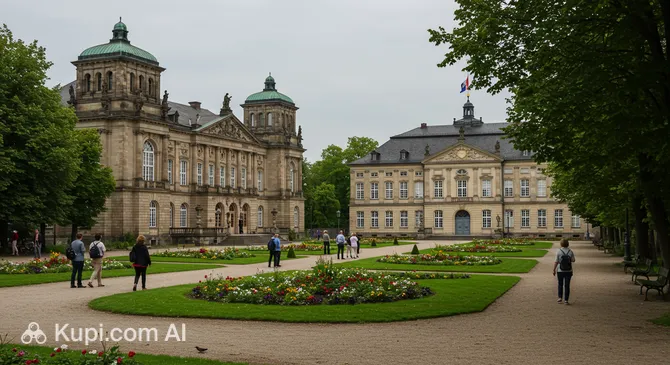
Hofgarten. Illustration.
Source: Kupi.com AI

Traveller photos:

The park covers an extensive area for relaxation and walking, with a total size of an impressive 27.73 hectares. A significant portion of this, about 13 hectares, is dedicated to picturesque meadows that create a sense of space and serenity. Walking along its shady paths, it's easy to forget the city bustle and immerse yourself in a calm atmosphere.

The Hofgarten is not only a place for relaxation but also a kind of open-air museum. It houses a substantial collection of sculptures that are seamlessly integrated into the landscape and located in the park's so-called "green rooms." Each sculpture tells its own story, adding cultural depth to the site and making every walk even more engaging.

Contacts

As a public park, you don't need specific contact details like a phone number or email to visit the Hofgarten. The park is conveniently located in the center of Düsseldorf, making it easily accessible for a stroll. To plan your route, you can use online maps or look for public transportation information on Düsseldorf's tourism portals.

How to contactContact
Address40213 Düsseldorf, Germany
Phone+49 211 8994800
Websitewww.duesseldorf.de

What to Do

In the Hofgarten, visitors can expect a peaceful atmosphere perfect for leisurely walks. You can enjoy the beauty of the picturesque alleys, rest in the shade of centuries-old trees, and admire the vast green meadows. It's a wonderful opportunity to escape the city bustle and immerse yourself in nature while being right in the center of Düsseldorf.

One of the main highlights of the Hofgarten is its rich collection of sculptures, turning the park into a real open-air museum. During your walk, you can see various works of art. Notable among them are the monument to landscape architect Weyhe, the expressive Triton sculpture created by Josef Hammerschmidt around 1900 from French limestone, and the monument to the artist Cornelius, the first director of the Düsseldorf Academy of Fine Arts. These and other sculptures represent both classicist works and more modern artistic solutions from the early 20th century, offering visitors a fascinating journey into the world of art right amidst the greenery.

Getting There

Getting to the Hofgarten in Düsseldorf is quite simple thanks to its central location and the city's well-developed transport system. The park is situated in the heart of Düsseldorf, making it easy to reach on foot from nearby areas, by public transport, or by taxi.

The most convenient way to reach the Hofgarten is by public transport. Several U-Bahn (underground) stations and tram stops are located in the immediate vicinity. For example, the Heinrich-Heine-Allee station is a major transport hub just a few minutes' walk from the park. Many bus routes also pass nearby. It is recommended to check the current schedules and routes on the official website of the Düsseldorf transport company or use popular travel planning apps.

If you prefer comfort or are traveling with luggage, you can use a taxi. A taxi ride from the Düsseldorf Central Station (Düsseldorf Hauptbahnhof) to the Hofgarten takes very little time, depending on traffic. Taxis are easy to find at designated ranks or can be called via mobile apps.

For those staying in hotels in the center of Düsseldorf, a walk to the Hofgarten can be a pleasant addition to exploring the city. The park borders famous streets like Königsallee and is close to the Old Town (Altstadt), allowing you to combine your visit with other sights.

Nearest city: Dusseldorf

History & Facts

The history of the Hofgarten dates back to a time when such green spaces were the exclusive privilege of royalty. Originally intended for the private walks of the nobility, a turning point came in 1769: German Duke Charles IV Theodore made the forward-thinking decision to not only expand the park but also open it to the public. This generous gesture marked the birth of the first public park in Germany, giving the residents of Düsseldorf a place to relax and connect with nature, which was unique for that era.

The park's journey has seen many phases of transformation. A major era of restoration and metamorphosis began in 1804 under the guidance of the talented landscape architect Maximilian Friedrich Weyhe. It is his thoughtful design, blending elements of English and French park art, that has survived almost unchanged for centuries, defining the unique character of the park we see today. In the 1870s, with the development of the city's water supply, the park was adorned with elegant fountains, and by 1900, the famous Triton sculpture was completed, becoming one of its most recognizable symbols.

Even in recent history, the Hofgarten has demonstrated remarkable resilience. In the summer of 2014, the powerful storm "Ela" caused significant damage to the park area, toppling many centuries-old trees. However, thanks to the coordinated efforts of city services and dedicated residents, the park was fully restored in just a year, once again delighting visitors with its beauty and tranquility, and confirming its status as the green heart of Düsseldorf.

Time Needed

A 1-2 hour stroll is usually enough to enjoy the main atmosphere of the Hofgarten. This time allows you to walk through the main alleys, enjoy views of the picturesque meadows, and feel the tranquility of this green corner in the heart of Düsseldorf. This is sufficient to get a general impression of the park and see its key features.

If you'd like to study the sculpture collection scattered throughout the park in more detail, or simply spend more time relaxing on a bench in the shade of the trees, a visit could take half a day (about 3-4 hours). The Hofgarten invites you to slow down, perhaps read a book on one of the lawns, or just enjoy the silence away from the city bustle. Photography enthusiasts will also find many picturesque corners to spend extra time on.

Overall, the Hofgarten offers flexibility in planning your visit. It's a place where you can drop in for an hour to catch your breath after sightseeing in Düsseldorf, or spend several hours fully immersed in its peaceful atmosphere and cultural heritage, represented by numerous sculptures.

Working Hours

As a public park, the Hofgarten in Düsseldorf is generally open to the public year-round and accessible for walks 24 hours a day. Entry is usually free, and no advance booking or registration is required. This allows visitors to enjoy its beauty and tranquility whenever it is convenient for them.

However, please note that the operating hours of individual facilities within the park (such as cafes or special exhibitions) may have their own specific schedules. For the most up-to-date information on any temporary restrictions, special events, or visiting rules, it is recommended to check the official Düsseldorf city website or info boards directly at the entrances to the Hofgarten.

Open 24/7

Nearby

After enjoying the serene atmosphere of the Hofgarten, don't rush to leave this area of Düsseldorf. Exploring the park's surroundings can greatly enrich your experience, as other interesting sites that tell the story of Düsseldorf's culture, history, and modern life are located just a short distance away.

A walk through the nearby streets will allow you to discover new facets of this multifaceted German city. Just steps away from the green alleys of the Hofgarten, you'll find cultural centers, historical monuments, and lively shopping areas that will perfectly complement your trip.

NameDistance
Kunstsammlung Nordrhein-Westfalen0.3 km
Kunsthalle Düsseldorf0.3 km
Düsseldorf Memorial0.4 km
Breidenbacher Hof0.4 km
The Wellem0.4 km
Schadow Arkaden0.4 km
Düsseldorf Town Hall0.6 km

Reached the bottom of the page?

Looks like you know this route inside out