Support

GarmischPartenkirchen

About

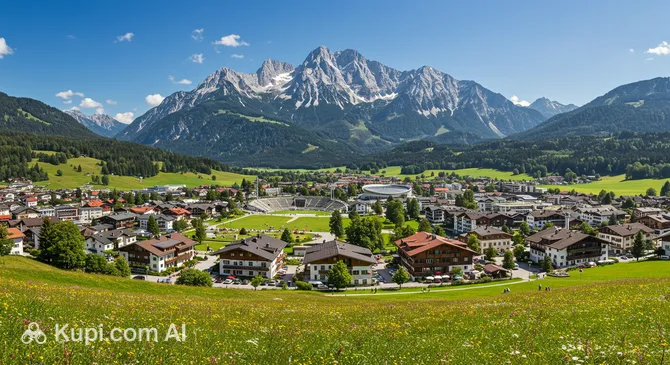
Garmisch-Partenkirchen is a true Alpine diamond shining in the south of Bavaria. The town is nestled at the foot of the majestic Zugspitze, the highest point that Germany is proud of. Here, an atmosphere of coziness and harmony with nature prevails, making it perfect for those seeking a break from the city bustle among mountain peaks and crystal-clear lakes.

Today, about 27,000 people live here, and the resort holds the status of a climatic health resort. The history of Garmisch-Partenkirchen is quite curious: the town was officially formed in 1936 through the merger of two ancient settlements specifically for the Winter Olympics. This event gave the place not only a new name but also a powerful boost for the development of international-class infrastructure.

Garmisch-Partenkirchen. Illustration.
Source: Kupi.com AI

A special charm is added to the streets by houses with painted facades in the "Lüftlmalerei" style, turning an ordinary walk into a tour of an open-air gallery. Travelers are also drawn to the famous Partnach Gorge (Partnachklamm) with its turbulent waterfalls and, of course, the opportunities for active sports: from ski slopes in winter to exciting trekking routes in summer.

Garmisch-Partenkirchen is a place where Bavarian traditions meet modern service. Be sure to include this town in your itinerary to enjoy local cuisine with a view of snow-capped peaks and to feel the unique spirit of the Alps.

Weather Overview

The climate of this Alpine resort is largely determined by its location at the foot of the mountains, so the weather here has a pronounced seasonal character. Winters in the region are snowy and moderately frosty: in December and January, the average temperature drops to -2...-3°C, and at night it can cool down to -7°C. This creates ideal conditions for the formation of a stable snow cover, which is highly valued by ski enthusiasts.

Spring arrives gradually but brings a significant amount of moisture. May stands out as one of the rainiest months of the year, when precipitation can occur for more than 20 days a month. Summer here is mild and not at all exhausting: in July and August, the air warms up to an average of +19.9°C during the day, making mountain walks very comfortable, although an umbrella or raincoat should still be kept handy due to frequent showers.

In autumn, the temperature gradually decreases, and by November the air cools down to +2°C, preparing the town for the new ski season. When planning your trip, be sure to check the forecast, as the weather in Garmisch-Partenkirchen can be changeable: expect a fresh summer with occasional precipitation and cold, snowy winters.

Average monthly temperature

Average monthly precipitation

Interesting Facts

Garmisch-Partenkirchen is not just a popular resort, but a place with a remarkable destiny full of unexpected turns. Beyond its obvious beauty, this Bavarian town holds many fascinating stories that make getting to know it even more exciting.
  • The town in its current form appeared as a result of a kind of "forced marriage." Until 1936, Garmisch and Partenkirchen were two independent settlements until they were united by government decree specifically for hosting Germany's first-ever Winter Olympic Games. A reminder of this grand event is the Olympia-Eissport-Zentrum Garmisch-Partenkirchen and the preserved sports infrastructure.

  • The symbol of the region, the Zugspitze mountain, has a unique feature: it is the only place in the country where, thanks to the glacier, you can ski practically year-round. Ascending to the summit is an adventure in itself, as picturesque cable cars and a historic cogwheel railway lead there.

  • Local nature has created a true masterpiece—the Partnach Gorge. This natural monument is famous not only for its turbulent cascades but also for being accessible for visits year-round, turning into a fantastic ice palace with massive icicles in winter.

  • The town is closely connected to world culture: the famous composer Richard Strauss lived and worked here for a long time, and the writer Thomas Mann was a frequent visitor. Alpine landscapes inspired many artists and musicians to create some of their best works.

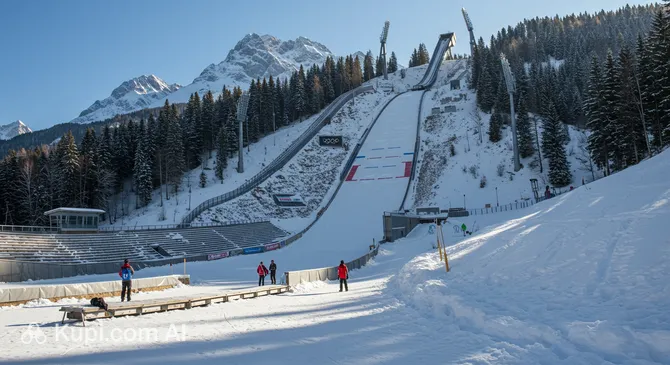
  • The architectural dominant of the sports park is the Olympic Ski Jump. Its modern futuristic design, updated in the 21st century, has become one of the town's most recognizable symbols, soaring over the valley.

Olympic Ski Jump. Illustration.
Source: Kupi.com AI

Traveler photos:

How to Get There

When planning a trip to the Bavarian Alps, it is important to think through the logistics in advance, as the resort town itself does not have its own airport. Nevertheless, getting here is quite easy thanks to the developed transport network of neighboring major cities. You can find more details on how to get to Garmisch-Partenkirchen by studying all available routes and modes of transport.

The main air gateway for tourists is usually Munich Airport (Franz Josef Strauss) (IATA: MUC). This is a major international aviation hub located in the city of Munich, about 109 km from Garmisch-Partenkirchen. Most flights from around the world arrive here. The journey from the airport to the resort by car or taxi will take about 2–2.5 hours.

Another convenient option, especially for those traveling within Europe, is Innsbruck Airport (IATA: INN). It is located in the Austrian city of Innsbruck, just 32 km from the destination. Despite the lower passenger traffic compared to the Munich hub, its proximity allows you to reach Garmisch-Partenkirchen by taxi or transfer in just 40–50 minutes. It's also worth considering Memmingen-Allgäu Airport (IATA: FMM) in the city of Memmingen (about 85 km), which often hosts flights from low-cost airlines.

For clarity, here is a summary of the main airports:

AirportPassenger trafficDistance
Innsbruck Airport862 20232 km
Memmingen Allgäu Airport3.2 mln85 km
Franz Josef Strauss Airport39.8 mln109 km
Altenrhein Airport84 100116 km
Bolzano106 629116 km

Rail connections are another popular way to reach the Alps. Although Garmisch-Partenkirchen has its own station, many travelers transfer at major hubs. The key transport hub is Munich Central Station (München Hauptbahnhof), located in the city of Munich (80 km from the resort). It is one of the busiest stations in Europe, from which regional trains depart regularly directly to the foot of the Zugspitze. The journey by train takes about an hour and a half.

It is also convenient to travel via Innsbruck Station, which is located in Innsbruck, Austria, about 34.5 km from Garmisch-Partenkirchen. A trip from there by taxi or bus takes less than an hour, and the picturesque views outside the window will be a great start to your vacation.

Below is information about the nearest major railway hubs:

StationPassenger trafficDistance
Innsbruck Railway Station14.1 mln35 km
Munich Hauptbahnhof164.3 mln80 km
Rosenheim Bus Station7.3 mln87 km
Augsburg Hauptbahnhof18.3 mln98 km
Salzburg Hauptbahnhof5.5 mln151 km

Main Attractions

Garmisch-Partenkirchen offers travelers much more than just walks through cozy streets. This region is saturated with natural and historical monuments that allow you to look at the Bavarian Alps from different perspectives. From breathtaking panoramas to ancient ruins—everyone will find a route to their liking here.

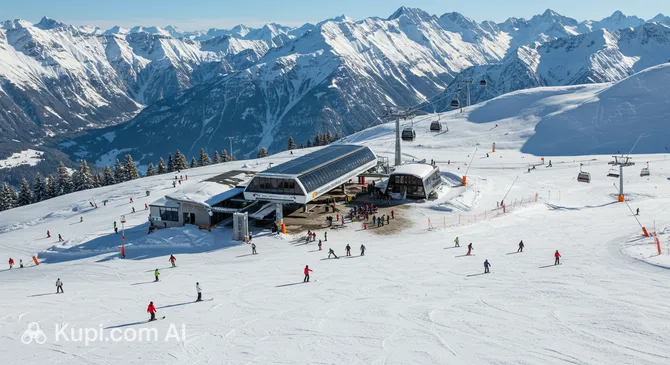
For outdoor enthusiasts, the center of attraction is Garmisch-Classic. This is a vast area combining three ski regions: Hausberg, Kreuzeck, and Alpspitze. In winter, it is a paradise for skiers and snowboarders with runs of varying difficulty, including the famous Kandahar descent. In summer, the lifts take tourists to the start of picturesque hiking trails and observation decks offering breathtaking views of the mountain ranges.

Garmisch-Classic. Illustration.
Source: Kupi.com AI

Traveler photos:

If you are looking for the best panoramic views of the Wetterstein range and the Zugspitze itself, you should head up Mount Wank. The Wank Cable Car leads there. This peak is often called the "Sun Mountain" (Sonnenberg) and is ideal for relaxed recreation. There are no difficult ski runs at the top, but there are sun terraces with deck chairs and easy walking routes accessible even to seniors and families with children.

History buffs and fans of romantic walks should visit the Werdenfels Castle Ruins. The remains of this medieval fortress rise on a hill to the north of the town. The walk to the ruins through the forest does not require special training and takes little time. From the walls of the old castle, there is a magnificent view of the Loisach Valley and Garmisch-Partenkirchen itself, allowing you to imagine how these lands were protected many centuries ago.

For family vacations, the Hausberg Cable Car is an excellent choice. It leads to Mount Hausberg, which is considered the resort's "home mountain" and the best place for beginners and children. In winter, ski schools and children's zones operate here, and in summer, the slopes turn into green meadows, ideal for picnics and leisurely walks in the fresh Alpine air.

Local Cuisine

The gastronomy of Garmisch-Partenkirchen is the embodiment of hearty Alpine traditions, where every meal turns into a small feast for the gourmet. The basis of the local menu is substantial Bavarian meat dishes. Tourists should definitely order the crispy pork knuckle (Schweinshaxe) with potato dumplings, the famous cheese soup, or an assortment of fried sausages. A traditional onion tart (Zwiebelkuchen), prepared here with special care, is an excellent choice for a snack.

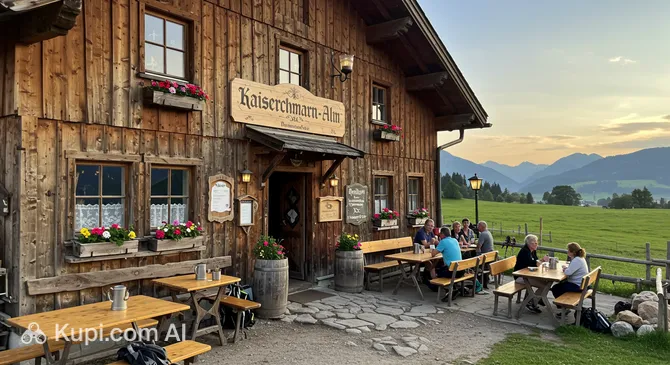
The sweet side of local cuisine deserves special attention. The king of desserts is rightfully considered the apple strudel with vanilla sauce, but the region's true calling card is the "emperor's pancake"—Kaiserschmarrn. This airy treat with raisins and powdered sugar is served in many establishments. To fully appreciate this dessert and other specialties, you can stop by the Kaiserschmarrn-Alm restaurant, where old recipes are honored and an incredibly cozy atmosphere is created.

Kaiserschmarrn-Alm. Illustration.
Source: Kupi.com AI

Traveler photos:

No feast here is complete without drinks. Bavarian beer is world-famous and flows like a river at any time of year. In winter, after an active day on the ski slopes, the best way to warm up is with a mug of hot, aromatic mulled wine (Glühwein) or a shot of local herbal schnapps. If you're looking for a place for evening relaxation with pleasant drinks, check out the Kaffee-Bar Berge, where you can relax in a casual setting.

The food culture in the town goes far beyond classic restaurants. A special lively atmosphere prevails at local farmers' markets: here you can buy the freshest mountain cheeses, homemade pastries, and smoked meats directly from the producers. Street food and regular gastronomic festivals allow tourists not just to satisfy their hunger but to immerse themselves in the authentic life of Bavaria.

Travel Tips

Before traveling to this picturesque corner of the Bavarian Alps, it is worth considering a few important nuances that will make your trip as comfortable as possible. Garmisch-Partenkirchen is a resort with character, where traditions are interwoven with modernity, and knowing local peculiarities will help you avoid unnecessary expenses and awkward situations.

  1. Clothing and gear: The weather in the mountains changes rapidly, so dress like an "onion" (in layers). Even in summer, evenings can be cool, so a fleece jacket and windbreaker are essential. If you plan on hiking or visiting the Partnach Gorge, regular sneakers won't be enough—bring comfortable trekking boots with a non-slip sole.
  2. Transport: The town itself is quite compact, and it's pleasant to walk around the center. Use local buses for trips to the lifts or Lake Eibsee. Tourists staying in hotels and apartments are issued a GaPaCard guest card—it entitles you to free travel on municipal buses. This will significantly save your budget, as taxis are expensive here and services like Uber are practically non-existent.
  3. Finances: The currency is the Euro (€). Be prepared for the fact that Bavaria is conservative: many traditional restaurants, souvenir shops, and especially mountain huts accept only cash. Always have small-denomination banknotes with you. Tips (Trinkgeld) are not left on the table here; it's customary to simply round up the bill when paying the waiter (by about 5–10%).
  4. Health and Safety: This is a very safe town where you can walk safely at any time of day. Pharmacies are easy to recognize by the red letter "A," and the schedule for on-call pharmacies is always posted on the door. The main danger here is underestimating the mountains: never leave marked trails and check the weather forecast before heading out. The emergency number is 112.
  5. Communication: The official language is German, but many people in the tourism sector speak English. However, locals will be delighted if you start a conversation with a polite "Grüß Gott" (the local greeting). Free Wi-Fi is available in many cafes and at cable car stations, but for stable connection in the mountains, it's better to buy a local SIM card in supermarkets (e.g., Aldi or Lidl).
  6. Local Etiquette: An atmosphere of friendliness prevails in Bavaria. In beer gardens (Biergarten), it is considered normal to sit at a long table with strangers after asking permission. Remember the Ruhetag (quiet day): on Sundays and holidays, all shops, including grocery stores, are closed. Plan your purchases in advance.
  7. What to avoid: It is strictly discouraged to walk on bike lanes, which are often marked by color or cobblestones—this can cause sharp dissatisfaction from cyclists. Also, do not cross the road on a red light, even if the street is empty: Germans are very disciplined and expect rules to be followed by guests.
  8. Drinking Water: Don't waste money on bottled water unnecessarily. Tap water in Garmisch-Partenkirchen comes from pure mountain springs; it is very tasty and safe. Just bring a reusable bottle with you.

By following these simple tips, you can feel at home in Bavaria and focus on the main thing—the magnificent views and Alpine hospitality. May your journey be easy and leave only warm memories!

Entertainment & Nightlife

Nightlife in Garmisch-Partenkirchen differs significantly from bustling metropolises like Berlin or Munich. You won't find massive techno clubs operating until dawn here, but the resort is famous for its cozy "après-ski" culture—parties after a day of skiing. Evening entertainment here is centered on socializing, delicious drinks, and Bavarian hospitality in atmospheric pubs and bars.

Two main locations become centers of attraction in the evening: the Marienplatz area in Garmisch and the historic Ludwigstraße in Partenkirchen. This is where the most popular establishments are located, where both tourists and locals gather. The atmosphere in most places is very casual and relaxed, with no strict dress code—casual style or even neat sportswear is quite appropriate.

If you're looking for a place with live energy and an international crowd, be sure to stop by the Irish Pub. This is a classic Irish-style establishment where live music often plays, sports matches are broadcast, and excellent Guinness is served. It's easy to make friends with travelers from all over the world and have a good time until late at night.

For those who prefer a quieter setting, Cafe Max is perfect. By day, it's a popular coffee shop, and in the evening, the venue transforms into a cozy lounge where you can enjoy a glass of wine or a cocktail while watching the life of the resort town. It's a great place for a romantic date or a leisurely conversation after a busy day in the mountains.

It's important to keep some practical nuances in mind. Most bars close around 1:00 or 2:00 AM, and restaurant kitchens stop serving even earlier—around 10:00 PM. Public transport (buses) practically doesn't run at night, so if you stay out late, count on a taxi. Taxi stands are located at the train station and Marienplatz, but it's more reliable to have a local service number or ask the bartender to call a car for you.

In terms of safety, Garmisch-Partenkirchen is one of the safest towns in Germany. You can walk the streets without fear even in the middle of the night. However, it's worth being careful on unlit stretches of road and watching your step in winter due to potential ice.

As for daytime entertainment, besides sports, the town offers a rich cultural program. You can visit the Werdenfels Museum to learn more about the region's lifestyle or attend a concert in the resort park (Kurpark), where a local orchestra often performs. The town also has a casino that attracts gambling enthusiasts with its elegant setting and variety of tables.

Parks & Museums

Garmisch-Partenkirchen wonderfully combines majestic Alpine nature and the rich cultural heritage of Bavaria. The town and its surroundings offer tourists not only sports activities but also the opportunity to enjoy the silence of green parks and immerse themselves in the history of the region through unique museum collections.

Among the natural areas, the Michael Ende Kurpark is particularly popular. This oasis of tranquility in the town center is named after the famous writer, author of "The Neverending Story," who was born in these parts. The park is ideal for leisurely walks: there are beautiful flower beds, a pond with water lilies, and even a "barefoot path" for wellness. In summer, open-air concerts are regularly held in the music pavilion, creating a unique atmosphere of coziness.

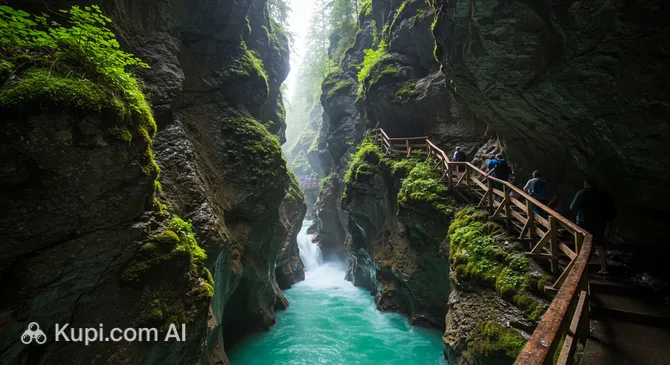
It's impossible to talk about the region's nature without mentioning the Partnach Gorge. This geological wonder features a river that has cut through the stone, forming a narrow canyon with sheer walls up to 80 meters high. A walk along the paths carved into the rock allows you to feel the power of the water element right nearby. In winter, the gorge turns into a fairytale kingdom of ice, and in summer, it offers a refreshing coolness.

Partnach Gorge. Illustration.
Source: Kupi.com AI

Traveler photos:

To get acquainted with history and culture, be sure to visit the Werdenfels Museum. It is located on the historic Ludwigstraße in a 17th-century building. The museum's exhibition details the daily life of local residents, the history of mountaineering, and folk traditions. Of particular interest is the collection of carnival masks used during local festivals.

Another cultural gem is the Aschenbrenner Museum. It presents an impressive collection of porcelain, dolls, and mechanical toys collected by Marianne Aschenbrenner. The exhibition will be interesting for both children and adults, thanks to the delicate work of the masters and the historical value of the exhibits. The museum also has a section dedicated to Christmas nativity scenes, which is very symbolic for religious Bavaria.

Fans of monumental architecture and sports history should see the Olympia-Eissport-Zentrum Garmisch-Partenkirchen. Built for the 1936 Games, it still impresses with its scale and serves as a reminder of how a small mountain resort became a center for world sports. The structure is a protected architectural monument and continues to host competitions and cultural events.

If you want to see something less touristy, take a walk to Lake Riessersee. This is a historic site where Olympic speed skating and hockey competitions were once held. Today, it is a quiet spot with stunning views of the Zugspitze, where you can rent a boat or just sit on the shore away from the noise of the central streets.

Getting Around

Moving around Garmisch-Partenkirchen won't be difficult for tourists: the town has a compact and well-thought-out public transport system. Local buses (Ortsbusse) handle the main load, connecting the resort center with the lifts, the picturesque Lake Eibsee, and neighboring villages. The buses are usually painted green, run strictly on schedule, and operate from early morning until evening; however, it's worth noting that there are practically no night services here.

For travelers, there is an incredibly convenient system that allows for significant savings. When checking into a hotel or apartment and paying the resort tax (Kurtaxe), each tourist is issued a personalized guest card—the GaPaCard. It entitles you to free travel on all municipal bus routes within the town limits and the immediate surroundings. Always carry this card with you: inspectors can check for it at any time.

A unique feature of the transport network is the historic cogwheel railway—the Bavarian Zugspitze Railway (Bayerische Zugspitzbahn). It departs from a separate station located next to the main railway station and serves not just as a means of transportation but as a full-fledged attraction. The trains take passengers to the glacier and the Zugspitze summit, making stops in Grainau and at Lake Eibsee. Travel on it is not included in the standard guest card and requires the purchase of a separate ticket.

If you have arrived for one day and do not have a GaPaCard, you can pay for bus travel in cash directly to the driver upon boarding (prepare small bills or coins). Tickets for regional trains (DB) connecting the resort with Munich or Innsbruck are best purchased in advance through the red machines at stations or the DB Navigator mobile app. Don't forget to validate paper tickets before boarding the train if they do not specify a specific date and time of travel.

As an alternative to public transport, you can use a taxi, although trip prices here are quite high. Taxi stands are located at the train station and Marienplatz; it is difficult to hail a car just by raising your hand on the street, so it is better to order by phone. Car sharing is poorly developed in the town, but bicycle rentals are extremely popular, especially e-bikes, which help you tackle mountain climbs without effort.

Accommodation

The choice of accommodation in Garmisch-Partenkirchen is huge and can satisfy the needs of any traveler—from budget backpackers to connoisseurs of luxury vacations. The town's infrastructure includes cozy family guesthouses (Gasthof), classic middle-class hotels, premium spa resorts, and numerous apartments (Ferienwohnungen), which are particularly popular with families with children and large groups.

When choosing an area, consider the specifics of the dual town. Garmisch is considered the more modern and lively part: fashionable boutiques, restaurants, and, importantly, the train station are concentrated here. This is an ideal choice for those who plan to use trains frequently or the cogwheel railway to ascend the glacier. Partenkirchen, with its historic Ludwigstraße, offers a quieter, more authentic atmosphere of old Bavaria with painted house facades and peaceful evenings.

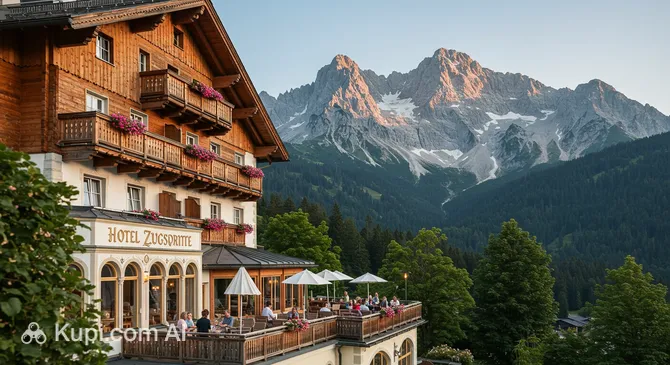
If you are looking for high-level comfort combined with Alpine traditions, pay attention to Hotel Zugspitze. Such establishments often offer guests not only cozy Tyrolean-style rooms but also their own wellness centers, which is especially pleasant after an active day on the ski slopes or hiking trails.

Hotel Zugspitze. Illustration.
Source: Kupi.com AI

Traveler photos:

Booking Tip: Garmisch-Partenkirchen is a year-round resort but has distinct peak seasons. In winter, this is the Christmas holidays and February; in summer, July and August. During these periods, the best accommodation options are booked up months in advance, so it is worth planning your trip well ahead of time.

The price range varies from moderate to high. Budget tourists can find inexpensive rooms in private guesthouses, while a night in a luxury hotel will cost a significant amount. It is most convenient to book accommodation through major online aggregators, but many small family hotels also take bookings directly through their websites or by email, sometimes offering slightly better conditions.

Nearby Cities

For those who want to explore the surroundings, Garmisch-Partenkirchen serves as an excellent starting point for day trips to several interesting nearby places. The region is rich not only in natural beauty but also in colorful towns, each with its own unique character.

Just an hour's drive away is picturesque Starnberg, located on the shores of the lake of the same name. It's an ideal place for relaxed walks along the promenade, boating, and enjoying views of the Alps from the water. The town is famous for its elegant villas and a special resort atmosphere highly valued by Munich residents and tourists alike.

Fans of medieval architecture should visit Kaufbeuren. This ancient town prides itself on well-preserved fortress walls and towers that give it an unmistakable historical charm. A stroll through the narrow streets of the old center and a visit to the famous St. Crescentia Monastery will allow for a deeper immersion into Bavaria's cultural heritage.

Another attractive destination is Weilheim in Oberbayern. This cozy town, located very close by, is known for its beautiful pedestrian center with traditional buildings, many shops, and cafes. It's a great option for those who want to see authentic Bavarian provincial life without the crowds of tourists.

CityPopulationDistance
Seefeld in Tirol3 30019 km
Telfs16 04621 km
Murnau am Staffelsee12 12822 km
Bobingen17 75730 km
Füssen15 80031 km

These nearby destinations allow for a more complete picture of the region's diverse culture and landscapes, making your vacation in the Alps even more fulfilling.

Shopping & Souvenirs

Shopping in Garmisch-Partenkirchen is a pleasant addition to a vacation in the mountains, combining Bavarian flair with modern comfort. You won't find endless rows of giant malls here like in metropolises, but the town is famous for its cozy boutiques, top-class sports equipment stores, and shops with traditional handicrafts. It's an ideal place to buy quality gear for outdoor activities or authentic items steeped in the spirit of the Alps.

The resort's commercial life is concentrated in two main zones, each with its own character. In the Garmisch district, the main artery is the pedestrian zone, starting from Marienplatz and extending deep into Am Kurpark and Von-Brug-Straße. Here you will find shops of famous European brands for clothing, perfumes, and jewelry. In the Partenkirchen district, shopping takes on a historical tone: family shops selling ceramics, national costumes, and art objects are located on the picturesque Ludwigstraße.

For those who prefer to do all their shopping in one place, the GEP Shopping Center (Garmischer Einkaufs-Paradies) operates in town. This is the resort's main shopping complex, located near the train station. Inside you will find supermarkets, electronics stores, clothing and footwear, as well as several cafes. This is a convenient location to restock on food or purchase everything necessary for your trip.

A special charm is added to local shopping by the markets. The most popular is the weekly farmers' market (Wochenmarkt), which usually takes place on Mohrenplatz. Here, local producers offer the freshest Alpine cheeses, homemade sausages, honey, and fresh pastries. This is the best place to taste Bavaria and buy edible gifts.

Speaking of souvenirs, it's worth bringing items from Garmisch-Partenkirchen that reflect local traditions. First and foremost, these are elements of the "Tracht" national costume: leather Lederhosen, Dirndl dresses, or high-quality wool jackets. Also popular are wood-carved items, beer steins with lids, and, of course, Bavarian delicacies—herbal schnapps, chocolate, and gingerbread.

When planning a shopping trip, keep in mind that most shops are open from 09:00 or 10:00 to 18:00–19:00 on weekdays and Saturdays. Sunday is a rest day (Ruhetag), when almost all retail outlets are closed, including supermarkets (exceptions may be small shops at the station or gas stations). As for payment, although cards are accepted in many places, cash is still very much preferred in Bavaria. In small souvenir shops, bakeries, or at the market, bills may be the only way to pay.

Tourists permanently residing outside the European Union can use the Tax Free system and get a refund of part of the value-added tax for purchases over a certain limit (usually from 50 euros). Look for "Global Blue" or "Tax Free" stickers in shop windows and don't forget to ask the seller for a special receipt for the refund at customs when you fly out.
Reached the end of the page?

That means the route is fully explored