Support

Passau

About

Passau, often referred to as the "City of Three Rivers" or even the "Bavarian Venice," is a true gem of southeastern Bavaria. It is snugly nestled at the unique junction of the Danube, Inn, and Ilz rivers, where its picturesque embankments and ancient buildings reflecting in the water create a one-of-a-kind atmosphere.

With a population of about 53,000, Passau retains the charm of an intimate European town where every corner breathes history. The city serves as an important cultural and administrative center for the Lower Bavaria region and is located on Germany's border with Austria, not far from the Czech Republic. This unique location has shaped its character and culture over the centuries.
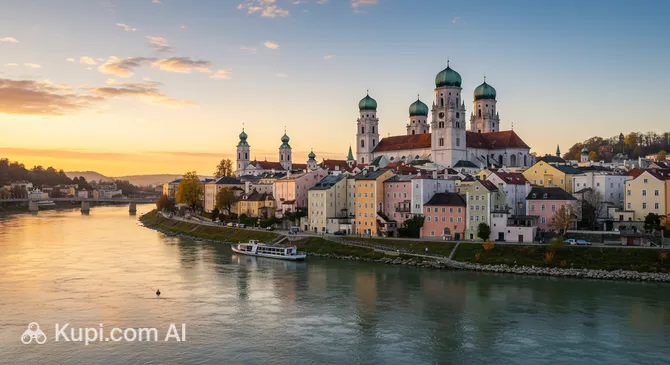
Passau. Illustration.
Source: Kupi.com AI

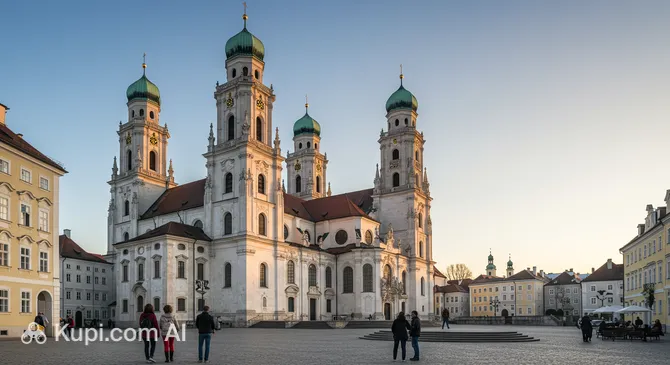
The main attractions drawing tourists include the majestic St. Stephen's Cathedral, home to the largest church organ in the world, the mighty Veste Oberhaus fortress offering breathtaking views of the river confluence, and the picturesque streets of the old town with their baroque architecture. Strolling through narrow alleys past colorful house facades leaves an unforgettable impression.

Passau is a city that enchants at first sight with its beauty, coziness, and rich history. A spirit of creativity and inspiration reigns here, and the city is filled with music and art. If you want to immerse yourself in the atmosphere of old Europe, enjoy leisurely walks, and discover one of the most scenic corners of Bavaria, be sure to visit this amazing city on three rivers.

You can find more interesting facts on the history of the city of Passau page.
Weather Overview

The weather in Passau is characterized by a temperate climate with clearly defined seasons. Summer, especially in July and August, is usually warm, with average temperatures around 19-20°C, and maximum values can reach 24-25°C. During the summer months, there is a moderate amount of precipitation, averaging 3 mm, with about 12-14 rainy days per month. Winters in Passau are cool, with the average temperature in January being around 0.8°C, with night frosts and maximum daytime temperatures around 3-4°C. Precipitation is also possible in winter; for example, in December, about 4 mm falls, and the number of days with precipitation reaches 16. Expect a warm summer with periodic rain and cool, damp winters. For a more detailed forecast and monthly information, you can study the climate of Passau.

Average monthly temperature

Average monthly precipitation

Interesting Facts

In addition to its picturesque landscapes and rich history, Passau hides many surprising details and stories that not everyone knows. This charming city on three rivers is ready to surprise even the most seasoned travelers.

St. Stephen's Cathedral. Illustration.
Source: Kupi.com AI

Traveler photos:

  • Passau is the only city in Germany where three rivers with different water colors meet: the blue-green Danube, the milky-turquoise Inn, and the almost black Ilz. This unique natural phenomenon can be observed at the site known as the Three Rivers Junction.

  • The St. Stephen's Cathedral houses one of the largest church organs in the world (the largest in Europe), consisting of more than 17,000 pipes. Its powerful sound can be heard during regular organ concerts, which attract music enthusiasts from all over the globe.

  • The city has repeatedly suffered from severe flooding throughout its history. On the walls of many old buildings in the historic center, marks still remain showing how high the water rose in different years. These marks serve as a silent reminder of the power of nature and the resilience of the townspeople.

  • Höllgasse, known as "Artist's Alley" (Künstlergasse), is the true creative heart of Passau. It is home to numerous art galleries and craft workshops, and house facades are often decorated with bright paintings and installations, creating a unique bohemian atmosphere.

How to Get There

Passau, located at the junction of three countries, boasts excellent transport accessibility, although the city itself does not have its own airport. Travelers usually arrive here via major transport hubs in neighboring cities. You can find more details on how to get to Passau and choose the most convenient route combining air travel and ground transport.

Since there is no airport in Passau, tourists must fly into neighboring cities. One of the most popular options is Franz Josef Strauss Airport (MUC) in Munich. This is a major international hub receiving flights from all over the world. It is located about 124 km from Passau. The journey by rental car or taxi takes about 1.5–2 hours, while the train can be reached with a transfer in slightly more time.

Another convenient option is Linz Airport (LNZ), located in the Austrian city of Linz, just 67 km from Passau. This is the closest airport, but it serves fewer flights. Travel time by car is about 1 hour. You might also consider Salzburg W. A. Mozart Airport (SZG) in Salzburg (Austria), which is 91.7 km away. The trip from there takes about 1.5 hours.

For clarity, here is summary information for the main airports located relatively close to the city:

AirportPassenger trafficDistance
Linz Airport232 95067 km
Ceske Budejovice Airport55 00085 km
W. A. Mozart Salzburg Airport1.8 mln92 km
Franz Josef Strauss Airport39.8 mln124 km
Vaclav Havel Airport Prague16.4 mln181 km

Rail connections in this region are excellently developed. Tourists often arrive at major hub stations first and then transfer to regional trains to Passau. An important transit point is Munich Central Station in the city of Munich. It is located 146.8 km from Passau and handles a huge flow of passengers. Direct trains and trains with transfers depart from here regularly, with travel time taking about 2 hours.

It is also convenient to travel via Austria using the Linz Hauptbahnhof station in the city of Linz. It is significantly closer—70.6 km from Passau. A train or car trip from there takes about an hour, making this route very attractive for those traveling from Eastern Europe or Austria.

Below is a table with key railway stations in the region that can serve as starting points for a trip to Passau:

StationPassenger trafficDistance
Linz Hauptbahnhof14.9 mln71 km
Salzburg Hauptbahnhof5.5 mln89 km
Rosenheim Bus Station7.3 mln126 km
Munich Hauptbahnhof164.3 mln147 km
St. Pölten Hauptbahnhof5 mln167 km

Main Attractions

Passau, known as the "City of Three Rivers," enchants its guests with its unique location and rich history reflected in its numerous attractions. Here, everyone will find something of interest, from majestic cathedrals to ancient fortresses and picturesque natural spots.

One of the city's main jewels is St. Stephen's Cathedral (Dom St. Stephan). This magnificent Baroque cathedral impresses with its interior decoration and is famous for housing the world's largest church organ. Regular organ concerts attract music lovers from all over the world, while the architecture and history of the cathedral itself make it a must-visit site.

St. Stephen's Cathedral. Illustration.
Source: Kupi.com AI

Traveler photos:

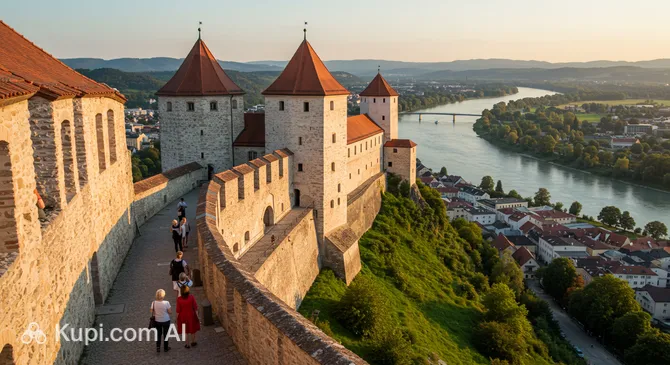
The Veste Oberhaus fortress towers majestically over the city, being one of the largest preserved castle complexes in Europe. Founded in 1219, it served as the residence of the Prince-Bishops of Passau. Today, the fortress walls house a museum where you can learn about the history of the city and the region, and its ramparts offer breathtaking panoramic views of the confluence of the three rivers and the old town.

Veste Oberhaus. Illustration.
Source: Kupi.com AI

Traveler photos:

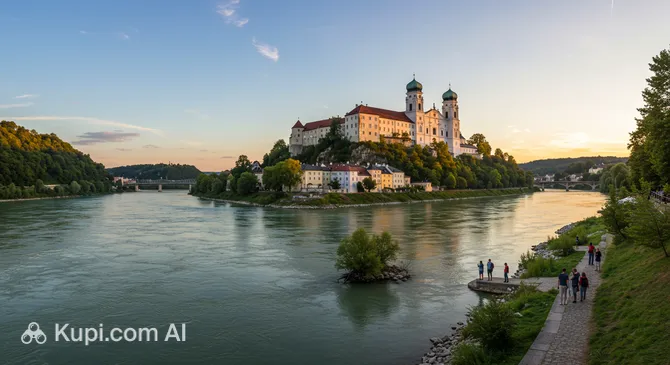
The Three Rivers Junction (Dreiflüssestadt) is also not to be missed—the spot where the Danube, Inn, and Ilz merge. This unique natural phenomenon can be observed from the promenade or during a river cruise. The difference in the water colors of the three rivers is particularly impressive, creating a picturesque scene. A walk along the rivers will provide unforgettable memories and allow you to enjoy the beauty of Passau.

Three Rivers Corner. Illustration.
Source: Kupi.com AI

Traveler photos:

For those traveling with family or simply looking to cool off on a hot day, the Passau Adventure Bath (Erlebnisbad PEB) is an excellent choice. Here, visitors can find various pools, water slides, and relaxation areas offering entertainment for all ages.

Local Cuisine

The gastronomy of Passau is a fascinating journey at the crossroads of Bavarian, Austrian, and Czech culinary traditions. The city, picturesquely situated at the confluence of three rivers, offers foodies the chance to enjoy hearty and aromatic dishes that reflect the region's rich cultural heritage. Everyone will find something to their taste here, from classic meat dishes to the freshest river fish.

Among the dishes that are a must-try in Passau, the "Schweinbraten" (roast pork) stands out—juicy roasted pork traditionally served with dumplings and sauerkraut. This hearty dish is a hallmark of Bavarian cuisine. No less popular is "Obatzda"—a savory cheese snack that pairs perfectly with fresh bread and, of course, local beer.

A special pride of Passau is its fresh fish dishes, as the city is literally washed by the waters of the Danube, Inn, and Ilz. On the menus of many restaurants, you will find Danube salmon, fried carp, and the famous "Forelle Müllerin"—trout meunière, delicately baked with herbs and butter. This is a true delicacy for connoisseurs of river bounty.

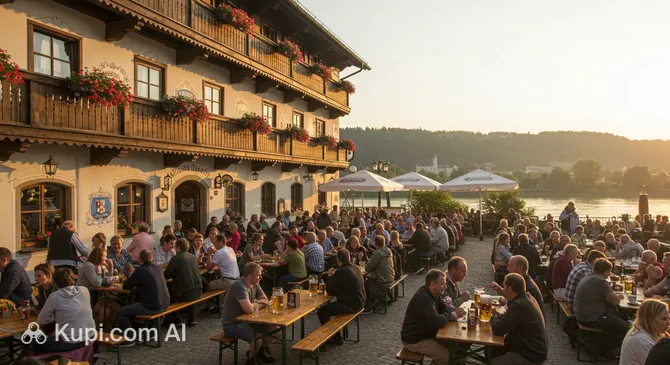
Speaking of drinks, one cannot fail to mention the famous Bavarian beer. Passau has its own breweries that produce both rich dark and light wheat beers, each with its own unique character. One of the iconic places where you can immerse yourself in the beer garden culture and try freshly brewed beer with traditional snacks is the Hacklberg Brewery Beer Garden and Restaurant. Among non-alcoholic drinks, juices, lemonades, and, of course, mineral water are popular.

Hacklberg Brewery Beer Garden and Restaurant. Illustration.
Source: Kupi.com AI

Traveler photos:

The food culture in Passau is diverse. Locals and tourists love to dine in traditional restaurants and cozy gasthöfe (inns). Additionally, in city markets and street fairs, you can always find aromatic sausages, fresh pastries, and seasonal sweets like Bavarian cream ("Bayerische Creme") or traditional gingerbread. Gastronomic festivals, such as the summer "Beer and Food Festival" or the winter Christmas market near the cathedral with mulled wine and roasted chestnuts, are also integral parts of the city's culinary life.

Travel Tips

Welcome to Passau, the charming "City of Three Rivers"! To make your journey through this unique Bavarian city as comfortable and memorable as possible, we have prepared some practical tips.

  1. Seasonal Clothing and Essentials: The climate in Passau is temperate. In summer, bring light clothing but don't forget a sweater or jacket for evening walks along the rivers. In spring and autumn, the weather is changeable, so layering is your best friend, as are an umbrella or raincoat. In winter, warm clothing and footwear will be needed. Be sure to bring comfortable shoes—you will be walking a lot on cobblestones and possibly climbing hills. Don't forget a power adapter (type F). When visiting churches, such as the majestic St. Stephen's Cathedral, it is customary to cover your shoulders and knees.
  2. Getting Around Town: Passau is a fairly compact city, and many of its attractions are easily reached on foot. For longer trips, you can use the local buses (Stadtwerke Passau). Taxis are available but can be expensive; check for ride-hailing apps upon arrival. Renting a car is not a necessity for seeing the city itself, and parking in the center can be difficult. However, if you plan to explore the scenic Bavarian countryside, a car may come in handy.
  3. Financial Matters: The official currency in Germany is the Euro (€). You can exchange money at banks, but it's usually more cost-effective to withdraw cash from ATMs (Geldautomat), which are easy to find. Credit and debit cards (Visa, Mastercard) are widely accepted in most shops, restaurants, and hotels. International cards usually work without problems. An approximate daily budget (excluding accommodation) can range from 50 to 100 euros. Tipping in restaurants (5-10%) is appreciated for good service; usually, the amount is just rounded up.
  4. Health and Safety: Passau is a very safe city. Nevertheless, observe standard precautions: keep an eye on your belongings in crowded places. Pharmacies (Apotheke) are easy to find; information about 24-hour pharmacies (Notdienst Apotheke) operating at night and on weekends can be found on the door of the nearest pharmacy or online. To receive medical assistance, EU citizens are advised to have a European Health Insurance Card (EHIC); other tourists are strongly encouraged to take out travel insurance. The emergency number is 112.
  5. Language and Connectivity: The official language is German. In tourist areas, hotels, and restaurants, many people speak English, especially the younger generation. However, knowing a few basic phrases in German, such as "Hallo" (Hello), "Guten Tag" (Good day), "Danke" (Thank you), "Bitte" (Please), "Entschuldigung" (Excuse me), will be very helpful and appreciated by locals. In Bavaria, the greeting "Grüß Gott" is also common. SIM cards for mobile internet can be purchased at supermarkets or mobile shops. Free Wi-Fi (WLAN) is available in many hotels, cafes, and some public places.
  6. Local Etiquette and Communication: Germans, and Bavarians in particular, value punctuality, order, and politeness. It is customary to shake hands when meeting. When addressing someone, use formal greetings if you do not know the person well. Try not to make noise in public places. Locals are usually straightforward but friendly, especially if you show respect for their culture.
  7. What to Avoid: Try not to walk on bike paths—they are intended exclusively for cyclists, and pedestrians on them can create dangerous situations. Also, avoid excessively loud conversations on public transport or in restaurants; Germans value tranquility.
  8. Special Tip for Passau: Don't miss the chance to take a river cruise at the confluence of the three rivers—the Danube, Inn, and Ilz. This is a unique experience that allows you to see the city from a completely different side. Also, be sure to attend an organ concert at St. Stephen's Cathedral—its organ is considered one of the largest in the world. Remember that most shops in Germany, including Passau, are closed on Sundays, so plan your shopping in advance.

We hope these tips help you better prepare for your trip and enjoy every moment in beautiful Passau. We wish you an unforgettable journey through this amazing city on three rivers!

Entertainment & Nightlife

Passau, known as the "City of Three Rivers," offers its guests not only picturesque daytime scenery but also a surprisingly vibrant nightlife, largely thanks to its large student population. The main centers for evening entertainment are concentrated in the Old Town (Altstadt) and the Innstadt district, where you will find many cozy bars, traditional pubs, and several clubs open late into the night.

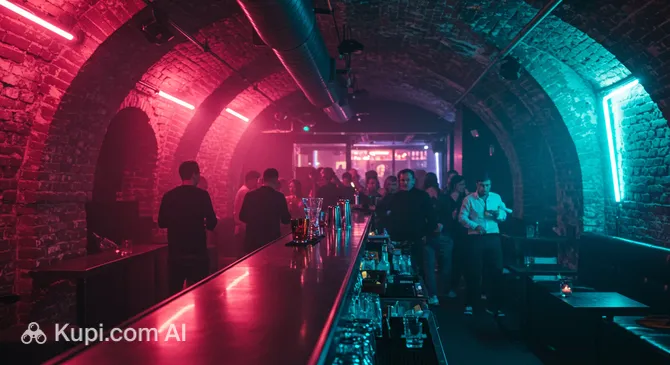
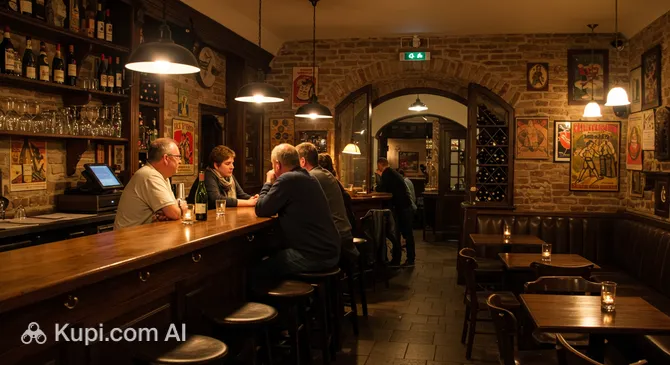
For those looking for a place to dance and enjoy cocktails, the Journey Cocktail Bar is an excellent choice. This popular nightclub attracts young people with modern music and a stylish atmosphere. If you prefer a more relaxed setting with Spanish flair, stop by Bodega Rusticana, where you can try tapas and Spanish wines. For connoisseurs of traditional Bavarian hospitality and fresh beer, the Hacklberg Brewery Beer Garden and Restaurant is a wonderful evening option, especially during the warmer months.

Journey Cocktail Bar. Illustration.
Source: Kupi.com AI

Traveler photos:

Bodega Rusticana. Illustration.
Source: Kupi.com AI

Traveler photos:

Hacklberg Brewery Beer Garden and Restaurant. Illustration.
Source: Kupi.com AI

Traveler photos:

The atmosphere in Passau's nightspots is generally laid-back and friendly. The crowd is mixed, featuring many students, locals, and tourists. The dress code is typically casual, except perhaps for some themed parties in clubs. Bars usually start to liven up after 9:00 PM or 10:00 PM, while clubs fill up closer to midnight and stay open until 3:00 AM or 4:00 AM, especially on weekends.

When planning an evening out, keep in mind that peak activity occurs on Friday and Saturday. Getting around the city center at night is easy on foot since distances are small. For trips to more distant areas or back to your hotel, you can use taxi services; ranks are located at key points in the city, or you can call one by phone. Passau is considered a safe city, but standard precautions, as in any other place, are still wise, especially late at night.

During the day, Passau also offers plenty of interesting activities. You can visit the impressive St. Stephen's Cathedral with its famous organ, explore the historical Veste Oberhaus fortress for stunning city views, or stroll along the scenic embankments. For shopping enthusiasts, there are shopping centers like the Stadtgalerie Passau.

Parks & Museums

Passau, a charming city at the confluence of three rivers in Germany, offers its guests not only breathtaking landscapes but also a rich cultural heritage embodied in its well-kept parks, interesting museums, and majestic historical monuments. Here, every traveler will find an activity to their liking: from peaceful walks in the heart of nature to a deep dive into the centuries-old history of this unique place.

One of the main natural jewels of Passau is undoubtedly the Three Rivers Junction (Dreiflüssestadt). This is an amazing place where the majestic Danube meets the emerald Inn and the dark Ilz. Watching the merging of waters of different colors is a truly unforgettable sight. The Inn Promenade (Inn-Promenade) and the Danube Promenade (Donau-Promenade) are perfect for leisurely strolls, allowing you to enjoy the fresh air, picturesque city views, and relax in the shade of sprawling trees.

To get acquainted with the rich history and culture of Passau, it's worth visiting its landmark museums. The majestic Veste Oberhaus fortress, proudly towering over the city, houses the Oberhausmuseum. It contains extensive collections telling the history of the city and the entire region, about medieval life, art, and crafts. The fortress walls offer a stunning panoramic view of the river confluence and the tiled roofs of the old town.

Equally interesting is the Glass Museum (Glasmuseum Passau), located in the historical "Wilder Mann" hotel building. It is famous for housing one of the world's largest collections of Bohemian glass, spanning the 17th to the 20th centuries. The elegance of the forms, the variety of techniques, and the splendor of the exhibits will impress any connoisseur of beauty. Fans of ancient history are recommended to check out the Roman Museum Kastell Boiotro (Römermuseum Kastell Boiotro), situated on the site of an ancient Roman fort, which introduces visitors to artifacts from the Roman era in the region.

The architectural landmark and heart of old Passau is the magnificent St. Stephen's Cathedral. This masterpiece of Baroque architecture is famous for its grand organ, considered the largest church organ in the world. The interior of the cathedral is striking for its magnificence, with an abundance of stucco and frescoes. Not far from the cathedral is the Old Town Hall (Altes Rathaus) with its picturesque facade and historical halls, which is also worth attention during a city walk.

To get a truly authentic impression of Passau, be sure to wander through the narrow, winding streets of the Old Town (Altstadt). Special attention should be given to Höllgasse, known as the "street of artists," where you will find many small galleries, workshops, and souvenir shops. And to see the city from a completely different perspective, climb to the viewing platform of the Mariahilf Pilgrimage Church (Wallfahrtskirche Mariahilf), located on the opposite bank of the Inn—from there, you'll have one of the best panoramic views of the three rivers junction and the historic center of Passau.

Getting Around

When planning a trip to Passau, you can count on a convenient public transport system to help you explore this picturesque city. The core of the transport network is the city buses (Stadtbus), operated by the company Stadtwerke Passau (SWP). They cover most areas of the city, including the historical center and more distant parts, ensuring comfortable travel even over hilly terrain.

The fare system in Passau is quite flexible. You can purchase single tickets (Einzelfahrschein) directly from the bus driver. For more frequent use of transport, day passes (Tageskarte) or multi-trip tickets like the "Streifenkarte" (a strip ticket where each strip corresponds to one trip or zone) may be more economical. It is best to check the official SWP website or their customer centers for information on current tariffs and ticket types. Tickets purchased from the driver are usually already validated. If you buy tickets in advance—for example, from a machine (if available) or a service center—they must be stamped upon entering the bus.

Buses in Passau run regularly from early morning until late evening. On weekends and holidays, schedules may change, and intervals between buses may increase. Timetables are usually available at stops and online. For tourists, this is a reliable way to reach major attractions, the train station, or your hotel. Pay attention to the route numbers and directions indicated on the front of the bus and on the stop signs.

Besides buses, exploring Passau is very pleasant on foot, especially its compact Old Town (Altstadt), located on the peninsula between the three rivers. Another popular option is the bicycle—the city and its surroundings have many scenic bike paths, such as those along the Danube. Bicycle rental points can be found in tourist areas. Of course, taxi services are always available and can be called by phone or found at designated ranks.

Accommodation

In Passau, travelers will find a variety of accommodation options to suit different preferences and budgets. The city offers a wide choice: from cozy guesthouses and pensions (B&Bs) to comfortable mid-range hotels and more prestigious options. Apartments and flats are also available for those who prefer more independence during their trip.

Particularly popular with tourists is the Old Town (Altstadt) district, where most historical attractions are concentrated, such as St. Stephen's Cathedral and the Three Rivers Junction. Staying here makes it easy to explore the city on foot. Areas adjacent to the main railway station are also convenient for accommodation due to good transport accessibility.

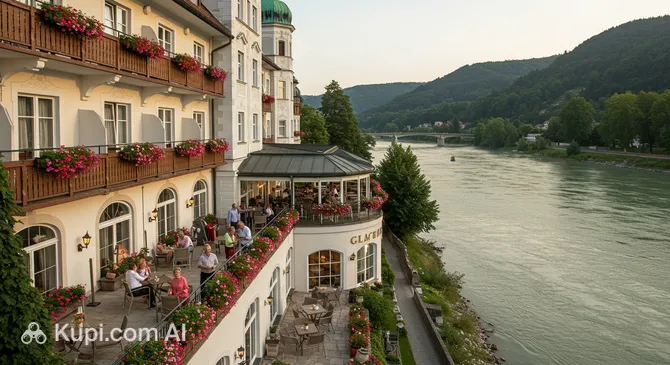
Notable hotels in the city include the Hotel König, which offers comfortable living conditions. Many hotels are located in scenic spots offering beautiful views of the rivers or historical buildings.

Hotel König. Illustration.
Source: Kupi.com AI

Traveler photos:

When planning a trip to Passau, especially during the peak tourist season (summer and Christmas markets) or during major events, it is recommended to book accommodation well in advance. This will allow you to choose the most suitable option in terms of location and price.

The price range for accommodation in Passau varies from budget options to luxury hotels. Most hotels and apartments can be booked through popular online booking platforms or directly on the hotels' official websites.

Nearby Cities

For those who want to explore the surrounding area, Passau serves as an excellent starting point for day trips to several interesting nearby locations:

CityPopulationDistance
Hauzenberg11 70317 km
Pocking16 22321 km
Waldkirchen10 90122 km
Osterhofen11 92034 km
Pfarrkirchen13 07339 km

These nearby destinations offer insight into the region's diverse culture and landscapes. Each trip promises new discoveries and pleasant impressions, complementing your journey to Passau.

Shopping & Souvenirs

Passau, a charming city at the confluence of three rivers, offers pleasant shopping opportunities, combining modern shopping centers with cozy little shops in the historic center. Although Passau may not be a world fashion capital, you can find quality goods, regional delicacies, and unique souvenirs here.

Main shopping spots are concentrated in the Old Town (Altstadt), especially along Ludwigstraße and its adjacent side streets. Here you will find clothing boutiques, shoe stores, jewelry shops, bookstores, and shops selling traditional Bavarian goods. Strolling through these picturesque streets is a pleasure in itself, allowing you to combine shopping with sightseeing.

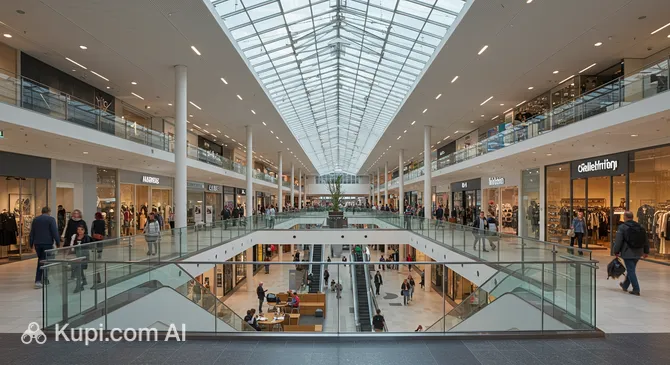
For those who prefer one-stop shopping, Passau has several shopping malls. One of the most popular is the Stadtgalerie Passau, which offers a wide selection of famous brand stores for clothing, electronics, and cosmetics, as well as cafes and restaurants. Another noteworthy shopping complex is the Three Rivers Shopping Center (Donaupassage, formerly known as the Nibelungen Center), offering a variety of goods and services.

Stadtgalerie Passau. Illustration.
Source: Kupi.com AI

Traveler photos:

Market lovers should visit the weekly farmers' market (Wochenmarkt), which usually takes place on Domplatz or Klostergarten. Here you can buy fresh local produce, cheeses, sausages, pastries, and flowers. During the pre-Christmas period, the famous Christmas Market (Christkindlmarkt) opens in Passau—one of the most beautiful in Bavaria—where you can purchase handmade crafts and Christmas decorations while enjoying the festive atmosphere.

As souvenirs from Passau, tourists often choose glassware, as the city is close to the Bavarian Forest region, known for its glassmaking traditions. Items with city symbols, such as depictions of the three rivers junction or St. Stephen's Cathedral, are also popular. Bavarian delicacies like local beer, liqueurs, or gingerbread also make excellent gifts.

Most shops in Passau are open from Monday to Saturday, usually from 9:00 or 10:00 AM until 6:00 or 8:00 PM. Large shopping centers may have longer hours. On Sundays and public holidays, almost all shops are closed, except for some souvenir shops and stores at the railway station. Cash (Euro) and bank cards (EC-Karte, Visa, Mastercard) are accepted. Small shops may prefer cash.

For tourists from non-EU countries, there is the possibility of a VAT refund (Tax Free Shopping) when purchasing goods over a certain amount in participating stores. To do this, you must ask the seller for a special Tax Free check at the time of purchase and present it along with the goods at customs when leaving the EU.

Reached the end of the page?

That means the route is fully explored