Support

Siegburg

About

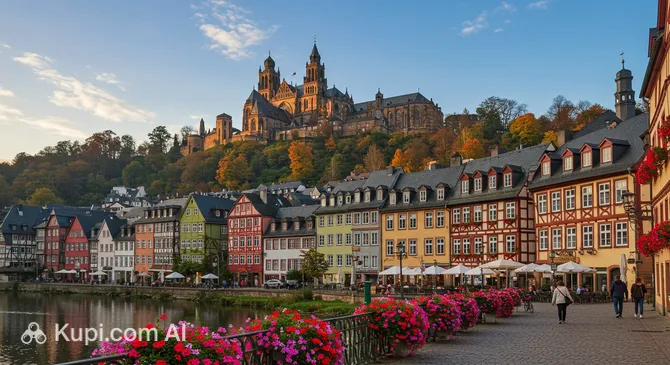
Siegburg is a cozy and welcoming town in Western Europe, located in the state of North Rhine-Westphalia. It sits literally at a crossroads of important routes: just 10 kilometers from Bonn and 26 kilometers from Cologne, on the picturesque banks of the Agger and Sieg rivers. Thanks to its favorable geographic location, the town serves as an ideal starting point for traveling throughout the region and exploring such an amazing country as Germany.

Siegburg. Illustration.
Source: Kupi.com AI

Despite its relatively small population of about 41,660 people, Siegburg is the administrative center of the Rhein-Sieg district. The town skillfully combines modern dynamics with the charm of antiquity. Walking through its streets, you will see how modern quarters, well-kept parks, and architecture from past centuries harmoniously intertwine, reflecting the rich history of Siegburg.

The town's special appeal lies in its leisurely and friendly atmosphere. Siegburg is surrounded by green meadows and hills, making it a wonderful place to escape the hustle and bustle of major metropolises. Guests can enjoy strolls through the historic center, visit the colorful farmers' market, or relax in cozy cafes. If you are looking for a place to experience authentic German flavor and comfort, Siegburg is definitely worth including in your itinerary.

Weather Overview

The climate of Siegburg can be described as moderately warm, without extreme temperature fluctuations, which makes the city pleasant to visit at any time of year. However, when planning a trip, it is important to consider the regional seasonal characteristics. To pack your suitcase correctly, we recommend studying the detailed weather in Siegburg by month in advance.

Summer here is usually mild and comfortable. From June to August, the average temperature stays around 18–19.5°C, with maximum values reaching 23.9°C. This is the driest period of the year, though an umbrella may still come in handy: even in the sunniest month, June, there are about 11 rainy days. May and September are also excellent for trips, delighting guests with average temperatures from 13.7°C to 15.7°C.

The winter period is cool and characterized by high humidity. The lowest temperatures are recorded in January, dropping on average to 3.5°C, while frosts do occur but are not severe (minimum around 1.4°C). Be prepared for frequent precipitation: December is the gloomiest month, with up to 20 days of precipitation.

Expect a moderately warm summer, ideal for long walks, and a cool, rather damp winter, for which waterproof footwear will definitely be needed.

Average monthly temperature

Average monthly precipitation

Interesting Facts

In addition to its main attractions, Siegburg holds many fascinating secrets and historical details that reveal themselves only to the most curious travelers. This town is a true treasure chest of antiquities, where every era has left its unique mark.

  • Ancient Heritage: The history of settlements on the site of modern Siegburg dates back to deep antiquity, long before the Roman era. Archaeological finds confirm that people inhabited this territory between 1000 and 500 BC, making these lands among the oldest inhabited spots in the region.

  • Ceramics Capital: Starting from the 15th century, Siegburg became famous throughout Europe for its unique pottery art. Local ceramics, known for their quality and artistic execution, were a coveted commodity in many countries, and modern masters carefully preserve and continue these centuries-old craft traditions.

  • The Town's Spiritual Guardian: The majestic Benedictine Abbey, founded in the 11th century, is not just an architectural landmark towering over the city. Today, it is an active cultural center where spiritual heritage harmoniously intertwines with art: concerts and exhibitions are held here regularly.

  • A City of Talents: Siegburg is proud of its outstanding residents—artists, musicians, and scientists who have made significant contributions to German culture. Their stories and achievements are carefully documented in the city museum, which serves as a tribute to famous locals.

How to Get There

Siegburg boasts excellent accessibility thanks to its location in the densely populated Rhine-Ruhr region. Travelers can easily plan a trip using the developed network of roads and railways, as well as its proximity to major aviation hubs. You can find all ways to get to the city on a dedicated page, and below we look at the main options.

Siegburg does not have its own airport, but the closest gateway is Cologne Bonn Airport (CGN), located just 10.8 km away. This is the most convenient option for tourists: the journey by taxi or transfer takes less than half an hour. The airport serves many European and domestic flights, being an important transport hub for the region.

An alternative for international travelers is Düsseldorf International Airport (DUS). It is located about 62 km from Siegburg. A car journey from there will take about an hour. This is a large airport with a huge passenger flow, offering a wide selection of flights worldwide.

For clarity, here is a summary of the region's main airports:

AirportPassenger trafficDistance
Cologne Bonn Airport10 mln11 km
Dusseldorf International Airport20 mln62 km
Dortmund Airport3.1 mln85 km
Frankfurt-Hahn Airport1.9 mln95 km
Maastricht Aachen Airport230 932102 km

Rail connections are one of the town's strong points. The Siegburg/Bonn station is located here, served by high-speed ICE trains, which allows you to get here quickly from Frankfurt, Cologne, and other major cities in Germany. This makes traveling by train one of the most comfortable ways to arrive.

If you are planning complex routes with transfers, you can use large neighboring hubs. For example, Cologne Central Station is approximately 24 km from Siegburg. It is one of Europe's busiest stations, from where it is easy to reach your destination by S-Bahn or taxi (travel time by car is less than an hour). Also nearby is Bonn Hauptbahnhof in the city of Bonn; the distance to the center of Siegburg is only about 11 km, and the car trip takes about half an hour.

Below is information about the nearest major railway stations:

StationPassenger trafficDistance
Bonn Hauptbahnhof24.5 mln11 km
Messe/Deutz Station23 km
Cologne Central Station113.2 mln24 km
Leverkusen Mitte Station5.5 mln31 km
Dormagen Railway Station2.2 mln43 km

Main Attractions

Siegburg and its immediate surroundings offer travelers more than just historical walks; they also provide excellent opportunities for modern leisure, shopping, and gastronomic discoveries. The town and neighboring districts are packed with places where you can spend quality time with the whole family or soak up the local atmosphere.

For fans of water activities and relaxation, the AGGUA Troisdorf complex is a real find. Located in the immediate vicinity of Siegburg, this park attracts guests with its variety of pools and exciting water slides. Of particular note is the magnificent sauna area, where you can relax both mind and body after a busy day of sightseeing. This place is perfect for both fun outings with children and peaceful recovery.

AGGUA Troisdorf. Illustration.
Source: Kupi.com AI

Traveler photos:

Those who cannot imagine a trip without quality shopping should head to the HUMA Shopping Park Sankt Augustin. It is one of the largest and most popular shopping centers in the region, offering an impressive range of products. Here you will find numerous clothing stores, electronics, and gifts. Spacious galleries and convenient infrastructure make HUMA an excellent place to buy everything you need and pick up memorable souvenirs from your trip.

The town's gastronomic gem, which many tourists include on their must-visit list, is the Tuscolo Siegburg restaurant. This establishment is famous far beyond the city for its authentic Italian cuisine and, in particular, its legendary oversized pizzas. The lively atmosphere, friendly staff, and consistently delicious dishes make this restaurant a great spot to end the day in the company of friends or family.

Local Cuisine

The gastronomic life of Siegburg is a true discovery for foodies, where hearty German traditions and modern culinary trends harmoniously intertwine. While in the North Rhine-Westphalia region, you simply must try the local classics: juicy sausages, aromatic pork knuckle with a crispy crackling, and various potato salads. A special place on the table is held by fresh bread, which is baked here according to old recipes, preserving centuries-old traditions of baking craftsmanship.

The drinking culture in the city is inextricably linked to local breweries. Establishments like Siegburger Brauhaus brew authentic German beer, strictly following the Beer Purity Law. A glass of the signature frothy beverage is the perfect accompaniment to a hearty lunch. For those who prefer non-alcoholic options, local cafes offer excellent coffee and seasonal homemade drinks.

However, Siegburg is famous for more than just German classics. The city's gastro scene is rich with Mediterranean and Asian cuisine offerings. If you crave variety and southern flair, it’s worth stopping by Tapeña Tapas Bar. This cozy spot is perfect for enjoying Spanish snacks and a relaxed atmosphere.

To immerse yourself in the daily life of the townspeople, head to the Wochenmarkt Siegburg farmers' market. It’s not just a place for trade, but a real gastronomic attraction where stalls overflow with fresh vegetables, farm cheeses, meat delicacies, and aromatic honey. And those with a sweet tooth must visit local pastry shops for magnificent strudels, pies, and the famous gingerbread, which people often take home as a delicious souvenir.

Travel Tips

Siegburg is a city where history harmoniously intertwines with modern comfort, and to ensure your trip goes flawlessly, it's worth considering a few local nuances in advance. We have prepared a list of practical recommendations to help you feel confident here and avoid typical tourist mistakes.

  1. Clothing and Essentials. The weather in the North Rhine-Westphalia region is changeable, so the best choice is to dress in layers ("the onion principle") to easily adjust to temperature changes. Be sure to bring comfortable flat-soled shoes: the climb to the famous Michaelsberg Abbey and walking on the cobblestones of the old town require comfort. Don't forget an adapter for Type F sockets (Schuko standard) if your plugs differ from European ones.
  2. Transport. Siegburg's historical center is very compact and best explored on foot. The city is an important transport hub: from the Siegburg/Bonn station, you can reach Cologne or Bonn in minutes by high-speed train (ICE) or city rail (S-Bahn). For route planning and ticket purchases, use the DB Navigator app. Taxis are reliable but expensive; for short trips, public transport is more economical.
  3. Finance. The official currency is the Euro. While Visa and Mastercard are accepted in most supermarkets and large restaurants, Germany remains a country that loves cash. Always have small bills (5–20 euros) and coins for payments in bakeries, souvenir shops, or at the market square. It is customary to leave a tip of 5–10% of the bill, simply rounding up the amount when paying.
  4. Health and Safety. Siegburg is a quiet and safe city where you can walk without fear even in the evening. Pharmacies are easy to recognize by the red Gothic letter "A" (Apotheke); the schedule of 24-hour duty pharmacies is usually posted on the door of any of them. Tap water here is of excellent quality and can be drunk without boiling.
  5. Communication. The main language is German, but the level of English proficiency among locals, especially young people and service workers, is quite high. Nevertheless, learning a few phrases, such as "Guten Tag" (Good day) or "Danke" (Thank you), will immediately win over your interlocutor. Free Wi-Fi is available at the station and in many cafes, but for a stable connection, it's better to buy a local SIM card at a supermarket (passport required for registration).
  6. Local Etiquette. Germans value punctuality, so it's better to arrive on time for tours or meetings. When entering small shops or an elevator, it is customary to greet those present. On Sundays, most shops (except those at the station) are closed, and making noise on the street or in residential areas is considered bad form—it is a time of quiet and rest (Ruhetag).
  7. What to Avoid. Never walk on bicycle paths (usually marked in red or with specific symbols)—this is a high-risk zone and the territory of cyclists, who can travel very fast. Also, do not cross the road on a red light, even if there are no cars: this causes disapproval among locals and can lead to a fine.
  8. Unique Souvenir. Remember the city's pottery past! Siegburg was famous for its ceramics for centuries. Try to find a traditional Siegburg mug (Siegburger Schnelle) or modern handmade ceramic items in local shops—it will be the most authentic gift from your trip.

Siegburg charms with its tranquility and German order. By following these simple tips, you can avoid minor troubles and fully focus on the beauty of the old architecture, the taste of local cuisine, and the hospitality of the residents of this cozy city.

Entertainment & Nightlife

Siegburg's nightlife may not compare to the massive raves of neighboring Cologne, but this town has its own unique charm. Evenings here are spent in an atmosphere of coziness and friendly conversation. Most of the action is concentrated in the historical center, where ancient architecture is illuminated by shop windows and street lamps, creating the perfect backdrop for an evening stroll.

The epicenter of evening activity is the Market Square (Marktplatz) and its adjacent pedestrian streets, such as Holzgasse and Bahnhofstraße. This is where most of the establishments that open their doors to those wishing to relax after sunset are located. The crowd in Siegburg is diverse, ranging from students and young people to respectable couples, so the dress code in most places is casual—casual style is appropriate almost everywhere.

A classic evening in Siegburg often begins with a late dinner that transitions into drinks. A great place to start is Tuscolo Siegburg. This place is famous for its lively, noisy atmosphere that perfectly sets a fun mood. It’s always crowded, Italian melodies play, and the clinking of glasses doesn't stop until late in the evening.

If you prefer a more intimate setting and a good wine list, it's worth checking out Tapeña Tapas Bar. Although known for its food, in the evening it transforms into an excellent wine bar where you can spend time in quiet conversation, tasting Spanish wines and cocktails. This is a popular location for a "pre-party" or a calm conclusion to the day.

For those looking for dancing and music, the choice in Siegburg itself is more limited, but it exists. One of the cult nightlife spots is the bar-club Casbah on the Market Square. This is an establishment with a long history where you can not only have a cocktail but also dance to modern hits on weekends. Traditional breweries (Brauhaus) are also popular in town; they stay open late and offer an authentic German atmosphere of fun.

Cultural evening leisure is represented by several venues. The large concert and exhibition hall Rhein-Sieg-Forum regularly hosts touring artists, musical groups, and comedy shows. Film lovers should check out the modern Cineplex Siegburg multiplex located right by the station—an excellent place for a relaxed evening.

Practical tips for night owls:

  • Safety: Siegburg is a very safe town. The center is well-lit, and you can walk here without fear even late at night.
  • Transport: If the local options aren't enough, remember that Siegburg station is within walking distance of the center. High-speed trains and S-Bahn trains (lines S12/S19) run around the clock on weekends, allowing you to reach Cologne's vibrant nightlife in just 20–30 minutes.
  • Taxi: Taxi ranks are located at the railway station and on the Market Square. You can also call a car via popular apps or by phone; an average trip around town will cost 10–15 euros.

During the day, entertainment is more laid-back. Guests can visit the City Museum (Stadtmuseum), located in a historical building that often hosts interesting temporary exhibitions, or stroll through the picturesque parks around the Michaelsberg Abbey.

Parks & Museums

Siegburg is a town where cultural heritage harmoniously coexists with picturesque natural landscapes. For tourists looking to escape the city bustle or immerse themselves in the region's history, there are many noteworthy places here, from quiet green alleys to unique museum collections.

Parks and Natural Areas

The green heart of the city is rightfully considered the area around Mount Michaelsberg. The slopes of this hill, crowned by a majestic abbey, have been transformed into a well-kept park with winding paths and observation decks. It is an ideal place for leisurely walks, offering breathtaking panoramas of the town and the Rhine valley. Here you can have a picnic on the grass or simply enjoy the silence in the shade of centuries-old trees, all while being just a few minutes' walk from the lively center.

Nature lovers should head to the Siegauen—the vast floodplains of the Sieg River. This is a true natural oasis with kilometers of walking and cycling routes. A stroll along the river offers encounters with diverse flora and fauna; herons and other waterfowl are often seen here. The flat terrain makes this place accessible to travelers of all ages and fitness levels.

Another gem for those seeking tranquility is the Trerichsweiher nature reserve. This marshy area with ponds is home to many bird and amphibian species. The paths around the water bodies are perfect for morning jogs or meditative walks in nature.

Museums and Galleries

The main guardian of the town's history is the Siegburg City Museum (Stadtmuseum), located in the historical building where the famous composer Engelbert Humperdinck was born. The museum's exhibition is multifaceted, but special attention is paid to the famous Siegburg stoneware (Siegburger Steinzeug), which was renowned throughout Europe in the Middle Ages. Visitors can trace the development of pottery and learn about the city's rich past through archaeological finds and everyday objects.

Equally impressive is the Treasury of St. Servatius Church (Schatzkammer St. Servatius). This is one of the most significant church treasuries in Germany. Its collection houses unique reliquaries, altars, and works of Romanesque jewelry dating back to the 12th century. Visiting this place allows you to touch the spiritual heritage of the region and see masterpieces that have survived centuries.

Historical Heritage and Architecture

The undisputed landmark and symbol of the city is Michaelsberg Abbey. The former Benedictine monastery with its powerful walls and towers is visible from almost anywhere in Siegburg. Although it now houses the Catholic Social Institute, the architectural ensemble and the monastery church remain available for viewing and admiration. Also worth noting is the Church of St. Servatius in the city center, which is a fine example of Romanesque and Gothic architecture.

Insider Tip

If you want to see the city from an unusual perspective, find the ancient defensive tower known as the Hexenturm (Witch's Tower), tucked away among the city buildings. For the best sunset photo, climb up to the "Johannistürmchen" on the slope of Michaelsberg—the view of the old town roofs from there is particularly romantic.

Getting Around

Siegburg's transport system is integrated into the extensive network of the Rhine-Sieg transport association (VRS), making travel around the city and its surroundings simple and convenient. For tourists, this means that the same ticket is valid for all types of public transport: buses, trams, and suburban trains within the chosen fare zone. Thanks to the town's compactness, many attractions in the center are accessible on foot, but the transport network is indispensable for trips to remote areas or neighboring cities.

The main form of rail transport connecting Siegburg with neighboring Bonn is the light rail (Stadtbahn), specifically line 66. Locals often call it the "Siegburgbahn." This line departs directly from Siegburg railway station and passes through picturesque surroundings to central Bonn and beyond. It is an ideal option for day trips. Numerous bus routes operated by RSVG run within the city and surrounding districts. The central bus station is located next to the railway station, providing convenient transfers.

A unified VRS fare system is used for payment. Tickets can be purchased from machines at stations (accept cash and cards), from bus drivers (often cash only and only on the bus), or via mobile apps such as the VRS App or DB Navigator. Important to remember: if you bought a paper ticket from a machine and it does not have a purchase time stamp, it must be validated (stamped) in a special orange or red device before entering the platform or inside the bus/tram. Fines for fare evasion in the region are quite high.

The cost of travel depends on the fare zone. For trips within Siegburg, a category 1b ticket is usually sufficient, while traveling to Bonn or Cologne will require a higher price category ticket (e.g., Preisstufe 3 or 4). It is beneficial for tourists to purchase a 24-StundenTicket (24-hour pass), which allows unlimited travel for 24 hours for one person or a group of up to five people. This often pays off after just the second or third trip of the day.

If you prefer an active lifestyle, check out the RSVG-Bike bike-sharing system (based on Nextbike). Rental stations are scattered throughout the city, and a bike can be easily rented via the app, which is especially pleasant for rides along the Sieg River. For those who value comfort, taxis are always waiting at the station. Popular taxi apps also operate in the region, although in Siegburg itself, the classic taxi rank at the station is often the fastest way to get a ride.

Separately, it is worth mentioning the rail connection. The Siegburg/Bonn station serves not only high-speed ICE trains but also S-Bahn suburban trains (lines S12 and S19). They function like an overground metro, linking the city with the airport and Cologne 24/7 on weekends, which is very convenient for those staying out late.

Accommodation

Siegburg, despite its compact size, possesses a decent and diverse hospitality infrastructure. While you are unlikely to find massive luxury resort complexes here, the town offers an excellent choice of modern business hotels, cozy family guesthouses, and comfortable apartments. The main focus of the local hotel stock is on functionality, cleanliness, and convenience, largely due to the town's status as an important regional transport hub.

The most popular and convenient area for tourists to stay is the historical center (Innenstadt) and the quarters adjacent to the railway station. Choosing accommodation in this location has two undeniable advantages. First, you are within walking distance of the Market Square, the Abbey, and the town's best restaurants. Second, the proximity to the Siegburg/Bonn station allows you to reach central Cologne or the airport in just 15–20 minutes, making Siegburg a strategically advantageous base for traveling throughout North Rhine-Westphalia.

When planning your trip, consider an important nuance: hotel occupancy in Siegburg directly depends on the event calendar of neighboring Cologne. During large international trade fairs (Messe) or the famous Carnival, accommodation prices in the metropolis skyrocket, and many guests choose Siegburg as a more affordable and peaceful alternative. Therefore, it is strongly recommended to book your accommodation in advance, especially if your dates coincide with major events or Christmas markets.

Overall, the price range in the town can be described as moderate. Staying here is often cheaper than in neighboring large cities, while maintaining high German quality standards. You can book a room easily through popular international online aggregators or directly on hotel websites. Renting private apartments is also gaining popularity, which is an excellent solution for families with children or those who prefer to cook for themselves.

Nearby Cities

For those who want to explore the surrounding area, Siegburg serves as an excellent starting point for day trips to several interesting nearby locations.

One of the most popular destinations is Bonn, located just 11 km from the town. The former capital of West Germany attracts tourists with its rich history and culture. Here you can visit the Ludwig van Beethoven House-Museum, stroll along the famous Museum Mile, or enjoy views of the Rhine from the city embankment. Bonn is ideal for a culture-packed leisure experience.

Nature and architecture lovers should pay attention to Bergisch Gladbach. This city is about 22 km away and serves as the gateway to the picturesque Bergisches Land region. Its main gem is the luxurious Baroque Bensberg Castle, which offers panoramic views of the surroundings. The city is also famous for its museums and cozy forest trails.

Very close by, literally 5 km away, is Troisdorf. This is a great place for a quiet family trip. Wissem Castle is located here, housing a unique European museum of book illustration and picture books. Additionally, the city borders the Wahner Heide nature reserve, which offers excellent opportunities for hiking.

CityPopulationDistance
Sankt Augustin55 7673 km
Lohmar30 4524 km
Troisdorf75 2225 km
Hennef47 4005 km
Bonn331 88511 km

These nearby destinations provide insight into the diverse culture and landscapes of the region, making your trip even more exciting and fulfilling.

Shopping & Souvenirs

General Overview

Shopping in Siegburg is a pleasant combination of modern opportunities and historical charm. The town is famous for its compact and picturesque pedestrian zone, where the shopping process turns into a leisurely stroll. There is no big-city bustle here, but there is an excellent selection of boutiques, family shops, and well-known brand stores. Siegburg is especially attractive for those who value a personalized approach and the atmosphere of an old German town.

Main Shopping Areas and Streets

The heart of the town's commercial life is the pedestrian zone, which begins almost from the railway station and leads to the Market Square. The main shopping artery is Kaiserstraße and the adjacent Holzgasse. Walking along these streets, you will find many shops for clothing, shoes, perfumes, and bookstores. The architecture here is pleasing to the eye, and the abundance of street cafes allows for a pleasant break between purchases.

Shopping Centers

While the city center itself is one large open-air shopping district, for large-scale shopping under one roof, it’s worth looking at the large complexes in the immediate vicinity. The main attraction for shoppers in the entire region is HUMA Shopping Park Sankt Augustin. It is located just a few minutes' drive from the center of Siegburg and offers a huge range of products: from electronics and sports equipment to fashionable clothes from international brands.

Markets

A special point of pride for Siegburg is its Market Square (Marktplatz). The regular city market held here is considered one of the most beautiful and richest in the region. Here you can buy the freshest farm products, flowers, and local delicacies. In winter, the square is transformed by the famous Medieval Christmas Market, which attracts tourists from all over Germany for unique handmade crafts and a festive atmosphere.

Souvenirs

As a memorable gift from Siegburg, it is worth bringing back the famous Siegburg ceramics (Siegburger Keramik). The city's pottery traditions date back to the Middle Ages, and today local masters create both replicas of old jugs and modern handmade items. Another popular souvenir is the "Abbey Liqueur" (Abteilikör), a reminder of the city's monastic past and the famous Michaelsberg Abbey.

Opening Hours and Payment

Shops in Siegburg typically operate from Monday to Saturday from 10:00 to 19:00 or 20:00. Large shopping centers and supermarkets may stay open longer, until 21:00 or 22:00. It is important to remember that on Sundays, almost all shops are closed, except for some points at the station. Euros and bank cards (Visa, Mastercard) are accepted for payment, but it is better to have cash in small souvenir shops or at the market.

Tax Free

Tourists residing permanently outside the European Union can use the Value Added Tax (VAT) refund system (Tax Free). Look for shops with a "Global Blue" or "Tax Free Shopping" sticker. When purchasing over a certain minimum (usually 50 euros), ask for a special receipt, which must be presented at customs when leaving the EU along with the purchases and your passport.

Reached the end of the page?

That means the route is fully explored