Support

Archaeological Museum of Piraeus

About

The Archaeological Museum of Piraeus is an important cultural center located in the famous port city of Piraeus, Greece. The museum attracts visitors not only with its exhibits but also with its excellent location: it sits right next to the excavations of an ancient amphitheater and almost on the shore of a picturesque sea bay, just steps from the coast. The modern two-story building was specifically designed to house a rich collection of archaeological finds.
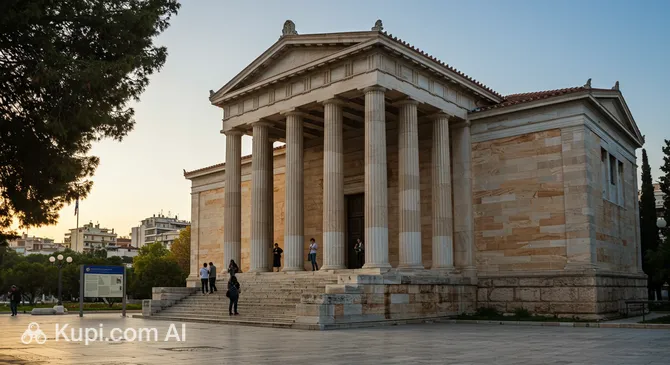
Archaeological Museum of Piraeus. Illustration.
Source: Kupi.com AI

Traveler photos:

The museum's collection is truly impressive: it features numerous artifacts discovered during archaeological excavations in Piraeus itself and its outskirts. These finds span a vast historical period, starting from the Neolithic era and ending with Roman times, telling the story of the port city's evolution, its trade links, and the daily lives of its inhabitants. The museum's exhibition is spread across ten spacious halls, each dedicated to a specific period or theme.

A visit to the Archaeological Museum of Piraeus is a unique opportunity to dive into the rich past of one of the key ports of the ancient world. Here, you can see ancient ceramics, sculptures, funerary steles, bronze items, and much more that helps recreate the picture of life in ancient Piraeus. The museum is a must-visit for anyone interested in the history and archaeology of Greece who wishes to gain a deeper understanding of this legendary city's significance.

Contacts

For up-to-date information on opening hours, ticket prices, and available tours at the Archaeological Museum of Piraeus, it is recommended to visit the museum's official website or contact local tourist information centers. There, you can find the latest data to plan your visit effectively.

How to contactContact
AddressChar. Trikoupi 31, Pireas 185 36, Greece
Phone number+30 21 0452 1598
Websitewww.piraeus.org

What to Do

A visit to the Archaeological Museum of Piraeus is a unique opportunity to immerse yourself in the rich history of this ancient port city. In the museum's ten spacious exhibition halls, an impressive collection of artifacts awaits you, covering a vast time span: from Neolithic finds to evidence of later civilizations. Each display case tells its own story, allowing you to trace the region's development over millennia.

Special attention in the exhibition is given to the maritime past of Piraeus, which served as the vital port for the Athenian state for centuries. You can see objects related to shipbuilding, trade, and the daily life of sailors, which will help you better understand the strategic importance of this location for Greece. The exhibits clearly demonstrate how the sea shaped the city's culture and economy.

But the experience isn't limited to the indoor galleries. Part of the archaeological collection is displayed outdoors, right next to the excavation site of the ancient amphitheater. This allows visitors to not only examine the artifacts but also to feel their connection to the historical context, seeing them where they were discovered centuries ago. This approach creates a more complete understanding of the region's cultural heritage and makes a visit to the museum even more educational and memorable.

Getting There

The Archaeological Museum of Piraeus is conveniently located almost on the shore of the bay, just a few minutes' walk from the coast. The ruins of the ancient amphitheater, situated in the immediate vicinity of the museum, serve as a landmark for visitors, making it easily recognizable.

Piraeus, being the main port of Greece and a major transport hub, is excellently connected to Athens. You can reach the city, and subsequently the museum, via various types of public transport, including the metro, buses, and trams running between the capital and the port.

One of the most convenient ways to reach the Archaeological Museum of Piraeus from central Athens is by metro. You will need Line 1 (the Green Line) to the final station, "Piraeus." From the metro station, you can walk to the museum while enjoying the sea views, or take a local bus if you prefer to save time. A taxi from the port or any other point in Piraeus is also always an available option.

Nearest city: Piraeus

History & Facts

The Archaeological Museum of Piraeus, located in the Greek city of the same name, Greece, holds a rich history closely intertwined with the fate of Piraeus itself. Founded in 1935, the museum originally occupied a modest building near the ancient theater in Zea. However, as the collection grew and the significance of the finds increased, there was a need for a more spacious and modern facility. Thus, the foundation for the modern museum was laid in 1966, and in 1981, it moved into a new two-story building where it remains today, presenting unique artifacts of the region to visitors.

The history of Piraeus itself dates back to antiquity. Interestingly, according to geological studies, in the distant past, Piraeus was an island, but over time, due to river silt, it joined with Attica. The first settlements here date back to the Neolithic era, and the city reached its peak when it became the main seaport of the Athenian state. In the Middle Ages, Piraeus was known as Porto Leone — "Lion Port" — thanks to an impressive stone lion sculpture that guarded the entrance to the harbor like a sentinel. The museum's exhibits reflect all these eras, allowing visitors to trace the city's development over thousands of years.

The museum's collection includes finds from Piraeus and the coastal areas of Attica, spanning from the Mycenaean era to Roman times. Among the most famous exhibits are the bronze statues discovered in 1959, including the celebrated "Piraeus Apollo" and "Piraeus Athena." These masterpieces of ancient Greek art attract the attention of researchers and art lovers from around the world. The museum is constantly being updated with new finds, revealing new pages in the history of this important ancient center.

Notably, the archaeological heritage of Piraeus continues to be actively studied and yields new discoveries. Plans for 2025 include the opening of a new underwater museum, which promises to be the largest in Greece. This ambitious project will be dedicated to ancient objects raised from the seabed during underwater excavations and will serve as an important addition to the existing Archaeological Museum of Piraeus, further expanding the understanding of the region's rich maritime past.

Time Needed

To explore the Archaeological Museum of Piraeus, most visitors typically need about 2-3 hours. This amount of time is generally sufficient to get acquainted with the main exhibition, which covers the history of Piraeus from Mycenaean times to the Roman period. You will be able to see impressive bronze statues, ceramics, funerary steles, and other artifacts found in this important port city and its surrounding areas.

If you have a deep interest in archaeology or the history of Ancient Greece, you might want to spend more time in the museum, carefully studying each exhibit and reading the accompanying information. In this case, a visit could take up to half a day. You should also take into account the possible presence of temporary exhibitions, which may require additional time to view.

Overall, when planning a visit to Piraeus, set aside at least a couple of hours for the Archaeological Museum to get a full sense of its rich collection and the historical significance of this region of Greece.

Working Hours

When planning a visit to the Archaeological Museum of Piraeus, it is important to check the current opening hours in advance. Generally, museums in Greece may have different schedules depending on the season (summer and winter), as well as special opening hours on public holidays. At this time, specific information regarding the museum's current hours and whether advance booking is required is unavailable.

We recommend checking the official website of the Archaeological Museum of Piraeus before your visit or contacting local tourist information centers in Piraeus for the most up-to-date information. This will help you plan your visit effectively and avoid any potential inconvenience caused by schedule changes or temporary closures.

DayOpening hours
Monday9:00 – 17:00
TuesdayClosed
Wednesday9:00 – 17:00
Thursday9:00 – 17:00
Friday9:00 – 17:00
Saturday9:00 – 17:00
Sunday9:00 – 17:00

Nearby

A visit to the Archaeological Museum of Piraeus is, without a doubt, a fascinating immersion into history. However, to make your journey through Piraeus even more enriching and memorable, it is worth exploring its surroundings. Often, nearby sites—whether they are other museums, historical monuments, or simply picturesque corners—help create a more complete picture of the city and its culture.

A stroll through the neighborhood will allow you to discover new facets of Piraeus, see how the past intertwines with the present, and perhaps find your own favorite spots that aren't mentioned in standard guidebooks. This is an excellent opportunity to complement your museum experience and feel the atmosphere of this port city. Near the Archaeological Museum of Piraeus, you will find several interesting places that may pique your interest:

NameDistance
Terpsithea Square0.3 km
Saint Nicholas Orthodox Church0.4 km
Clock of Piraeus0.5 km
Hellenic Maritime Museum0.5 km
Mastronikolas Konstantinos Nightclub0.9 km
O Giorgos1 km
Hippodameia Square1.2 km

Have you reached the end of the page?

So the route has been studied inside and out