Support

Hellenic Cosmos Cultural Center

About

The Hellenic Cosmos Cultural Center is a modern cultural hub and museum located in vibrant Athens, the heart of Greece. It is not just an exhibition space, but an innovative platform where the history and culture of Hellas come to life through cutting-edge technology. The center invites visitors of all ages on a fascinating journey, combining interactive displays, educational programs, and vibrant cultural events.
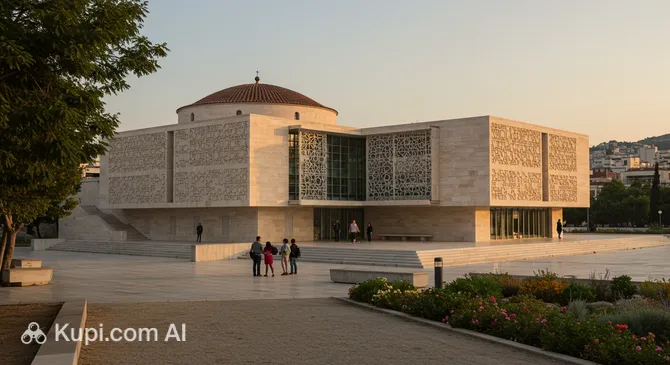
Hellenic Cosmos Cultural Center. Illustration.
Source: Kupi.com AI

Traveler photos:

The primary goal of Hellenic Cosmos is to make the rich heritage of Ancient Greece and the Hellenistic period accessible and engaging for modern audiences. Here, you can immerse yourself in various aspects of Greek civilization, from mythology and philosophy to the daily life of ancient cities, thanks to impressive multimedia installations, captivating virtual reality shows, and carefully curated themed exhibitions.

Hellenic Cosmos caters to a wide range of visitors: it is an ideal place for educational family leisure, school trips, and for anyone seeking to better understand the roots of European culture. Thanks to its unique format, which combines education and entertainment, the center has become a favorite for both tourists and locals, establishing itself as one of Athens' iconic modern landmarks.

Contacts

For the most up-to-date information on opening hours, ticket prices, and contact methods for the Hellenic Cosmos Cultural Center, we recommend visiting the center's official website. You can also find useful information in local travel guides or tourist information centers in Athens.

How to contactContact
AddressPireos 254, Tavros 177 78, Greece
Phone number+30 21 2254 0000
Websitewww.hellenic-cosmos.gr

What to Do

A visit to the Hellenic Cosmos Cultural Center promises a full program for all ages. One of the main highlights is the interactive exhibitions dedicated to various eras of Greece's rich history. Here, you are not just a passive observer but an active participant in the learning process. The virtual tours are particularly popular: thanks to modern virtual reality technologies, guests can take an exciting "plunge" into ancient cities and examine famous architectural monuments in detail, feeling like a part of bygone eras.

Beyond virtual journeys, the center offers a wide range of educational programs and workshops designed for different audiences. For younger visitors, engaging themed activities, quests, and science shows are regularly organized to spark interest in history, art, and science in a playful way. Additionally, the Hellenic Cosmos frequently hosts temporary art exhibitions, informative lectures, vivid theatrical performances, and fun family festivals, making every visit to the center unique and memorable.

Getting There

Getting to the Hellenic Cosmos Cultural Center is quite simple, as it is conveniently located near the center of Athens. Thanks to the well-developed public transport system in Greece's capital, you will have several convenient options to reach this unique site and immerse yourself in the world of Hellenic culture.

The most popular and cost-effective way is to use public transport. Bus and tram routes pass near the center, and there is also a metro station nearby, making it easily accessible from almost anywhere in the city. The journey from central tourist areas of Athens, such as Plaka or Monastiraki, usually takes about 15-20 minutes. For those on foot, the path from the nearest public transport stops is well-marked with signs, so you can find your way without difficulty.

If you prefer more independence or are traveling by car, parking is provided near the Hellenic Cosmos Cultural Center for your convenience. Additionally, you can always use taxis or the car-sharing services popular in Athens, which offer a comfortable and fast way to reach your destination hassle-free, especially if you are short on time or traveling with luggage.

Nearest city: Athens

History & Facts

The Hellenic Cosmos Cultural Center did not appear out of nowhere—its creation was an important part of a broader initiative aimed at the careful preservation and active promotion of Greece's rich cultural heritage. From the very beginning, the center had an ambitious goal: not just to collect artifacts, but to present the history and culture of Greece in a way that is understandable and interesting to modern audiences, inspiring further exploration.

Special attention in the Hellenic Cosmos exhibitions is given to the Hellenistic era—a period when Greek culture and language spread far beyond the Balkan Peninsula. Visitors can learn how new scientific and cultural centers, such as legendary Alexandria or Pergamon, emerged and flourished, and how Hellenic influence shaped the world at the time. This allows for a deeper understanding of the scale of Greek heritage and its global significance.

The uniqueness of the Hellenic Cosmos Cultural Center lies not only in its themes but also in its approach to presenting material. It is not just a museum in the classical sense, but a space where history comes alive through modern digital technologies. With their help, images of ancient cities, majestic libraries, antique theaters, and other iconic monuments are recreated with incredible accuracy. This immersive approach allows visitors to not just learn facts, but literally touch the past and better realize Greece's invaluable contribution to the development of world culture and science.

Time Needed

When planning a visit to the Hellenic Cosmos Cultural Center, you should allow for 2-4 hours to fully explore its exhibitions and features. This time will let you slowly immerse yourself in the center's atmosphere, study both permanent and temporary exhibitions, and take advantage of the interactive offerings.

Allowing this much time is especially important if you want to fully appreciate everything the center offers. For example, participating in interactive programs or visiting the virtual reality zone, which is one of the main highlights of Hellenic Cosmos, can take up a significant part of your visit. To avoid rushing and to get the most out of every aspect, it's best to set aside at least a couple of hours, and ideally about half a day.

Working Hours

The Hellenic Cosmos Cultural Center is usually happy to welcome guests daily, from morning until evening. However, it's worth noting that specific opening hours may vary. This often depends on the season, as well as the schedule of events and temporary exhibitions. Therefore, to ensure your visit is as smooth as possible, we strongly recommend checking the current schedule on the official website of the cultural center just before your trip.

Regarding the need for advance ticket booking or registration for tours and interactive programs—it is also best to check this information in advance, especially if your visit coincides with the peak tourist season or if you wish to attend a popular show. Generally, the Hellenic Cosmos Cultural Center is open to visitors year-round, but the availability of specific exhibits or programs may be seasonal. The most up-to-date and accurate information can always be found on the official website or by contacting the center's information service.

DayOpening hours
MondayClosed
Tuesday9:30 – 14:00
Wednesday9:30 – 14:00
Thursday9:30 – 14:00
Friday11:00 – 19:00
Saturday11:00 – 19:00
Sunday11:00 – 19:00

Nearby

A visit to the Hellenic Cosmos Cultural Center is undoubtedly a highlight, but Athens has much more to offer! Exploring the surrounding areas will allow you to dive deeper into the atmosphere of this amazing city, discover other interesting spots, and gain even more unforgettable impressions. Don't limit yourself to just the center, as there may be hidden gems nearby that will make your trip even richer.

To help you plan your onward route, we have prepared a list of some attractions located near the Hellenic Cosmos Cultural Center. Perhaps something on this list will pique your interest and become the next stop on your Athenian adventure.

NameDistance
Athens Aquarium1 km
Upupa Epops2.1 km
Technopolis2.6 km
Ancient Agora of Athens3 km
Odeon of Herodes Atticus3 km
Temple of Hephaestus3 km
Areopagus Hill3 km

Have you reached the end of the page?

So the route has been studied inside and out