Support

Theatre of Dionysus

About

The Theatre of Dionysus is not just ancient ruins, but the true cradle of European theatrical art. Located on the southeastern slope of the Acropolis in Athens, Greece, it is considered the oldest theater in the country and one of the oldest in the world. Visiting this historical site allows you to touch the origins of dramatic art and imagine how great tragedies and comedies were born here.
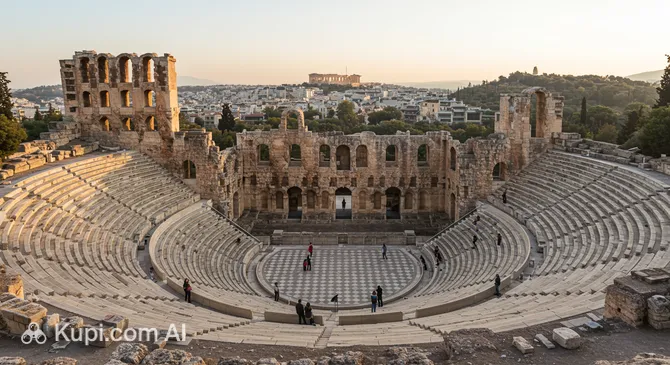
Theatre of Dionysus. Illustration.
Source: Kupi.com AI

Traveler photos:

The history of the Theatre of Dionysus dates back to the mid-6th century BC, during the reign of the tyrant Peisistratos. It was originally part of the sanctuary of Dionysus Eleuthereus, the patron of vegetation and winemaking. The first theatrical structures were wooden, but around 326-325 BC, the theater underwent a massive reconstruction: wood gave way to durable stone and noble marble, giving the structure its monumentality and grandeur.

Even by Ancient Greek standards, the Theatre of Dionysus was an impressive structure. Its stone seats, arranged in 67 rows, could accommodate several thousand spectators, allowing a vast number of Athenians to enjoy the performances. Imagine the atmosphere that reigned here during the premieres of works by Aeschylus, Sophocles, or Euripides—it was the heart of the ancient city's cultural and social life.

Contacts

Since the Theatre of Dionysus is an open-air historical monument and part of the extensive Acropolis archaeological complex, it may not have a direct contact phone number for general inquiries. To find the current opening hours, ticket prices, and visiting rules, it's best to check official tourist websites for Athens or information boards right at the entrance to the Acropolis grounds. You can reach the theater on foot by climbing the Acropolis Hill; it's located on its southeastern slope.

How to contactContact
AddressMitseon 25, Athina 117 42, Greece
Phone number+30 21 0322 4625
Websiteodysseus.culture.gr

What to Do

When visiting the Theatre of Dionysus, you can truly immerse yourself in the atmosphere of ancient Greek culture. Imagine how, thousands of years ago, famous theatrical competitions took place here, drawing enthusiastic crowds. Today, you can carefully examine the surviving elements of this majestic structure. Pay attention to the orchestra—the circular area where the chorus once performed; the remains of the skene, which served as a dressing room for actors and later became a multi-story stone building; and the proskenion—the platform where the theatrical performance itself unfolded.

Besides exploring the ancient stones, the grounds of the Theatre of Dionysus offer breathtaking views: you can admire the panorama of the sea and the distant island of Aegina, which will add vivid impressions to your visit. It is also a wonderful opportunity to delve into the features of ancient Greek theatrical architecture and learn more about the revolutionary ideas of the playwright Sophocles. It was he who not only enriched ancient Greek tragedy but also first used scenery here, attaching it to the facade of the skene, making the Theatre of Dionysus innovative for its time.

It is important to remember that the Theatre of Dionysus is an integral part of the famous Acropolis archaeological site. This means that your introduction to the cradle of theatrical art can be easily combined with visits to other outstanding Athens attractions located nearby. Such a comprehensive visit will allow you to deeper understand the grandeur and cultural heritage of the ancient city.

Getting There

The Theatre of Dionysus is conveniently located on the southern slope of the majestic Acropolis in Athens, making it easily accessible for visitors. One of the most convenient and popular ways to get here is by using the Athens Metro. You will need the "Acropolis" station, located on the Red Line (Line 2). From the metro exit to the theater itself, you'll enjoy a pleasant 5-10 minute walk, allowing you to gradually immerse yourself in the ancient atmosphere as you ascend toward this historical site.

Besides the metro, you can reach the Theatre of Dionysus by city bus—many routes pass near the Acropolis, followed by a short walk. Taxis are also always available to drop you as close as possible to the entrance of the archaeological site. Given its central location, many travel agencies include visits to Athens and specifically the Theatre of Dionysus in their sightseeing tours through the historical heart of Greece, which can be a convenient option for those who prefer organized tours.

Nearest city: Athens

History & Facts

The Theatre of Dionysus, built in the middle of the 6th century BC, was originally a wooden structure. Its main purpose was to host the city's most important festivals—the Rural and Great Dionysia. These festivals, dedicated to the god Dionysus, took place twice a year and played a massive role not only in the religious but also in the state life of ancient Athens. It was here that the traditions forming the foundation of world theatrical art were born.

A significant transformation of the theater occurred around 326-325 BC. During this period, the wooden stage and audience rows were replaced with more durable and majestic marble and stone constructions. The renovated Theatre of Dionysus took on a monumental appearance: in its center was the orchestra—a circular space for the chorus; behind it rose the skene—a multi-story stone building that served as dressing rooms for actors; and in front of the skene was the proskenion—a special platform where the main stage action took place.

During the Great Dionysia, the Theatre of Dionysus became an arena for thrilling theatrical competitions. Traditionally, three tragic playwrights participated, each presenting three tragedies and one satyr play—a play that humorously riffed on a well-known mythological plot. Comedy writers also competed, submitting one work each. The results of these significant cultural competitions were carefully recorded in special inscriptions called didascaliae, which were then kept in the state archives of Athens. The general management and organization of the theatrical performances were entrusted to the Athenian archon, emphasizing the high status of these events.

Time Needed

To fully enjoy the atmosphere of the Theatre of Dionysus and carefully examine its surviving parts, it is recommended to set aside approximately 1-2 hours. During this time, you will have enough time not only to study the ancient stone rows, the orchestra, and the remains of the skene but also to absorb the spirit of this historical place where theatrical art was born. You will also have the opportunity to take photos and simply enjoy the views from this part of the Acropolis.

It’s worth noting that the Theatre of Dionysus is part of the large Acropolis archaeological complex in Athens. If you plan to visit other significant sites on the hill, such as the Parthenon, Erechtheion, or Propylaea, your total visit time will, of course, increase significantly. In that case, you should allow at least half a day to explore the entire Acropolis, including the Theatre of Dionysus, to see all the iconic monuments of ancient Greece without rushing.

Working Hours

The Theatre of Dionysus is part of the extensive Acropolis archaeological site, and its opening hours coincide with the overall operating hours of the Acropolis. As a rule, the attraction is open to visitors year-round, but the exact hours may vary depending on the season (summer months usually offer longer visiting hours than winter) and public holidays. Usually, the Acropolis opens in the morning, around 8:00 AM, and closes toward evening, but the time for the last entry may be an hour or two before closing.

Since precise information about opening hours can change, it is highly recommended to check current data on the official website of the Hellenic Ministry of Culture and Sports or on Athens tourism portals right before your planned visit. Tickets for the Acropolis, which include access to the Theatre of Dionysus, can be purchased both on-site and online, which often helps avoid queues, especially during the high tourist season. Advance booking is not always mandatory but can be helpful.

8:00 – 18:00

Nearby

Visiting the Theatre of Dionysus is undoubtedly an immersion into the very heart of ancient history and culture. However, to make your trip to Athens even more enriching and memorable, don't limit yourself to just one attraction, no matter how significant it may be. Exploring the surroundings of the Theatre of Dionysus will allow you to see a fuller picture of the ancient city's greatness and discover other treasures located just a few steps away.

Many of the iconic landmarks of Athens are in close proximity, allowing you to create a fascinating walking route. This is a unique opportunity to feel the historical connection between various monuments and better understand the life of the ancient Greeks. Below is a list of some attractions located near the Theatre of Dionysus, along with their approximate distances.

NameDistance
Acropolis of Athens0.2 km
Parthenon0.2 km
Acropolis Museum0.2 km
Odeon of Herodes Atticus0.3 km
Temple of Olympian Zeus0.5 km
Roman Agora0.5 km
Areopagus Hill0.5 km

Have you reached the end of the page?

So the route has been studied inside and out