Support

Acropolis of Athens

About

The Acropolis of Athens is a majestic ancient citadel rising on a rocky hill in the heart of Athens, the capital of Greece. This outstanding architectural monument, visible from many parts of the city, is not just a landmark but a true symbol of Western civilization and its contribution to art and philosophy. Initially, the site was chosen for defensive purposes, but over time it transformed into the most important religious and cultural center of the Ancient World.
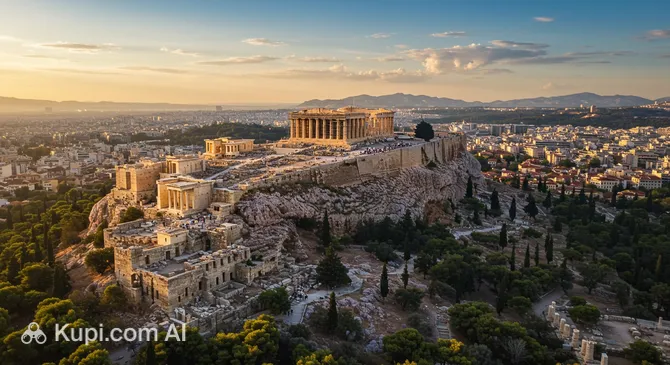
Acropolis of Athens. Illustration.
Source: Kupi.com AI

Traveler photos:

The complex was built in the 5th century BC at the initiative of the Athenian statesman Pericles and was dedicated to the goddess Athena, the patron of the city. The greatest architects and sculptors of the time, such as Phidias, Ictinus, and Callicrates, worked on creating this masterpiece. The main building material was Pentelic marble, quarried nearby. Despite the damage the Acropolis has suffered over the centuries, many of its structures have been restored and continue to amaze today with their grandeur.

Several world-famous buildings are located within the Acropolis, each a work of art. The Parthenon, a grand temple dedicated to Athena, takes center stage. Also located here are the elegant Erechtheion, famous for its Porch of the Caryatids, and the small but exquisite Temple of Athena Nike (Wingless Victory). The monumental gateway—the Propylaea—serves as the grand entrance to this open-air museum.

Contacts

For the most up-to-date information regarding opening hours, ticket prices, and visiting regulations for the Acropolis, it is recommended to consult official sources. The Hellenic Ministry of Culture and Sports provides official contact details for inquiries. Additionally, tickets can be purchased online through the official booking service, which helps visitors avoid long queues.

How to contactContact
AddressAthens 105 58, Greece
Phone number+30 21 0321 4172
Websiteodysseus.culture.gr

What to Do

A visit to the Acropolis is, above all, an opportunity to see the legendary Parthenon in person. This majestic temple, dedicated to the goddess Athena, is considered the pinnacle of classical architecture. As you walk around it, pay attention to the details: the massive marble columns and the famous friezes depicting scenes from ancient Greek myths and ritual processions. This is a unique chance to touch history and appreciate the craftsmanship of ancient builders.

Beyond the Parthenon, other treasures await you within the complex. Be sure to see the Erechtheion—an elegant temple known for its Porch of the Caryatids—and the miniature but no less impressive Temple of Athena Nike (Wingless Victory). Your path to the top of the hill will lead through the monumental gates—the Propylaea—which are an architectural masterpiece in their own right. You can also find the Altar of Athena Polias and the site where the giant statue of Athena Promachos once stood.

A walk through the Acropolis is not just a tour of ancient ruins, but a true immersion into the atmosphere of Ancient Greece. Here, on the hilltop, it is easy to imagine how life bustled thousands of years ago. Additionally, some of the best panoramic views of Athens open up from here, making the visit even more memorable. Do not rush; give yourself time to feel the greatness of this place and take stunning photos against the backdrop of ancient columns and the modern city.

Getting There

Getting to the Acropolis in Athens is quite simple, as it is located in the very heart of the city and is visible from many vantage points. For those who enjoy walking, the path to the foot of the sacred hill from historical districts like Plaka or Monastiraki is a pleasant journey through picturesque streets. A walk from the central Syntagma Square takes about 15–20 minutes. This option allows you not only to stretch your legs but also to better feel the atmosphere of the ancient capital.

The most convenient and fastest way to reach the site is by using the Athens Metro. The nearest station is appropriately named "Akropoli" and is located on the red M2 line. From the metro exit to the southeastern entrance of the archaeological site, it is only a few minutes' walk. You can also travel to "Thissio" station on the green M1 line or "Monastiraki" at the intersection of lines M1 and M3—both are approximately a 10-minute walk from the main entrance.

In addition to the metro, numerous city buses and trolleybuses serve the Acropolis area. For example, bus No. 230 stops right by the main entrance and the Acropolis Museum. Other routes stop on Vasilissis Amalias Avenue or in the Makriyianni district, from where the destination is a 5–10 minute walk. A taxi ride from the city center is a fast and comfortable, though more expensive, alternative. It is also worth considering the Hop-On Hop-Off tourist buses, which always include a stop at this key landmark of Greece.

The Acropolis has two main entrances: the main entrance on the western side, reached through the monumental Propylaea, and a side entrance located on the southeastern slope. The main entrance is more famous but often has longer queues. The side entrance, located near the Akropoli metro station and the Theater of Dionysus, is usually less crowded, allowing for faster entry to the complex. Regardless of the entrance you choose, be prepared for an uphill climb, so comfortable shoes are a must for a pleasant visit.

Nearest city: Athens

History & Facts

The history of the Acropolis of Athens is rooted in deep antiquity, long before its world-famous marble temples appeared. Archaeological finds indicate that the first settlements on this rocky hill existed as early as the Neolithic era. By the second millennium BC, it served as a fortified residence for a Mycenaean king, protected by massive walls. In the 6th century BC, one of the first monumental temples, the Hekatompedon, was erected on this site, considered the predecessor of the famous Parthenon.

A turning point in the Acropolis's history came during the Greco-Persian Wars. In 480 BC, Persian forces captured Athens and completely destroyed the sanctuaries on the hill. However, this destruction served as the catalyst for the most ambitious building project of antiquity. Just 30 years later, during the so-called "Golden Age" of Athens, a large-scale reconstruction began at the initiative of the statesman Pericles. Under the guidance of the greatest architects and sculptors of the time, including Phidias, masterpieces were built that still define the Acropolis today: the Parthenon, the Erechtheion, and the Temple of Athena Nike.

In subsequent centuries, the fate of the Acropolis was filled with dramatic changes. After Greece became part of the Roman and later Byzantine Empires, the ancient temples were converted into Christian churches. With the arrival of the Ottomans in the 15th century, the Parthenon became a mosque and the Erechtheion served as a harem. A catastrophic event occurred in 1687 during a conflict between Venetians and Turks. The Ottoman garrison used the Parthenon as a gunpowder magazine, and a direct hit from a Venetian cannonball caused a massive explosion that destroyed the central part of the temple and changed its appearance forever.

Time Needed

For a standard, leisurely tour of the main monuments atop the Acropolis of Athens, including the Parthenon, the Erechtheion, and the Propylaea, most visitors need about 2–3 hours. This is enough time to walk across the entire site, take photos, enjoy panoramic views of Athens, and soak in the atmosphere of this historical site without rushing.

However, the duration of your visit may vary. If you want to explore every corner in more detail, including the southern slope with the Theater of Dionysus and the Odeon of Herodes Atticus, you should plan for an additional hour. History and archaeology enthusiasts who wish to delve into all the details with an audio guide or as part of a guided tour may need up to 4 hours or more. Also, keep in mind that in the summer months, intense heat and large crowds can slow down your pace, so it is recommended to visit the Acropolis early in the morning or later in the evening.

Working Hours

The Acropolis of Athens is open to visitors year-round, but its opening hours vary significantly depending on the season. During the summer period (usually from April to October), the complex operates on an extended schedule, opening at 8:00 and closing late in the evening, allowing visitors to enjoy the views at sunset. In the winter season (from November to March), the hours are reduced, and the complex closes earlier, typically at 17:00. Last entry is half an hour before closing. It should also be noted that the Acropolis is closed on public holidays, such as January 1, March 25, May 1, Easter, and December 25 and 26.

Given the immense popularity of this Greece landmark, it is strongly recommended to buy tickets online in advance. This will not only save you time and the need to stand in long lines, especially during the height of the tourist season, but will also allow you to better plan your visit to Athens. Tickets can be purchased on the official website of the Hellenic Ministry of Culture (hhticket.gr). For visits during the most popular morning hours, tickets are often sold out long before the date of the visit, so early booking is the best strategy.

8:00 – 20:00

Nearby

A visit to the Acropolis is just the starting point for exploring the ancient heart of Athens. The entire area surrounding the sacred hill is a vast open-air archaeological park where every step leads to a new discovery. To truly feel the greatness of ancient Greece, it is worth dedicating time to explore the treasures found at its base.

Strolling through the surroundings of the Acropolis allows you to piece together the puzzle of history. Here, within walking distance of each other, are temples, theaters, market squares, and residential quarters that once formed the single living organism of the ancient city. This is a unique opportunity to trace how the political, cultural, and everyday life of Athenians developed over the centuries.

NameDistance
Parthenon0.1 km
Odeon of Herodes Atticus0.1 km
Areopagus Hill0.2 km
Theatre of Dionysus0.2 km
Roman Agora0.3 km
Acropolis Museum0.4 km
Ancient Agora of Athens0.5 km

Have you reached the end of the page?

So the route has been studied inside and out