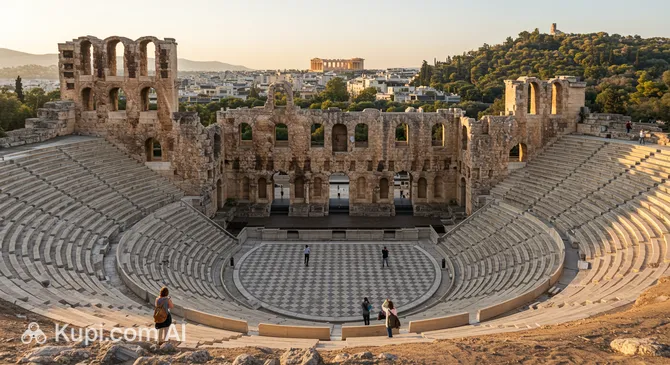
On the southern slope of the famous Acropolis in Athens, the capital of Greece, lies the Odeon of Herodes Atticus — a majestic ancient theater that locals often call the "Herodeon." It is one of the most impressive ancient structures surviving today and an iconic site for anyone interested in history and art. Built in 161 AD, it was a tribute by the wealthy Athenian citizen Herodes Atticus to his wife.
Traveler photos:
The theater is a classic example of Roman architecture, which significantly distinguishes it from the neighboring Theater of Dionysus. Its semicircular auditorium could hold about 5,000 people. Originally, the 32–35 rows of seats were lined with black and white marble, creating a striking visual effect that continues to amaze visitors today. Restoration work in the 1950s returned the theater to its marble splendor.
The architectural centerpiece of the Odeon was a three-story stage building decorated with Roman arches and niches containing statues. Interestingly, in ancient times, this grand structure was partially covered by a cedar wood and tile roof, making it one of the most luxurious theaters of its day. Today, the Odeon of Herodes Atticus continues to live on — concerts and festivals are regularly held on its stage, returning this place to its original purpose.