Support

Trikala

About

Trikala is a cozy and exceptionally picturesque city located in the heart of Greece, on the fertile Thessalian plain along the banks of the Lithaios River. Surrounded by hills and green fields, it radiates a special charm and tranquility, attracting travelers with its peaceful atmosphere and scenic views.
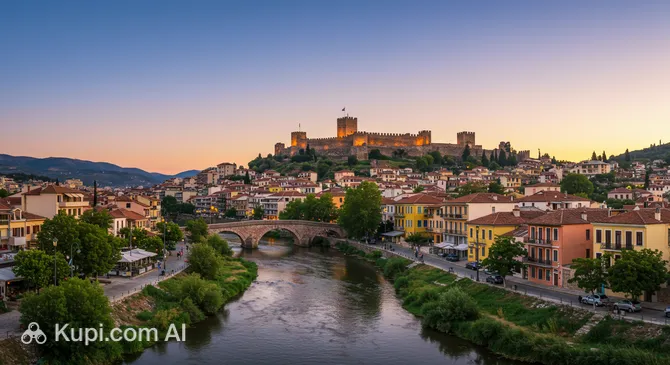
Trikala. Illustration.
Source: Kupi.com AI

With a population of approximately 61,653 people, Trikala is an important administrative, cultural, and economic center of the prefecture of the same name. Despite its status, the city maintains a wonderful atmosphere of comfort and leisure, where it is easy to feel the harmony between a rich history and the modern pace of life. Here, the past is organically woven into everyday life, creating a unique character.

Trikala serves as an excellent starting point for exploring world-famous sites such as the unique monasteries of Meteora and the legendary Mount Olympus. The city itself seems designed for leisurely strolls: wide streets, charming bridges over the Lithaios River, historic buildings, and plenty of green spaces invite exploration. One of the city's hallmarks is the central pedestrian street, Asklipiou, which is always lively and welcoming.

Visiting Trikala is worthwhile for its unique atmosphere, rich cultural heritage, and stunning natural views. It is a place where ancient myths coexist with modern innovations, and every corner breathes history and hospitality. Every traveler will find something here: from contemplating ancient monuments to enjoying local cuisine and walking along the picturesque river.

You can find more interesting facts on the history of Trikala page.

Weather Overview

In Trikala, expect hot summers with temperatures often exceeding 30°C (up to 32.3°C in July), and low rainfall (about 1-2 mm per month), which may fall as brief showers. Winters here are cool and wetter: the average January temperature is around 4.7°C (with nightly lows down to 0.2°C), and rainfall increases to 3-4 mm per month, bringing more overcast days. Spring and autumn months offer more moderate and comfortable weather for a visit. You can find more detailed information on weather conditions on the Trikala Climate page.

Average monthly temperature

Average monthly precipitation

Interesting Facts

In addition to its famous landmarks and picturesque corners, Trikala hides many amazing stories and features that not everyone knows about. Ready to learn some curious facts about this charming Greek city?

  • The city of Trikala is built on the site of the ancient city of Trikke, which, according to myth, was named after the nymph Trikke, daughter of the river god Peneus. Moreover, legend has it that Asclepius—the famous god of healing and patron of medicine—was born here, making this place an important center of ancient Greek culture and science.

  • Trikala is the true cradle for many famous Greek composers and musicians, such as Vassilis Tsitsanis, Apostolos Kaldaras, and Kostas Virvos. Their priceless legacy is carefully preserved in the city's Center of Folk Music, where visitors can see the artists' personal belongings and rare exhibits related to their lives and work.

  • Every year, Trikala turns into a real winter wonderland thanks to the "Mill of Elves" (Mylos ton Elfón) Christmas market. This grand event, held on the grounds of an old mill, includes a theme park with rides, workshops, and treats, attracting thousands of guests from all over Greece and making the city one of the country's main Christmas destinations.

  • Trikala is home to the unique Katsigoyianni Museum, which boasts an impressive collection of over a thousand works of art. This makes the museum an important center for lovers of modern Greek creativity and the region's cultural heritage.

How to Get There

When planning a trip to picturesque Thessaly, it is important to think about your route in advance. Although the city does not have its own airport, its convenient location allows for easy travel from the country's major transport hubs. You can study all ways to get to the city in more detail, and below we will tell you about the nearest airports and railway stations.

Tourists most often choose a flight through Thessaloniki International Airport (IATA: SKG). It is located in Thessaloniki, about 148 km away. This is Northern Greece's largest transport hub, receiving many international flights. The journey from the airport to Trikala by rental car or taxi takes about 2–2.5 hours, and by bus—about 3–3.5 hours.

Another convenient option is Ioannina Airport (IATA: IOA), which is significantly closer, just 82.7 km from Trikala, in the city of Ioannina. This is a regional airport with lower passenger traffic, but it can be convenient for domestic or connecting flights. A car trip from here will take approximately 1.5 hours.

For clarity, here is a summary of the main airports:

AirportPassenger trafficDistance
Ioannina Airport134 01183 km
Nea Anchialos120 00096 km
Aristoteles Airport4 301107 km
Aktion Airport773 587111 km
Thessaloniki International Airport7.0 mln148 km

Rail service is also a popular way to reach the region. One of the key hubs travelers often pass through is Thessaloniki Railway Station. It is important to note that this station is in the city of Thessaloniki, approximately 156 km from Trikala. From here, trains depart to many parts of the country, and tourists often transfer here to continue deep into the mainland by bus or regional train.

Below is information about the nearest major railway station:

StationPassenger trafficDistance
Thessaloniki Railway Station156 km
Durres Railway Station2 000277 km

In addition to planes and trains, Trikala is very convenient to reach via KTEL intercity buses or a rental car. Modern highways connect the city with Athens and Thessaloniki, making a car trip a comfortable and scenic way to enjoy the views of Greece.

Main Attractions

Trikala is a city with a rich history and many interesting sites that attract travelers. It harmoniously combines ancient monuments, Ottoman heritage, and the charm of traditional Greek architecture, offering something for every guest.

One of the city's main gems is the Fortress of Trikala (Kastro). This Byzantine citadel, proudly overlooking the city from a hill, has witnessed many historical events. Climbing its walls, you can not only touch antiquity but also enjoy breathtaking panoramic views of the city and the fertile Thessalian plain. Inside the fortress is the famous Clock Tower—a recognizable symbol of Trikala—as well as an open-air theater that frequently hosts cultural events.

An equally significant monument is the Kursum Mosque (Osman Shah Mosque). Built in the 16th century according to the design of the prominent Ottoman architect Mimar Sinan, it is considered one of the most beautiful and well-preserved mosques in Greece. Its majestic dome and elegant minaret draw the attention of architecture enthusiasts. Today, the mosque functions as an exhibition space, introducing visitors to the region's rich cultural heritage.

For those who want to feel the spirit of the old city, the Varousi district is a must-visit. This historic neighborhood, located at the foot of the fortress, enchants with its narrow cobbled streets, traditional 19th-century mansions with overhanging balconies, and bright flower pots. Walking through Varousi, you can feel as if time has slowed down, while numerous cozy taverns invite you to taste local cuisine.

The Lithaios River flows through the heart of Trikala, which, according to myth, is the river of Oblivion. Its embankments are a wonderful place for leisurely walks and relaxation. A central element of the river landscape is the Central Bridge, built in 1886. This elegant metal bridge not only connects the banks but also serves as a popular meeting spot and photo location, being another symbol of the city.

Local Cuisine

The cuisine of Trikala is a true immersion into the gastronomic traditions of Thessaly, where fresh local products and time-tested recipes are highly valued. The city offers foodies the chance to enjoy authentic flavors that will be long remembered. Here you can taste both hearty meat dishes and light snacks made from the freshest vegetables and cheeses.

Be sure to try the famous Thessalian lamb, roasted with aromatic herbs and vegetables, or succulent meat delicacies cooked over charcoal. Local taverns take pride in their homemade sausages and goat meat dishes. Equally popular are traditional pies, such as spanakopita (spinach pie) or tiropita (cheese pie), which make for a great snack or side dish. It is also worth paying attention to the hearty soups, which are especially relevant during the cooler months.

Among the local drinks, traditional Greek options are popular. For alcoholic choices, try tsipouro (a strong grape distillate, often homemade) or local wine. Lovers of anise-flavored drinks will appreciate ouzo. Common non-alcoholic drinks include Greek coffee brewed in a briki and various herbal teas, such as mountain tea.

The food culture in Trikala is closely tied to traditional taverns and street food. Locals and tourists love gathering in cozy taverns to enjoy a leisurely dinner with friends or family. For a quick and tasty bite, gyros or souvlaki, which can be found everywhere, are excellent choices. Visit the local farmers' markets—this is a great opportunity to buy fresh vegetables, fruits, olives, the famous Greek feta, other local cheeses, honey, and aromatic herbs. Homemade sweets like baklava and loukoumi are also frequently sold here.

Travel Tips

Welcome to Trikala, a charming city in the heart of Thessaly! To make your journey through this unique corner of Greece as comfortable and memorable as possible, we have prepared some practical tips.

  1. Clothing and Essentials:

    The climate in Trikala is continental: summers are hot, and winters can be quite cool. In summer, bring light, breathable clothing, sunscreen, and a hat. In winter, you will need warm clothes, including a jacket, hat, and gloves. Comfortable shoes are your best friend at any time of year, as the city is great for walking. Don't forget a power adapter (Type F). If you plan to visit the Meteora monasteries (located nearby), remember the dress code: shoulders and knees must be covered.

  2. City Transport:

    Trikala is famous for being cyclist-friendly—this is one of the best ways to get around! You can easily find rental points. Public transport consists of buses (KTEL) that connect different parts of the city and its surroundings. Taxis are also available. Renting a car can be useful if you plan to explore the Thessaly region in more detail, but it is not necessary for the city itself.

  3. Finances:

    The official currency is the Euro (EUR). You can exchange money at banks or exchange offices. Bank cards (Visa, Mastercard) are accepted in most shops, restaurants, and hotels. ATMs are easy to find throughout the city. A rough daily budget can vary, but Trikala is considered a relatively affordable city. Tipping in restaurants is welcomed (usually 5-10% of the bill or rounding up), but not always strictly required.

  4. Health and Safety:

    Trikala is generally a safe city. Pharmacies (in Greek "φαρμακείο"—pharmakio) are easy to find; ask a pharmacist or at your hotel about on-call pharmacies that work after hours. In case medical assistance is needed, EU tourists can use the EHIC card. Others are strongly recommended to have travel insurance. Follow standard precautions: keep an eye on your belongings in crowded places.

  5. Communication:

    The official language is Greek. In tourist areas, hotels, and among young people, many speak English. Learn a few basic Greek phrases such as "Yassas" (Hello), "Efcharisto" (Thank you), "Parakalo" (Please/You're welcome)—locals will appreciate it. SIM cards from local operators can be purchased at their offices. Wi-Fi is available in many cafes, hotels, and some public areas of the city.

  6. Local Etiquette:

    Greeks are hospitable and friendly. A simple greeting ("Kalimera"—good morning, "Kalispera"—good evening) is appropriate. When visiting churches and monasteries, behave respectfully and maintain silence. Politeness and openness are valued in social interactions.

  7. Things to Avoid:

    Do not photograph military installations. Also, avoid provocative behavior and excessively loud talking in public places, especially near religious sites. An extremely offensive gesture in Greece is the "moutza"—an open palm with fingers spread pointing toward a person.

  8. Special Feature of Trikala:

    If you plan a winter trip, be sure to try to visit the "Mill of Elves" (Milos ton Elfikon)—this is a famous Christmas park that turns the city into a true fairy tale and attracts visitors from all over the country. Also, Trikala is known as one of Greece's first "smart cities" with many innovative solutions.

We hope these tips help you plan an unforgettable trip to Trikala. Enjoy every moment in this amazing Greek city!

Entertainment & Nightlife

The nightlife in Trikala will surprise you with its richness and diversity. Despite not being a metropolis, the city has a vibrant and dynamic atmosphere, largely thanks to the large number of students and the local social culture. Evenings here are traditionally spent out of the house, enjoying good company, music, and drinks.

The epicenter of evening entertainment is rightfully the Manavika district. This is an old quarter where vegetable markets and warehouses were once located. Today, its narrow cobbled streets and restored stone buildings are filled with numerous traditional taverns, stylish bars, and "tsipouradiko." You can start the evening with dinner to the sounds of Greek music and then move to one of the nearby bars. The atmosphere in Manavika is incredibly colorful: noisy, fun, and very friendly.

Another popular area is the pedestrian Asklipiou Street and its adjacent alleys, as well as the Lithaios River embankment. More modern cafe-bars are concentrated here, operating as coffee shops during the day and transforming into trendy spots with cocktails and DJ sets after dark. The crowd here is diverse, ranging from young people to couples enjoying an evening promenade.

If you are looking for specific spots, pay attention to the establishments along the river where you can have a cocktail with a view of the illuminated bridges. In the summer, many bars set up tables outside, creating one big open-air party. Clubs with loud dance music usually open closer to midnight and stay open until morning, located both in the center and on the outskirts of the city.

Practical Tips:

  • Timing: Greeks go out late. Bars start filling up after 10:00 PM, and the peak of the fun is at midnight and later.
  • Dress Code: Most venues accept a smart casual style. You will be comfortable in neat casual clothing, though you can dress up more for nightclubs.
  • Safety: Trikala is a very safe city. Walking through the center (especially in the Manavika and Asklipiou areas) is perfectly fine even late at night. The streets are well-lit and busy.
  • Transport: If you stay out late, it's best to call a taxi. Taxi stands are located in the center, for example, at Riga Fereou Square, or a car can be called by phone.

Regarding daytime entertainment, besides exploring historical monuments, the city offers cultural leisure. You can attend performances at the open-air theater in the fortress or visit the Matsopoulos Mill—a unique industrial complex transformed into a cultural park with a museum, cinema, and exhibition halls. It is a great place for family relaxation and learning about the region's industrial history.

Parks & Museums

Trikala is a city where picturesque green spots for relaxation harmoniously blend with a rich cultural heritage, offering guests an immersion into the history and art of the Thessaly region. Here, everyone will find an activity to their liking, whether it's a leisurely stroll through a park or exploring ancient artifacts.

For lovers of nature and quiet relaxation, Trikala offers several wonderful places. One of the main ones is Central Park, located in the heart of the city. It is a great place for walks among the greenery, resting on benches, or having a picnic. The Lithaios River, flowing through the center, adds a special charm to the city. Its embankments are popular for walks and jogs, while picturesque bridges and swimming swans create a peaceful atmosphere.

The cultural life of Trikala is rich and diverse. To learn about the region's history, be sure to visit the Archaeological Museum of Trikala, which features finds spanning from prehistoric times to the Byzantine era. The Tsitsanis Museum is unique, dedicated to the life and work of the famous Greek composer and singer Vassilis Tsitsanis, who was born in Trikala. The museum's exhibition tells not only about the maestro but also about the development of the Greek folk music genre "rebetiko." It is also worth stopping by the Municipal Art Gallery, which frequently hosts exhibitions of works by local and Greek artists.

The historical center of Trikala holds many traces of the past. The dominant feature of the old town is the Byzantine fortress rising on a hill. By climbing its walls, you can enjoy a panoramic view of the city and the surrounding landscapes. At the foot of the fortress lies the colorful Varousi district with its narrow cobbled streets, traditional houses with overhanging balconies, and old churches—an ideal place for leisurely walks. Among the significant architectural monuments is the Osman Shah Mosque (Kursum Djami), built in the 16th century, which is used today as an exhibition space and serves as a reminder of the city's multifaceted history.

In addition to the main museums and historical monuments, you can visit the Cultural Center in Trikala, where various events are regularly held, from concerts and theater productions to lectures and exhibitions reflecting the city's modern cultural life.

For a more authentic experience of Trikala, visit the central city market (agora). Here, you can not only buy fresh local products but also observe the daily life of the townspeople. In the evening, head to the Manavika district—a former commercial quarter that is now famous for its cozy taverns, cafes, and bars, where you can taste local cuisine and enjoy a hospitable atmosphere.

Getting Around

Getting around the city of Trikala is quite convenient due to its compact size and developing transport system. The main form of public transport here is city buses, which connect various districts of the city and its surroundings. There are no subways, trams, or trolleybuses in Trikala, which is typical for cities of this scale.

The bus network is managed by a local company, usually "Astiko KTEL." Routes cover most of the city's key points, including the center, residential areas, and some suburban zones. Schedules and route maps can be found at stops, as well as possibly on the carrier's official website or at tourist information centers. Buses run with reasonable frequency, although intervals may increase in the evenings and on weekends.

The fare payment system for buses is quite standard. Tickets can usually be purchased in advance at special kiosks (periptero), newsstands, or tobacco shops, and sometimes directly from the driver, though the price might be slightly higher in the latter case. There are single-trip tickets as well as, potentially, passes for multiple trips or for a day, which can be more cost-effective if you use transport frequently. Be sure to validate your ticket in the special machine inside the bus immediately after boarding to avoid fines. Fares are generally affordable.

As for practical advice, it is always useful to have small change with you to buy a ticket from the driver if other options are unavailable. Public transport operating hours usually cover the main daylight period, roughly from early morning to late evening. For precise information on the schedule of specific routes, it is best to consult local sources upon arrival.

In addition to buses, there are other ways to get around Trikala. Taxis are easily available and can be called by phone or found at designated taxi stands. This is a more expensive but comfortable option, especially for night trips or when carrying luggage. One of the standout features of Trikala is its friendliness toward cyclists. The city is actively developing cycling infrastructure, with many bike lanes, making it an excellent way to explore its flat streets. There are bicycle rentals as well as a city bike-sharing system, making this mode of transport very attractive. Of course, due to the city's compactness, many attractions are within walking distance, especially in the center.

Trikala is known for its "smart city" initiatives, which can extend to the transport system. For example, there may be mobile apps for tracking buses in real-time or planning routes. We recommend checking for such services locally to make your movement around the city even more comfortable.

Accommodation

In Trikala, travelers will find a variety of accommodation options to suit different preferences and budgets. The city offers cozy family-run hotels and guesthouses, as well as modern mid-range hotels. Apartments and rental housing are also available for those who prefer more independence and a home-like feel.

For tourists, areas near the city center and along the banks of the Lithaios River will be particularly convenient, as it is easy to reach major attractions, cafes, and shops from there. The central part of the city offers a good selection of hotels that allow you to immerse yourself in the atmosphere of Trikala. Notable options include, for example, Hotel Lithaion or Hotel Divani Trikala, which offer comfortable stays.

The price range varies from budget options to higher-category hotels. You can book accommodation through popular online platforms or directly on hotel websites. It is recommended to book your stay in advance, especially if your trip coincides with the peak tourist season or during local festivals, to ensure the best choice and prices.

Nearby Cities

For those who wish to explore the surroundings, Trikala serves as an excellent starting point for day trips to several interesting nearby locations.

Among them is Larissa, a lively city with a rich history where you can see an ancient theater and dive into modern Greek life. Volos, located on the coast, attracts with its waterfront, the opportunity to head into the Pelion mountains, and its famous "tsipouradiko" taverns serving meze with the local drink tsipouro. And Ioannina, situated on the shores of the picturesque Lake Pamvotis, charms with its historic castle, an island with ancient monasteries, and a special, peaceful atmosphere.

CityPopulationDistance
Karditsa38 55425 km
Tyrnavos11 06949 km
Larissa144 65157 km
Farsala9 29860 km
Grevena25 90565 km

These nearby destinations offer insight into the region's diverse culture and landscapes. Each trip promises new discoveries and impressions, complementing your journey to Greece.

Shopping & Souvenirs

Shopping in Trikala offers a pleasant mix of local stores and the chance to buy authentic Greek goods. The city is not known for massive shopping malls or streets with luxury brands, but here you can find high-quality local products, souvenirs, and everything needed for a comfortable vacation.

The main commercial life of Trikala is concentrated in its bustling center. The primary shopping arteries, such as Asklipiou Street (Odos Asklipiou) and its adjacent pedestrian streets, offer a large selection of shops. Here you will find clothing and shoe boutiques, accessory shops, cosmetics, bookstores, and jewelry salons. A walk along these streets is a pleasure in itself, as many shops are housed in beautiful buildings, and cozy cafes invite you to rest between purchases.

In Trikala, there are no large multi-story shopping centers typical of metropolises. However, you can find several small shopping galleries or complexes in the city where various shops are gathered under one roof. They offer a convenient format for those who prefer to shop in one place.

Be sure to visit the local market (in Greek, "laiki agora"), which usually operates once a week. Here you can buy the freshest fruits, vegetables, olives, cheeses, honey, herbs, and other products from local farmers. It is a great place to feel the city's atmosphere and buy tasty gifts. You can also find small souvenir shops in the central part of the city.

From Trikala, as from Greece in general, it is worth bringing back gastronomic souvenirs: high-quality olive oil, local olives, Thessalian honey (the Thessaly region is famous for its honey), traditional sweets (such as halva or loukoumi), and aromatic herbs. Products from local craftsmen, ceramics, and small textiles are also popular. Don't forget about tsipouro—a traditional strong drink especially characteristic of this region of Greece.

Shops in Trikala typically operate from Monday to Saturday. Note the traditional Greek lunch break (siesta), which lasts from approximately 2:00 PM to 5:00 PM or 5:30 PM, after which shops reopen and stay open until 8:00 PM or 9:00 PM. On Saturdays, many shops close earlier, and on Sundays, most are closed, with the exception of some tourist shops and kiosks. You can pay with both cash and bank cards in most stores. However, in markets and small souvenir shops, cash may be preferred.

Tourists from non-European Union countries can take advantage of the tax refund system (Tax Free) for purchases made in Greece. To do this, you must make a purchase of a certain amount at a store participating in the Tax Free system (look for the corresponding logo) and ask the seller for a special receipt. The tax refund can be obtained at the airport when departing the country.

Reached the end of the page?

That means the route is fully explored