Support

Man Mo Temple

About

Man Mo Temple is one of the oldest and most revered landmarks in Hong Kong. Located on bustling Hollywood Road in the historic Sheung Wan district, this active Taoist temple is a true oasis of peace and spirituality. It is dedicated to two important deities of the Chinese pantheon: Man, the god of literature, and Mo, the god of war, which gives it special symbolic significance for believers and cultural enthusiasts alike.
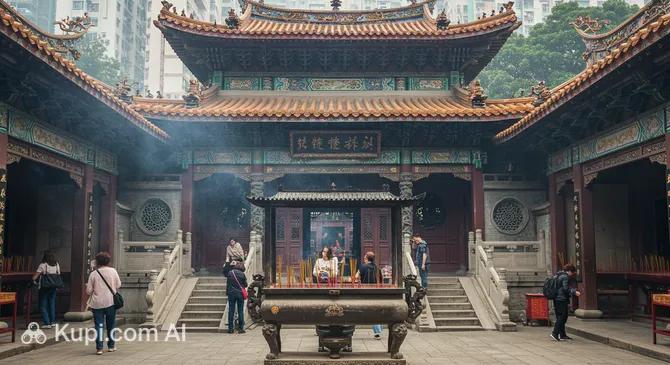
Man Mo Temple. Illustration.
Source: Kupi.com AI

Traveler photos:

Architecturally, Man Mo Temple is a classic example of traditional Chinese craftsmanship. Despite its compact size, it impresses with its rich interior decoration. Inside, you will see an elaborately decorated altar, carved wooden panels, golden inscriptions, and many traditional Chinese decorative elements. A special, almost mystical atmosphere is created by the huge incense spirals suspended from the ceiling. Their smoke, slowly filling the air, symbolizes prayers ascending to heaven and creates a sense of tranquility.

Man Mo Temple holds great importance for local residents, especially for students and those seeking success in studies or civil service, as the god Man is the patron of education and literature, while the god Mo is the patron of justice and strength. The combination of these two deities symbolizes the harmony between knowledge and valor. Visiting the temple is not just a tour of a historical monument, but a unique opportunity to touch the living traditions and spiritual culture of Hong Kong, feeling its authentic spirit away from the hustle and bustle of the modern metropolis.

Contacts

If you are planning to visit Man Mo Temple or need additional information, such as current opening hours or special ceremonies, please use the contact details below. Note that an official website and email for the temple are not listed; for information that cannot be obtained by phone, we recommend consulting local information resources or checking details on-site. We suggest verifying the information before your visit, as details may change.

How to contactContact
AddressMan Mo Temple, 124-130 Hollywood Rd, Sheung Wan, Hong Kong
Websitehongkongfuns.com

What to Do

Visiting Man Mo Temple is an immersion into the atmosphere of ancient Chinese traditions. Here you can observe rituals of offering gifts to the deities and even participate in them by lighting incense in the hope of good luck, success, or blessings. This is particularly common among students and applicants before important exams. Many visitors bring fruit, flowers, and other symbolic gifts to the altar, which is an integral part of the local culture.

One of the temple's most memorable features is the huge incense spirals suspended from the ceiling. It is believed that the longer the spiral smolders, the longer and higher the prayer ascends. The thick but pleasant aroma of incense fills the entire temple space, creating a special, meditative atmosphere. Take a close look at the interior: it is richly decorated with intricate carvings, traditional Chinese lanterns, and plaques with the names of those who made donations. Photography is allowed inside, but it is important to do so with respect for the worshippers and the sanctity of the place.

Getting There

Man Mo Temple is conveniently located in the heart of Hong Kong on the famous 124–126 Hollywood Road, making it easily accessible for tourists. Getting here is simple, as the temple is situated in a vibrant part of the city with excellent transport links.

The easiest and most popular way to reach the temple is by metro. You need to take the MTR to Sheung Wan station and take exit A2. From there, it is just a leisurely 10-minute walk to Man Mo Temple. This route also allows you to explore this colorful neighborhood along the way.

Besides the metro, you can use other types of public transport. For example, the temple can be reached by tram — one of the iconic symbols of Hong Kong — or by buses that run routes to the central part of Hong Kong Island. If you prefer comfort, you can always take a taxi, which will easily take you directly to the temple entrance from anywhere in the city.

A pleasant bonus is that there are other interesting places to visit near Man Mo Temple. In the immediate vicinity, you will find numerous antique shops, art galleries, and the famous Cat Street market. Thus, a visit to the temple can easily be combined with a fascinating walk through one of Hong Kong's most authentic districts.

Nearest city: Hong Kong

History & Facts

Man Mo Temple, one of the gems of Hong Kong, has a rich history dating back to the mid-19th century. It was built in 1847 by Chinese merchants during the period of British rule. At a time when the city was rapidly changing under Western influence, the construction of the temple became an important symbol of preserving traditional Chinese culture and beliefs. Almost immediately after its founding, the temple turned into a significant spiritual center for the local community, attracting those seeking divine support before major life challenges, whether passing exams, participating in legal proceedings, or starting a new business.

Interestingly, Man Mo Temple is not just a single building, but an entire complex. It also includes the Lit Shing Kung temple, which is dedicated to all the heavenly gods of the Chinese pantheon, making it a place of universal worship. Additionally, the Kung Sor building is part of the complex. Historically, it served as an important community space where local community meetings were held, pressing issues were discussed, and collective decisions were made. This highlights the temple's role not only as a religious site but also as a social hub.

The significance of Man Mo Temple to Hong Kong's cultural heritage has been officially recognized at the highest level. In 1994, it was granted Grade 1 Historic Building status, highlighting its architectural and historical value. In 2010, the temple was officially declared a monument. These statuses ensure its preservation for future generations and confirm its enduring importance as a witness to the city's rich history and living traditions.

Time Needed

To get to know Man Mo Temple, admire its rich interior, observe traditional rituals, and take commemorative photos, 30 minutes to 1 hour is usually enough for most visitors. This time is sufficient to soak in the special atmosphere of this historical site and see its main features.

The temple is not very large, so it can be viewed relatively quickly. However, if you want to delve deeper into the details, watch the devotees' prayers, examine the numerous decorations and incense spirals, or simply sit quietly in silence to absorb the spirit of the place, your visit may take a little longer. In any case, even a short visit will leave a lasting impression.

Working Hours

Man Mo Temple hospitably opens its doors to visitors every day. You can immerse yourself in its peaceful atmosphere from 08:00 AM to 06:00 PM. A significant advantage is that admission to the temple is completely free. This means that for a standard visit, you generally do not need to book tickets or make an appointment in advance. This accessibility makes it easy to include a visit to this iconic Hong Kong landmark in your itinerary.

8:00 – 18:00

Nearby

A visit to Man Mo Temple will certainly be a highlight of your trip to Hong Kong. However, to make your experience even more complete and diverse, it is worth paying attention to the attractions located nearby. Exploring the surroundings will allow you to immerse yourself deeper into the atmosphere of this incredible city and discover new interesting places.

The area around Man Mo Temple is rich in unique sites, from other historical monuments to modern entertainment venues. A short walk can lead you to iconic Hong Kong landmarks, each telling its own story and complementing the overall picture of your journey. Below is a list of some of them, along with their distance from the temple.

NameDistance
COA0.2 km
Quinary0.3 km
Tai Kwun0.5 km
The Trilogy0.5 km
Maggie Choo's0.5 km
Lan Kwai Fong0.7 km
The Helena May1.1 km

Have you reached the end of the page?

So the route has been studied inside and out