Support

Guptar Ghat

About

Guptar Ghat is one of the most revered and significant sites in the sacred city of Ayodhya, located in India. This ghat, consisting of a series of steps leading to the waters of the sacred Sarayu River, attracts pilgrims and tourists with its deep spiritual atmosphere and rich history, closely intertwined with Hindu mythology.
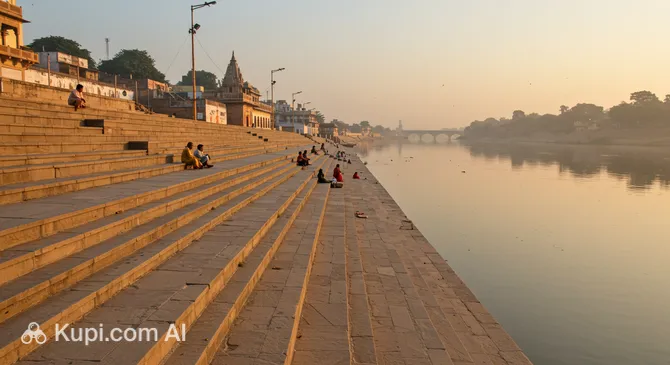
Guptar Ghat. Illustration.
Source: Kupi.com AI

Traveler photos:

The main significance of Guptar Ghat lies in its connection to Lord Rama, the central figure of the "Ramayana" epic. According to legends, it was at this spot that Rama performed Jal Samadhi—meditation in the water—after which he left the earthly world and returned to his divine abode, Vaikuntha. This event makes the ghat particularly sacred for followers of Hinduism and gives it an aura of mysticism and reverence.

Visiting Guptar Ghat offers a unique opportunity to experience India's ancient traditions and spiritual life. Here you can see devotees performing ablutions and prayers, and feel the calm and peace radiating from this site. Although the ghat may not be as grand as some other famous ghats in India, its historical and religious significance makes it a must-visit for those interested in the culture and spirituality of this amazing country.

Besides its religious importance, Guptar Ghat also offers picturesque views of the Sarayu River, especially at sunrise or sunset. It is a place for reflection, prayer, and observing the flow of life by the sacred waters, leaving a profound impression on every visitor.

Contacts

Guptar Ghat is a revered pilgrimage site and an open public space on the banks of the Sarayu River. Typically, such sites do not have a dedicated visitor contact service. For up-to-date information on how to reach Guptar Ghat, as well as possible rituals or recommended visiting hours, it is best to check the travel portals of Ayodhya or consult directly with local guides and information centers upon arrival in the city.

How to contactContact
AddressFaizabad Cantt, Faizabad, Fatehpur Saraiya Manjh, Uttar Pradesh 224001, India

What to Do

Visitors to Guptar Ghat can immerse themselves in an atmosphere of deep spirituality and witness ancient Hindu rituals. The primary activity here is observing pilgrims performing sacred ablutions in the waters of the Sarayu River, offering prayers and flowers to deities. Many come here for meditation or simply to sit on the ghat steps, absorbing the calming energy of the place. It is also an opportunity to see sadhus (holy ascetics) and Brahmins conducting ceremonies.

Visually, Guptar Ghat offers serene views of the Sarayu River. The steps leading to the water are a characteristic feature of Indian ghats and create a distinct atmosphere. Small temples and shrines dedicated to various deities, primarily Lord Rama, are often located near the ghat, adding even more religious significance to the site. These areas are particularly picturesque at sunrise or sunset when the soft light paints the river and surrounding structures in warm tones.

For many visitors, a significant part of the experience is simple contemplation and reflection. You can spend time watching the river flow, listening to the sounds of prayers and chants. Photography is possible, but it should always be done with respect for the believers and their rituals. Engaging with locals, if they are open to dialogue, can provide a deeper understanding of the site's importance to Hindu culture.

Beyond spiritual practices, Guptar Ghat is a place where you can feel the pulse of everyday religious life in Ayodhya. It is not just a tourist attraction but a living space where faith, tradition, and history intertwine. Visiting the ghat leaves many with a sense of peace and a connection to something ancient and sacred.

Getting There

Guptar Ghat is located in the city of Ayodhya, on the banks of the sacred Sarayu River. To reach Ayodhya itself, travelers usually use train or bus services, as the city is a significant pilgrimage center in India and is well-connected by transport routes to other major settlements in the country. If you are arriving from more distant regions, you may first need to fly into the nearest major airport and then continue your journey by train, bus, or taxi to Ayodhya.

Within Ayodhya, there are several ways to get to Guptar Ghat. The most popular and accessible forms of transport are auto-rickshaws (tuk-tuks) and cycle-rickshaws, which are easily found throughout the city. The trip from central Ayodhya or the local railway station to the ghat usually doesn't take much time. You can also hire a taxi, which may be a more comfortable, albeit more expensive, option.

Since Guptar Ghat is a well-known location, most local drivers know how to get there. However, it is always a good idea to agree on the fare in advance, especially when using a rickshaw. If you prefer to navigate on your own, you can use navigation apps on your smartphone by searching for "Guptar Ghat." The ghat is located on the riverbank and is easily recognizable by its characteristic steps leading down to the water.

Nearest city: Ayodhya

History & Facts

The name Guptar Ghat itself carries deep meaning and is directly linked to a key event in Hindu mythology. The word "Gupt" in Sanskrit means "hidden" or "secret." According to legend, it was at this very spot that Lord Rama, having completed his earthly tasks, performed Jal Samadhi – a sacred immersion into the waters of the Sarayu River, after which he mysteriously left the world and returned to his divine abode. This act of hidden departure gave the ghat its name, making it a place of special veneration.

Although the exact founding date of the original Guptar Ghat is lost in the depths of time, its spiritual significance has remained unchanged for many centuries. It is believed that in the 19th century, the ghat was significantly renovated and improved by Raja Darshan Singh, which helped preserve it as an important pilgrimage center. Several temples are located on the ghat's territory and in its immediate vicinity, most notably the Sita-Ram Temple, Chakra Harji Vishnu Temple, and Narsingh Temple. These shrines, even if rebuilt over time, serve as reminders of the ancient legends associated with this place.

The historical significance of Guptar Ghat is not limited to the legend of Rama's departure. Over the centuries, this site has witnessed countless pilgrimages and religious ceremonies. There is a belief that the sanctity of this stretch of the Sarayu bank was recognized even before the events associated with Rama, though it was his departure that finally solidified Guptar Ghat's status as one of the most important Tirthas (sacred sites) in Ayodhya. The belief in the purifying power of the Sarayu waters at this specific location attracts devotees seeking spiritual cleansing and blessings.

An interesting fact is that Guptar Ghat, despite its association with "departure" or "disappearance," is perceived not as a place of mourning but as a symbol of divine transition and eternity. For believers, it is a reminder of the cyclical nature of existence and the possibility of liberation. Visiting the ghat allows one not just to see a historical site but to experience a deep spiritual continuity that has been preserved here for millennia, making it an integral part of India's cultural and religious heritage.

Time Needed

Usually, to see Guptar Ghat and soak in its special atmosphere, most visitors need about 1 to 2 hours. During this time, you can leisurely stroll along the steps leading to the sacred Sarayu River, watch the flow of the water, take a few memorable photos, and simply feel the tranquility of this significant place. This time is quite sufficient for a general acquaintance with the ghat and its immediate surroundings.

If you plan for a deeper immersion into the atmosphere of Guptar Ghat—for example, if you wish to spend time in meditation, observe rituals performed by pilgrims, or visit the small temples nearby—it is worth allocating more time, perhaps 2 to 3 hours or even up to half a day. The time spent here is very personal and largely depends on your individual interest and desire to touch the spiritual side of this place. The morning or evening hours can be especially atmospheric, as the soft light creates unique views and invites peaceful contemplation.

Working Hours

Guptar Ghat, like most ghats in India, is an open public space on the riverbank intended for ritual ablutions, prayers, and meditation. Typically, such places are accessible 24/7 or at least from early morning until late evening, allowing devotees to perform morning and evening rituals. There are usually no specific "working hours" in the traditional sense for ghats, and entry is free.

Advance ticket booking or registration for visiting Guptar Ghat is not required. However, if you plan to visit during major religious holidays or festivals, be prepared for large crowds. For the most accurate information on recommended visiting hours, especially if you are interested in specific ceremonies, it is best to ask locals, guides in Ayodhya, or check official city tourism resources if available.

Open 24 hours

Nearby

Visiting Guptar Ghat is undoubtedly an important part of a trip to Ayodhya, but exploring its surroundings can significantly enrich your experience. Ayodhya is a city with a rich history and many sacred sites, and exploring nearby attractions will allow you to delve deeper into its unique atmosphere.

By setting aside time to see other points of interest, you can gain a fuller understanding of the cultural and spiritual heritage of this ancient city in India. Below is a list of some attractions located near Guptar Ghat that may interest you.

NameDistance
Military Mandir1.6 km
Hotel Sheeri Inn3 km
SAT Styles3 km
Tipsy Town3.3 km
Gulab Bari (Tomb of Shuja-ud-Daula)4.6 km
Digital Electronics Store5 km
Naka Chauraha (Ayodhya-Raebareli Road)5.1 km

Have you reached the end of the page?

So the route has been studied inside and out