Support

Mahadev Temple

About

Mahadev Mandir, widely known as Neelkanth Mahadev Temple, is one of the most revered shrines of Lord Shiva in northern India. The temple rises majestically on a hill amidst dense forests and valleys near Haridwar. This site attracts thousands of pilgrims not only for its architecture but also for its profound mythological significance: it is believed that this is where Shiva drank the poison that rose from the depths of the world ocean to save humanity.
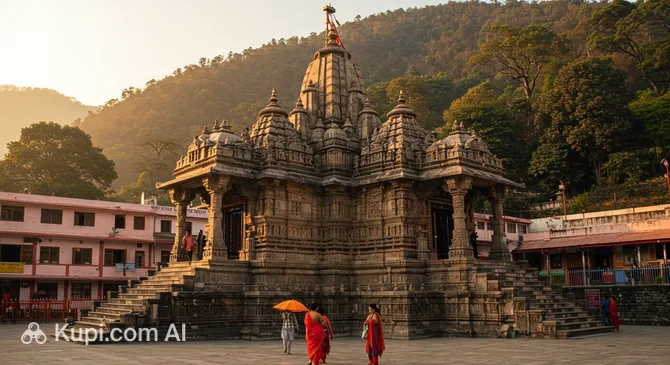
Mahadev Temple. Illustration.
Source: Kupi.com AI

Traveler photos:

The architectural style of the temple is traditional North Indian with a high tower—the shikhara—decorated with numerous sculptures of deities and colorful bas-reliefs depicting ancient legends. At the center of the sanctuary lies a sacred lingam, where believers bring their offerings in hopes of blessing and protection.

The location of Mahadev Mandir at the junction of three mountain ranges makes it a unique natural site. The combination of the temple's bright paintings, the rugged Himalayan foothills, and the pilgrimage atmosphere creates a singular character that impresses even those travelers who are far from religious traditions.

Contacts

When planning a pilgrimage to Mahadev Mandir, it is recommended to check the current road conditions and ritual schedules in advance with local residents or at ashrams in Haridwar. Since the temple is located in a mountainous area of northern India, it is best to get up-to-date practical information regarding crowds and opening times directly in Rishikesh or from taxi drivers before heading out.

How to contactContact
Address4887+Q7X, Swargashram Rd, Swarg Ashram, Rishikesh, Uttarakhand 249304, India

What to Do

The main purpose of visiting Mahadev Mandir is darshan, the traditional viewing of the deity. Believers and tourists alike can participate in puja, offering Shiva water from the Ganges, milk, flowers, and bilva leaves. A special energy is felt during the morning and evening rituals, when the temple space fills with mystical awe to the sounds of mantras and bells.

In addition to religious rites, visitors are invited to try some trekking. The path to the temple along a mountain trail through the forest allows you to enjoy panoramas of gorges and fresh mountain air. Along the way, you may encounter itinerant sadhus (ascetics), rest in small tea stalls, and observe the wildlife of the Himalayan foothills.

There are numerous market stalls around the temple grounds where you can buy souvenirs: rudraksha beads, copper vessels for holy water, and small figurines. Don't forget to visit the observation terraces to take panoramic photos of the surrounding hills, which are especially picturesque in the rays of the setting sun.

Getting There

The journey to Mahadev Mandir typically begins from the region's major spiritual hubs—Haridwar or Rishikesh. Travelers first need to reach these cities by train or bus, then cross the Ganges and head toward the Swargashram area. From there, a winding mountain road about 12 kilometers long leads to the temple, passing through picturesque forests and gorges.

To reach the shrine, you can hire a taxi, take an auto-rickshaw, or join pilgrims in shared jeeps and minibuses that run regularly during daylight hours. Keep in mind that the serpentine road requires caution, and the drive can take anywhere from 45 to 90 minutes depending on traffic density.

For outdoor enthusiasts and pilgrims, there is a hiking trail leading from Swargashram. This route is considered quite challenging due to steep climbs, but it is very popular. The walk through the Himalayan foothills takes about 3–4 hours and allows you to fully enjoy the pristine nature and the silence of the mountain forest.

Nearest city: Haridwar

History & Facts

The history of Mahadev Mandir is inextricably linked to one of Hinduism's most majestic legends—Samudra Manthan, or the Churning of the Ocean. According to tradition, when gods and demons were extracting the nectar of immortality, a deadly poison called "Halahala," capable of destroying all living things, rose from the depths of the ocean. To save the universe, Lord Shiva drank this poison but held it in his throat, which turned blue. It was for this deed that Shiva received the name Neelkanth ("The Blue-Throated One"), and a temple was erected on the spot where he rested after the event.

Although the current temple building with its vibrant decorations was built in a later period, the site itself has been revered as sacred since ancient times. For centuries, the Manikut, Vishnukut, and Brahmakut hills surrounding the temple have served as meditation sites for great sages and rishis seeking solitude in the Himalayan foothills.

A special atmosphere can be found at Mahadev Mandir during major religious festivals, such as Maha Shivaratri or during the holy month of Shravan. During these times, thousands of devotees from all over northern India make a pilgrimage to the shrine to pay their respects to Shiva, turning the temple grounds into a center of grand celebrations and fairs.

Time Needed

To explore the Mahadev Mandir temple complex itself and participate in the rituals, 1–2 hours is usually sufficient. This is enough time to perform darshan, examine the architectural details of the sanctuary, and enjoy the views from the open platforms. However, you should plan your trip considering travel time, which can vary significantly.

If you choose transportation (taxi or jeep), it is best to set aside half a day for the entire trip from Rishikesh and back. For those who decide to make a walking pilgrimage along the mountain trail, almost a full day will be required, as the climb alone takes about 4 hours. In any case, there is no need to rush—the atmosphere of the sacred mountains invites unhurried contemplation.

Working Hours

Mahadev Mandir, like most active Hindu temples, follows the natural light cycle and pilgrimage traditions. Typically, the shrine opens its doors to devotees from early morning (around 5:00–6:00) and welcomes visitors until late evening (19:00–20:00). The most activity is observed during the morning and evening Aarti—solemn worship ceremonies.

As the exact schedule may change depending on the season and religious calendar, visitors are advised to check current operating hours with local guides or drivers in Rishikesh. During major festivals like Maha Shivaratri, the temple may operate on a special schedule, staying open longer than usual to accommodate the massive flow of pilgrims.

Nearby

A visit to Mahadev Mandir can easily be combined with exploring other iconic sites around Haridwar and Rishikesh. As the temple is located in an area with a high concentration of ashrams and shrines, exploring neighboring sites will allow you to dive deeper into the unique spiritual culture of the region.

Just a few kilometers from the mountain trail are well-known landmarks such as the Parmarth Niketan Ashram, which hosts majestic Ganga Aarti ceremonies, and the famous Beatles Ashram, which became legendary after the visit of the Fab Four. Also worth noting is the picturesque Ram Jhula bridge, where a walk offers unforgettable views of the sacred river.

NameDistance
Parmarth Niketan Ashram0.3 km
The Beatles Ashram0.5 km
Ram Jhula0.8 km
Ganga Beach0.9 km
Little Amsterdam1.3 km
Lakshman Jhula1.9 km
Triveni Ghat2 km

Have you reached the end of the page?

So the route has been studied inside and out