Support

Kejaksan Square Cirebon

About

Kejaksan Square (Alun-Alun Kejaksan) is not just an open space, but the true heart of the city of Cirebon, located in Indonesia. Like many other city squares on the island of Java, it plays a central role in public life. It is a traditional "alun-alun"—a place where history meets modernity, and local residents gather to relax and socialize.
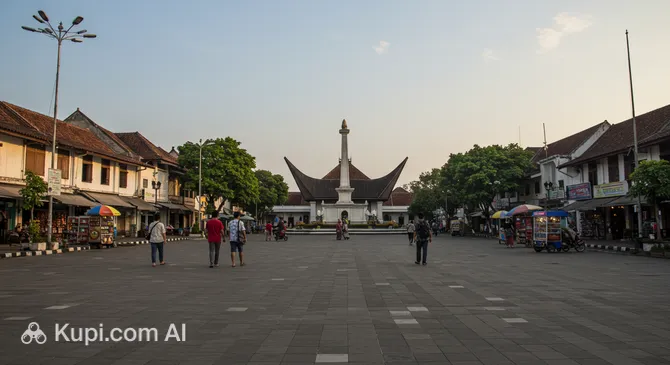
Kejaksan Square Cirebon. Illustration.
Source: Kupi.com AI

Traveller photos:

The square serves as the main stage for city festivals, national holidays, and various cultural events. On ordinary days, it is filled with townspeople who come here to stroll, relax in the shade of the trees, or simply enjoy the atmosphere. It is a lively place that allows tourists to immerse themselves in the daily life of an Indonesian city.

Surrounded by important administrative buildings and historical sites, including the At-Taqwa Mosque, Kejaksan Square is an essential cultural and social hub. Its strategic location and rich history make it a must-visit for anyone who wants to get to know the soul of Cirebon. Recent reconstruction has transformed it into a modern and comfortable public space while preserving its historical charm.

Contacts

Since Kejaksan Square is a public space, it doesn't have an official phone number or email address. However, it is very easy to find as it is located in the heart of Cirebon, right next to the At-Taqwa Grand Mosque. The square is just 750 meters from Cirebon Railway Station, making it easily accessible on foot. Access to the square is open 24 hours a day, allowing you to visit at any time that suits you.

How to contactContact
AddressJl. Siliwangi No.01, Kebonbaru, Kec. Kejaksan, Kota Cirebon, Jawa Barat 45124, Indonesia

What to Do

Kejaksan Square is the perfect place to feel the rhythm of life in Cirebon and take a break from the city bustle. During the day, you can take a leisurely stroll along the well-kept paths, sit on benches in the shade of spreading trees, and watch the daily life of the residents. In the evenings, the square is transformed, becoming a center of attraction for families, young people, and tourists. At this time, the atmosphere becomes especially lively, and the air is filled with the aromas of local cuisine, which you can try at the numerous street cafes and stalls located around the perimeter.

Beyond relaxation, the square offers many cultural experiences. Festivals, fairs, and concerts featuring local creative groups are often held here. Tourists can witness traditional dances or even participate in folk festivities, allowing for a deeper immersion into the region's culture. For architecture lovers, the square is also of great interest: it is surrounded by historical buildings whose appearance combines Javanese, Sundanese, and Chinese motifs characteristic of Cirebon. Following recent reconstruction, modern amenities have been added, including a children's playground, making it a wonderful place for family leisure.

Getting There

Kejaksan Square is located in the center of Cirebon, which ensures excellent transport accessibility. It is convenient to reach by taxi, public transport, or simply on foot if your accommodation is in the central part of the city.

Cirebon itself is a major transport hub in Indonesia, easily accessible by train or bus from Jakarta and other cities on the island of Java. If you arrive at Cirebon Railway Station, the trip to the square will take only 10–15 minutes by taxi or motorcycle taxi. Alternatively, you can choose a walking route, as the distance to the square does not exceed two kilometers.

Nearest city: Cirebon

History & Facts

The history of Kejaksan Square is closely linked to the traditions of Javanese cities, where the central square, or "alun-alun", has always been the heart of public life. Since the city's founding, it has served as the main meeting place for residents of all classes. It was here that important decrees were read, bustling market days were held, and townspeople gathered to discuss pressing matters. This square was not just a geographical center, but a true stage where everyday life unfolded.

The city of Cirebon, founded—according to some records—in 1388, was for a long time the residence of the local sultan, which gave the square a special status. Located at the crossroads of two cultures—West Javanese (Sundanese) and Central Javanese—the city absorbed their unique features. This cultural fusion is reflected in the architectural appearance and traditions associated with Kejaksan Square, making it a living monument to the region's rich past.

A special role in the history of the square was played by Cirebon's transformation into an important Islamic center on Java in the 15th and 16th centuries. This event influenced the entire urban environment: the square became a venue for major religious holidays and events. Traditionally, the alun-alun was surrounded by the most significant buildings, including the ruler's palace and the main mosque, emphasizing its central importance in the spiritual and secular life of the city.

Time Needed

When planning a visit to Kejaksan Square, you should aim for a duration of one to three hours, depending on your interests. For a quick introductory walk to see its architecture, take a few photos, and feel the overall atmosphere, 1–2 hours is quite enough. During this time, you will be able to walk around the entire area and get a general impression of this landmark in the city of Cirebon.

If you want to dive deeper into local life, it is recommended to set aside 2–3 hours. This is enough time not only for a leisurely stroll but also to try street food from one of the many stalls, relax on a bench in the shade of the trees, or wait for the evening illumination when the square especially comes to life. Additionally, extra time may be needed if your visit coincides with one of the city festivals or cultural events that are frequently held here.

Working Hours

Kejaksan Square is a public space available for visiting 24/7, allowing guests of Cirebon to enjoy its atmosphere at any time. Since entry to the square is free, you won't need to buy tickets or book in advance. It is open to everyone year-round.

While the square is accessible 24/7, the liveliest time for a visit is in the evenings and on weekends. During this period, it fills with locals and tourists, street cafes are open, and a festive atmosphere prevails. If you prefer a quieter environment for walks and photography, it is better to come here in the morning or afternoon on a weekday.

Open 24/7

Nearby

A visit to Kejaksan Square is a great opportunity to get to know the heart of Cirebon, but you shouldn't stop there. Exploring the surroundings will allow you to dive deeper into the city's culture and history, discovering many other interesting places located just a few steps away.

Thanks to its central location, the square is an ideal starting point for walking tours. Nearby, you will find both iconic historical monuments and modern shopping centers, cozy restaurants, and picturesque parks. This will allow you to easily create a full itinerary for the day without needing to use transportation.

NameDistance
At-Taqwa Grand Mosque0.1 km
NEO Restaurant Cirebon0.8 km
Grage Mall Cirebon0.9 km
Kampung Kecil Cirebon1 km
Cirebon Doll Palace1.1 km
Panjunan Red Mosque1.2 km
Cirebon Super Block Mall1.3 km

Reached the bottom of the page?

Looks like you know this route inside out