Support

Tana Toraja

About

Tana Toraja is an extraordinary region nestled in the highlands of the western part of Sulawesi island. Here, amidst emerald rice terraces, dense forests, and misty valleys, time seems to slow its pace. This unique corner, located in Indonesia, attracts travelers with its mystical atmosphere and the feeling of touching something truly authentic, far from the hustle and bustle of big cities.

The district is home to about 450,000 people, most of whom are members of the Toraja ethnic group. Local residents carefully preserve their traditions, turning the region into a living open-air museum. The deep and eventful history of Tana Toraja is reflected in every aspect of life: from daily routines to grand rituals that have no parallels in the world.

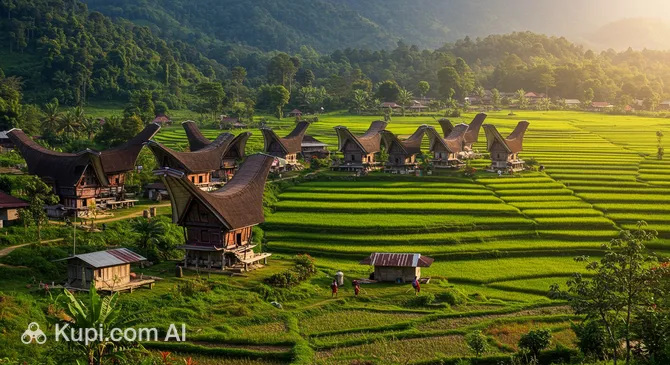
Tana Toraja. Illustration.
Source: Kupi.com AI

One of the main architectural features of the area is the tongkonan — traditional houses with curved roofs resembling boats. Visitors are also drawn to the unique rock burials and sacred caves shrouded in ancient myths. For nature lovers, the village of Lolay, known as the "land above the clouds," will be a true discovery, offering breathtaking panoramas from its "heavenly balcony."

If you are looking for a place to immerse yourself in an unexplored world and get acquainted with unusual customs, Tana Toraja is the perfect choice. This destination will provide you with vivid impressions, whether through ethnographic exploration or contemplating majestic mountain landscapes.

Weather Overview

Thanks to its location in the highlands, the climate in this region can be described as "eternal spring." There is no exhausting tropical heat here, which makes strolling through rice terraces and traditional villages comfortable practically any time of year.

When planning your trip, check the detailed weather in Tana Toraja to choose the right wardrobe. The temperature regime here is remarkably stable: average figures hover around 20–21°C from January to December.

Expect warm days with maximums around 25–26°C and quite fresh nights when the air cools down to 16–17°C, so a warm sweater for the evenings will be useful. You should also be prepared for high humidity: rains are frequent visitors here, and the number of rainy days varies from 19 in September to 30 in March and December, so a reliable raincoat will be your best friend on the trip.

Average monthly temperature

Average monthly precipitation

Interesting Facts

Beyond the main attractions, Tana Toraja holds many fascinating secrets and cultural peculiarities that capture the imagination of travelers.

  • Boat-houses. Traditional tongkonan dwellings are unmistakable: their roofs are curved and resemble overturned ships. According to local beliefs, this unusual shape is a tribute to the ancestors who arrived on the island by sea and used their vessels as their first shelters on land.

  • Kambira "Baby Trees." The region preserves a unique and touching custom of burying infants inside the trunks of living trees. Locals believe that by being buried this way, the child continues to "grow" with the tree, harmoniously returning to the womb of nature.

  • The Village Above the Clouds. The settlement of Lolay earned its romantic nickname thanks to the thick morning mists that densely blanket the lowlands. Standing here at dawn, it feels as if you are on an island in the middle of a celestial ocean, and the views from the heights are often compared to a legendary "stairway to heaven."

  • Grand Send-offs. The funeral ceremonies of the Torajan people are world-famous for their incredible scale. This is not just a farewell, but a multi-day event gathering hundreds of guests, accompanied by ritual dances and music, for which preparations can take a very long time.

How to Get There

A journey to the "land of the heavenly kings" is a true adventure that usually begins with a flight to the island of Sulawesi. Since the region is located in the highlands, logistics require some planning. You can explore all available routes and choose the best one by following the link: more about how to get to Tana Toraja.

The main air gateway for most tourists is Sultan Hasanuddin International Airport (UPG). Note that this major aviation hub is not in Tana Toraja, but in the provincial capital, Makassar. The straight-line distance is about 222 km, but the overland route passes through challenging mountain terrain. A bus or car trip usually takes around 8–10 hours. It is a long but scenic journey.

Geographically, Tampa Padang Airport (MJU) in the city of Mamuju is the closest to the region (about 96 km in a straight line). However, due to the nature of the mountain roads, a transfer from there will also take time. Another option is to fly into Mutiara Airport (PLW) in the city of Palu, but it is significantly further away, and the journey will take a lot of time.

For clarity, here is a summary of the nearest airports (distance is straight-line; the real road path will be longer):

AirportPassenger trafficDistance
Lagaligo Airport80 00056 km
Tampa Padang Airport55 00096 km
Sultan Hasanuddin International Airport13 mln222 km
Morowali114 077234 km
Mutiara Airport777 572239 km

There is no rail service in this part of the island, so trains are not used for travel to Tana Toraja. The primary method of overland travel is by road. Tourists often use comfortable night or day buses from Makassar, as well as rented cars with a driver. The route winds through picturesque mountain passes and along the coast, turning the transfer into a separate excursion with stunning views.

Main Attractions

Kete Kesu is perhaps the region's most famous traditional village, appearing as if frozen in time. Here, travelers can see classic tongkonan houses with curved roofs, lined up in a strict row opposite rice barns. This place is interesting not only for its architecture but also for the opportunity to learn about burial traditions: right behind the village lies an ancient burial site with hanging coffins and family vaults that are hundreds of years old.

For those who want to touch the mystical side of Torajan culture, Londa is a must-visit. This is a natural cave at the foot of a cliff that serves as a resting place for many generations. At the entrance, visitors are greeted by wooden tau-tau statues representing the deceased, while inside the cave, one can see ancient coffins that have become part of the natural landscape over time. The atmosphere here is mysterious and invites reflection on eternity.

An impressive monument is the Lemo cliff necropolis. Dozens of burial niches, resembling windows to another world, have been manually carved into the sheer stone wall. From stone "balconies," rows of tau-tau dolls with large expressive eyes look down at tourists. Lemo is considered one of the most photogenic spots due to the contrast between the stark gray rocks and the bright green rice fields surrounding this sacred site.

Fans of megalithic culture should visit Bori Kalimbuang. This complex is famous for its menhirs — tall vertical stones erected in honor of noble deceased. Stones of various sizes create a unique ensemble reminiscent of ancient European megaliths but with local flavor. A walk here provides a sense of tranquility and allows one to see how deeply the roots of local traditions run.

Local Cuisine

Tana Toraja's cuisine is an original blend of ancient traditions and vibrant flavors born from the fertile lands of Sulawesi. Local dishes are often characterized by a bold use of spices and unique cooking methods. The region's signature dish is rightfully considered pa'piong. This is meat (most often pork or chicken) mixed with aromatic herbs, which is roasted inside a bamboo stalk over an open fire. This method gives the food incredible tenderness and a special, slightly smoky flavor that is impossible to forget.

Since buffaloes play a sacred role in Torajan culture, dishes made from their meat hold a place of honor on the menu. Be sure to try pallubasa — a rich buffalo soup with added roasted coconut flakes and a generous set of spices. Traditionally, this hearty treat is served during major ceremonies and festivals, but travelers can also find it in local establishments, wanting to taste authentic cuisine.

For those ready for gastronomic experiments, local markets offer unusual snacks, such as crunchy fried crickets or spicy flatbreads. If you prefer more familiar desserts, look for fried bananas and sweet sticky rice prepared in coconut milk. An abundance of fresh tropical fruits and vegetables grown on the mountain slopes perfectly complements any meal.

Speaking of drinks, it is impossible not to mention the legendary Toraja coffee. This variety of Arabica, grown in the highlands, is valued worldwide for its complex, velvety taste with notes of chocolate and spices. A cup of hot, freshly brewed coffee from local plantations is not just a drink, but a true ritual perfectly suited for the region's cool morning climate.

Food culture here is closely intertwined with social life. Locals and tourists often meet at bustling markets and small street cafes where a friendly atmosphere prevails. Throughout the year, Tana Toraja hosts gastronomic festivals where you can attend culinary workshops and personally witness the process of preparing national masterpieces.

Travel Tips

Traveling to Tana Toraja is an immersion into a completely different world, where ancient traditions intertwine with daily life and mysticism becomes reality. To ensure your trip to this unique highland region is as comfortable as possible and leaves only warm memories, we have prepared a list of important practical recommendations.

  1. Clothing and Essentials: Don't let the tropical latitudes mislead you — in the Tana Toraja highlands, evenings can be cool (down to +16°C). Be sure to bring a fleece sweater or a light jacket. Since rain is frequent and sudden, a quality raincoat or umbrella should always be at hand. For walking through villages and rice terraces, you will need comfortable, non-slip shoes. If you plan to attend ceremonies, choose modest clothing that covers your shoulders and knees (preferably in dark tones).
  2. Transport: Public transport in the region consists of "bemo" minibuses and "ojek" motorcycle taxis, but they are not always convenient for tourists. The optimal option for exploring the surroundings is renting a car with a driver or a scooter (if you have experience driving on mountain serpentines). Taxi apps common in big cities may work inconsistently or not at all here, so it is better to arrange transfers in advance through your hotel.
  3. Finances: The main currency is the Indonesian rupiah. In villages and small shops, only cash is accepted. ATMs and exchange offices are available in major centers like Rantepao and Makale, but withdrawing money outside of them will be problematic. We recommend carrying a sufficient supply of small bills. Your daily budget depends on your plans, but prices here are moderate; entry fees to attractions are usually inexpensive.
  4. Health and Safety: The region is safe for tourists, but the road here from Makassar takes 8–10 hours along a winding serpentine. If you suffer from motion sickness, be sure to stock up on tablets. Pharmacies are available in the towns, but it's better to bring specific medications with you. Also, don't forget sunscreen — the sun is very active in the mountains, even if the weather seems overcast.
  5. Communication: The official language is Indonesian (Bahasa Indonesia), while locals speak the Toraja language. English is understood by guides and hotel staff, but it may be useless in the countryside. Learn a few phrases, such as "Terima kasih" (Thank you), to build rapport with the locals. For connectivity, it is best to buy a SIM card from Telkomsel, as it has the best coverage in the mountainous terrain; Wi-Fi is available in most Rantepao guesthouses and cafes.
  6. Local Etiquette: If you are lucky enough to be invited to a traditional funeral ceremony, it is customary not to arrive empty-handed. It is considered good manners to bring a gift for the family of the deceased — usually a carton of cigarettes or a bag of sugar. Always ask for permission before taking photos of local residents, especially elderly people.
  7. What to Avoid: It is categorically forbidden to touch human remains, skulls, and coffins in burial caves (Londa, Kete Kesu) — this is considered a grave violation of the ancestors' peace and a taboo. Also, avoid loud laughter and noisy behavior during ritual processions; show respect for the grief and traditions of the hosts.
  8. Important Advice: To truly understand the meaning of what is happening, we strongly recommend hiring a local guide. Torajan culture is full of complex symbols and rituals that are impossible to decipher without a guide. A guide will not only show you hidden paths but also explain the significance of every architectural element and ceremony, turning a simple excursion into a profound cultural discovery.

Tana Toraja is a place that teaches one to look at life and eternity in a new way. By following these simple rules and showing respect for local customs, you will be a welcome guest in this amazing land and bring back a priceless experience of touching one of Indonesia's most authentic cultures.

Entertainment & Nightlife

Nightlife in Tana Toraja differs significantly from the noisy parties of Bali or Jakarta. You won't find neon signs for massive nightclubs or dance floors operating until dawn here. Evening leisure in this region is primarily about cozy gatherings, lively conversation, and immersing yourself in the relaxed atmosphere of the highlands. The center of evening activity is the town of Rantepao, where most cafes and small bars catering to both locals and travelers are concentrated.

Main activity bustles on the primary streets of Rantepao, especially around Jalan Ahmad Yani and adjacent alleys. The atmosphere in these establishments is very casual and friendly: it is customary to meet fellow travelers, share impressions of the day, and enjoy the cool mountain evening. There is no dress code — tourists arrive in comfortable hiking clothes. Most places close quite early, around 10:00 PM – 11:00 PM, so it’s worth planning your evening in advance.

Among the popular places to spend time, Cafe Aras stands out. This establishment is famous for its unique interior decorated with traditional wood carvings and ancient artifacts, creating a one-of-a-kind ambiance. Here you can order a cold beer or cocktails and relax to soft music. Another well-known attraction is Mambo Restaurant — a great place for dinner that turns into a bar with a laid-back vibe in the evening, where foreign tourists often gather.

For those who want to experience the local flavor, karaoke is an excellent option. Torajans love to sing, and in many cafes, you can hear both Indonesian hits and Western classics in the evenings. If you're looking for something livelier, look for places like Cafe Jangkar, where local bands often play on weekends and the terrace offers a view of the city at night.

Practical Tips:

  • Transport: Public transport does not run at night, and standard taxi apps might not find a car. Arrange a transfer in advance or choose a hotel within walking distance of Rantepao's center.
  • Safety: The area is considered safe, but streets are often poorly lit. Always carry a flashlight or a charged phone when returning to your hotel.
  • Prices: The cost of drinks and food here is very moderate; the average check for dinner with drinks rarely exceeds 100,000–150,000 rupiahs.

During the day, the region offers entirely different activities. Besides visiting the famous burial complexes, active travelers can go rafting on the Sa'dan River — an exciting adventure through wild jungles and canyons. Trekking tours through picturesque rice terraces and visits to traditional markets, where you can see bustling traders and buy unique souvenirs, are also popular.

Parks & Museums

While Tana Toraja is primarily famous for its mystical rituals and ancient burials, the region also offers travelers magnificent natural areas and cultural venues. Here, the concepts of "park" and "museum" often intertwine: nature itself serves as a majestic backdrop, and the villages act as living keepers of history.

Natural Areas and Parks

One of the most impressive sites combining natural beauty and man-made wonders is the Buntu Burake hill complex. This site towers over the town of Makale and is known for its giant statue of Jesus Christ, which rivals the famous monument in Rio de Janeiro in size. The area around the statue is landscaped as a park with observation decks offering breathtaking panoramas of mountain ranges and green valleys. The glass bridge is particularly popular — an attraction for the brave, allowing one to literally hover over the abyss.

For lovers of secluded relaxation in the lap of nature, the Tilanga Natural Pool is ideal. This is a crystal-clear lake with cool water, hidden in the shade of dense trees and karst rocks. The place is steeped in legend: sacred eels live in the pool's waters, which, according to belief, must not be caught. Tilanga is a great opportunity to refresh yourself after a hot day and enjoy the sounds of the jungle in a peaceful atmosphere.

Another unique natural location is the Ollon Valley. Although it is not a city park in the traditional sense, the landscape here resembles Alpine meadows or savanna with soft green hills through which a river flows. This place is often called the "Teletubbies Hills" for its idyllic look. People come here for camping, picnics, and stunning photos against a backdrop of untouched nature.

Museums and Cultural Centers

To gain a deeper understanding of the history of local rulers, it is worth visiting the Buntu Kalando Museum in the Sangalla district. Located in a former palace of the royal family, the museum houses a collection of artifacts belonging to the Puang Sangalla nobility. Here you can see ancient weapons, household items, traditional clothing, and musical instruments. The exhibition is small but very atmospheric, allowing a glimpse into the region's aristocratic past.

An important cultural site is the Museum Ne' Gandeng in the village of Malakiri. This complex was created in honor of a respected elder and community figure. The museum grounds are built with traditional tongkonan houses and are often used for large-scale ceremonies and festivals. For tourists, this is an opportunity to see Torajan architecture in perfect condition and learn more about the social structure and values of local society.

Insider Tip: If you want to see a real "open-air museum," head to the Pasar Bolu market on big trading days (usually once every six days). This is not a museum in the classic sense, but it is here that you will see living culture: the trade of mighty buffaloes that cost a fortune, and the sale of traditional spices and coffee. This place will give you the most vivid and authentic impressions of your trip.
Getting Around

The public transport system in Tana Toraja differs significantly from the standard urban infrastructure of major metropolises. Here you won't find subways, trams, or large municipal buses with fixed schedules. All local traffic is organized somewhat chaotically, yet it is surprisingly effective for mountain conditions. The main means of transport for locals and budget tourists are bemos (also known as "pete-pete") — small minibuses running between villages and the region's main towns, Rantepao and Makale.

Bemos are usually painted blue or red, and their routes do not have numbers in the traditional sense. The direction of travel is often indicated on the windshield, but the most reliable way is simply to ask the driver before boarding. There are virtually no official stops: to catch a minibus, just wave your hand from the roadside, and to get off, loudly say "Kiri" (which means "left") to the driver or tap a coin on the glass. This is the cheapest way to reach popular locations situated along the main roads.

For short-distance trips within settlements, bentors (motorized rickshaws) and ojeks (motorcycle taxis) are popular. A bentor is a hybrid of a motorcycle and a sidecar that can tightly fit two passengers. It is a colorful and inexpensive way to get from your hotel to a market or restaurant. An ojek is a standard motorcycle with a driver; it is indispensable for reaching hard-to-access attractions via narrow or broken roads where a car cannot pass.

The payment system in Tana Toraja's public transport is strictly cash-based. Transport cards, passes, or contactless phone payments do not work here. It is customary to pay the driver directly at the end of the trip. It is highly recommended to carry small denominations of Indonesian rupiah, as the driver might not have change for large banknotes. The fare in bemos is fixed and very low, but with bentor and ojek drivers, you must agree on the price in advance before starting the trip, and bargaining is perfectly appropriate.

It is important to consider the transport operating hours. Life in the highlands settles down early: bemos and bentors actively run from early morning until 4:00 PM – 5:00 PM. After sunset, finding public transport becomes extremely difficult, and in remote areas, virtually impossible. Familiar taxi-hailing apps (like Grab or Gojek) operate inconsistently or not at all in this region, especially outside the center of Rantepao.

Given the spread-out nature of the attractions (cliff burials, caves, and traditional villages are located quite far from each other), most tourists prefer alternative options. The most comfortable way is renting a car with a driver for the whole day. This allows you to create a flexible itinerary and not depend on the whims of the weather or minibus schedules. For more active travelers, scooter rentals are available, but keep in mind the challenging mountain terrain and winding roads, which require confident driving skills.

Accommodation

The hospitality infrastructure in Tana Toraja is quite well-developed for a remote region, although you won't find the usual international chain giants here. The main accommodation stock consists of cozy guesthouses, small family-run hotels, and colorful lodges styled after local architecture. The range of options varies from budget rooms in local homes (homestays) to comfortable 3-4 star hotels, which are often called "resorts" here due to their grounds and natural views.

Strategically, the most convenient place to stay is the town of Rantepao. This is where all tourist life is concentrated: restaurants, souvenir shops, currency exchanges, and transport hubs. By staying in Rantepao, you can easily reach the main attractions and walk to cafes in the evening. The town of Makale, the administrative center, is located slightly to the south; it is quieter and suits those seeking peace, but the choice of tourist services there is more modest.

A unique feature of the local hotel business is the architectural style. Many hotels, even in the mid-price segment, are built in the shape of traditional tongkonan houses with curved roofs. Staying in such a place allows you to immerse yourself deeper into the region's atmosphere without sacrificing modern amenities like hot water and air conditioning. Some complexes are situated right in the middle of rice fields, offering guests the chance to wake up to views of misty hills.

Booking Tips:

The tourist season in Tana Toraja has distinct peaks. The highest demand is observed in July and August (the time when most lavish funeral ceremonies are held) and in December (Christmas holidays). During these periods, the best accommodation options are sold out months in advance, and prices may rise. If your trip falls on these dates, make sure to book well ahead.

The pricing policy in the region remains very democratic. Budget travelers can find a place to stay for a nominal fee, and a night in the region's best hotel will cost significantly less than an equivalent level in Bali. Large hotels are available on popular international booking platforms, but many small guesthouses and homestays still operate through direct contact via messaging apps or accept walk-in guests, though relying on this during the high season is not recommended.

Nearby Cities

For those who want to explore the surroundings, Tana Toraja serves as an excellent starting point for trips to several interesting nearby locations. Although the mountain terrain of Sulawesi makes travel slow, neighboring cities offer a stark contrast to the highlands, allowing you to see coastal life and other cultural features of the island.

CityPopulationDistance
Makale9 96013 km
Rantepao43 12321 km
Palopo180 13051 km
Mamuju278 76479 km
Pinrang182 73180 km

One of the closest major centers is Mamuju — the capital of West Sulawesi province. This coastal city offers travelers a completely different atmosphere compared to the mystical mountains of Toraja. Here, you can stroll along the Manakarra Beach waterfront, enjoy fresh seafood, and see the famous Karampuang Island, popular with snorkelers. A trip here allows you to swap the cool of the misty hills for a warm sea breeze.

Another interesting destination is Pinrang, located south of the highlands. This region is famous for its vast rice fields and developed agriculture. Tourists are attracted here by natural sights such as the Sulili hot springs, where you can relax in healing water, and picturesque waterfalls hidden in tropical greenery. Pinrang provides an opportunity to see the more measured, agrarian life of the island.

Also worth noting is the town of Majene, the historical center of the Mandar people. It is known for its traditions of seafaring and shipbuilding. Here, you can relax on the beautiful Dato Beach with white sand and rocky cliffs, as well as get acquainted with Mandar culture, which differs from Torajan customs but is no less original and interesting for ethnographic study.

These nearby destinations allow you to get an idea of the diverse culture and landscapes of the region, complementing the impressions of visiting the unique land of Toraja.

Shopping & Souvenirs

Shopping in Tana Toraja is a fascinating immersion into the world of ethnography, which has little in common with typical trips to shopping centers. People come here not for designer clothes, but for unique handmade items that carry the warmth of craftsmen's hands and the spirit of ancient traditions. Trade in the region is centered around authentic crafts, the famous coffee, and art pieces reflecting the rich culture of the local people.

The center of commercial activity is the town of Rantepao. On its central streets, tourists will find the largest number of souvenir shops, art galleries, and workshops. Here you can leisurely choose gifts and observe woodcarvers at work. There are no large malls in the region; for basic necessities, visit small supermarkets of the Indomaret or Alfamart chains, but the most interesting shopping awaits you at the markets.

The most colorful place for shopping is considered to be the Pasar Bolu market, located a couple of kilometers from Rantepao. It is a true landmark: they sell everything from fragrant spices to mighty buffaloes, the price of which can be comparable to the cost of a car. Also noteworthy is the market in the town of Makale, which offers an excellent selection of local products and textiles.

The main souvenir worth taking home is local coffee (Kopi Toraja). This high-altitude Arabica is famous for its mild taste and lack of acidity; it is best to buy beans by weight. Another popular item is ikat fabric with traditional geometric patterns, woven by hand. Travelers often purchase miniature wooden tau-tau statues, carved panels, and beaded jewelry.

Shops in Rantepao usually operate from 9:00 AM to 5:00 PM – 6:00 PM, while markets open at dawn and wind down activity by noon. A cash-only culture prevails in the region: credit cards are accepted only in rare hotels and large stores, so be sure to stock up on Indonesian rupiahs for a trip to the market and be ready to haggle.

The tax refund system (Tax Free) does not operate in Tana Toraja, as trade is predominantly conducted by private entrepreneurs. You will only be able to process a VAT refund for large purchases made in other regions at the international departure airport before leaving Indonesia.

Reached the end of the page?

That means the route is fully explored